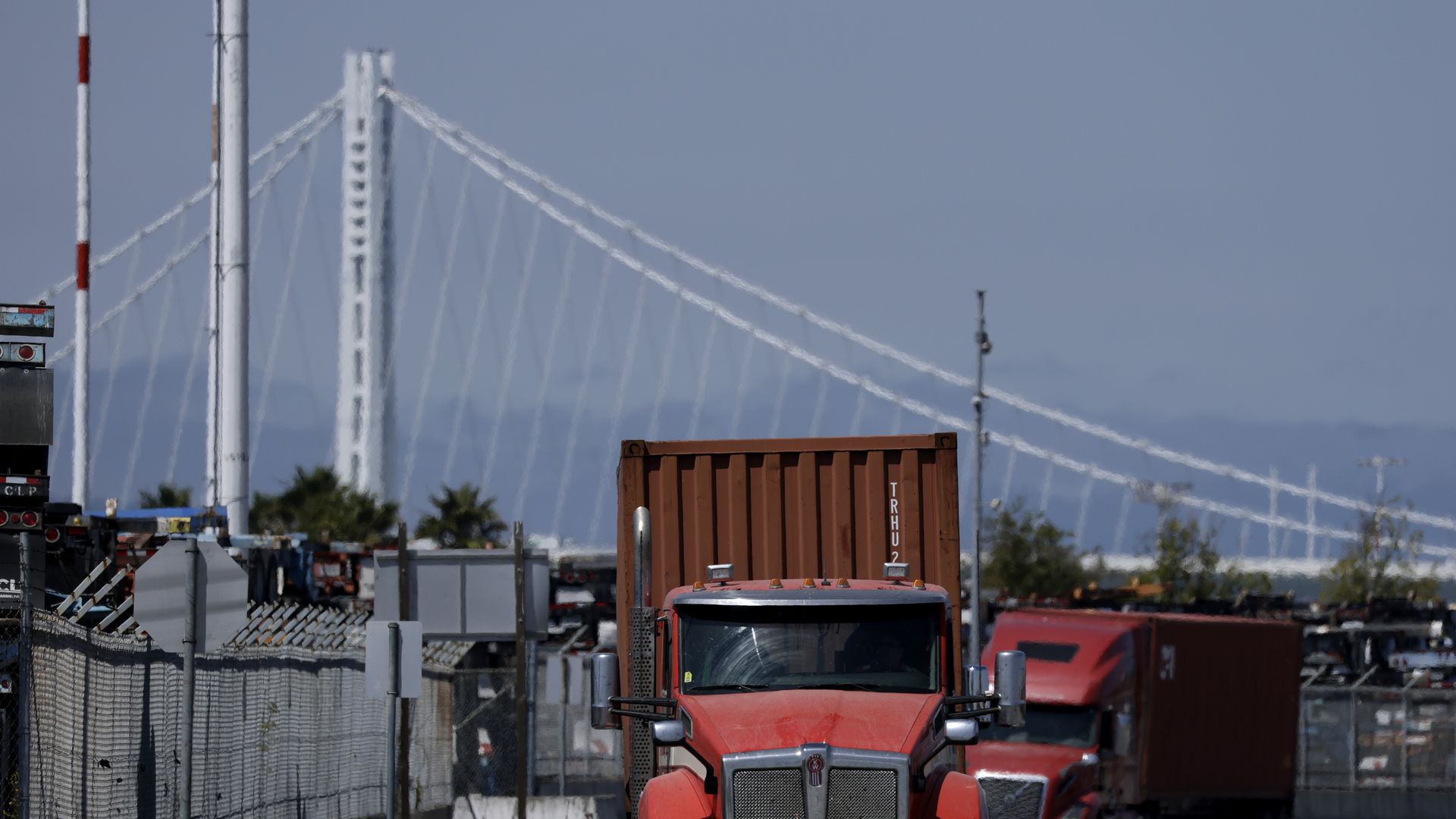
Around 9,500 truck drivers have been pulled off the road for failing to meet English-language proficiency requirements reinstated by the Trump administration.
The big picture: Immigrants account for an estimated 18% of all truck drivers, and some estimates show that the industry is already short tens of thousands of drivers.
Elon Musk dubbed the Department of Government Efficiency only "somewhat successful," but his meme turned real government agency leaves behind a wrecking ball legacy Washington will feel for years.
The Trump Administration dramatically escalated its standoff with Venezuela on Wednesday by seizing a large tanker loaded with crude oil bound for Cuba.
Why it matters: President Trump's pressure campaign on Venezuelan leader Nicolás Maduro has now struck at the heart of Venezuela's oil-based economy.
The Federal Reserve cut interest rates for the third time this year Wednesday, amid significant internal dissent and signs that further rate cuts next year are likely to be limited.
Why it matters: The Fed has delivered the interest rate relief President Trump has repeatedly demanded, though as chair Jerome Powell approaches his final months in office, the path of policy ahead is clouded in uncertainty.
President Trump is granting China access to more of Nvidia's advanced AI chips, he announced this week, a partial win for Nvidia which has lobbied against U.S. export restrictions first put in place in late 2022.
The big picture: Nvidia warns that blocking its sales has accelerated China's domestic chipmaking push — creating new global rivals and threatening the U.S. lead in the AI race.
The Trump administration has announced plans to revamp the way HR works across the federal government, per a memo shared with Axios, part of a push to reshape the bureaucracy.
Why it matters: DOGE may be in the rearview mirror for Elon Musk, but the administration is plowing ahead with its overhaul of the federal workforce.
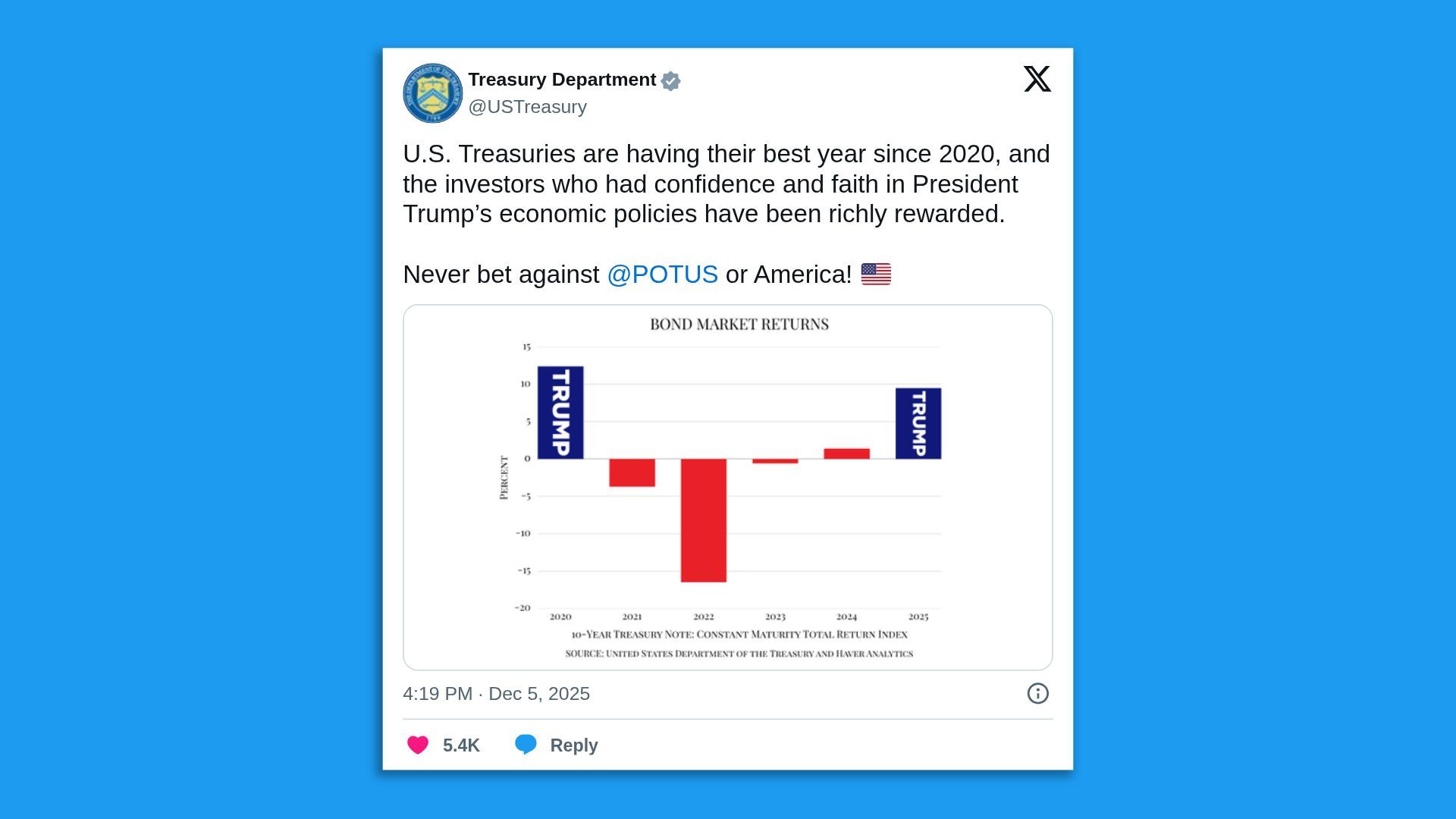
Treasury Secretary Scott Bessent has a message for America: Investors in U.S. Treasury bonds have enjoyed a strong year of returns, and this is a reflection of American economic strength.
The big picture: Bessent's description of this year's returns on Treasury securities is accurate, but bond returns don't necessarily correlate with overall economic conditions.
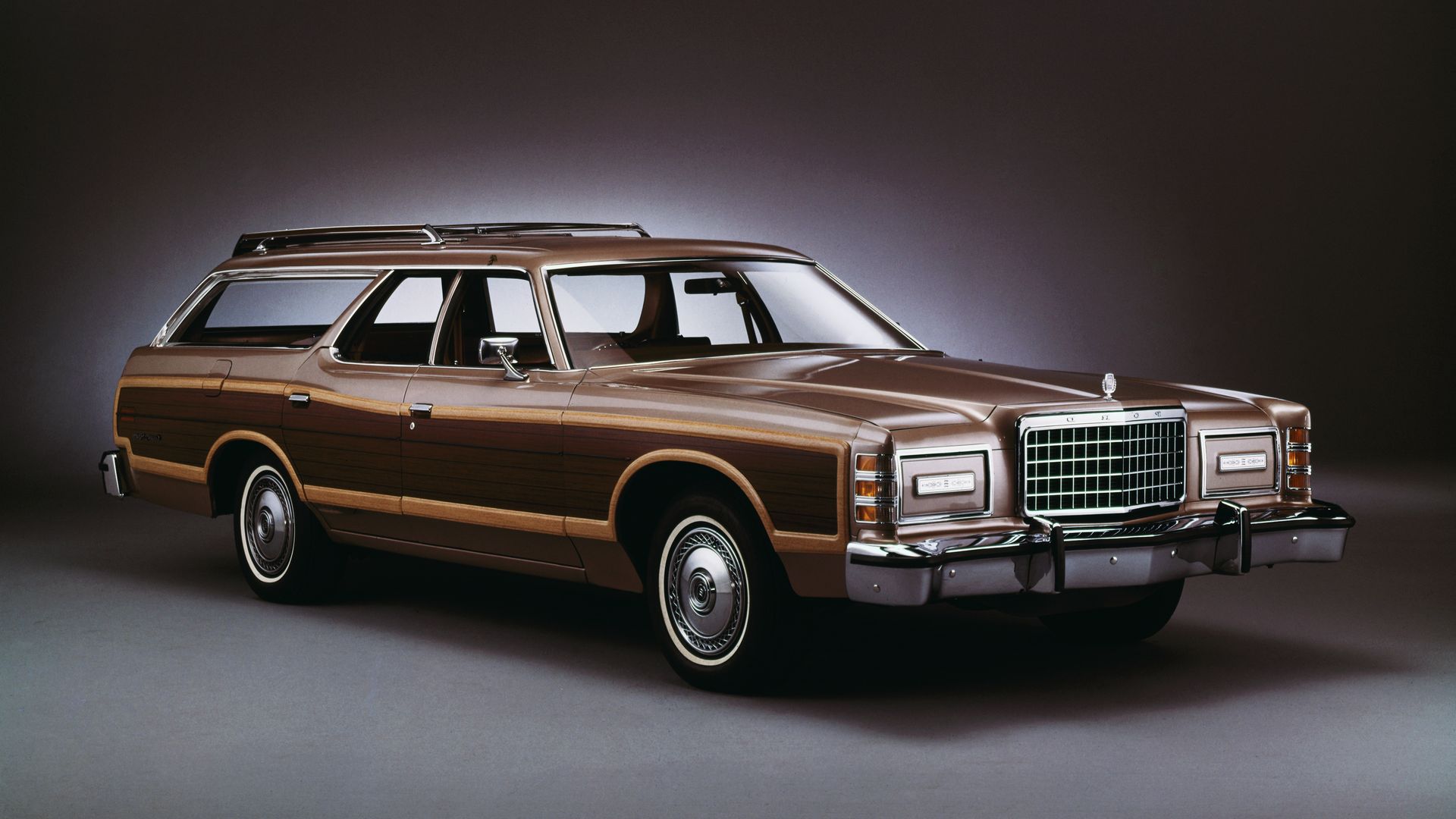
Besides the headlines about President Trump's effort to make cars affordable again — or his surprising tiny car infatuation — the administration's rollback of certain fuel economy standards could also change the mix of cars on dealer lots.
Why it matters: Reclassifying what constitutes a "car" or a "truck" for fuel economy purposes could mean the return of the traditional station wagon, Transportation Secretary Sean Duffy recently mused.
The University of Utah's board of trustees on Tuesday unanimously approved the creation of a for-profit company in partnership with private equity firm Otro Capital.
Why it matters: Private equity is becoming part of college sports, after several stalled attempts.
Conversations with more than a dozen strategists and investors on their 2026 outlooks reveal that Wall Street is not worried about an AI bubble, but wants to add portfolio protection just in case.
Why it matters: Hedging was not very profitable in 2025,but the mix of macro uncertainty and AI concerns next year has investors worried that skipping protection could be costly.
2026 is going to be the year for the forgotten 493: the overwhelming majority of companies in the S&P 500 that are not the core tech stocks powering this bull market, according to Wall Street forecasts.
Why it matters: This view could lead to a rotation in market leaders next year, as investors seek out AI super users rather than just AI leaders.
Small-business owners were excited for Trump 2.0. Now, tariffs and inflation are causing headaches and eroding optimism.
Why it matters: Main Street's pain is a negative for the entire economy.
The waning confidence of small-business owners, typically a conservative group, is also another political headwind for the president, who has been getting low marks on the economy.
Instacart orders for cold and flu medicine, cough suppressants and other sick-day essentials tend to spike around Christmas, per new data the company shared with Axios.
Why it matters: It's a way of seeing how our shopping patterns are affected by outside factors — in this case, cold and flu season.
What they found: Orders for cold and flu medicine and cough suppressants both peaked on Dec. 26 last winter, per Instacart.
Facial tissues peaked on Dec. 27, while "immune support" products peaked on Dec. 28.
How it works: That's based on each category's daily order share between July 1, 2024, and June 30, 2025.
Between the lines: Some relevant items had definite wintertime spikes, but others — like hand sanitizer and wipes — saw steadier demand over the covered period.
What's next: Experts are warning of a new flu outbreak tied to an emerging version of strain H3N2, Axios' Herb Scribner reports.
Elon Musk told Katie Miller in an interview for her podcast on Tuesday that DOGE, the Trump administration's cost-cutting department he spearheaded, was "somewhat successful."
Why it matters: It's a rare comment from Musk regarding the work DOGE did earlier this year, and hints at his lingering dissatisfaction with the inner workings of U.S. politics.
Why it matters: The Tennessee-based chain was pulled into a political firestorm that shook its core customer base and forced a redesign reversal — fallout still shaping its recovery.