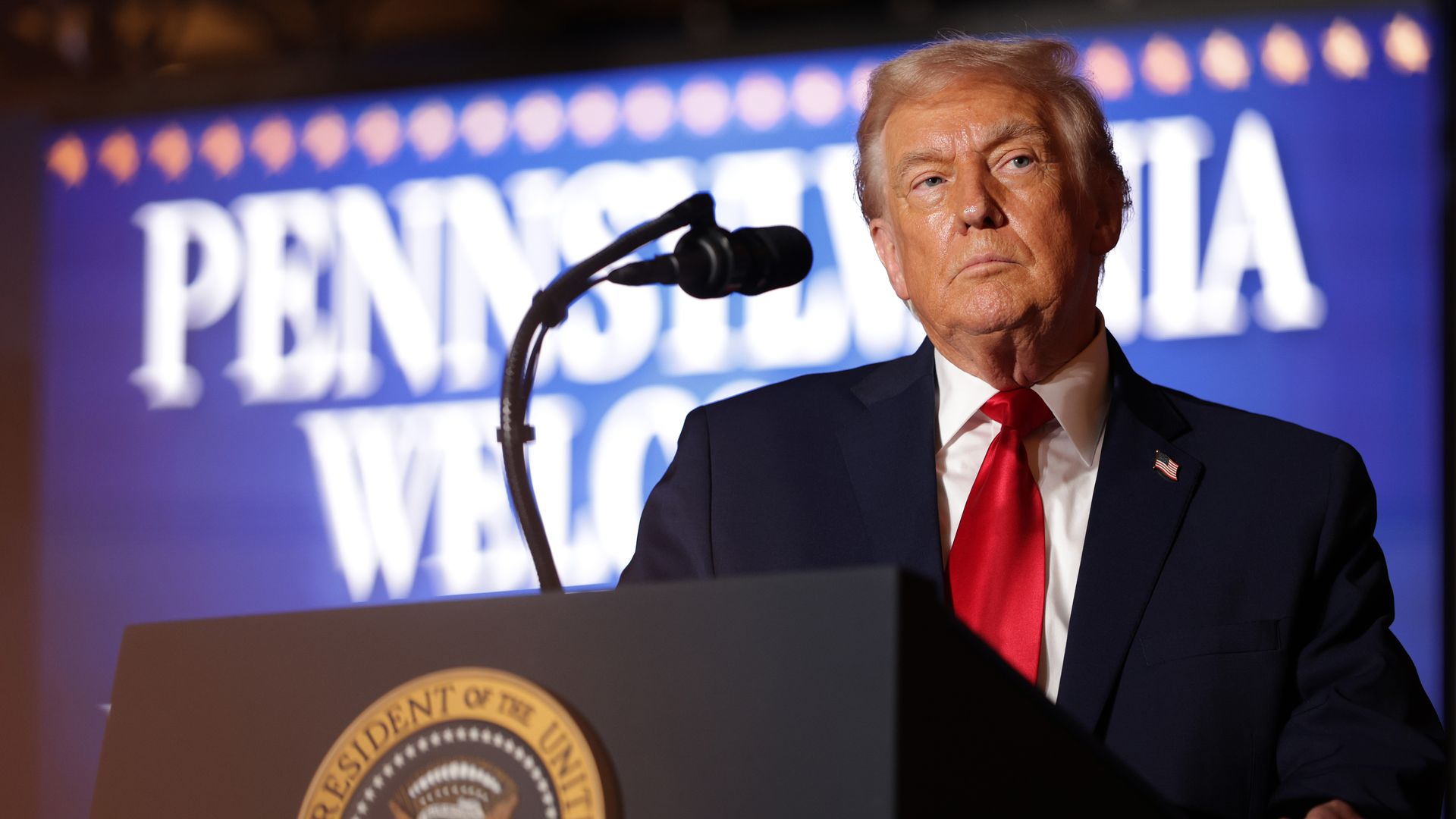
The House of Representatives voted Wednesday to overturn President Trump's executive order ending collective bargaining rights for two-thirds of the federal workforce.
The big picture: It's the first time during Trump's second term that the House has secured enough votes to repeal one of his executive orders, though the measure faces an uphill battle as it heads to the GOP-controlled Senate.
Costco started its 2026 fiscal year with solid sales and profit growth as shoppers kept spending and online sales surged double digits, the company said Thursday.
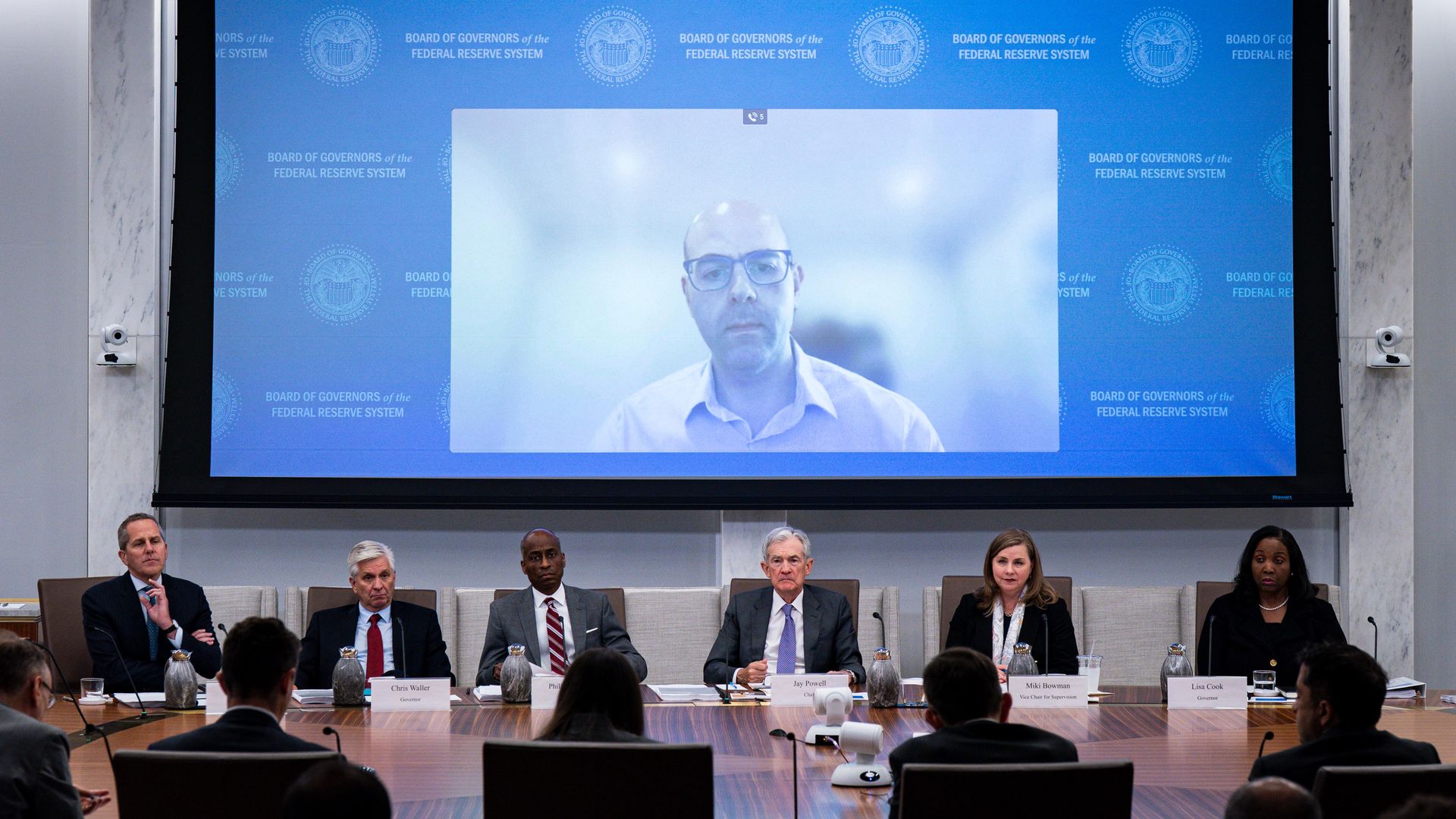
The Federal Reserve Board of Governors on Thursday approved the reappointment of 11 of the 12 presidents of regional Fed banks — the one exception reflecting a previously announced retirement.
Why it matters: There had been speculation among central bank watchers that this every-five-years reappointment process could involve more fireworks than usual, as Trump appointees to the board seek major change to the nation's central bank.
Atlanta Fed president Raphael Bostic recently announced his retirement at the conclusion of his term in February, but his 11 counterparts around the country were green-lit for another term.
Driving the news: "Following a comprehensive review by the boards of directors of the regional Reserve Banks, and the unanimous concurrence of Federal Reserve Board members," the Fed announced reappointment of the 11 bank presidents.
The action also includes reappointment of the banks' first vice presidents, who act as chief operating officer of the banks and fill in if the president is unavailable.
Of note: The mention "unanimous concurrence" of governors implies that the three Trump-appointed governors were on board with the reappointments.
Catch up quick: Presidents of the 12 reserve banks serve in an unusual hybrid public-private structure. They are selected by independent boards of directors consisting of local community members, with appointments that must be approved by the presidentially appointed Board of Governors in Washington.
They have significant management and operational responsibilities, and have a rotating vote on monetary policy as part of the interest rate setting Federal Open Market Committee (the New York Fed chief has a permanent vote).
They serve five-year terms that all end in February of years ending in "1" and "6," meaning that their terms are up early next year.
Paramount had to make a key change during the process of bidding for Warner Bros Discovery — explicitly promising that its foreign partners and Jared Kushner's fund wouldn't have any voting or governance rights, according to sources familiar with the bidding process.
It ended up losing out to Netflix anyway, leading to this week's hostile bid.
Why it matters: It's one of a few changes Paramount made, ultimately unsuccessfully, to help address concerns from WBD's board, sources said.
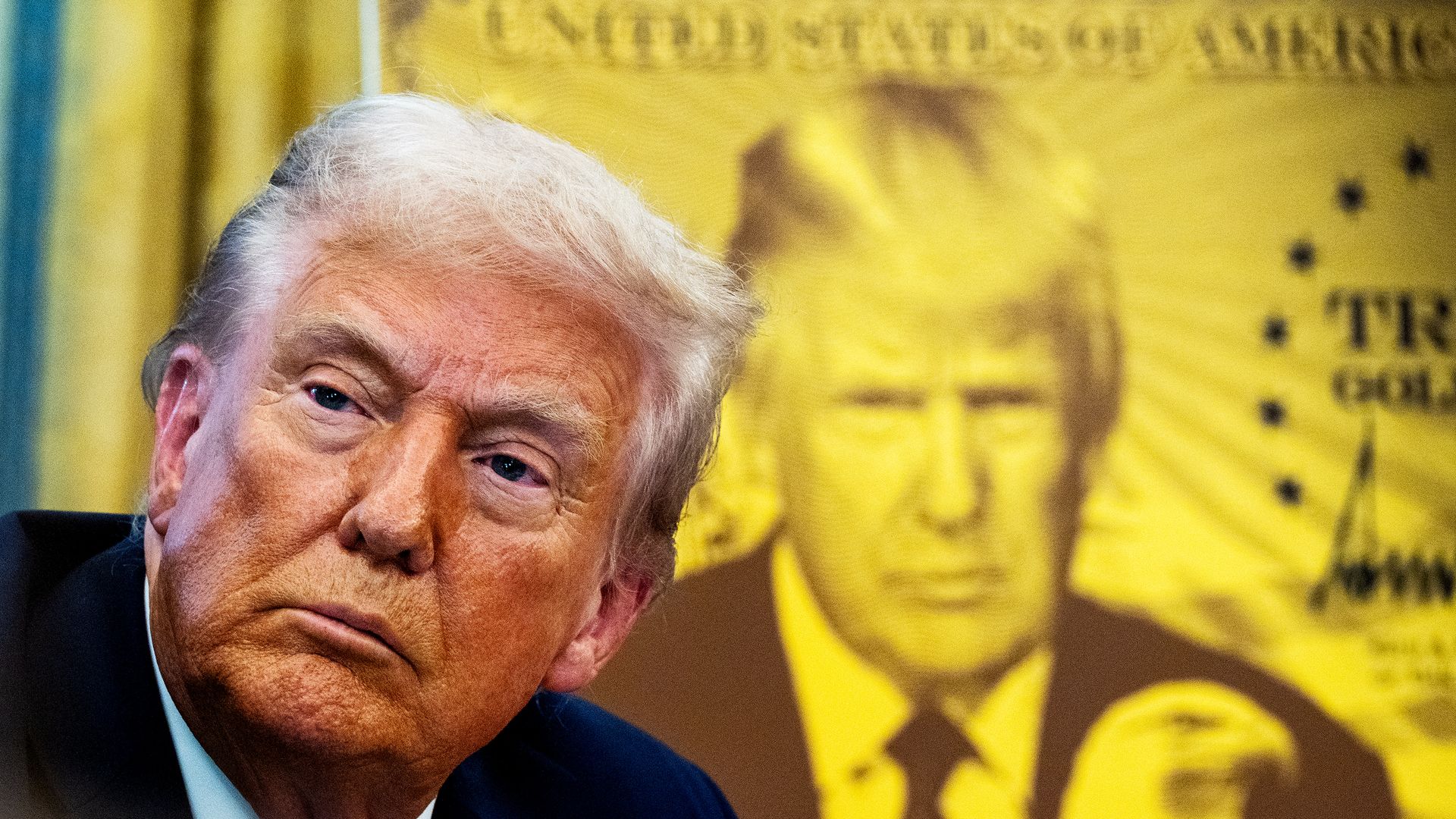
The Trump administration began accepting applications for the Trump Gold Card on Wednesday, offering a pay-to-play option for foreign nationals wanting to speed up their path to American residency.
The big picture: The program fast tracks immigration protocols for the very wealthy at the same time the administration is narrowing other paths to residency for refugees, asylum seekers, and low-income people.
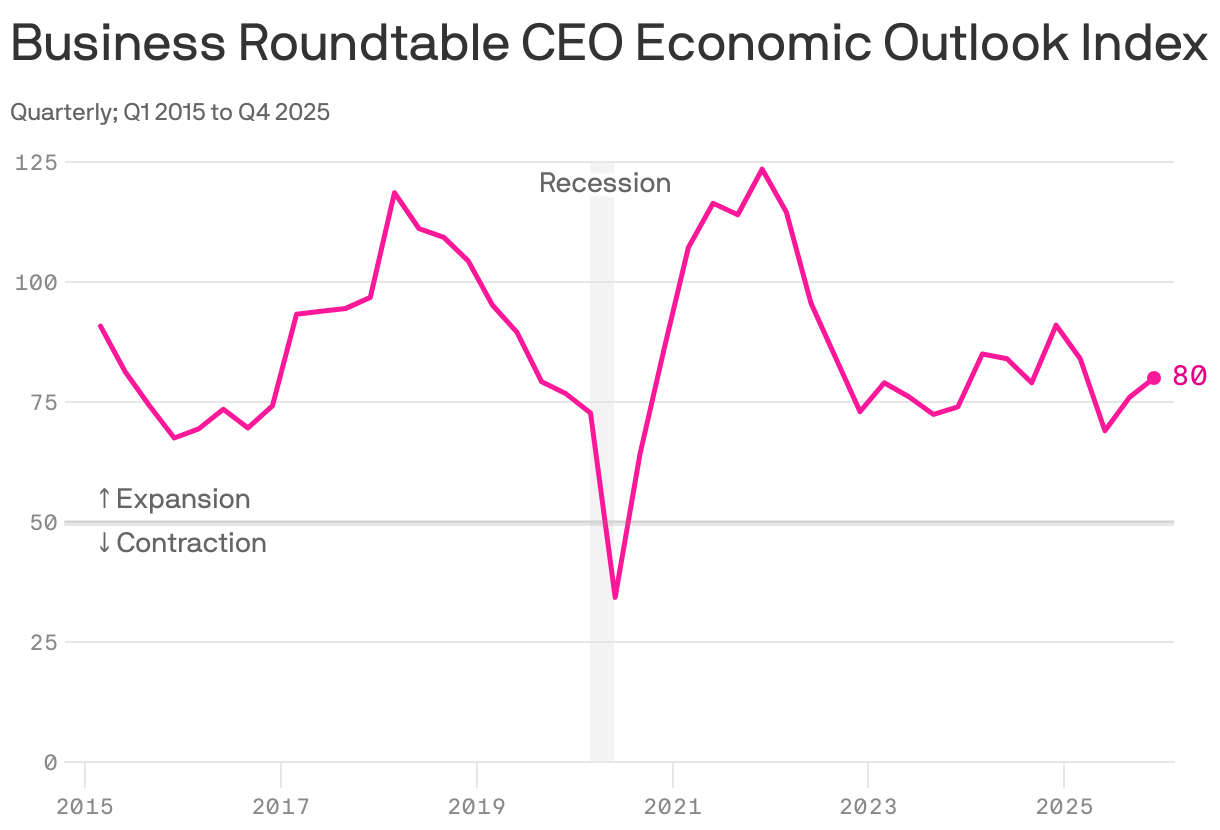
CEO sentiment increased for the third consecutive quarter, even as America's most prominent executives expect underlying job market conditions to remain weak.
Why it matters: The economic outlook among CEOs has steadily improved since plunging in the aftermath of President Trump's initiation of the global trade war.
Under the hood, however, there is evidence that structural economic changes — including the proliferation of AI — are weighing on hiring intentions, a warning sign for the labor market.
JPMorganChase is launching a new $1.5 trillion, 10-year plan to strengthen industries vital to America's national security and economic resilience — from critical minerals to semiconductors and strategic technologies like cybersecurity and AI.
Why it's important: The Security and Resiliency Initiative comes at a time when the U.S. is looking to modernize infrastructure, shore up supply chains and implement policies that promote growth.
The initiative will help create economic development, innovation and jobs in America.
Three out of four U.S. companies in AI, cybersecurity and advanced manufacturing report that they struggle to find qualified talent.
Why it's important: There's an urgent need to strengthen the talent pipeline for these industries as labor shortages grow. Without a strong talent pipeline, the country risks falling behind on AI innovation, energy independence and more.
Why it matters: Prediction markets are rapidly expanding their presence throughout the U.S., offering "event contracts" on sports, elections, news, entertainment and other topics.
Driving the news: Kalshi and Crypto.com will announce Thursday that they have convened an alliance to create the Washington, D.C.-based Coalition for Prediction Markets.
Initial members include Kalshi, Crypto.com, Robinhood, Coinbase and Underdog.
The coalition's focus will include promoting federal regulation — via the Commodity Futures Trading Commission (CFTC) — and warding off legal attempts by state gaming regulators to block their services.
State of play: 39 states have legalized sportsbooks, but prediction markets are live in states that haven't done so — and in some states that have — under the premise that they are regulated by the CFTC, a federal agency.
What they're saying: "Americans deserve clarity, not 50 conflicting interpretations,"Sara Slane, executive board member of the new coalition and head of corporate development at Kalshi, said in a statement
Slane added that "a unified industry voice was needed to advocate for access and consistency nationwide."
Friction point: The coalition's formation comes amid a growing fissure in the gambling industry over prediction markets.
The American Gaming Association — whose members include land-based casino chains like MGM and Caesars — has launched a campaign blasting prediction markets as unlawful.
The AGA has placed ads on YouTube and on social media ripping prediction markets, saying "it's still sports betting" — hitting at the core of the legal dispute.
DraftKings, FanDuel and Fanatics recently left the AGA in a dispute over the issue. Fanatics has already launched its own prediction market, Fanatics Markets, while DraftKings and FanDuel are expected to introduce similar services in the coming weeks.
How it works: Businesses that compete with each other but share similar political interests often combine their voices in Washington via interest groups that lobby policymakers.
In the auto industry, for example, numerous auto companies are members of the Alliance for Automotive Innovation, including rivals such as GM and Ford.
What to watch for: Whether Polymarket joins.
Polymarket has a fierce business rivalry with Kalshi, but their political interests are largely aligned.
U.S. travel destinations and businesses are facing another potential setback after the Trump administration proposed requiring international travelers make their social media accounts available for inspection before gaining entry to this country.
Why it matters: The American hospitality industry is already feeling the effects of declining international travel, thanks to economic uncertainty, political blowback and tighter immigration restrictions.
Here's what's new on Disney+, Peacock, Prime Video, Hulu, Netflix, BET+, Paramount+ and HBO Max.
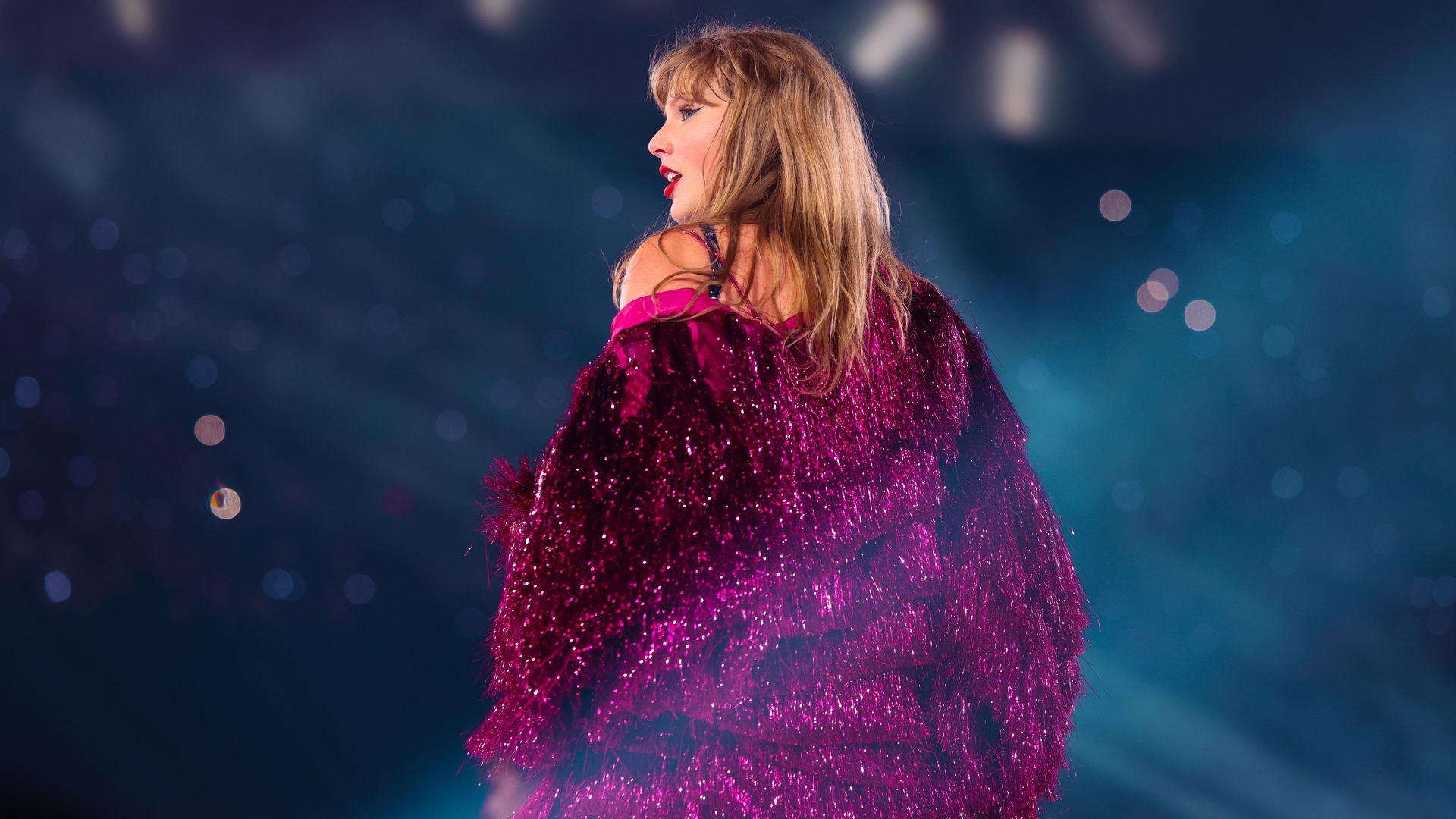
What we're watching: A documentary that goes behind the scenes of Taylor Swift's globetrotting "Eras Tour," the second season of "Here Come the Irish" and new movie starring a cute, but depressed pup.
America has a talent shortage, with 40% of adults lacking basic digital skills, says a new report from JPMorganChase that bolsters the bank's recently announced $1.5 trillion U.S. investment initiative.
Why it matters: The report frames the workforce shortage as a national security threat, not just an economic issue, arguing that funding for vital industries like AI and energy won't move the needle without a talent pipeline.
Some of the world's biggest startups — including two AI darlings — have signaled possible IPOs next year, blockbuster offerings that would mint some $3 trillion worth of new public companies.
Why it matters: These companies generate little or no profit yet carry towering valuations. An AI-obsessed market that's happy to overlook all that risks repeating the mistakes of the dot-com era.
Economic growth in the U.S. is expected to decline over the next decade, but there's a bright spot: AI, according to new projections from The Conference Board out Thursday morning.
Why it matters: While fears of AI causing sweeping job loss are driving mass anxiety at the moment, the report offers a more nuanced perspective.
A growing economy is important for a raft of reasons — it creates jobs, raises living standards and brings innovation.
Elon Musk on Wednesday evening suggested that SpaceX will go public in 2026.
Why it matters: Axios' Dan Primack reported earlier that SpaceX had told investors about the planned initial public offering and that it could be the largest IPO ever, topping Saudi Aramco's $25.6 billion raise in 2019.