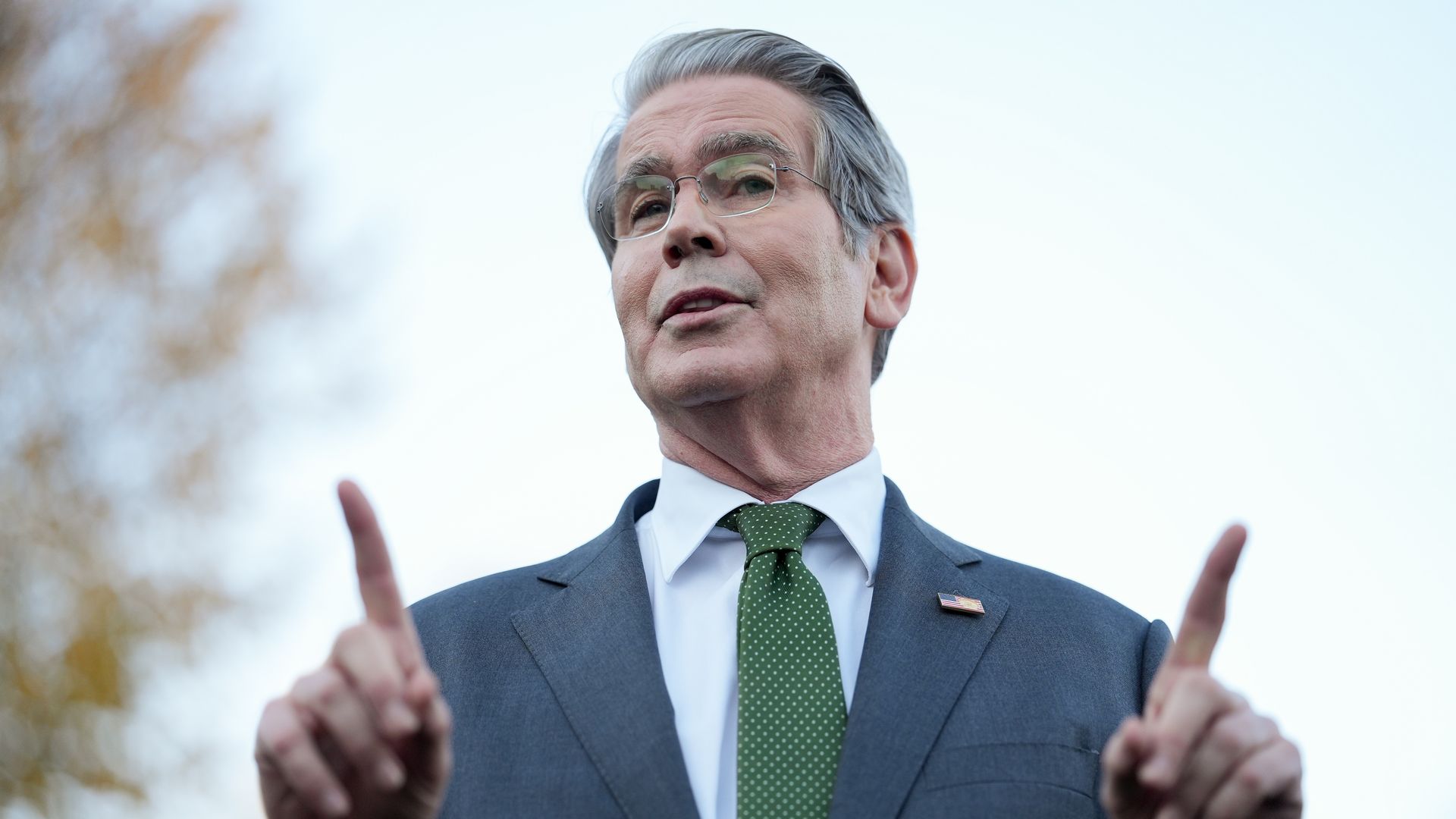
President Trump's tariffs will cut deficits by $3 trillion over the next decade, $1 trillion less than previously forecast, the Congressional Budget Office said Thursday.
Why it matters: Taking a trillion dollars in deficit reduction off the table may complicate the math around Trump's $2,000 tariff dividend checks — already unpopular with Senate Republicans who want to prioritize the deficit.
Market bulls, briefly roused Thursday morning, have slipped back into a fall hibernation.
Why it matters: The world's largest retailer, world's most valuable company and world's largest economy all showed signs of life — but not enough to shift the mood of increasingly jittery investors.
The Jordan Brand is showing love to three iconic U.S. cities for its next exclusive sneaker drop, but these aren't the usual suspects.
Why it matters: The shoe company intentionally steered away from top markets New York, Los Angeles and Chicago to spotlight customers in less-served cultural hubs.
Air travelers without a federally-compliant REAL ID can still make it through security checkpoints after paying an $18 fee under a new TSA initiative.
The big picture: Transportation officials previously warned that passengers without the approved license or a passport would undergo an alternative identity verification program, which could include additional screening or delays. But the new notice would tack on an extra charge to already expensive flight costs.
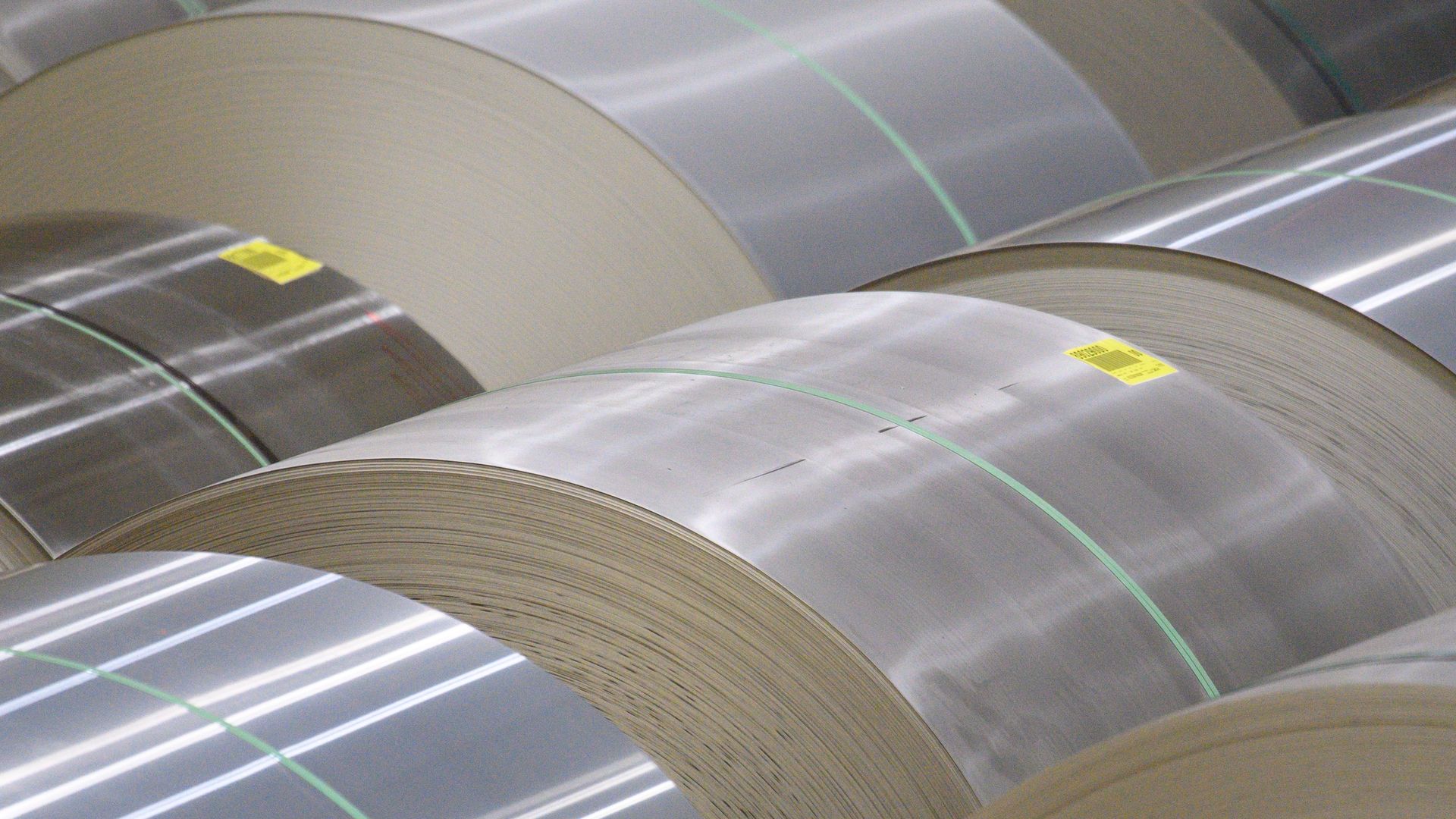
Another fire broke out Thursday morning at a key aluminum supplier to the auto industry, a potential setback to the recovery from an earlier blaze that was already going to cost Ford $2 billion in lost production this quarter.
Why it matters: The Novelis plant in Oswego, N.Y., supplies 40% of the aluminum used by the U.S. auto industry, and Ford, with its lightweight aluminum-body F-series pickups, is its biggest customer.
A bipartisan group of lawmakers is demanding answers from fast-fashion giant Shein over the possible sale o U.S. consumers of dolls "with a childlike appearance."
The big picture: The rare cross-party scrutiny piles onto years of criticism the Chinese-founded online retailer has faced over its environmental and labor practices and comes as it contends with new trade barriers to its sale of ultra-cheap goods.
The September jobs data captured the most confusing economic backdrop in some time: a messy, mixed picture.
There was an apparent burst of hiring, but also the highest unemployment rate in four years — and both data points came with big caveats.
Why it matters: Call it the mixed-bag labor market. There is no strong evidence that the labor market is rapidly weakening or gaining momentum. But there are data points to support either position.
Walmart raised its full-year outlook after another strong quarter, powered by double-digit e-commerce growth, as outgoing CEO Doug McMillon prepares to hand off to U.S. president John Furner.
Why it matters: The results underscore Walmart's transformation from a low-price superstore into a tech-driven global powerhouse.
The economy added 119,000 jobs in September, while the unemployment rate edged up to 4.4%, the Bureau of Labor Statistics said on Thursday in a release delayed by the record-long government shutdown.
Why it matters: The labor market was in better shape than previously thought in September, complicating the economy's current picture.
The 2025 market rally has been largely powered by a small set of tech stocks.
The big picture: Investors have to decide whether the blockbuster earnings Nvidia reported on Wednesday are enough to calm the AI bubble fears that have weighed on the market. No pressure.
Nvidia, the most valuable company in the world, delivered record earnings results for the third quarter, with revenue up 62% year over year, impressing even the lone analyst on Wall Street with a sell rating on the stock.
Why it matters: The results, and the market reaction thus far, indicate that nothing is stopping the Nvidia train.
What they're saying: "It was a good quarter, I give them full credit for that," Jay Goldberg, the lone bear and senior analyst at Seaport Research Partners, told Axios after the earnings release Wednesday.
"Honestly, I thought it was going to be a much stronger guide. But this is still a decent guide," he said, adding the guidance beat may not be enough for investors forget the recent tech headwinds.
On the call, Nvidia CFO Colette Kress said the firm expects half a trillion dollars of revenue from its Blackwell and Rubin chips through 2026.
"Blackwell sales are off the charts, and cloud GPUs are sold out," Nvidia CEO Jensen Huang said in a statement in the earnings release.
Zoom out: The broader question of whether the market is heading full speed ahead into an AI bubble lies on Nvidia's back, given that it makes up 8% of the S&P 500 and 1% of the global market.
Huang addressed this at the top of his remarks on the call: "There's been a lot of talk about an AI bubble. From our vantage point, we see something very different."
He then talked about examples of returns on AI investment, mentioning everything from Meta's advertising business to expansion opportunities for OpenAI.
Reality check: The results are still not enough to make Goldberg change his sell rating, he said, since he is still concerned about how long customers can keep spending billions on Nvidia chips.
He is concerned about the path forward for neocloud players in particular.
"The sort of growing looming question is how long can they keep this up?"
What to watch: Whether the results lift the broader market.
Headwinds facing Nvidia and the broader AI ecosystem were "not put to rest" with these results, Dan Morgan at Synovus Trust wrote in a note.
Everywhere Republicans look, they see big political trouble. Worse, they think things will get much bleaker before better as AI spreads through 2026.
They see it in the top November races, where they got cooked.
They see it in rising internal MAGA drama and division.
And they increasingly see it in private and public polls showing President Trump's persistently plummeting popularity on key issues.
Why it matters: Step back and survey the political landscape. Republicans aren't only losing elections, they're consistently losing support on prices and the economy, in all polls, big or small, Republican or Democrat, over a several-month period. You can't spin yourself out of reality.
Here's what's new on Netflix, Apple TV+, HBO Max, Peacock, Hulu, BET+ and Prime Video.
What we're watching: A loving tribute to a music legend, the sequel to "The Family Plan," and a documentary about the state of active shooter prep in schools.
All major chatbots are "fundamentally" unsafe for teen mental health support, children's advocacy group Common Sense Media said Thursday in a report showing systemic issues across the board.
Why it matters: People of all ages are turning to chatbots for therapy and mental health help, even as experts disagree on whether that's safe.
Your financial situation — not just what you earn but whether you're in over your head — is strongly linked to how you feel about democracy, according to a significant new study by Gallup and the Charles F. Kettering Foundation.
Why it matters: Inflation, rising debt, affordability and the current state of politics are shaking Americans' views about their system of rights, freedoms and governance, though most don't have a better alternative in mind.
Consumers scrambling to take advantage of expiring tax credits for electric cars drove a record-breaking quarter of U.S. clean-energy investments, according to a new report.
Why it matters: It shows that policy matters, especially if it's coming or going.
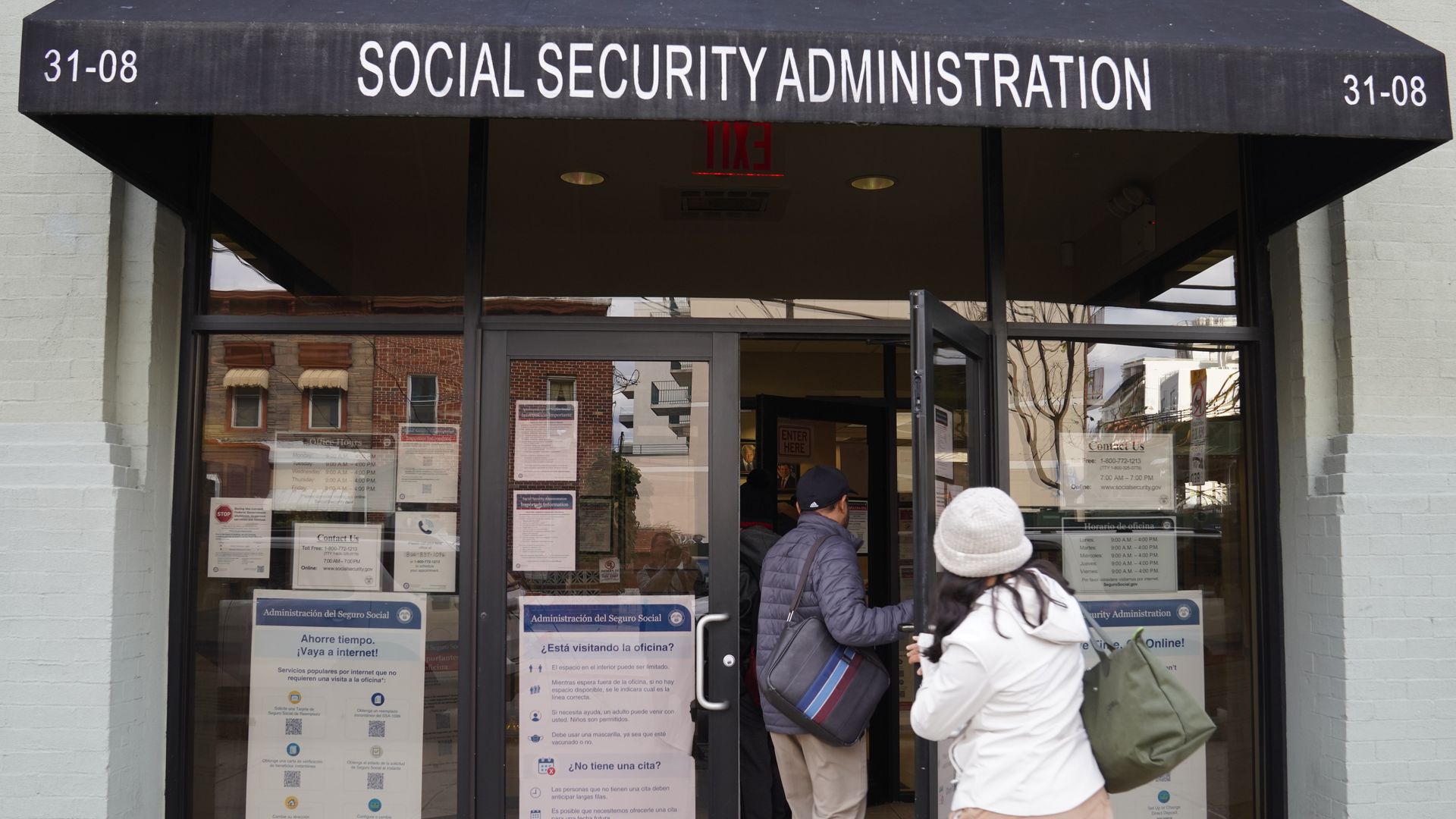
The Social Security Administration is not planning to overhaul the way disability benefits work, an advocate who had conversations with administration officials this week tells Axios.
Why it matters: A previously reportedplan would've reduced the number of people who qualified for disability and had panicked advocates.