MAGA is outraged over President Trump's announcement that he'll allow 600,000 Chinese students to attend U.S. universities, which touches on several of the movement's most potent third rails.
Why it matters: Trump's base is perpetually wary of Beijing's influence in the U.S., obsessed with protecting American jobs from foreigners, and hostile toward what it sees as "woke" ideology in higher education.
Nvidia's earnings report on Wednesday afternoon will deliver insights into how the company is navigating trade tensions with China and whether the AI economy is showing signs of cracking.
Why it matters: The bellwether AI stock has mushroomed into an outsized force in the S&P 500, now accounting for about 8% of the index.
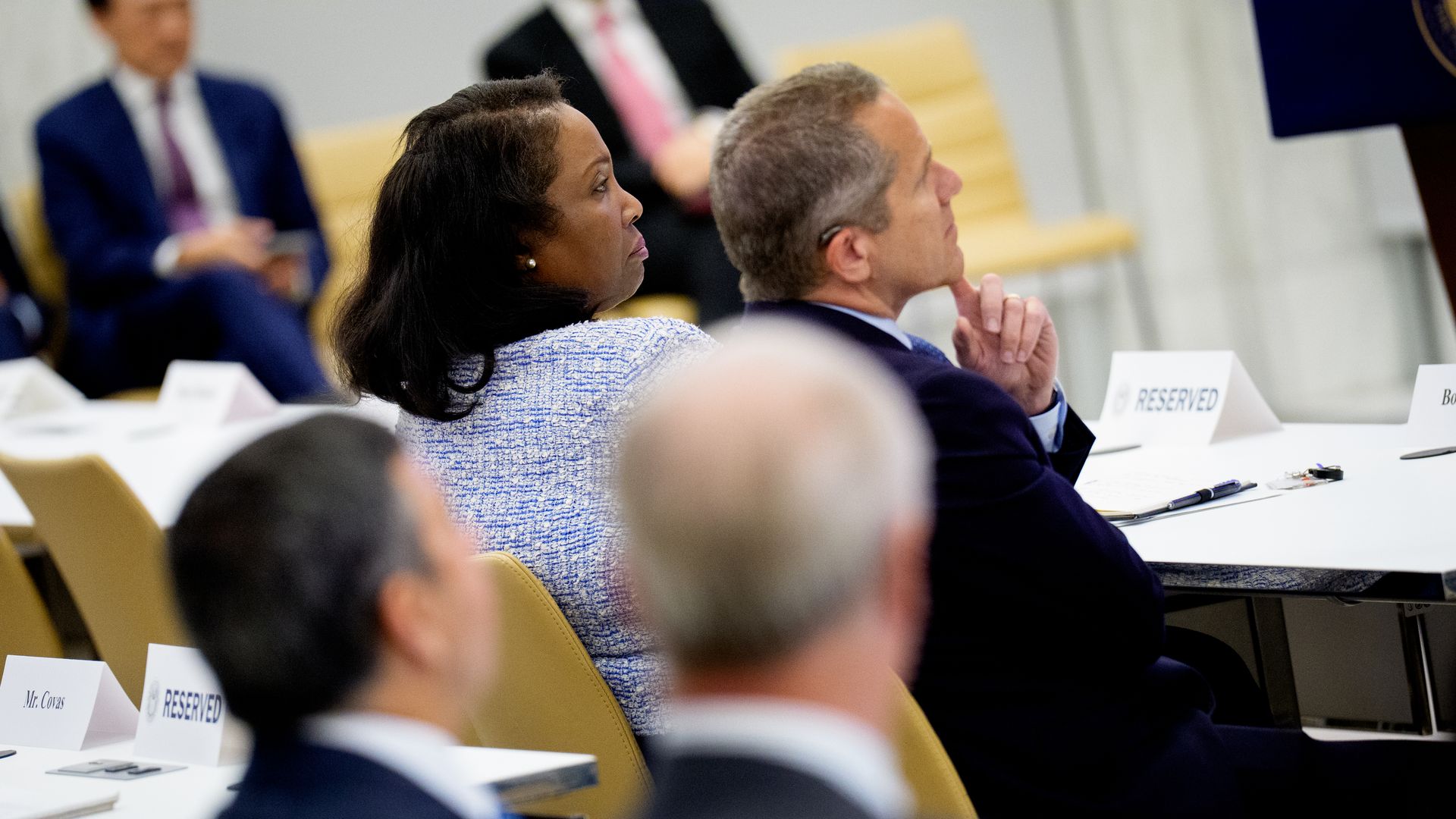
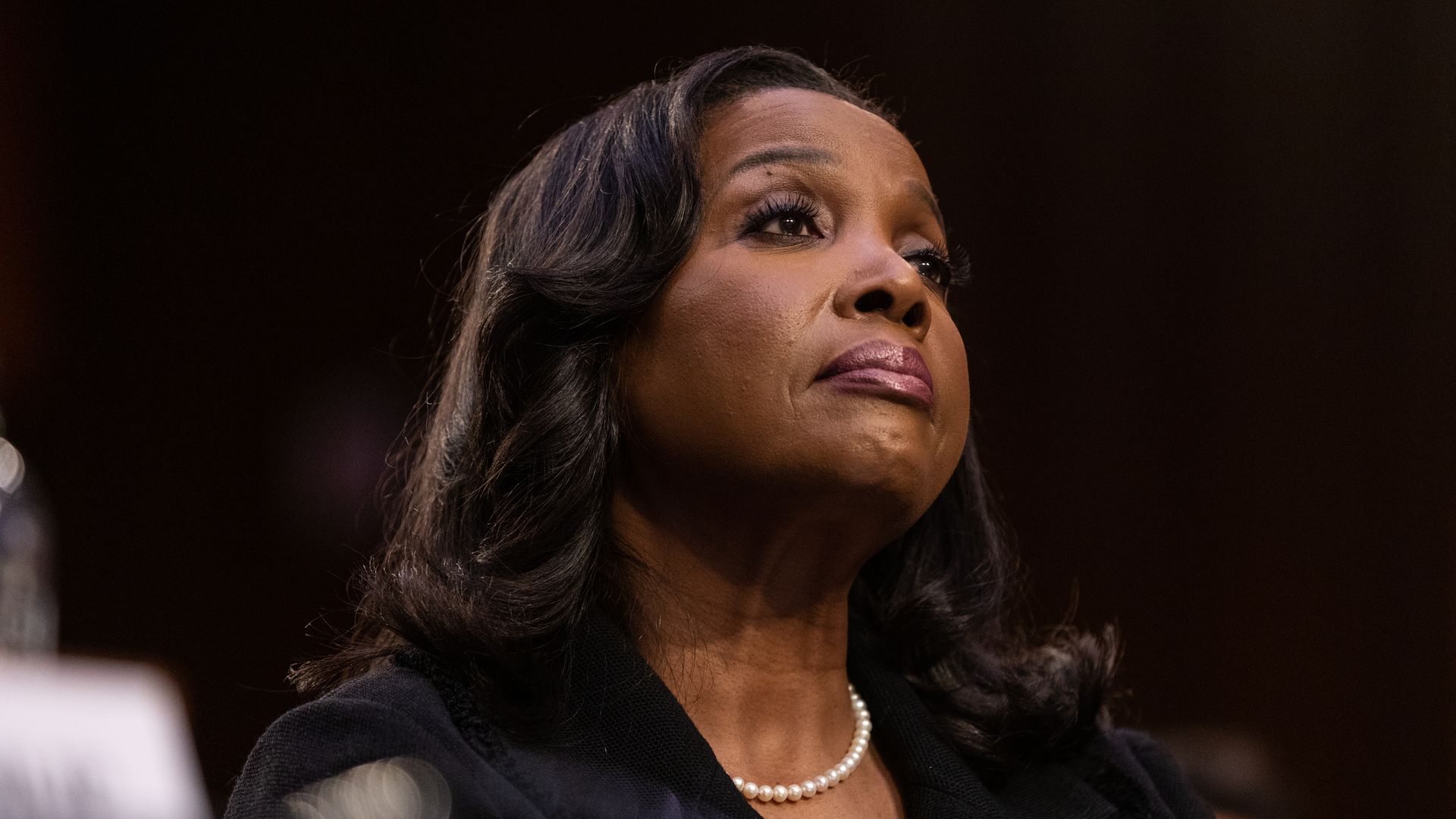
The Federal Reserve on Tuesday said it would "abide by any court decision" that determines whether top official Lisa Cook can be removed by President Trump.
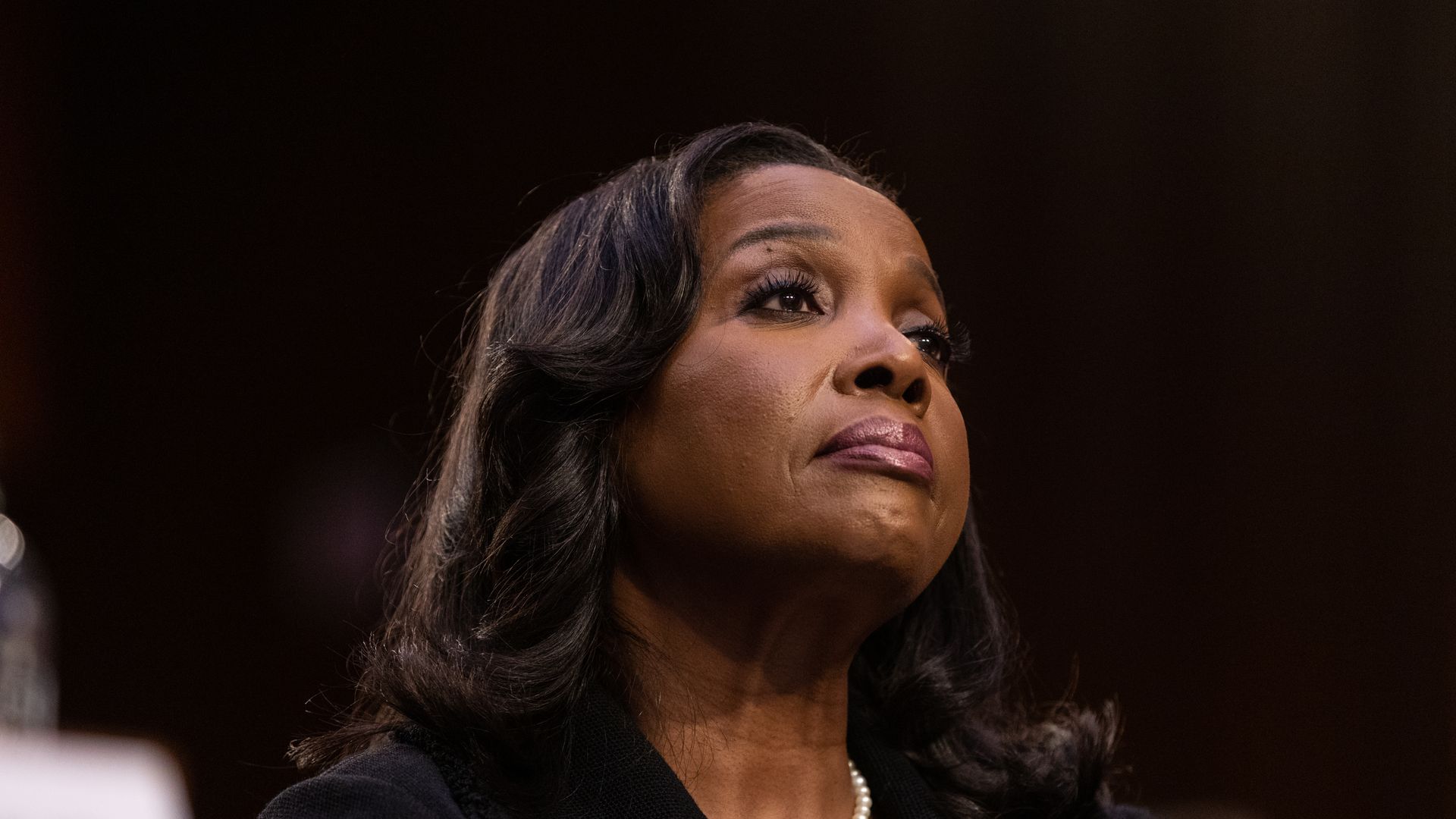
Why it matters: Cook confirmed that she would sue after Trump fired her, setting up an unprecedented legal battle over the limits of presidential power when it comes to the Fed.
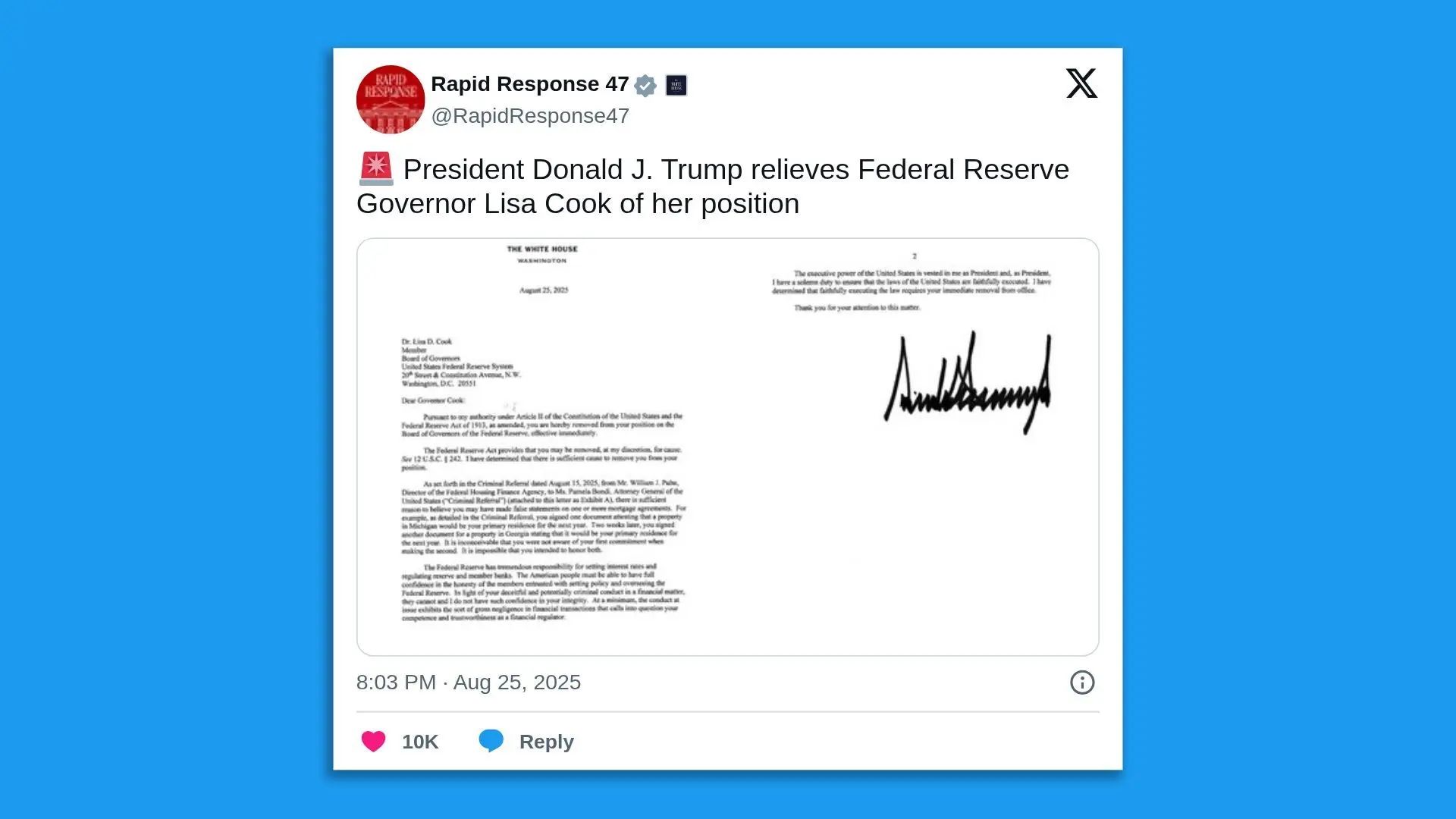
The president and the Fed have been on a collision course for months. At 8:02pm ET Monday night, the crash took place, as President Trump said he was firing Federal Reserve governor Lisa Cook for alleged false claims in her mortgage applications four years ago.
Why it matters: Cook says she will fight what she and her lawyers characterize as an illegal attempt to fire her, setting up a legal battle royale over who is really in charge of the world's most important central bank.
President Trump's push to oust Federal Reserve governor Lisa Cook tees up the first test of the limits the Supreme Court recently set for politically-motivated threats to fire officials on independent boards like the central bank.
Why it matters: Trump has been hammering the Fed for months to lower interest rates and has repeatedly threatened to fire Cook and Chair Jerome Powell to make that happen, threatening the bank's independence.
Streamers are eyeing splashy in-person experiences to court younger demographics who crave stronger connections with their favorite shows and platforms.
Why it matters: For years, streaming services poured money into digital customer acquisition. But in a saturated and maturing U.S. market, they're stepping outside the screen.
Federal Reserve governor Lisa Cook will sue over President Trump's attempt to fire her from the central bank, per a statement from her law firm on Tuesday.
Why it matters: Trump's unprecedented action will be tested by the courts, setting up a legal battle that will define the guardrails around the central bank.
For years, job hopping was the surest path to a hefty raise.
Not anymore — now, pay raises for those who switch employers are the same as for those who stick around.
Why it matters: The slowing job market — particularly for professionals — is giving employers the upper hand on pay, a new Bank of America Institute report points out.
A Chinese trade official is due to visit the U.S. in coming days, but that will not be a prelude to future negotiations or a meeting of the countries' leaders, a source familiar with the negotiations tells Axios.
Why it matters: Talks between the world's two largest economies are in a delicate state. A tariff truce is holding, but pressure is increasing on both sides over issues ranging from tech to agriculture.
Stocks are barely under pressure, the dollar recovered the worst of its losses and the yield curve continued to steepen after President Trump fired Federal Reserve governor Lisa Cook on Monday.
Why it matters: These market moves are fairly muted in response to the administration's latest attempt to threaten central bank independence.
Why it matters: It's legally unclear if the president has that power. So Trump touched off a historic legal fight that threatens the central bank's political independence.
IBM and AMD have agreed to collaborate on quantum computing, creating a powerful tech duo amid growing optimism that the technology will have real-world implications sooner rather than later.
Why it matters: Quantum computing could have huge implications for everything from drug discovery, to financial modeling, to AI development.
Almost 2 in 3 physicians say there aren't enough qualified doctors to fill openings in their area, in another sign of how the health care workforce is straining to meet patient demand.
The big picture: Mergers and acquisitions of practices, turnover from pandemic-era burnout and expansion into underserved areas are raising doubts about whether the nationwide shortage of doctors will ease over the next decade, a Medscape survey of 1,001 physicians found.
As big drug companies line up to announce new U.S. jobs and plants in the face of Trump tariff threats, generics giant Sandoz is sending a different message.
The big picture: CEO Richard Saynor is telling the Trump administration it should use carrots, not sticks, with generic drug makers that account for more than 90% of U.S. prescriptions but that compete on price and volume — to a point where, as he puts it, antibiotics sell for less than a packet of M&Ms.
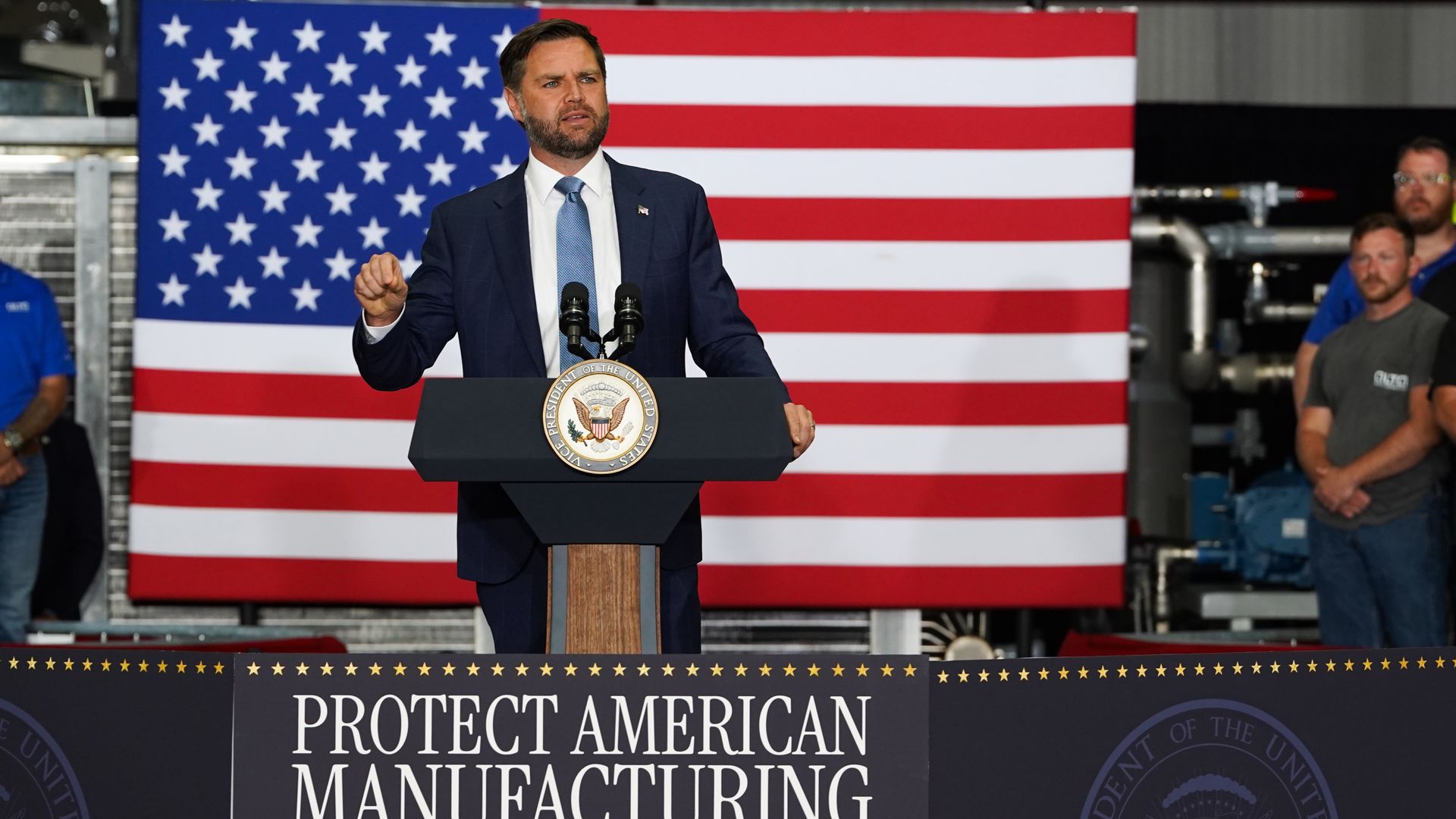
Vice President JD Vance will travel to La Crosse, Wisconsin, on Thursday to speak at a steel fabricating facility about the megabill's benefits for manufacturing, a source tells Axios.
Why it matters: Vance, who grew up in the Rust Belt, is promoting President Trump's economic wins at a time when workers and companies fear tariffs could produce headwinds.
Hopes for lower interest rates are an invitation for small-cap stocks, typically those with valuations under $2 billion, to join the market rally.
Why it matters: As the market is increasingly concentrated in Big Tech names, investors are looking for places to diversify. Small caps are finally breaking out relative to large caps, in a trend that could be primed to continue.
Extreme weather is driving sky-high home insurance prices in some especially storm-prone parts of the country, a new analysis finds.
Why it matters: Climate change is supercharging extreme weather events like hurricanes, increasing the odds of losses and claims and driving up insurance premiums.
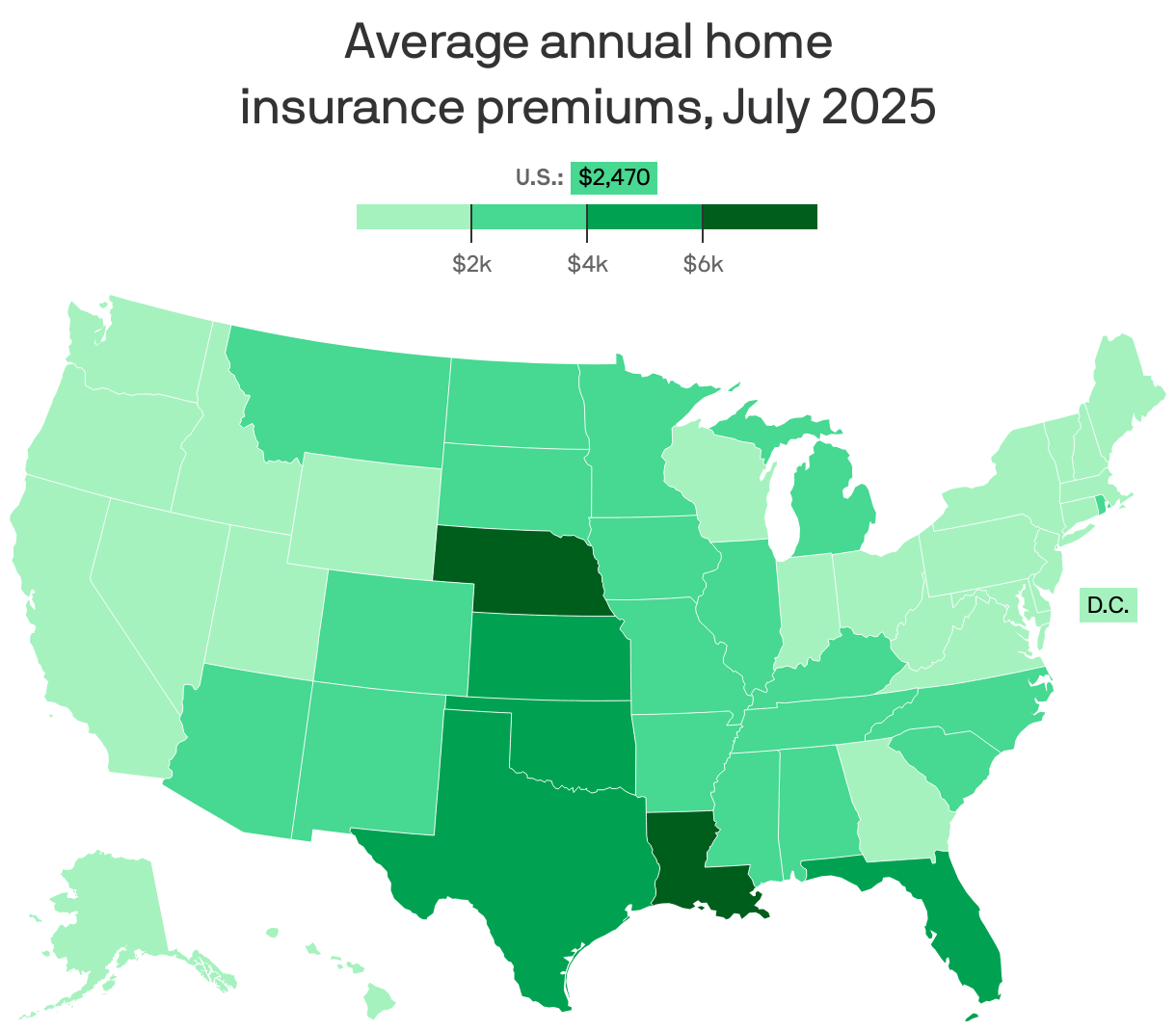
Driving the news: The national average for annual home insurance premiums is up 9% since 2023, per a new Bankrate breakdown, hitting $2,470 as of July.
That's based on quotes for married male-female homeowners with an eight-year-old $300,000 home, a clean claim history, and good credit.
Zoom in: Nebraska ($6,425), Louisiana ($6,274) and Florida ($5,735) are just some of the states with shockingly higher-than-average premiums, Bankrate found.
All three are vulnerable to extreme weather, including hurricanes, tornadoes, wind, hail and more.
Caveat: These figures don't include flood insurance.
Stunning stats: Homeowners in the New Orleans metro spend nearly 17.5% of the area's median annual income on home coverage, Bankrate found.
Those in the Miami metro spend nearly 13.4%.
Yes, but: Some places with relatively high average homeowner premiums also have higher median incomes.
In the Denver metro, for example, "the average $300,000 home insurance policy costs $3,644 per year ... but homeowners there earn a median annual income of $103,055, resulting in just 3.54% of their pay going toward premiums," Bankrate says.
"From 2023 to 2025, home insurance costs in Florida decreased by an average of $579, representing a 9% drop," per the analysis.
Between the lines: Climate change is driving non-renewals in some areas, a Dec. 2024 Senate Budget Committee report found.
Non-renewals are correlated with higher premiums and are "often an early warning sign of market destabilization," per the report.
"Premiums are skyrocketing, insurers are non-renewing customers or pulling out of risky markets altogether. As climate change gets worse, insurance availability and affordability will also get worse."
Reality check: The amount you'll actually pay for home insurance depends on many factors — not least of which is your credit score, but also the cost of your home, its materials, and other variables.
Go deeper: Soaring home insurance rates are acting as a "stealth inflation driver," Axios' Emily Peck reports.
It's time to revisit the 60/40 investment strategy – allocating 60% of your portfolio to stocks and 40% to bonds – before the Federal Reserve potentially cuts rates, says George Catrambone, head of fixed income at DWS Americas.
Why it matters: As stocks and bonds have become increasingly correlated amid several economic head fakes, Catrambone argues that the bond market is on track to become a great portfolio diversifier again.
To President Trump's many roles, formal and self-designated, add a new one to the list: chairman of all boards.
The big picture: The president has assumed a quasi-authority to orchestrate how the private sector operates, both broadly and down to the management and ownership of individual companies.
Why it matters: There's been significant anecdotal evidence of an AI-related slowdown in hiring for certain jobs, but new data shows a real and measurable impact for entry-level workers.
President Trump said he had fired Federal Reserve governor Lisa Cook on Monday, though the top Fed official later said she won't leave the post.
Why it matters: The firing is a legally dubious move that further threatens the central bank's political independence, one that might set up a legal battle in the months ahead.
Democratic Congress members responded with fury on Monday after President Trump said he's firing Federal Reserve governor Lisa Cook.
Why it matters: Some lawmakers are calling on the federal judiciary to swiftly strike down Cook's ouster, arguing that the president has no legal basis for it.