Supreme Court says Trump can fire agency heads for now, but insulates Fed


Add Axios as your preferred source to
see more of our stories on Google.
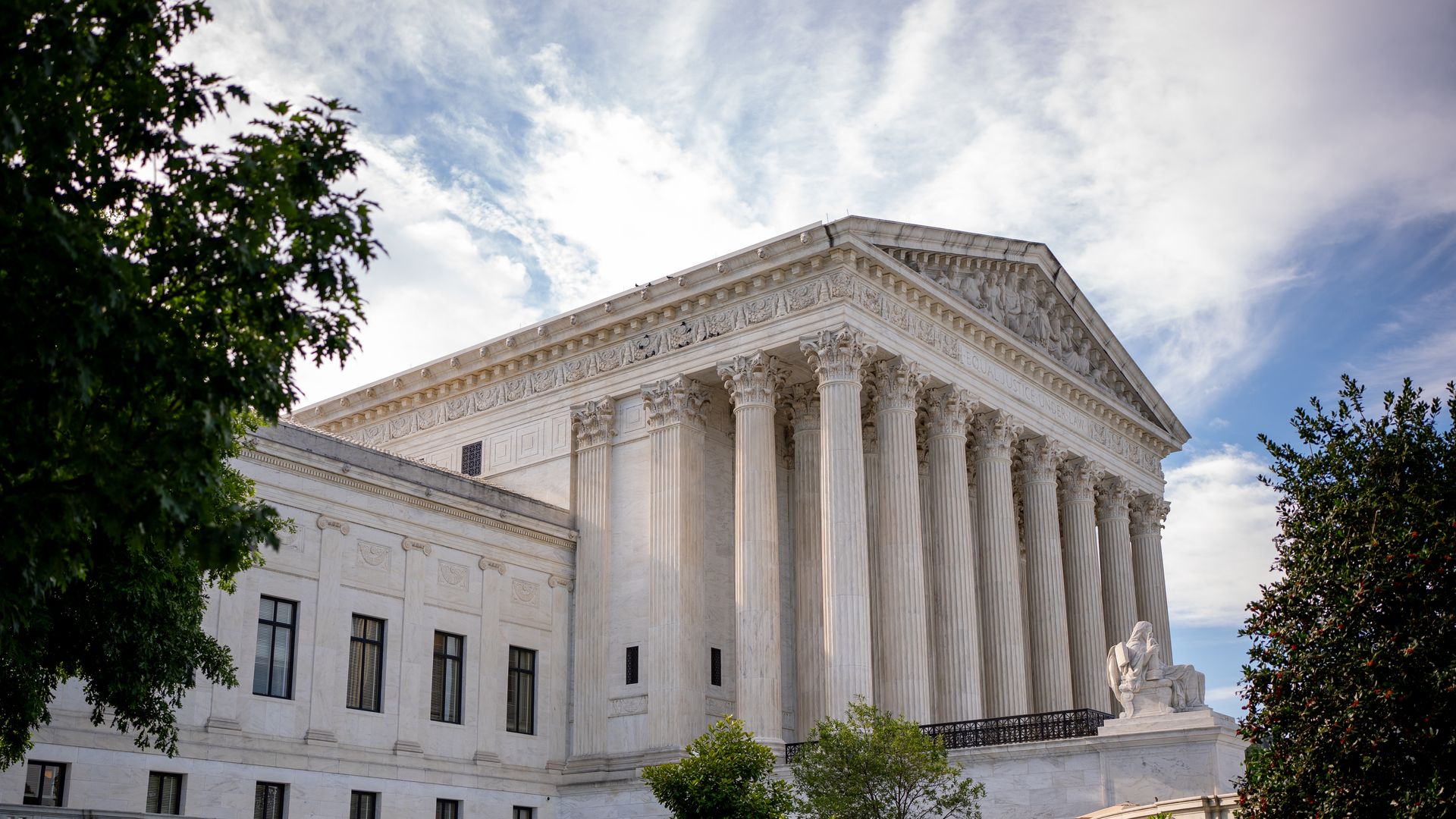
The Supreme Court. Photo: Andrew Harnik/Getty Images
The Supreme Court issued a stay Thursday allowing President Trump's removal of two independent agency heads to remain in force for now — but suggested Federal Reserve officials have special protection based on the central bank's unique structure.
Why it matters: The ruling suggests that the court will ultimately vest the president with significant authority to remove the heads of agencies, even when Congress has structured them to be insulated from politics.
- But the decision's carve-out for the Fed will come as a significant relief to markets that were concerned about the central bank's independence.
Driving the news: The court issued a stay Thursday night in a case involving Trump's move to fire members of the National Labor Relations Board and Merit Systems Protection Board.
- "The stay reflects our judgment that the Government is likely to show that both the NLRB and MSPB exercise considerable executive power," and that therefore it is within the executive authority of the president to remove them, the court's majority wrote.
- But is is not a final decision. The question of whether the NLRB and MSPB appointments fall under certain exceptions "is better left for resolution after full briefing and argument."
- The order was unsigned, and the three liberal justices dissented.
Catch up quick: Trump fired Gwynn Wilcox, a Democratic member of the NLRB, back in January, kicking off a string of terminations at federal agencies.
- Previously, it was understood that appointees at quasi-independent executive agencies could only be removed for cause.
- Wilcox filed suit in February, alleging that the move was "unprecedented and illegal."
- The case has gone back and forth in the lower courts; last month a federal appellate court blocked her firing and the White House appealed, leading to Thursday's stay.
The intrigue: In issuing the stay, the majority noted a claim by the fired members that their case could have implications for the president's ability to remove members of the Fed's Board of Governors or Open Market Committee.
What they're saying: "We disagree. The Federal Reserve is a uniquely structured, quasi-private entity that follows in the distinct historical tradition of the First and Second Banks of the United States," the majority wrote.
Yes, but: A dissent by Justice Elena Kagan seemed impatient with the logic of the Fed carve-out.
- "The majority closes today's order by stating, out of the blue, that it has no bearing on" removal of Fed officials.
- "I am glad to hear it," Kagan writes, "and do not doubt the majority's intention to avoid imperiling the Fed."
- "But then, today's order poses a puzzle. For the Federal Reserve's independence rests on the same constitutional and analytic foundations as that of the NLRB, MSPB, FTC, FCC, and so on—which is to say it rests largely on" Humphrey's Executor, a 1935 case establishing the constitutionality of independent agencies.
Between the lines: From the moment Trump started removing agency commissioners earlier this year, analysts predicted the ultimate target might be more control over the Fed.
- But some hoped past court comments about the central bank as a unique entity might insulate it from such action.
Editor's note: This story has been updated with background on the case.
