Why it matters: Big-box retailers — including Home Depot, Lowe's, Walmart and Costco — are moving early on Halloween as tariffs threaten to raise prices and fuel even more urgency among consumers.
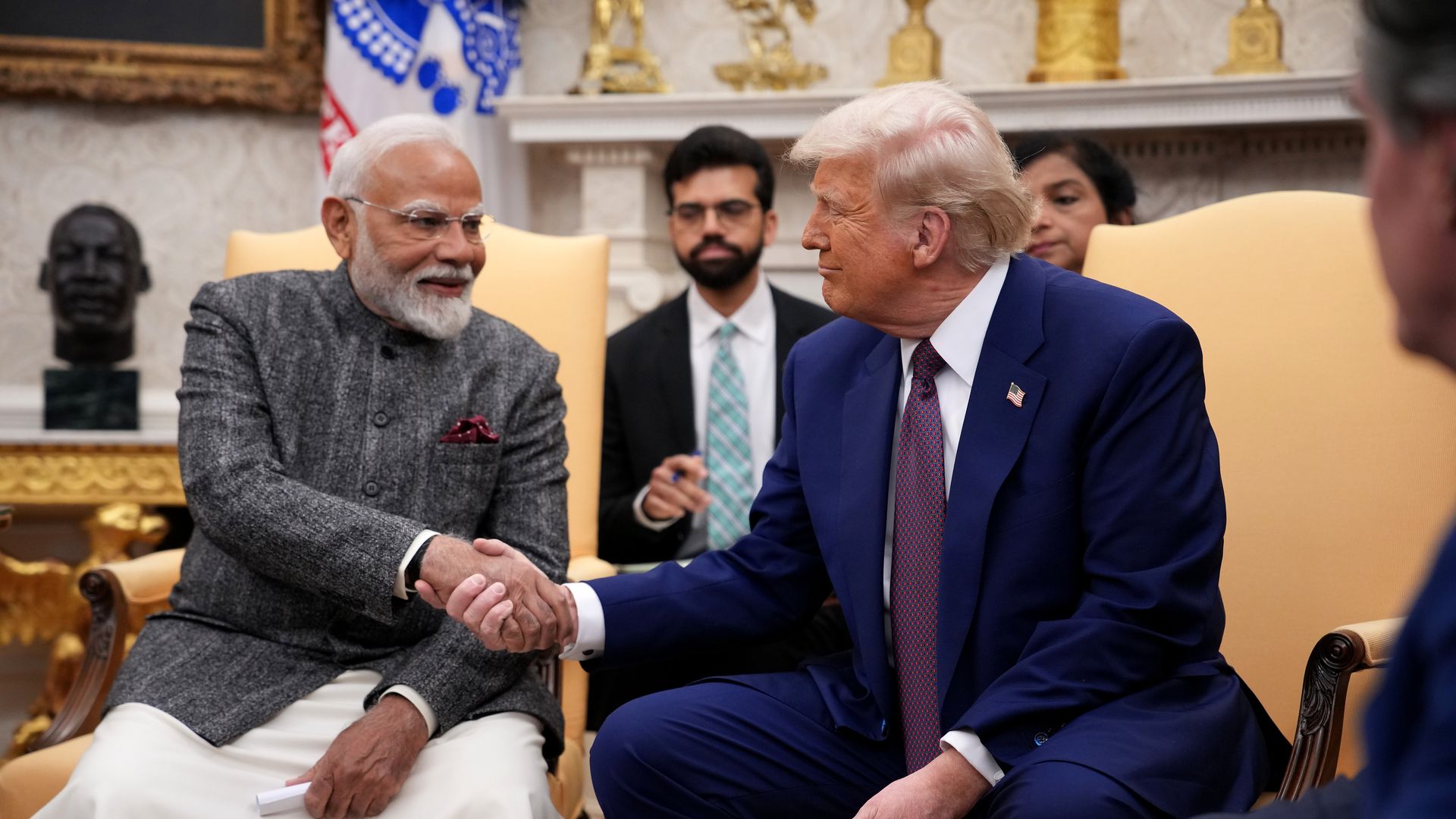
India will probably face a 20% to 25% tariff, though a deal isn't finalized, President Trump told reporters aboard Air Force One on Tuesday.
Why it matters: India was one of the first deals the administration said it was close to landing, but it's still pending months later — a prime example of the complexities of global trade.
The price of ether (ETH), the coin of the realm for Ethereum, the blockchain that popularized smart contracts, is up 100% over the last 90 days, but it can't quite seem to break through the $4,000 price barrier.
Why it matters: True believers remain long-suffering loyalists, because unlike other majors out there, ether hasn't notched a new all-time high since its last ebullient moment, in late 2021.
Who owns your financial data: you or your bank? That question is at the heart of a debate pitting crypto platforms against some of the world's largest financial institutions.
Why it matters: The Consumer Financial Protection Bureau created a rule to ensure that consumers and authorized third parties have access to their financial data.
But some banks, led by JPMorgan, are challenging that.
Driving the news: The Financial Technology Association and several crypto trade groups, including the Blockchain Association and the Digital Chamber, sent a letter last week urging the Trump administration to uphold consumers' data rights.
Skydance this week is expected to complete its $8 billion acquisition of Paramount Global, following a 20-month process that was cinched via political appeasement.
Wesley LePatner, a Blackstone executive who served as CEO of the firm's real estate income trust, was among four people killed Monday when a gunman opened fire in a Midtown Manhattan office building that houses Blackstone's global headquarters.
She had been with Blackstone for 11 years, after more than a decade at Goldman Sachs.
The global economy is surviving President Trump's trade wars with stronger-than-expected growth, the International Monetary Fund said in newly updated forecasts — even as a drag from fraying trade relations is likely to continue.
Why it matters: The group warns that the economy's shocking resiliency is underpinned by fleeting forces — not the type of durable trends that will spur further growth.
UnitedHealth Group's stock continued its year-long descent Tuesday after the insurer warned that escalating medical costs will continue to drag down its earnings.
As Wall Street looks past the August 1 trade deadline, Morgan Stanley warns that investors should "resist" the temptation to "move on from tariff deadlines."
Why it matters: The call is a rare warning from Wall Street analysts, who are otherwise largely sanguine about the broader effect of tariffs on the economy and financial markets.
What they're saying: "Clients we talk to are certainly jaded when it comes to the tariff topic, and we sympathize," the analysts noted.
"The evolution of tariffs can still create pressure and opportunity."
Between the lines: Morgan Stanley notes three reasons behind the call.
This earnings season, it's not enough to beat Wall Street estimates on profits or revenue. If you're not bullish on your future earnings, investors will punish you.
Why it matters: In a moment of marked policy uncertainty, companies are struggling to meet investors' lofty expectations on their forward guidance, which could put pressure on the broader market.
It's a pivotal week for financial markets, with $11.3 trillion worth of tech companies reporting earnings, a slew of economic data including the jobs report, a Federal Reserve meeting and a tariff deadline.
Investor positioning suggests earnings will take center stage, as trade deals aren't moving markets and an interest rate pause is priced in.
Why it matters: This signals what could drive markets for the rest of the year: corporate earnings and interest rate guidance rather than trade deals.
The trade deal between the U.S. and the European Union could hit the pharmaceutical industry with billions in new costs and ultimately drive up prices and limit access.
Why it matters: Drugmakers have been heavily reliant on foreign countries' manufacturing and raw materials, most of it duty-free. Those free-trade policies are on the way out as the U.S. prepares to impose a 15% tariff on U.S.-bound imports of branded drugs from Europe.
Trump's "announce first, details later" approach to trade deals has caught some global leaders off guard and led to contradictions about the billions of dollars the administration says foreign nations have pledged.
Why it matters: These are not traditional, word-heavy trade deals with text agreed to by all negotiators.
Instead, news of deals comes via flashy announcements with big numbers and little specificity, leaving global investors wondering about the durability of such frameworks.
What they're saying: "With several of the latest deals, the two parties seemed to offer divergent understandings of the details almost as soon as the agreement was announced," Evercore ISI's Sarah Bianchi wrote in a client note.
"All this means there is still much to be worked out in the months ahead and creates risks over the medium-term that misunderstandings could still emerge that jeopardize the tentative trade truces," Bianchi adds.
The other side: An administration official says the trade frameworks settle what the White House sees as the biggest points of contention.
The finer details are being hashed out, the official adds — noting that complete bilateral trade agreements, down to the HTS code, are not realistic given the short timeframe.
What's going on...
🇪🇺 Europe: The White House says that aluminum, steel and other metals imported from Europe would be subject to a 50% tariff, not the 15% agreed to in the deal, according to a fact sheet.
But European Commission president Ursula von der Leyen said at a news conference that metal levies "would be cut and a quota system will be put in place."
Meanwhile, analysts are questioning the viability of Europe's commitment to buy $750 billion worth of U.S. energy on top of an additional $600 billion investment.
🇬🇧 U.K.: Parts of the U.S.-U.K. deal still need to be implemented, including for U.K. steel and aluminum tariffs that Trump said would be slashed.
🇯🇵 Japan: As part of a trade framework, Trump said the Japanese committed to investing $550 billion in America, with the U.S. keeping 90% of the profits.
But Japan's top negotiator Ryosei Akazawa said over the weekend the nation will invest — at most — 2% of that sum, Bloomberg reported. The rest will come in the form of loans.
🇻🇳 Vietnam: Trump announced a U.S.-Vietnam trade deal, in which the nation would be subject to a tariff rate of 20%.
Vietnamese officials have acknowledged the existence of a deal, though not the specific terms, the FT reported earlier this month.
For the record: "The simple reality is that President Trump has, in record time, used tariffs to strike trade deals that secure unprecedented market access for American industries, farmers, and workers to economies that combined are worth over $30 trillion and are home to over one billion people," White House spokesperson Kush Desai said in a statement.
The bottom line: Beneath the headlines, key details of Trump's trade deals remain unclear.
"The devil is in the details. Other 'deals' in recent months have proven less unbalanced than was initially presented," Karl Schamotta, chief market strategist at payments firm Corpay, wrote in a note.
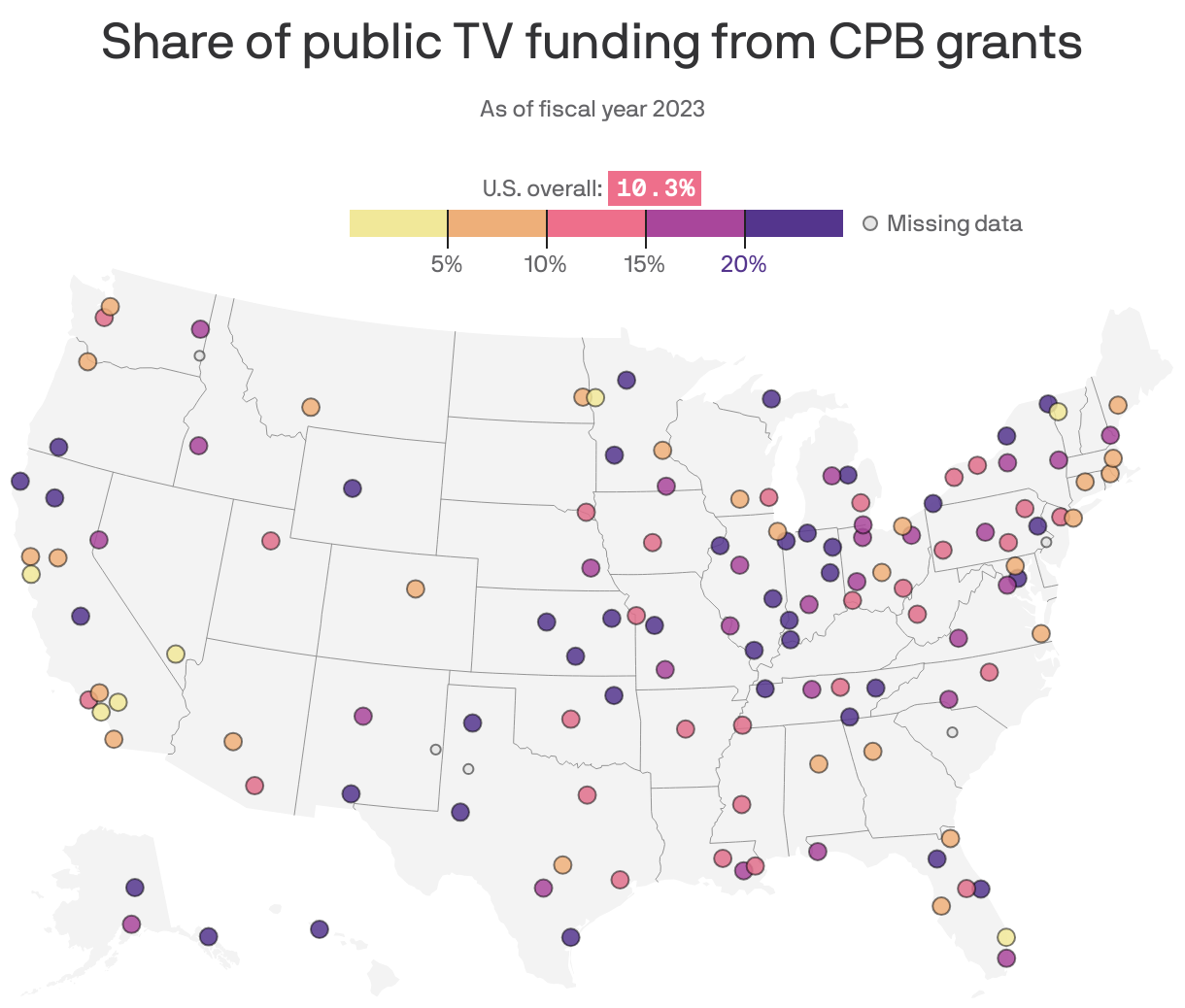
Data: CPB financial disclosures compiled by Alex Curley; Map: Erin Davis/Axios Visuals
Public TV and radio stations may find themselves with big holes in their budgets after Congress rescinded $1.1 billion in Corporation for Public Broadcasting (CPB) funding, based on publicly available financial data collected by a former NPR staffer and shared with Axios.
Why it matters: Public media outlets serve essential community newsgathering and emergency roles, but the Trump administration and others on the right have long accused them of left-leaning bias.
Airport security programs like TSA PreCheck and CLEAR allow travelers to breeze through screening. As TSA eases security protocols, travel experts say paying for that privilege is still a good investment.
Why it matters: Two decades after post-9/11 crackdowns made fast-track security a no-brainer for many Americans, especially frequent fliers, the appeal of skipping long lines hasn't faded.
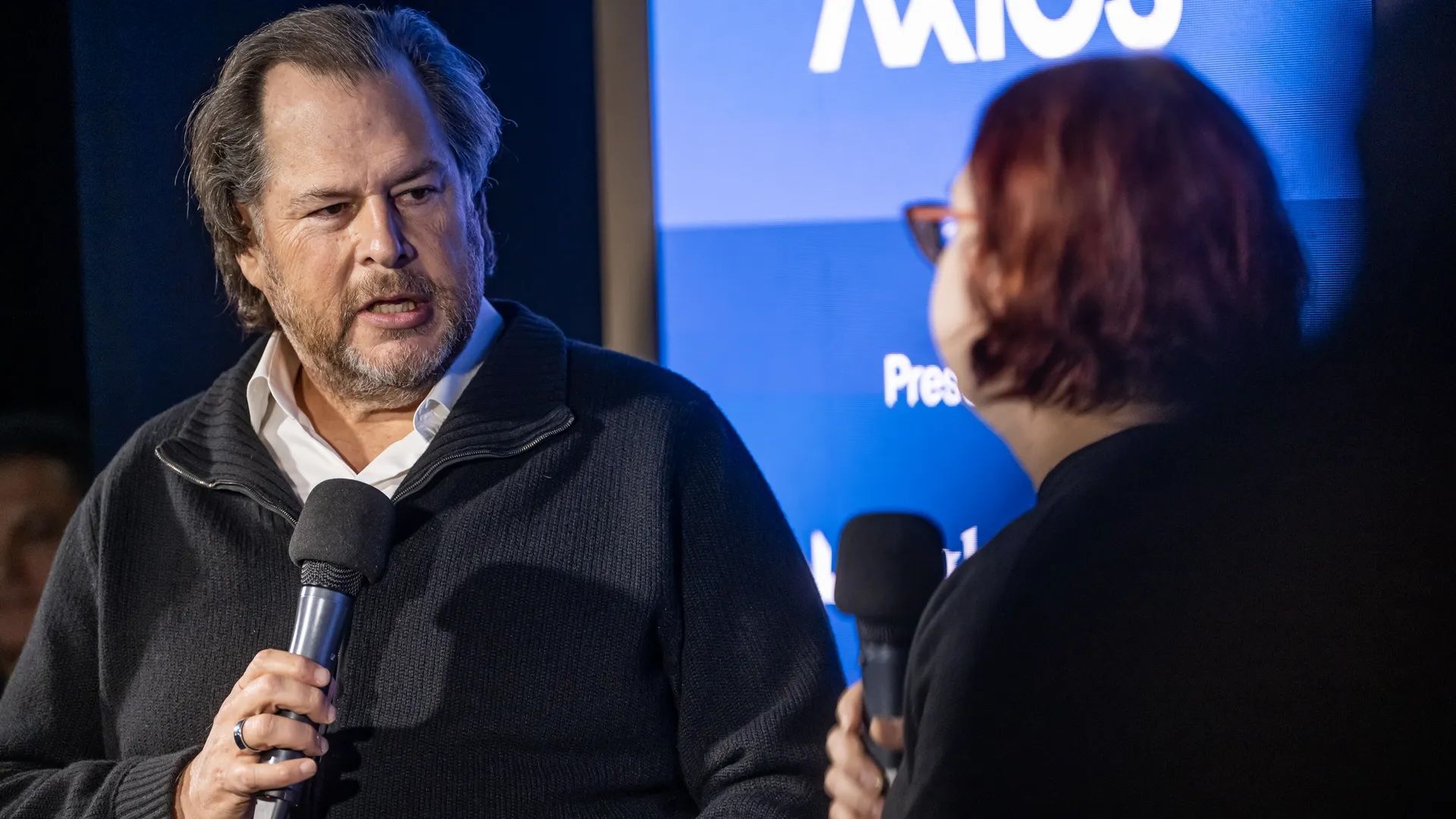
Salesforce CEO Marc Benioff, like many tech executives, is pushing the idea that humans and AI bots will soon work side by side, despite current turbulence.
Why it matters: Tech leaders are hedging their bets on AI: promising an eventual utopia in which everyone is productive and fulfilled, while at the same time reducing hiring, cutting jobs and voicing a range of near-term concerns.