Trump signs order to ax federal funding for NPR and PBS

Add Axios as your preferred source to
see more of our stories on Google.
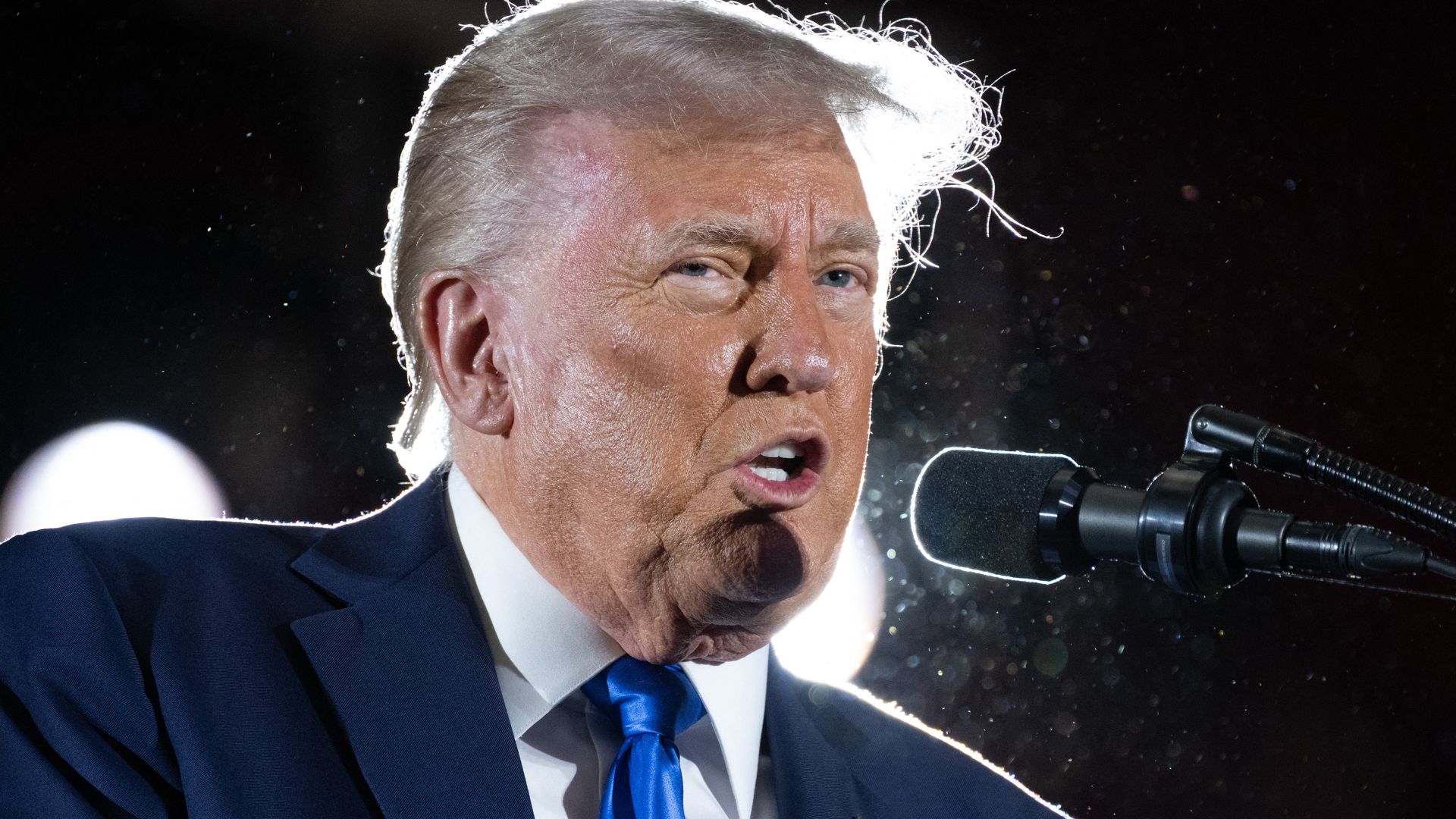
President Trump delivers commencement remarks at the University of Alabama in Tuscaloosa, Ala., on May 1, 2025. Photo: Saul Loeb/AFP via Getty Images
President Trump signed an executive order on Thursday night that's designed to cut funding to NPR and PBS.
Why it matters: The order that calls the two biggest public broadcasters in the U.S. "biased" and directs the Corporation for Public Broadcasting to "cease direct funding" for them comes amid a broader push to target traditional media companies that Republicans see as biased against them.
- The situation is already tense with the CPB, which allocates about $535 million in federal funding annually to NPR and PBS. The CPB filed a lawsuit against Trump and several administration officials on Monday for attempting to fire three members of its board.
- PBS and NPR had for decades enjoyed bipartisan support from lawmakers responsible for approving their government funds, per Axios' Sara Fischer and Natalie Daher.
Zoom in: Trump's order claims "neither entity presents a fair, accurate, or unbiased portrayal of current events" to taxpayers.
- "The CPB Board shall cease direct funding to NPR and PBS, consistent with my Administration's policy to ensure that Federal funding does not support biased and partisan news coverage," states the order.
- "The CPB Board shall cancel existing direct funding to the maximum extent allowed by law and shall decline to provide future funding."
Zoom out: The two public broadcasters are mostly funded by nongovernment sources, but PBS CEO Paula Kerger said during an an Axios News Shapers event in Washington, D.C., local member stations for PBS and NPR rely heavily on the government funding through the CPB.
- NPR previously defended its editorial integrity after Rep. Marjorie Taylor Greene (R-Ga.) called on the CEOs of the two broadcasters to testify at a DOGE subcommittee hearing on what she described as "systemically biased content" from federally funded radio and TV organizations.
What they're saying: Katherine Maher, NPR president and CEO, said in a statement that the organization will challenge the executive order "using all means available."
- America's founders, Maher added, "knew that an informed public is essential to a functioning democracy, and that commitment to serve an informed public is the heart of NPR's mission."
Paula Kerger, president and CEO of PBS, in a statement emailed to Axios called the order "blatantly unlawful."
- She said it "threatens our ability to serve the American public with educational programming, as we have for the past 50-plus years," adding, "We are currently exploring all options to allow PBS to continue to serve our member stations and all Americans."
"CPB is not a federal executive agency subject to the president's authority," Patricia Harrison, CPB president and CEO, said in a statement on Friday.
- "Congress directly authorized and funded CPB to be a private nonprofit corporation wholly independent of the federal government."
- In creating CPB, Congress forbade federal departments, agencies or officers from exercising control over its broadcasting, she added.
What we're watching: The order is likely to be challenged in court.
- Federal judges have blocked Trump administration efforts to gut congressionally approved funds for agencies overseen by the U.S. Agency for Global Media.
Go deeper: U.S. press freedom falls to historical low
Editor's note: This article has been updated with comment from PBS..
