Thursday's economy stories

Tillis crashes Trump's Fed tour
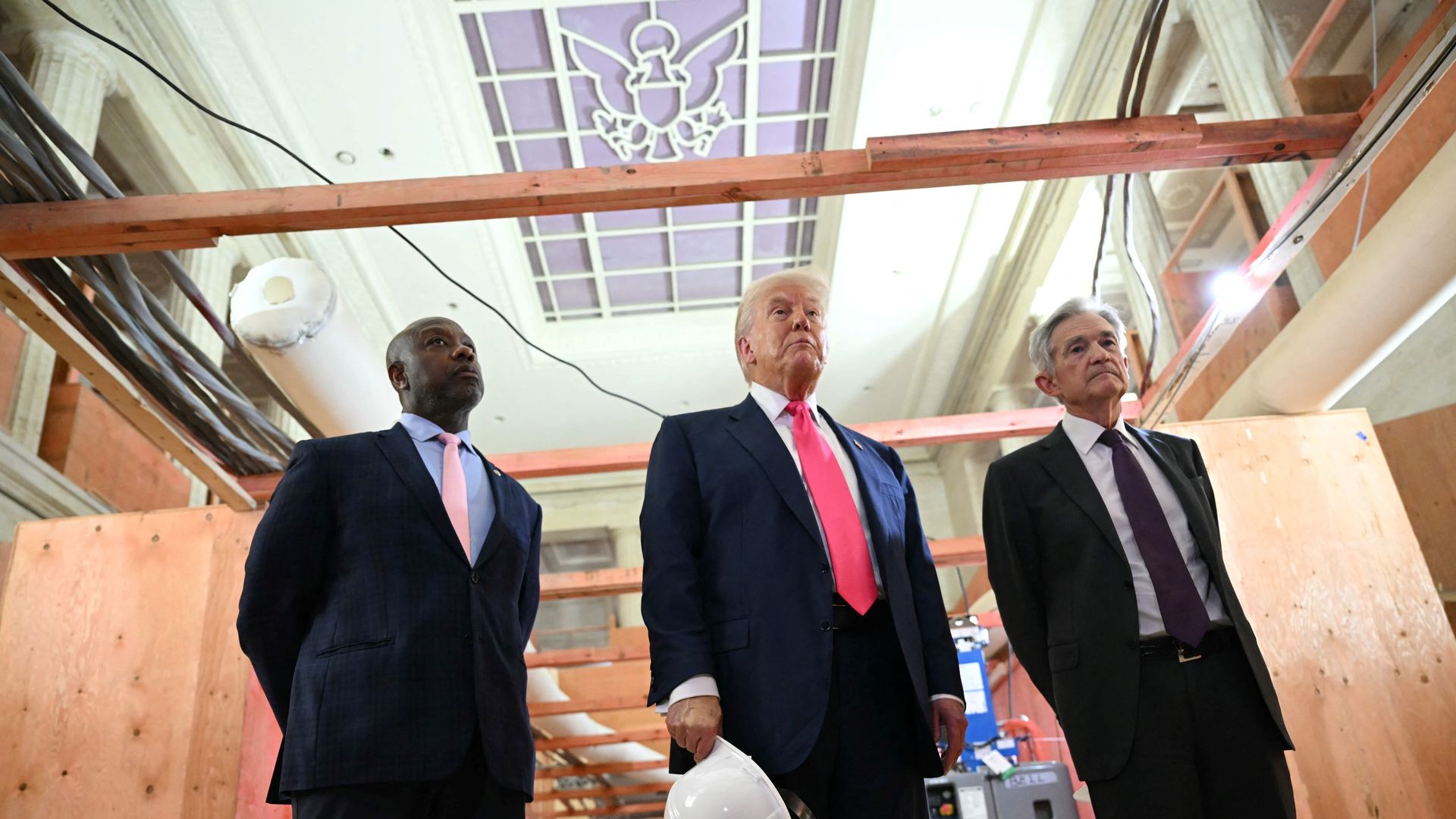
Sen. Thom Tillis (R-N.C.) joined the Fed tour on Thursday.
Why it matters: The question for President Trump is if Tillis will join the battle on who should replace Fed Chair Jerome Powell — and which side he'll be on.
- On a Senate Banking Committee with a 13-11 partisan split, each Republican will have the ability to vote with Sen. Elizabeth Warren (D-Mass.) and deadlock the committee.
- That's especially true for the retiring Tillis, who bucked Trump on his one "big beautiful bill" and scuttled the nomination of Ed Martin, Trump's first choice to be U.S. attorney for D.C.
Driving the news: Tillis was a late tour addition, tagging along with Trump, banking panel Chair Tim Scott (R-S.C.) and other administration officials who have been fiercely critical of Powell.
- Trump didn't repeat any of his Powell insults as they stood side-by-side in hard hats.
- "I'd love him to lower interest rates," Trump said.
- Treasury Secretary Scott Bessent has been saying that Trump isn't in a hurry to name a replacement for Powell, whose tenure ends in May. An announcement is now expected at the end of the year.
The intrigue: Like Sen. Rand Paul (R-Ky.) balking at Mike Waltz's nomination as the U.S. ambassador to the UN this week, Tillis can slow-walk any Fed nominee he doesn't think is qualified.
- This month, he said that ending the Fed's independence would be a "huge mistake."
What we're watching: Tillis is a lame-duck senator, but he hasn't gone full Bulworth. Yet.
- Still, he is full of pluck, telling us Wednesday to "release the damn" Jeffrey Epstein files.
- Twelve years ago, a first-term Sen. Warren helped kill the Fed candidacy of Larry Summers, a leading candidate for the president of her own party.
The bottom line: Tillis — a fierce defender of the Fed's independence — is expected to play a crucial role in vetting Powell's successor.

On crypto market structure, the Senate keeps it simple
The Senate has circulated a draft of its version of market structure legislation, and it is markedly different than what the House offered — largely because there is so much less there.
Why it matters: These two versions need to become one, setting up a clash of regulatory philosophies and strategic priorities — the House's broad framework that goes heavy on the details, or the Senate's that seems more designed to get passed.

CEO of Singapore's GIC warns of "valuation overshoot" in frothy market
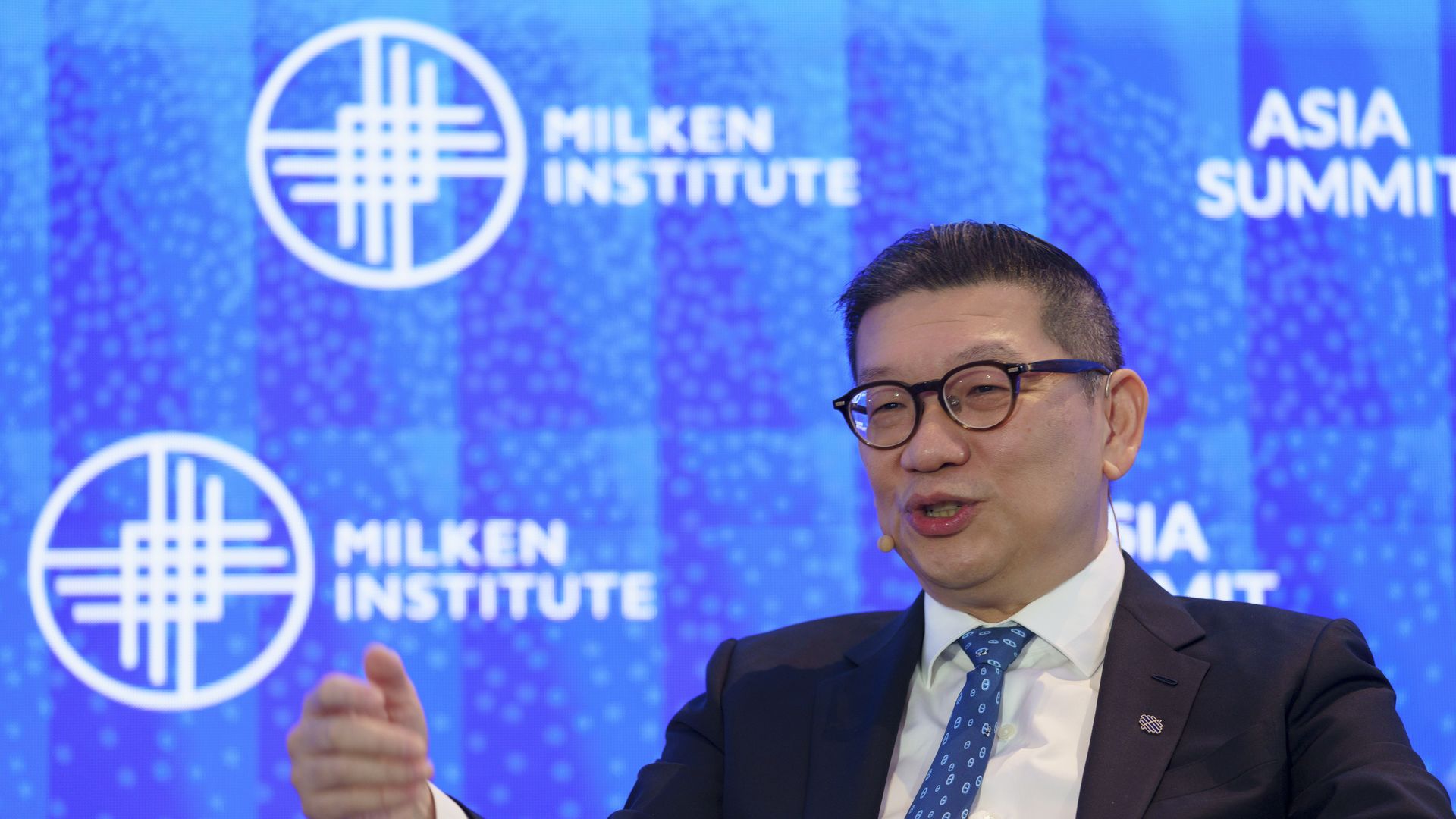
This year may turn out to be historic for investors, requiring high levels of discipline to avoid chasing unreasonable valuations, the CEO of Singapore's sovereign wealth fund GIC said Thursday.
Why it matters: GIC is one of the world's largest investors, with more than $800 billion under management, so its cautious view at a time of surging markets globally is noteworthy.

Trump tours Fed construction project, calls for lower rates
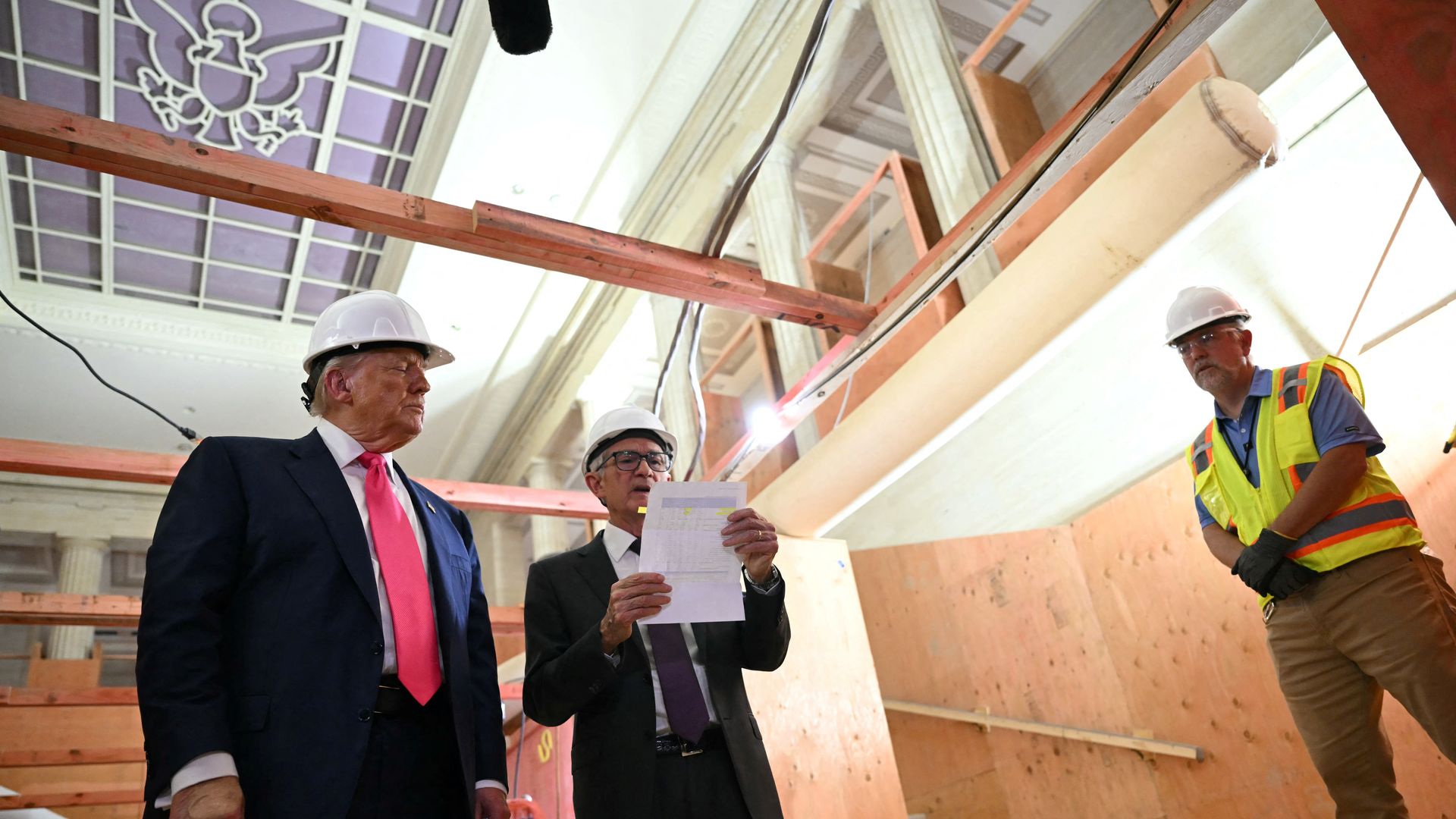
President Trump toured the Federal Reserve's $2.5 billion headquarters construction project Thursday, continuing his demands for lower interest rates from chair Jerome Powell.
Why it matters: It amounted to a dramatic made-for-the-cameras moment, following weeks of Trump allies apparently laying the groundwork to oust Powell for cause over the project.

Social Security recipients set to face an $18,000 benefit cut in just seven years
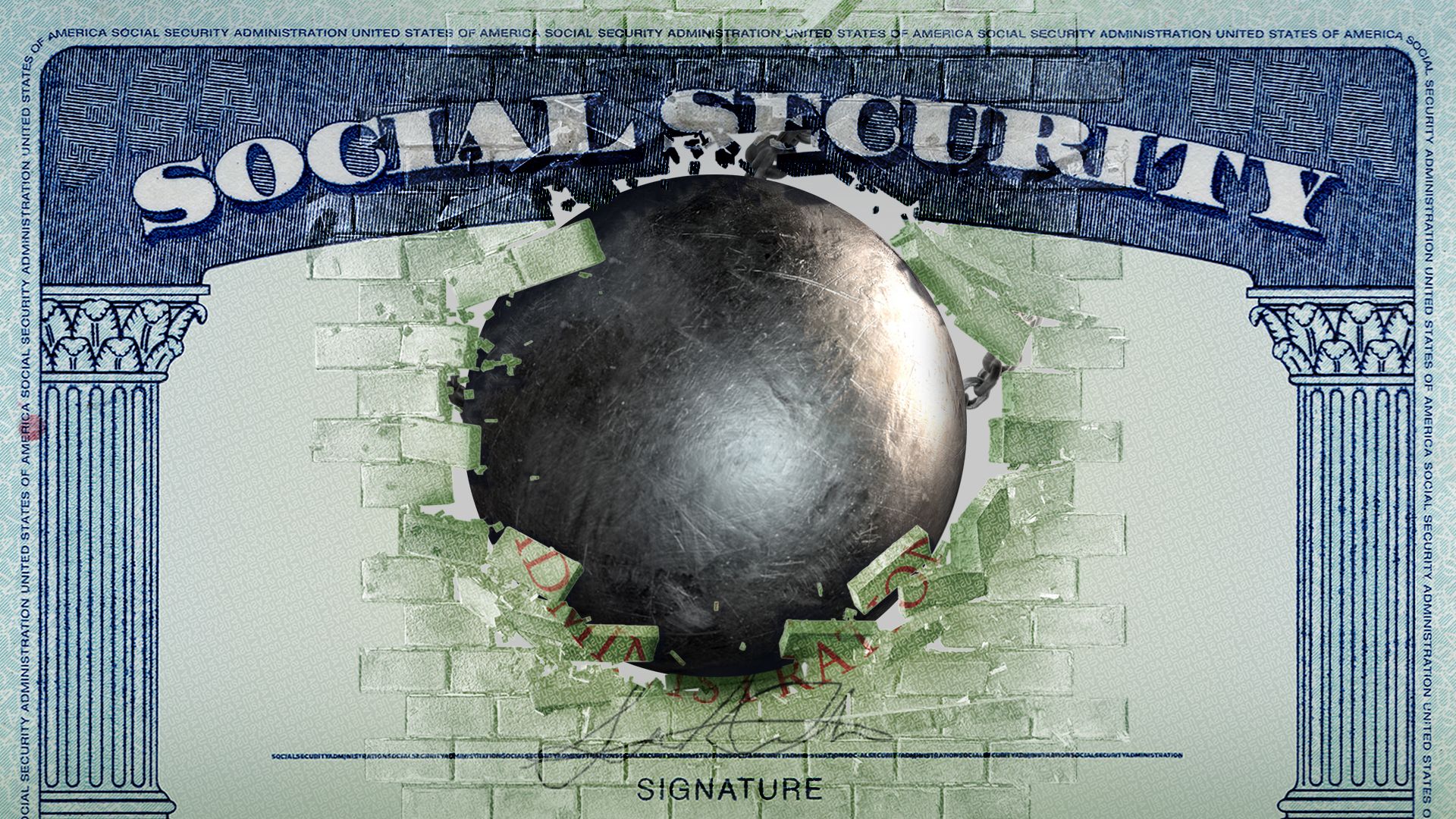
Retirees are facing the prospect of substantial Social Security cuts in just seven years, sooner than projected, due to the "big, beautiful bill," per an analysis out Thursday from the Committee for a Responsible Federal Budget.
Why it matters: If policymakers don't stop this from happening, it would at least double the poverty rate of America's seniors, per several estimates.

Catch up quick
🍬 Some things to keep in mind if you are tempted by altcoin season. (Axios)
🦹♂️ Cyber criminals are using the names of abandoned DeFi projects to trick people into turning their money over to them. (DL News)
👴 Another old wallet wakes up and moves a few hundred million in bitcoin. (The Block)
Roman Storm: Prosecution almost rested
Federal prosecutors are expected to rest their case against Tornado Cash co-founder Roman Storm in Manhattan this week.
- If ever there has been a criminal cause célèbre in the blockchain industry, it's this one.
The big picture: The U.S. government sees Tornado Cash as a line in the sand over its ability to monitor the flow of funds as a means to stymie organized crime and terrorism financing.
- Open source developers see the project as a line in the sand over their right to create code, independent of how other people choose to use it.
The latest: The government — which charged Storm in 2023 over money laundering, operating an unlicensed money-transmitting business and U.S. sanctions violations — sought to prove that the funds from a pig-butchering case they highlighted flowed to Tornado Cash.

What to do if you're caught in a rip current

Rip currents are the leading cause of lifeguard rescues, according to the National Oceanic and Atmospheric Administration.
Why it matters: These powerful, narrow channels of fast-moving water also known as "drowning machines" can pull you out to sea before you even realize what's happening.

U.S. trade agreement with Japan includes $550 billion in unanswered questions


One key element of the U.S.-Japan trade pact raises more questions than answers about the future of the two nations' economic relationship.
The big picture: A reported $550 billion investment commitment from Japan would reflect a massive surge in the nation's financial exposure to the United States. But no one in either the Japanese or U.S. government has articulated key details about how it would really work.
- In U.S. officials' description of the commitments, President Trump would have the discretion to direct the investment funds and the U.S. would receive 90% of the profits.
- It's unclear what legal entities — on either the Japanese or U.S. side — would be involved, or what would be in it for Japanese companies if they have neither control over the investments nor a financial return.
Catch up quick: A White House fact sheet said Trump will direct the funds toward revitalization of the U.S. industrial base, including energy infrastructure, semiconductor manufacturing, critical minerals, pharmaceuticals and shipbuilding.
By the numbers: It's worth emphasizing just how big $550 billion is — nearly 14% of Japan's 2024 GDP.
- Japan is already the single-largest source of foreign direct investment in the United States, with a cumulative capital of $754 billion deployed as of last year. It's been rising rapidly, too — nearly doubling over the last decade.
Reality check: That has been driven by Japanese companies voluntarily making investments on which they expect to earn a handsome return — think of the Toyota manufacturing plant in Georgetown, Kentucky, which reflects about $10 billion in investment as of early last year.
- But those kinds of projects don't spin up overnight. The initial groundbreaking on the Toyota plant was in 1986.
- Japanese FDI in the U.S. increased by about $54 billion in 2024, a huge 7.7% surge, but the contemplated investment fund is more than 10 times that size.
Similarly, Japan is the biggest owner of U.S. Treasury securities — with $1.1 trillion as of May. But those purchases are directed by the Japanese government to manage the nation's own currency and reserves, not at the behest of the U.S. president.
- The Bank of Japan buys U.S. bonds with the full expectation of interest earnings and principal being paid back.
What they're saying: "They came to us with the idea of a Japan-U.S. partnership, where they are going to provide equity, credit guarantees and funding for major projects in the U.S.," Treasury Secretary Scott Bessent said Wednesday on Bloomberg TV.
- A White House official tells Axios that "the shape and timeframe here are still TBD, but it's effectively an investment vehicle whose cash the Japanese will put up, and whose investments will be directed by the President into the sectors we have prioritized."
The other side: "The vague promises about Japan investing $550 billion in the U.S. and Americans receiving '90% of the profits,' are the kind of fantastical claims better suited for a campaign rally than a serious trade announcement," wrote Veronique de Rugy, a senior research fellow at the Mercatus Center, in a note.

Venmo the Treasury to help pay Uncle Sam's debt? You can, if you really want
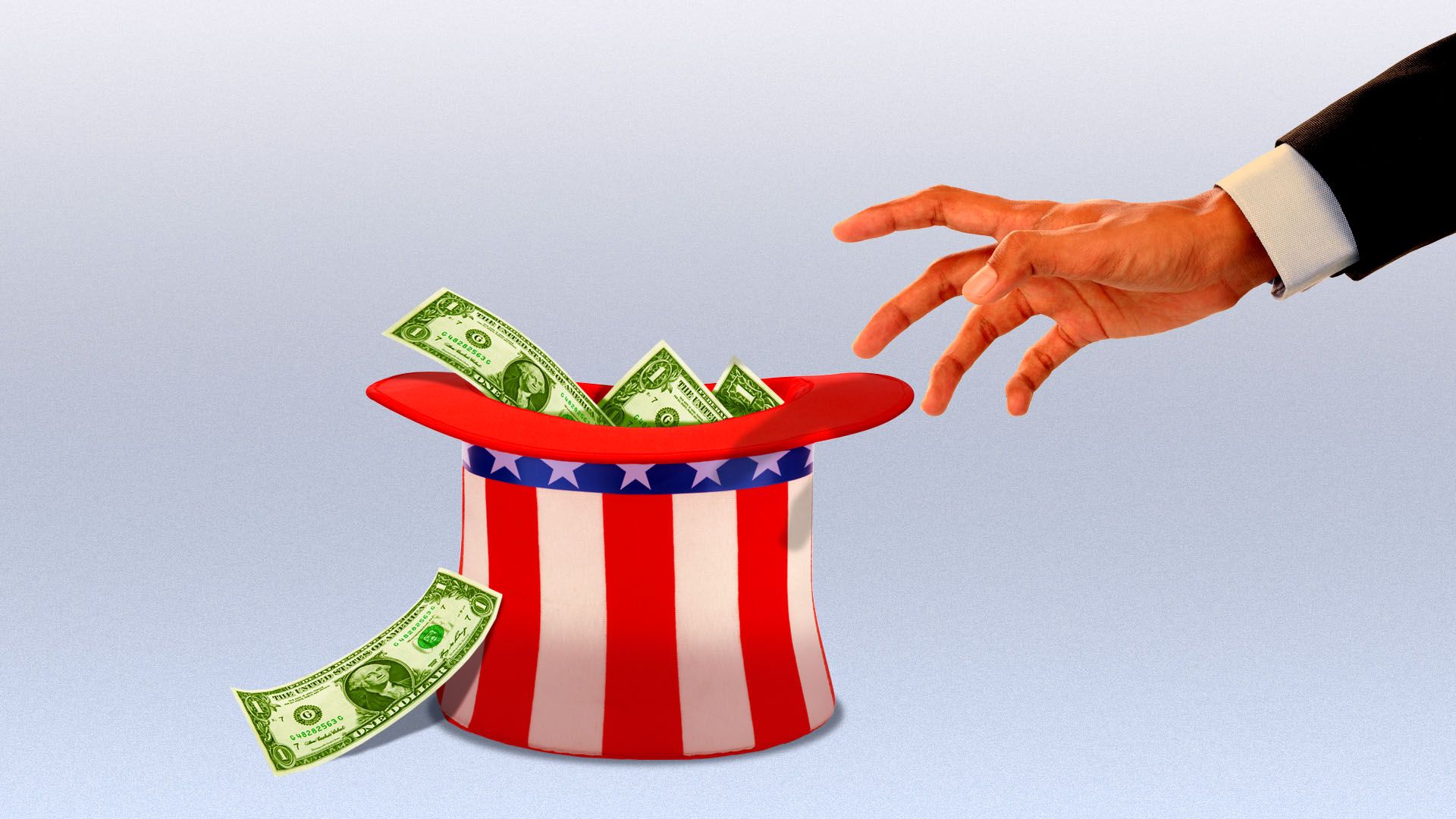
Of all the things you might use Venmo for — buying drinks, splitting a check with friends, repaying a loan — there's a good chance you've never had "sending the government a gift to help pay the public debt" on your list.
- But you can, if you really, really want.
The big picture: Axios' calculations suggest it'd be almost impossible for your personal donation to actually make a hole in the debt, even if you were feeling really generous.

Wall Street only cares about one tariff deal today
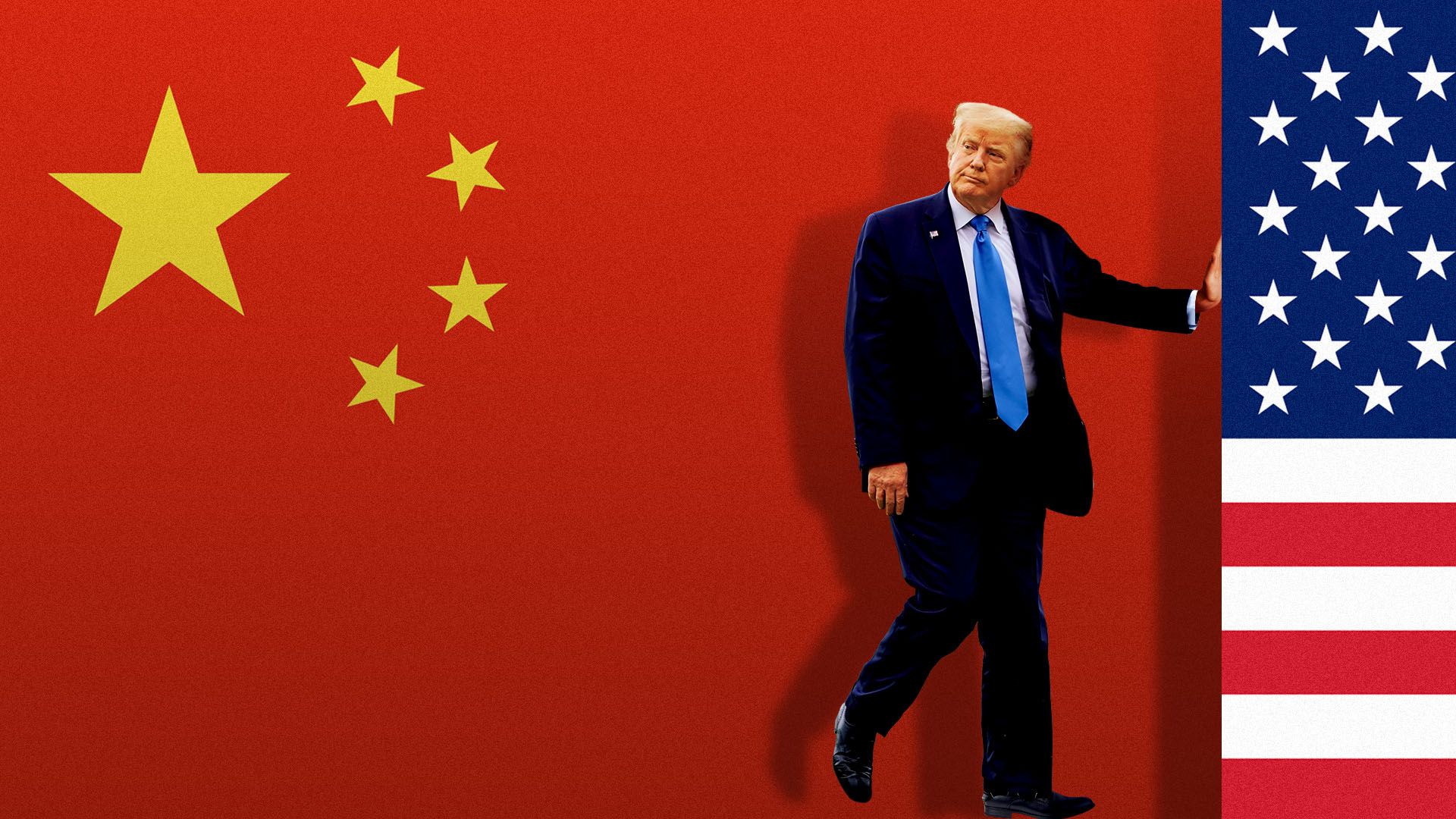
The stock market barely moved off the trade deal with Japan this week, as market sources said that's the new investor playbook for tariff headlines: Ignore them unless it's about China.
Why it matters: The stock market, which is up 27% since the April 8 lows, has already priced in trade deals.
What meme stock mania says about the market rally


Meme stocks are back, with GoPro, Opendoor and Krispy Kreme rallying double digits this week thanks to retail investors and Reddit threads.
Why it matters: The retail resurgence is the latest signal that investors are willing to take on more risk, as stocks keep hitting record highs and it gets harder to beat the broader market.
New movies and shows this week on Netflix, Hulu and Paramount+

Here's what's new on Netflix, Hulu, Paramount+, Apple TV+ and Prime Video.
What we're watching: The highly anticipated sequel to "Happy Gilmore," a new adventure series about a young "Black genius" and a documentary chronicling the history of hip-hop.

Columbia agrees to pay $200 million fine to settle Trump admin dispute
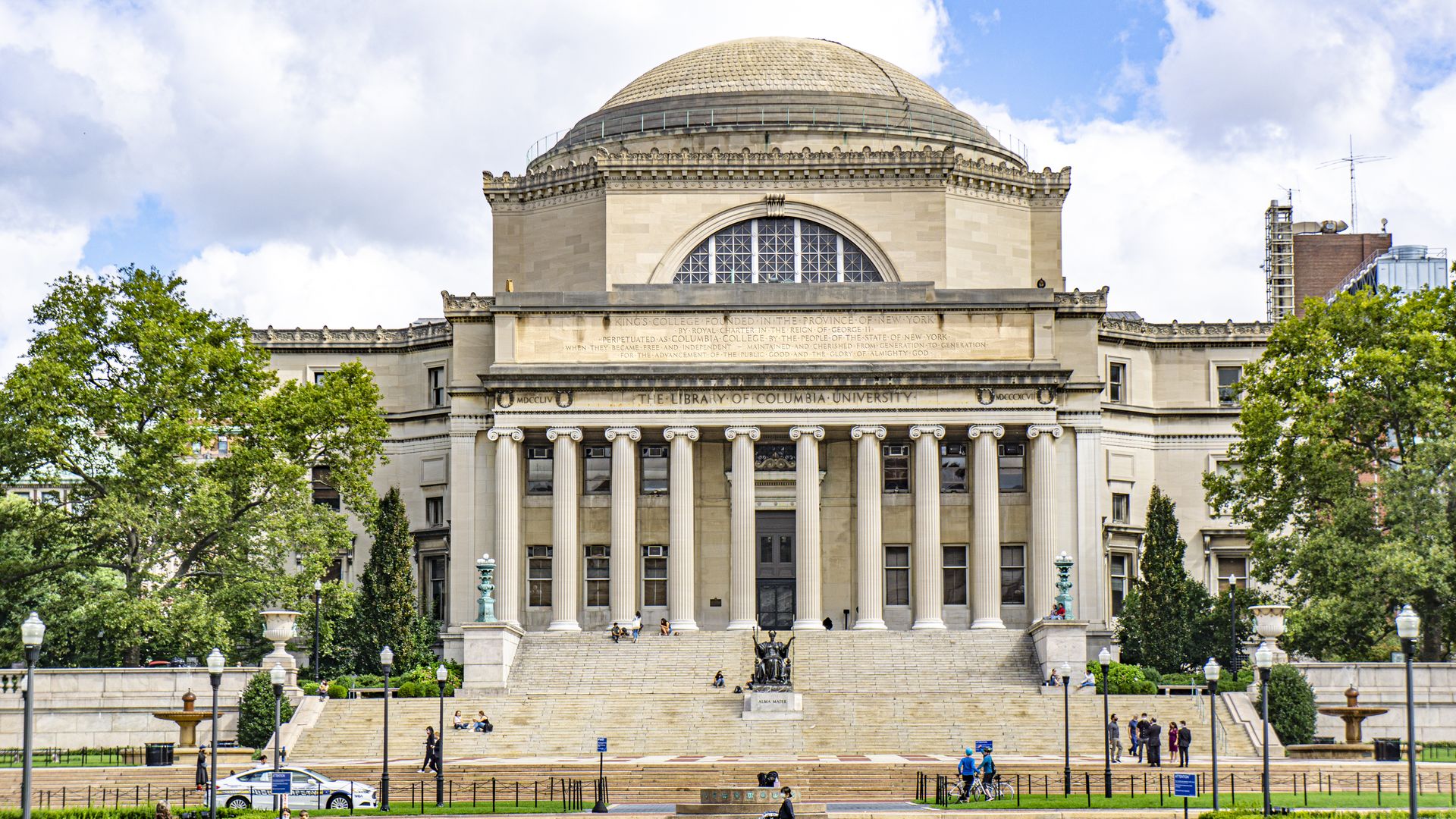
Columbia University agreed Wednesday to pay a $200 million fine to resolve a Trump administration investigation "into alleged violations of federal anti-discrimination laws," the college announced.
Why it matters: The agreement will see Columbia's federal funding restored.