CEO of Singapore's GIC warns of "valuation overshoot" in frothy market

Add Axios as your preferred source to
see more of our stories on Google.
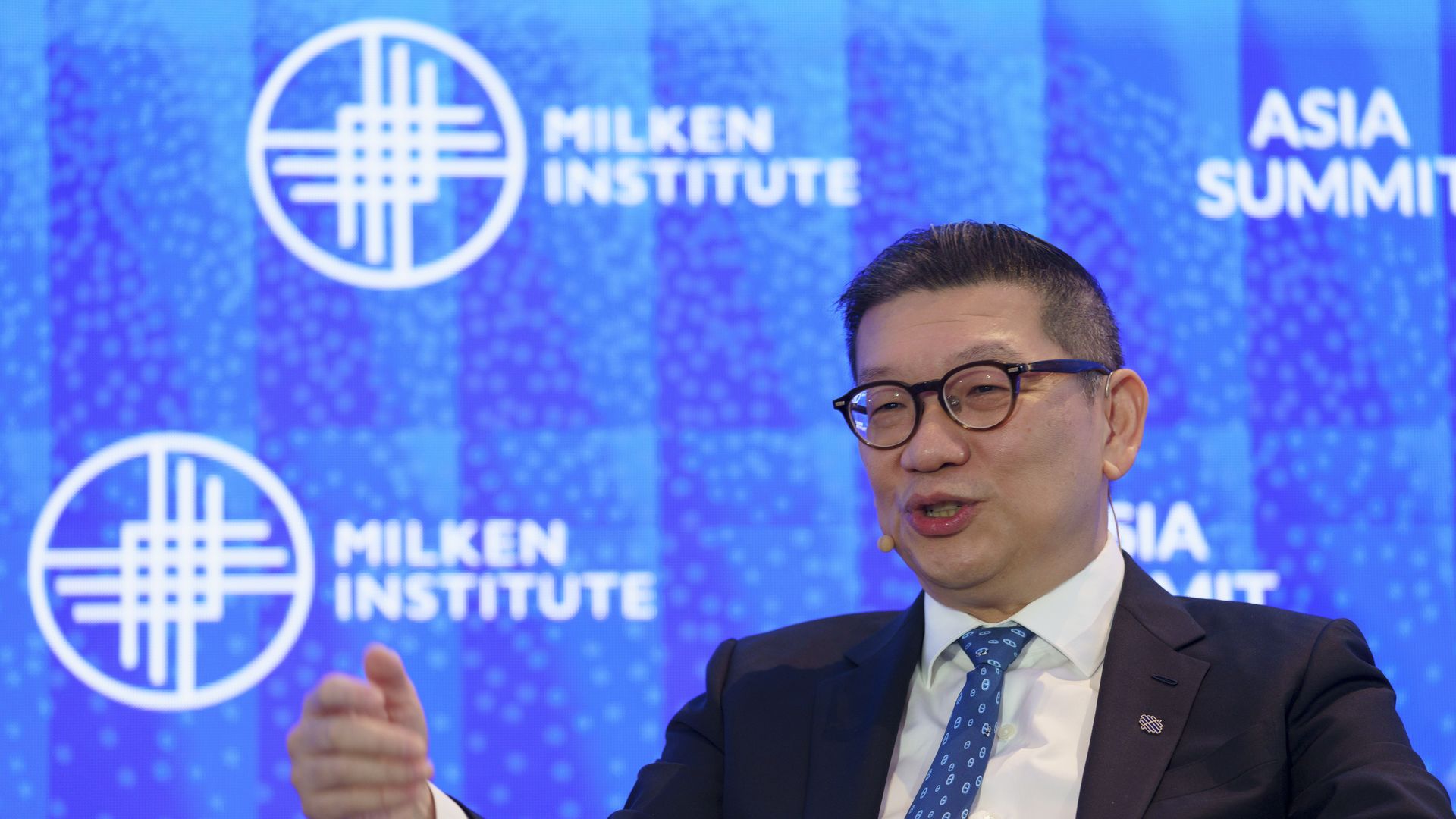
GIC CEO Lim Chow Kiat. Photo: Ore Huiying/Bloomberg via Getty Images
This year may turn out to be historic for investors, requiring high levels of discipline to avoid chasing unreasonable valuations, the CEO of Singapore's sovereign wealth fund GIC said Thursday.
Why it matters: GIC is one of the world's largest investors, with more than $800 billion under management, so its cautious view at a time of surging markets globally is noteworthy.
What they're saying: "2025 may be a turning point in markets — and in history. 'There are decades where nothing happens, and weeks where decades happen.' We are living in one of those moments," GIC CEO Lim Chow Kiat wrote in his annual letter.
- "Situations like the Nikkei bubble in the late 1980s, the Nasdaq collapse in the early 2000s, and the periodic bursting of meme stock bubbles all illustrate the dangers of valuation overshoot," he wrote.
- "Long horizons offer little help in such situations. Even if asset prices eventually recover, the time lost will have been too great. This is why we remain disciplined on price."
Context: GIC, established in 1981, manages Singapore's foreign reserves.
- The Sovereign Wealth Fund Institute ranks it as the world's eighth-largest such fund.
- It has a more reserved approach than some peers; the word "cautious" is frequently used in the financial press to describe the fund.
Zoom in: One area of increasing focus for GIC is AI, per separate comments from Lim released Thursday evening.
- "AI's disruptive potential is a key area that we are very much focused on, because when some companies succeed, it will have to be at the expense of other companies. If you are simply playing the role of an agent or intermediary, then you can be replaced by technology," he wrote.
- He added that the fund is adopting AI more actively internally, including piloting a virtual investment committee that can review memos and question deal teams on their analyses.
Of note: The fund reported an annualized real rate of return, adjusted for inflation, of 3.8% for the 20 years ended March 31.
