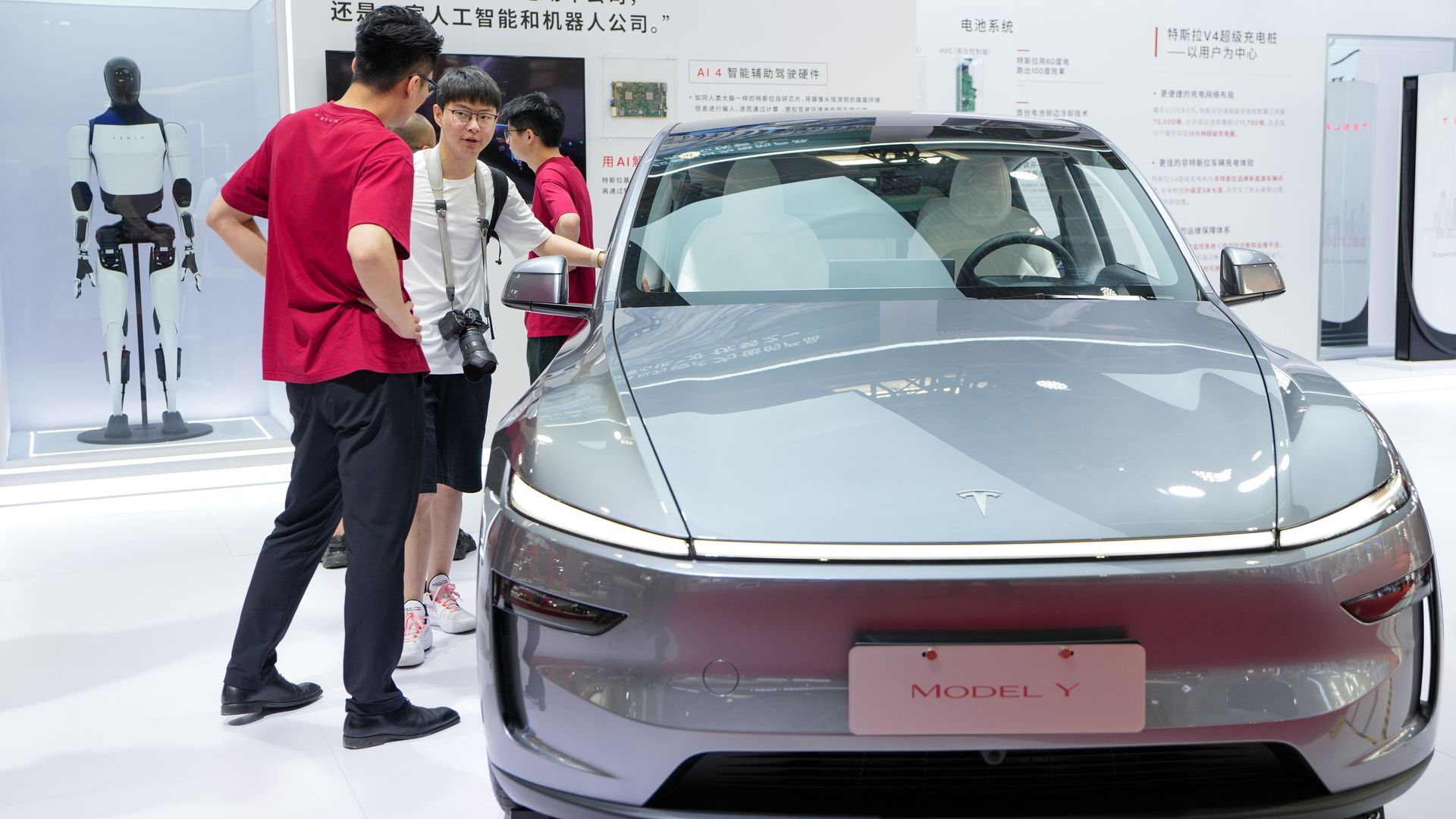
Tesla said Wednesday that it has begun production of "a more affordable model."
Why it matters: The automaker has long promised a cheaper EV, but has said little about it recently, fueling speculation that CEO Elon Musk had lost interest.
Facing criticism of its service, the Social Security Administration said on Wednesday that the wait times for customers who call its 800 number and or visit its field offices are down from last year.
Why it matters: The agency that handles retirement and disability benefits has been under fire over slower customer service, and has seen thousands of employees depart in the wake of DOGE incentives to leave.
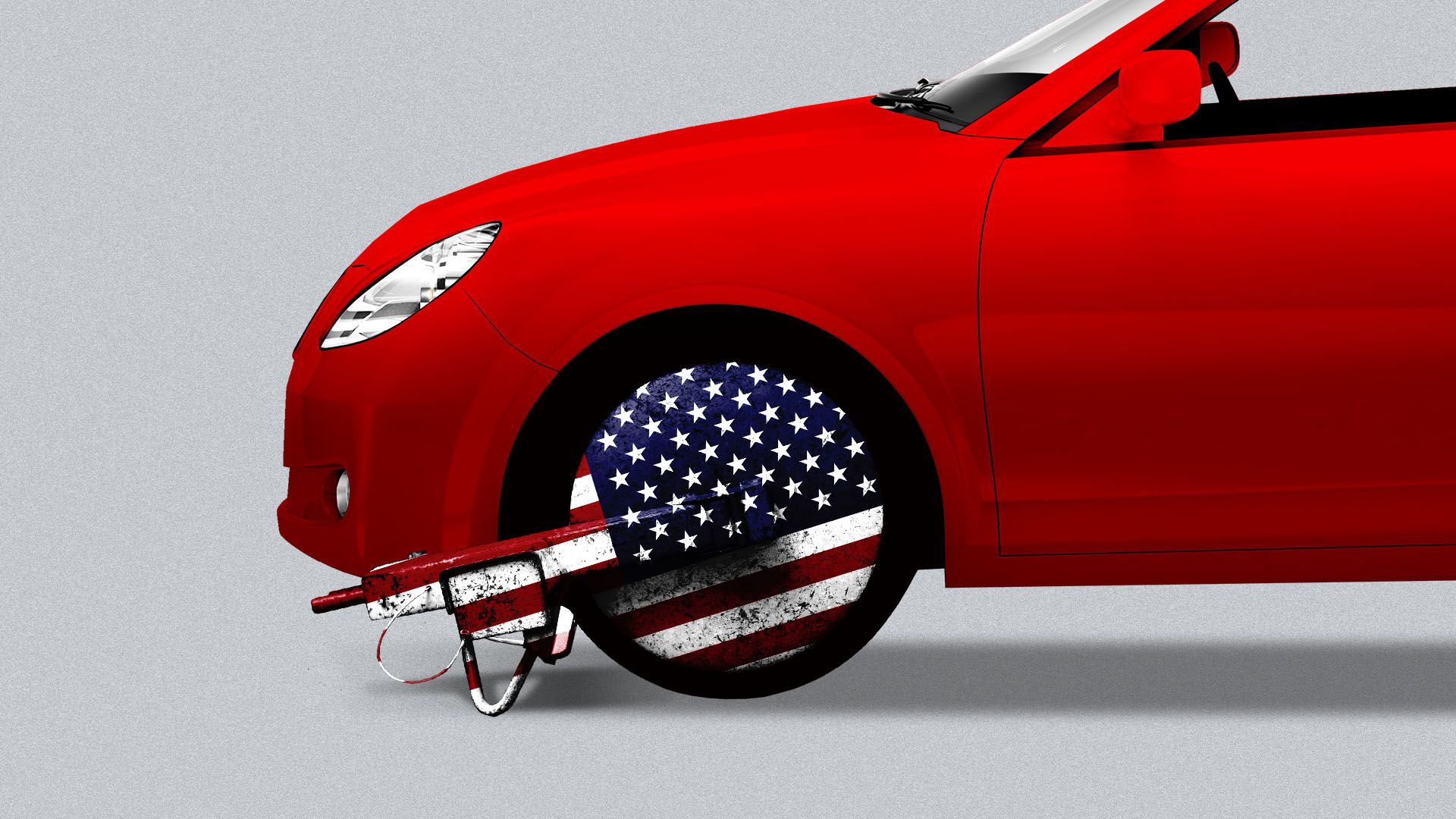
U.S. automakers may not sell a lot of cars in Japan, even aftera new trade pact between the two countries — but they're definitely worried about how the deal might disadvantage them at home.
Why it matters: President Trump's promise to strengthen the U.S. auto sector often runs counter to his trade and policy actions, leaving automakers feeling frustrated and confused.
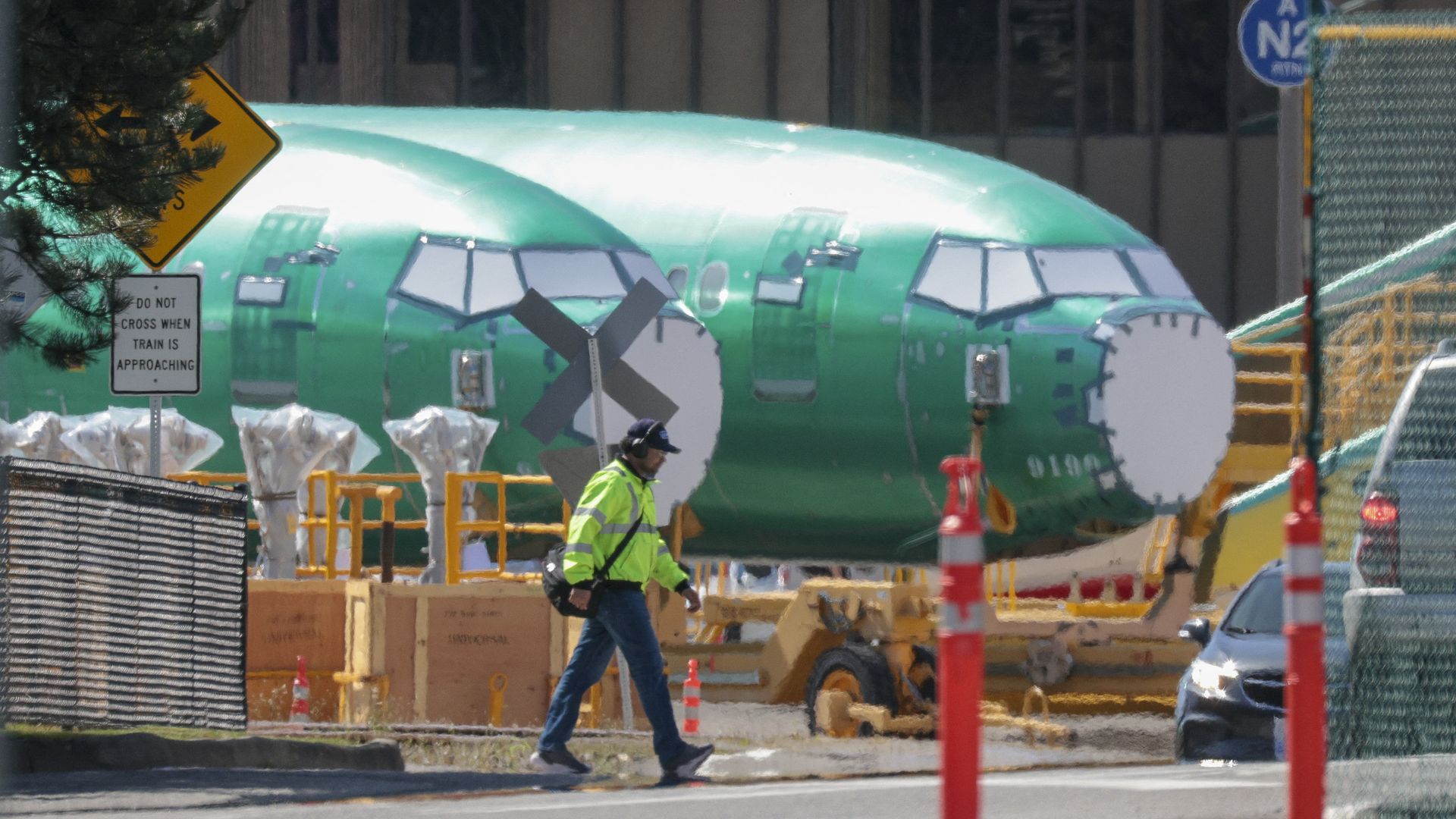
Boeing continues to benefit from trade diplomacy, securing global deals as U.S. partners make concessions in tariff talks with the Trump administration.
Why it matters: It's a decisive turn for a company recently beset by business and regulatory disasters caused by quality troubles, legal problems, labor issues and trade walls.
The U.S. is reportedly closing in on a trade agreement that would impose 15% tariffs on goods from the European Union.
Why it matters: The framework — details of which were reported by Reuters and the Financial Times on Wednesday — would be the latest that implements hefty tariffs on a key ally.
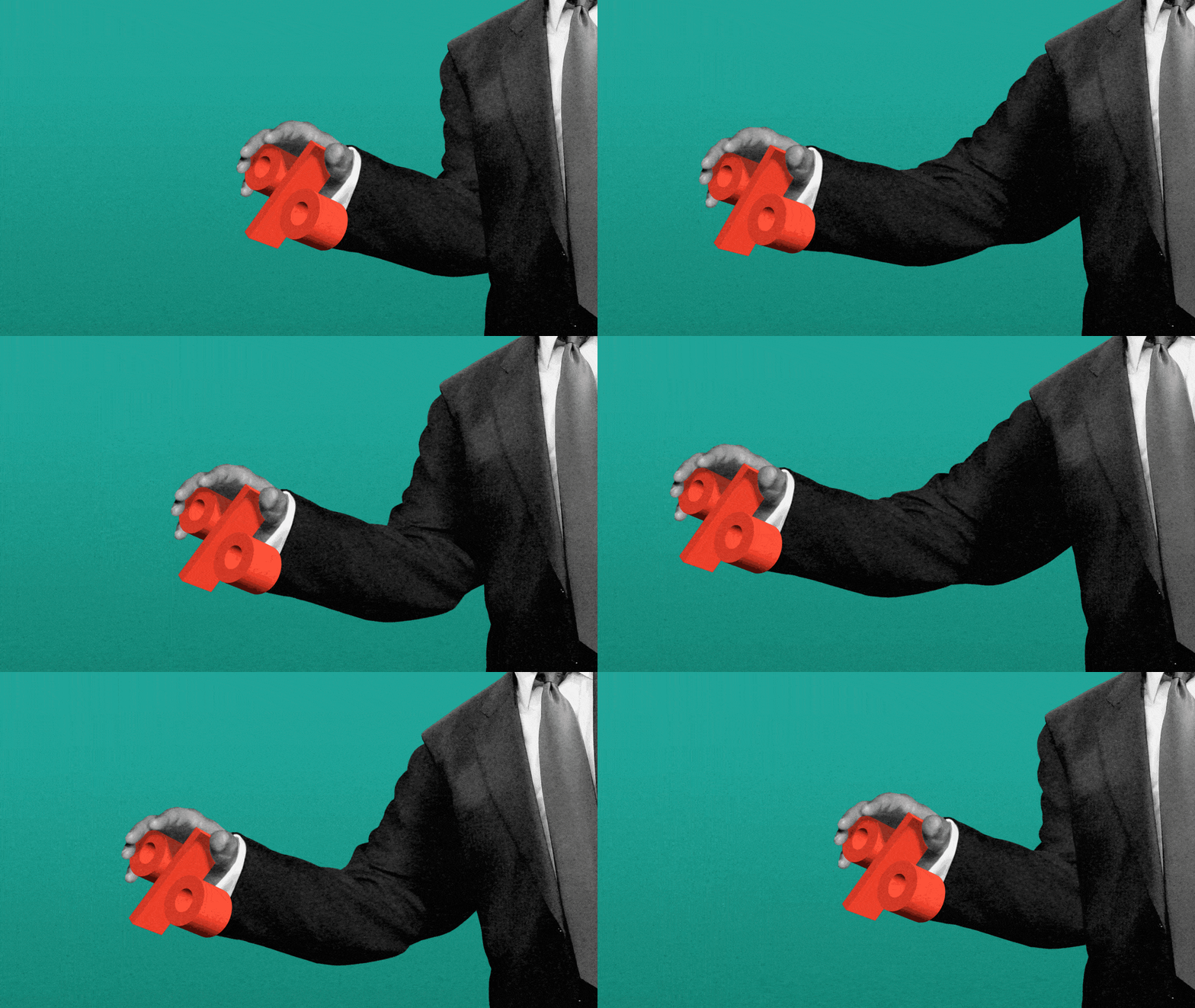
Six months ago, the prospect of a 15% tariff on all goods from a major trading partner like Japan — vastly higher than seen in modern times — would likely have spooked financial markets and caused a wave of economic worry.
Now it brings relief.
Why it matters: President Trump shifted the trade war psychology. Financial markets and manufacturers alike have come to accept that double-digit tariffs are the new reality. And they've concluded that it's not so terrible, considering it could be worse.
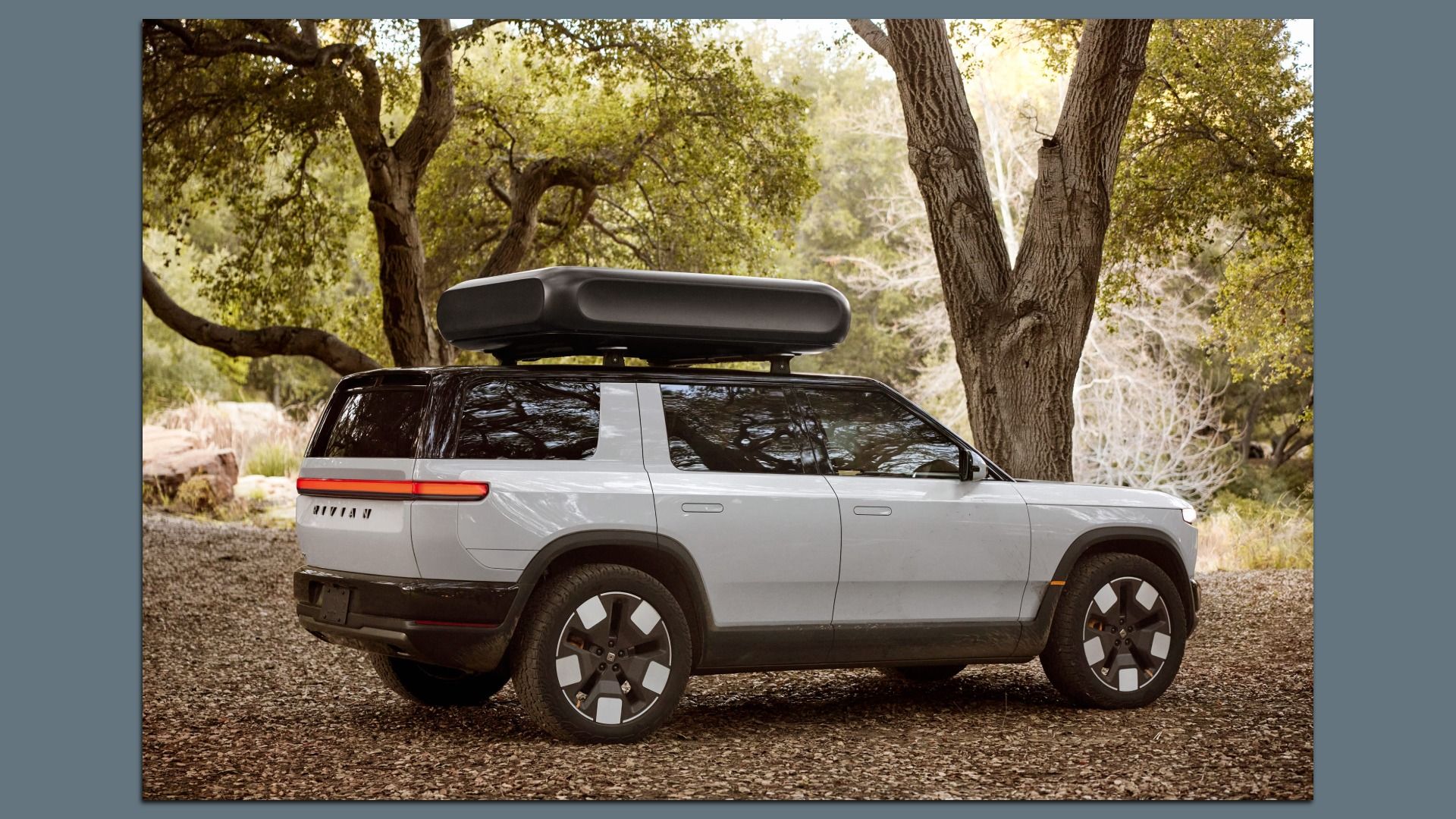
As a newcomer to the auto industry, Rivian finds itself at a critical juncture.
Sales of its pricey R1 models are headed in the wrong direction, but it's pinning a lot on next year's release of a smaller, $45,000 SUV, the R2, followed later by an even cheaper R3.
But first, the company has to get through 2025.
Why it matters: Electric vehicle sales have stalled in the U.S., and President Trump's tariff and tax policies will further stifle growth.
Archer Aviation and Anduril Industries are "deep in the work, building stuff," for their hybrid-power vertical takeoff and landing aircraft, the former's CEO, Adam Goldstein, told Axios.
Why it matters: Very little has been shared about the project, which was initially described as targeting a potential Pentagon program.
The Trump administration's sweeping "transparency" crusade has electrified MAGA loyalists eager to see "Deep State" officials and Jeffrey Epstein's alleged clients paraded to prison.
Now, some of President Trump's most prominent supporters say he must deliver to maintain that unity.
Why it matters: Under pressure for his handling of the Epstein case, Trump is taking a big swing at MAGA's biggest bogeymen — the supposed cabal of shadowy elites who run the country, along with its army of unelected government bureaucrats.
More than 18% of Americans are planning road trips to next year's FIFA World Cup matches.
Why it matters: That could mean big traffic jams for host cities.
By the numbers: Among modes of travel to the World Cup cities, the top choice highlighted in a survey from ParkMobile was traveling by car (47%), followed by plane (30%), train (3%), and bus (2%).
State of play: City officials are guiding fans toward public transportation as improvements are made ahead of next summer's tournament.
Only 12% of respondents to ParkMobile's survey said they prefer to take public transit to major events.
Almost90% of attendees from outside the host cities report a willingness to pay more for reserved, off-street parking during the World Cup compared to 80% of locals.
What's next: The first 2026 World Cup match in the U.S. kicks off in Los Angeles on June 12.
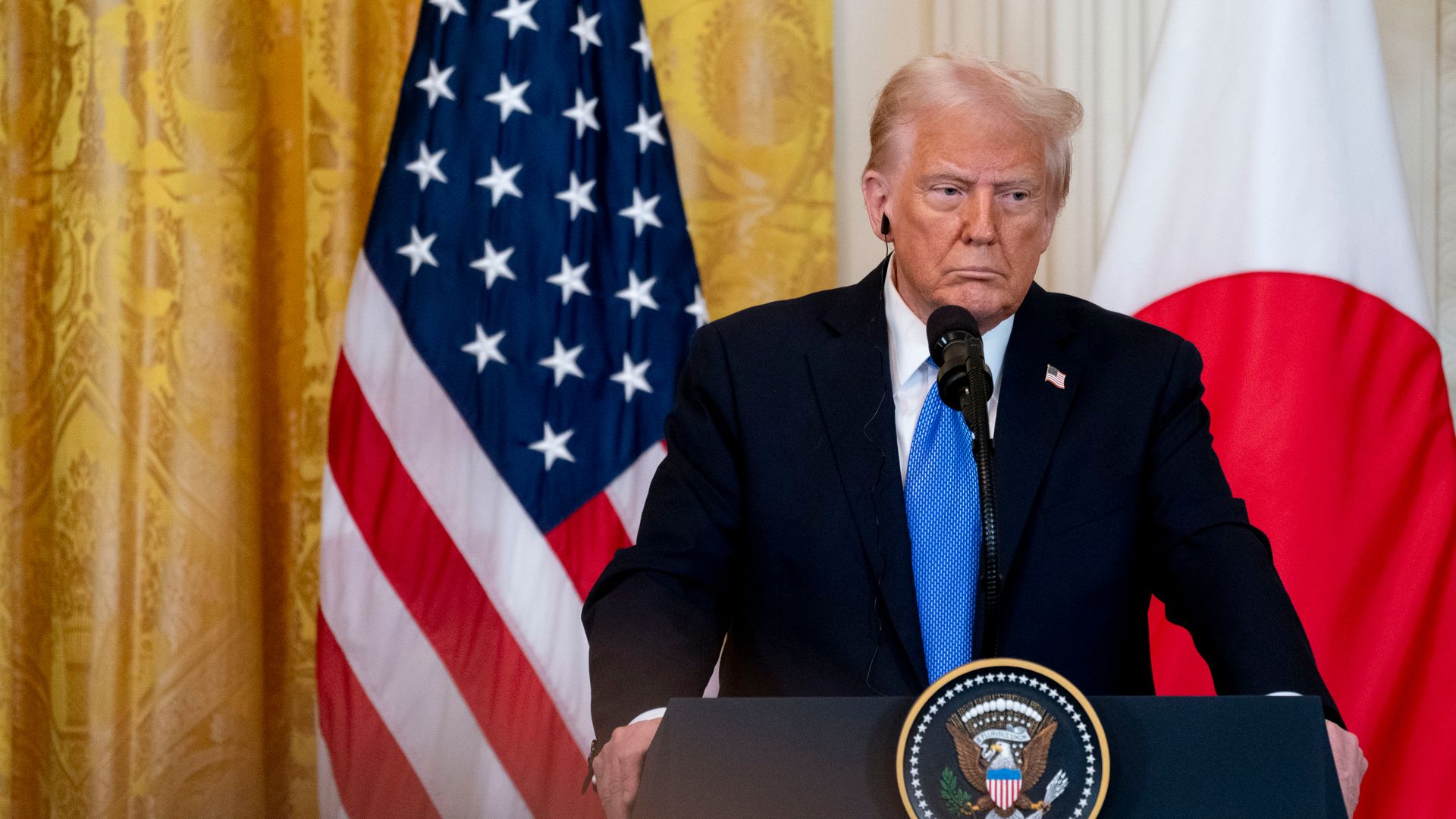
President Trump on Tuesday said the U.S. notched a trade agreement with Japan that would see 15% tariffs on all goods imported from one of the nation's key trade partners.
Why it matters: A U.S.-Japan trade deal would be the most significant since the White House threatened to impose sharply higher tariffs on much of the globe.