Why Boeing keeps winning in Trump trade deals

Add Axios as your preferred source to
see more of our stories on Google.
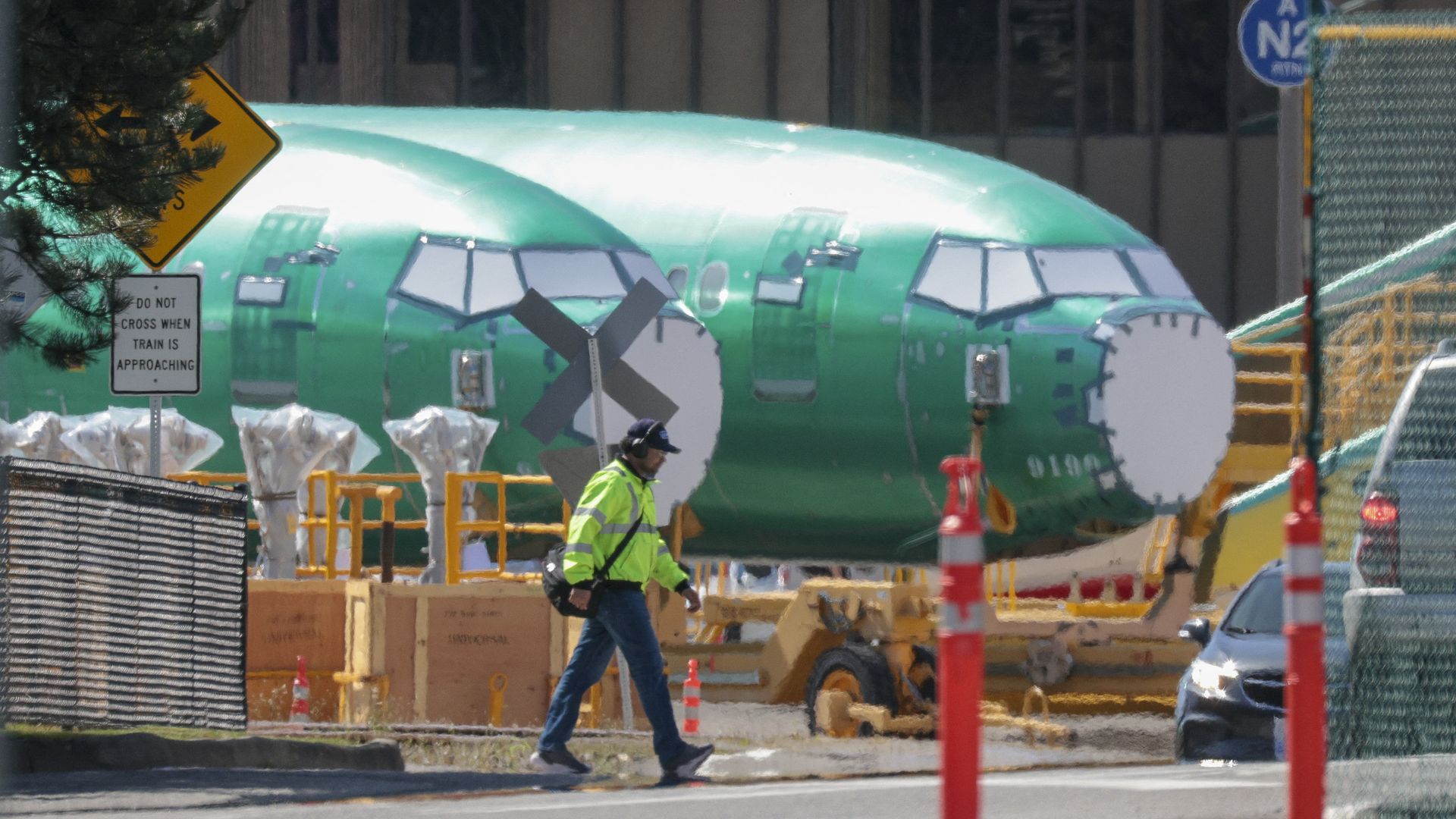
A Boeing 737 aircraft fuselage at the company's factory in Renton, Wash., on April 15. Photo: Jason Redmond/AFP via Getty Images
Boeing continues to benefit from trade diplomacy, securing global deals as U.S. partners make concessions in tariff talks with the Trump administration.
Why it matters: It's a decisive turn for a company recently beset by business and regulatory disasters caused by quality troubles, legal problems, labor issues and trade walls.
The latest: Japan agreed to buy 100 Boeing planes as part of a broader trade deal with the White House, an administration official said.
- Boeing did not immediately respond to a request for comment Wednesday morning.
The big picture: The Japan deal highlights a trend. Orders for Boeing's jets have also been included in announced U.S. trade deals with the U.K. and Indonesia.
- Analysts have speculated that a similar deal could be part of a long-term trade agreement with China. And India was reportedly considering Boeing orders as leverage in their own trade deal negotiations with the U.S.
- Meanwhile, Boeing orders have been a component in several economic cooperation deals announced by the White House with Qatar, Saudi Arabia and the United Arab Emirates.
What they're saying: "These countries, facing the risk of U.S. tariffs or seeking stronger ties with Washington, have turned to Boeing to signal goodwill," CFRA Research analyst Matthew Miller tells Axios.
Between the lines: As the largest American exporter — and one of only two major global manufacturers of wide-body jets — Boeing is naturally poised to reap significant international business, some of which might've come without trade deals.
- But the company presents a particularly useful opportunity in bilateral negotiations, where the Trump administration has focused on trade imbalances.
- "Aircraft purchases offer a fast way to shift trade statistics due to their high dollar value," Miller says. "And Boeing has increasingly become the default American export tool in such scenarios."
The impact: The new deals — combined with operational and regulatory progress — have helped boost a recovery in Boeing's stock.
- Shares are now up 70% since plummeting in April on tariff fears, poor earnings and China temporarily halting Boeing deliveries as trade tensions peaked. The stock is up 25% over the past 12 months.
Zoom in: "For Boeing, these trade-influenced deals bring a substantial boost to backlog and future cash flow," Miller said.
- "While the full revenue impact plays out over time, the order brings near-term benefits in the form of deposits and progress payments, which help improve liquidity. It also provides critical visibility for production planning."
Reality check: Past presidential administrations have also touted Boeing deals after international trips and negotiations.
- President Obama, for example, bragged in 2011 about Indonesia buying more than 200 aircraft from Boeing in "the largest deal, if I'm not mistaken, that Boeing has ever done."
The intrigue: President Trump himself has repeatedly torched Boeing since retaking the White House over the company's long-delayed program to build two new Air Force One jets — a contract the president originally signed early in his first term.
- The company now plans to deliver the two new jets in 2027, before Trump leaves office.
The bottom line: This isn't necessarily a Trump-loves-Boeing situation — it's a Boeing-is-very-useful-for-Trump situation.
