President Trump said Wednesday he's "giving very serious consideration" to bringing Fannie Mae and Freddie Mac, the government-sponsored mortgage giants, public.
The big picture: Trump said on Truth Social he'll speak with officials including Treasury Secretary Scott Bessent, Commerce Secretary Howard Lutnick and Federal Housing Finance Agency director William Pulte, about the matter "and will be making a decision in the near future."
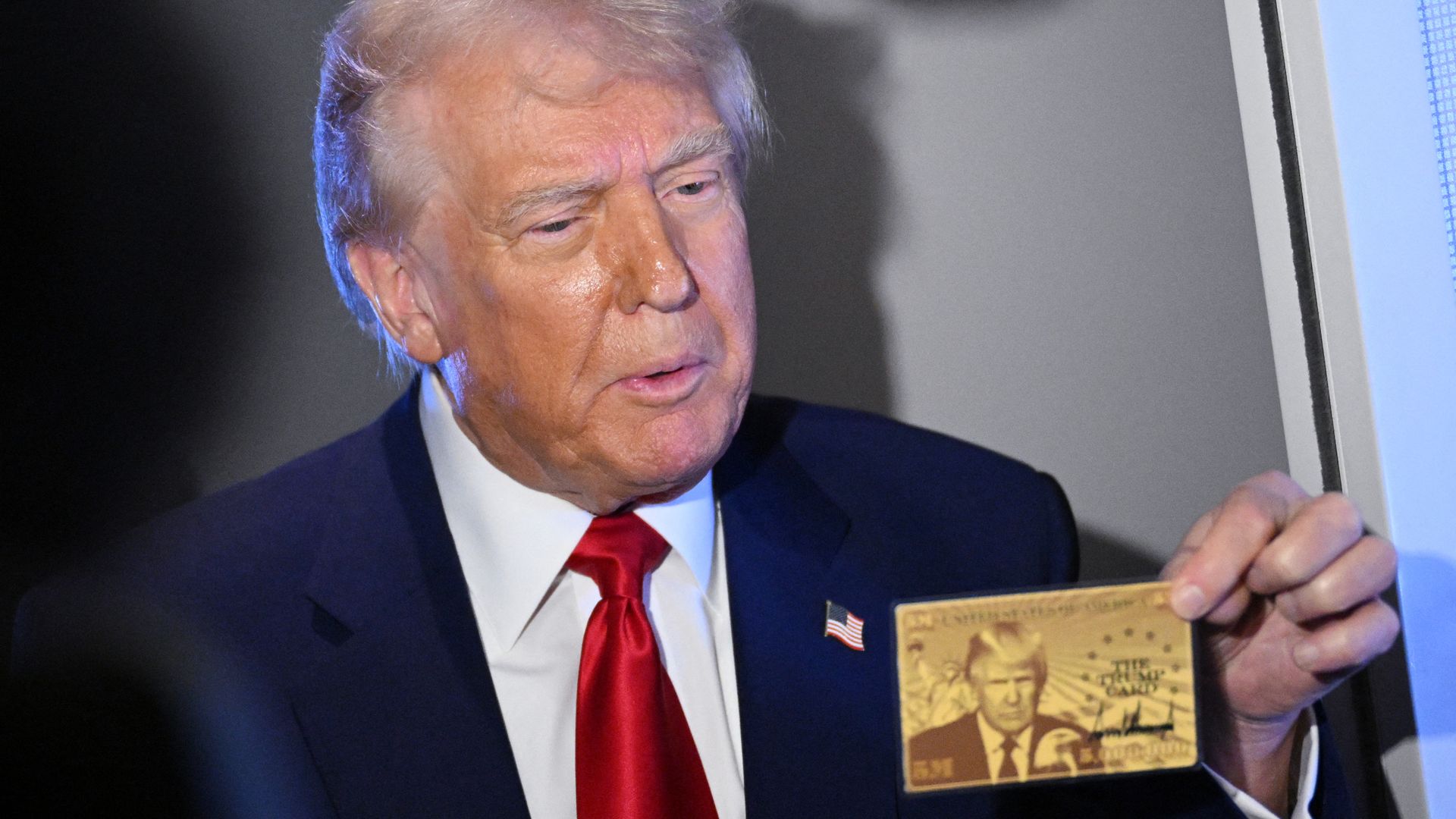
The "gold card" website allowing people to buy U.S. permanent residency for $5 million will launch within a week, Commerce Secretary Howard Lutnick said Wednesday at an Axios Building the Future event in Washington.
Why it matters: President Trump has suggested the U.S. could sell 1 million of the cards — enough to retire the national debt.
President Trump felt "horrible" about the impacts of tariffs on China that hit American businesses in April, Commerce Sec. Howard Lutnick said at an Axios event on Wednesday.
Why it matters: Lutnick said the pain was necessary — but he again insisted prices won't rise for consumers.
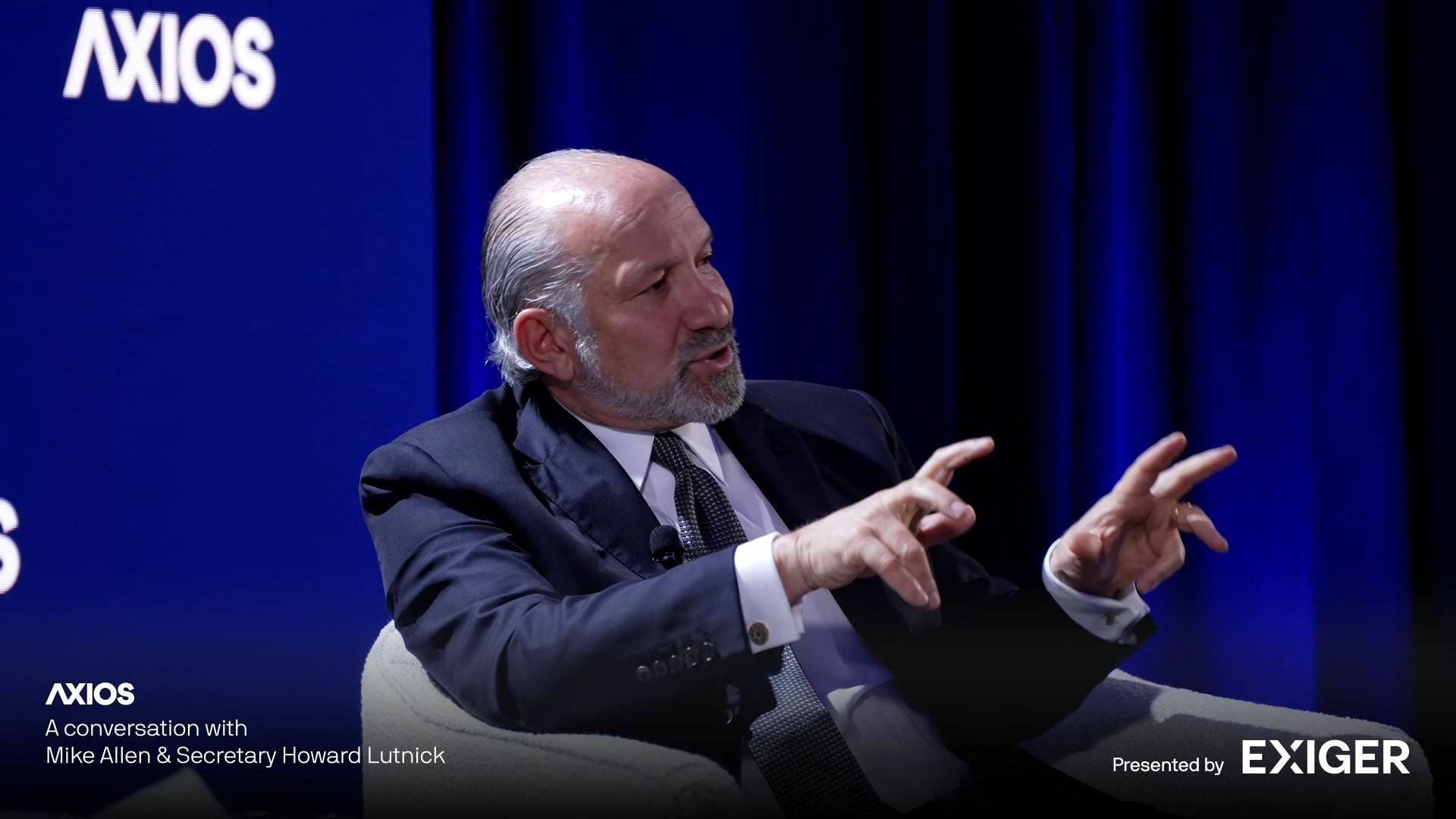
The U.S. expects to make trade deals with "most" of its key partners before a pause on tariffs runs out this summer, Commerce Secretary Howard Lutnick said Wednesday at an Axios Building the Future event in D.C.
Why it matters: The uncertainty around how many trade deals are made, when, and with whom has roiled markets for months.
Nvidia boss Jensen Huang says U.S. export controls on AI chips have totally missed the mark — with their biggest impact being the erosion of Nvidia's competitive position.
The curbs,whichbegan in 2022 and were meant to slow down China's progress on artificial intelligence, have instead fueled a surging Chinese industry, Huang said at a news conference in Taiwan early this morning.
"All in all, the export control was a failure," he said.
📉 The impact: Nvidia's once-dominant position in China has been significantly dented — its market share in the country falling from 95% four years ago to only 50% today, Huang said.
Target today missed expectations for Q1 earnings and revenue and cut its full-year sales forecast.
🎯 Zoom in: The retailer's comparable sales fell 3.8% in the first quarter. Over those three months, it saw fewer customers, and those shoppers spent less per visit.
The company pointed to factors like lower consumer confidence, uncertainty over potential tariffs and customer boycotts after rolling back DEI initiatives in January.
It lost market share in 20 of the 35 merchandise categories it tracks, CEO Brian Cornell noted on the company's earnings call.
Target announced leadership changes. The company said chief strategy and growth officer Christina Hennington will be leaving — notable, as CNBC reported she'd been widely considered a candidate to succeed Cornell as CEO.
Bitcoin set a new all-time high Wednesday, breaking its record from around the time of the inauguration in January.
Why it matters: This bull run is behaving differently from past crypto booms — most notably, the retreat from the recent high has not led to massive losses.
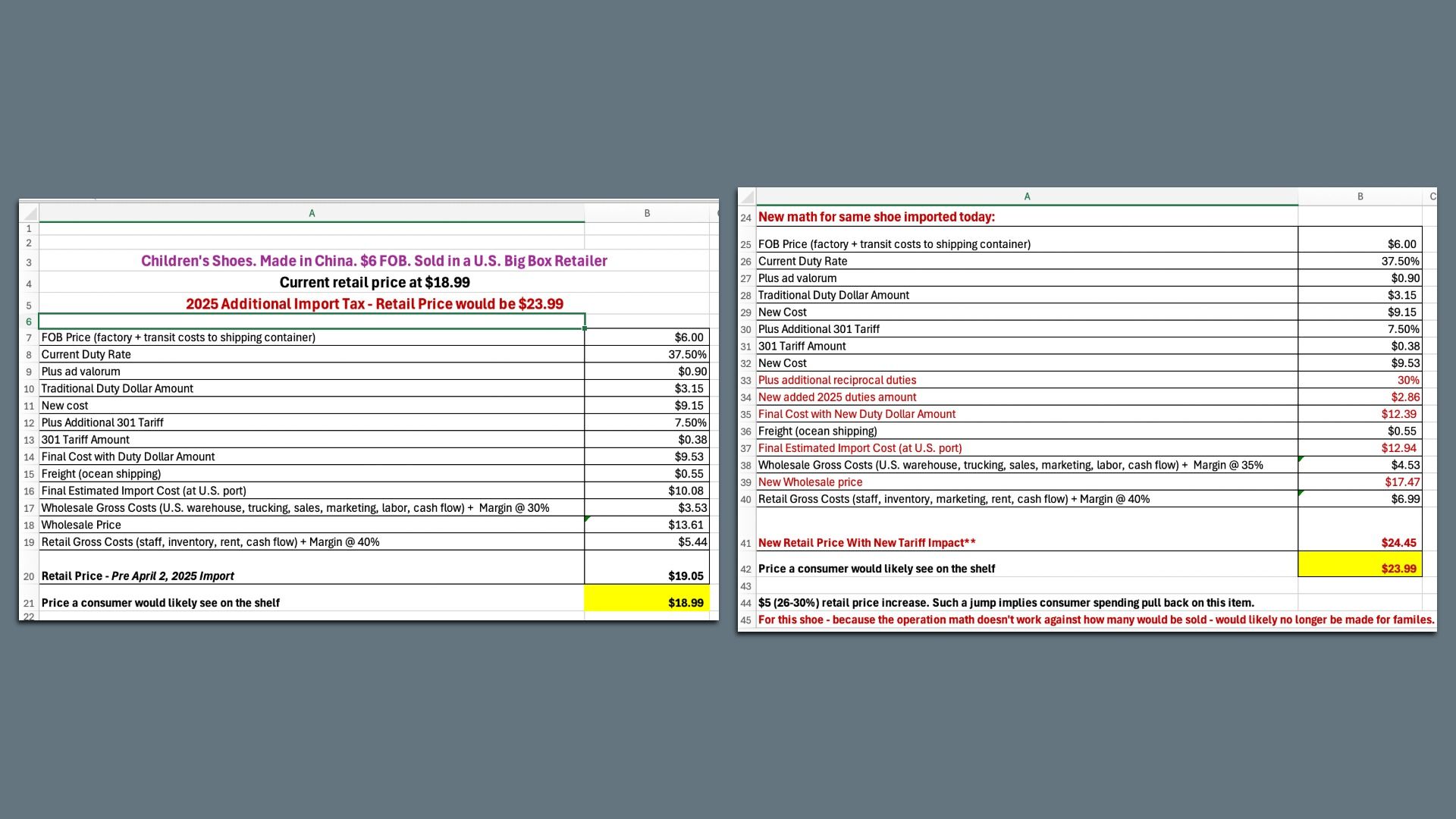
A spreadsheet making the rounds in Congress illustrates the stark tariff-era math for America's retailers, leaving them with two options: hike consumer prices or risk a cash crunch that threatens their survival.
Why it matters: The numbers, an illustrative example produced by a footwear trade association, show that many importers of consumers goods from China can't make the math work, even after the reduction in tariff rates from 145% to 30%.
Public trust in self-driving vehicles is critical, but without federal standards, companies in the sector get to decide what to share about the safety of their technology, with varying levels of transparency.
As Tesla gears up to launch robotaxis next month in Austin, Texas, there are still plenty of outstanding questions.
Why it matters: Even if you're personally not ready to ride in the back seat of a robotaxi, everyone will be sharing the road with them soon enough.
Target officials said Wednesday they plan to "offset the vast majority" of tariff impacts to consumers and remain "price competitive."
Why it matters: The Minneapolis-based retailer saw sales decline more than expected in the first quarter of the year, and warned of a "high degree of uncertainty" between tariffs and consumer confidence.
Some changes implemented by the Department of Government Efficiency at the Social Security Administration are reportedly being rolled back, but the agency is still struggling with fallout from the Elon Musk chainsaw.
Why it matters: The retreat shows the limits of DOGE's slash-and-burn strategy at an agency that is deeply enmeshed with Americans' lives.
In a small hangar east of downtown Orlando sits a custom two-seater aircraft hardwired for combat. It carries no missiles under its wings. It has no concealed weapons bay. And it has no refueling probe.
It does, however, host the Advanced Tactical Augmented Reality System (ATARS), which can simulate all of the above.
The big picture: Training and rehearsal are cornerstones of military success. But it's easier said than done. Services like the U.S. Air Force are plagued by pilot shortages, aging aircraft and availability issues.
President Trump yesterday declared himself the biggest "fiscal hawk" in Washington.
He then spent the next hour urging Republicans to unite behind the most budget-busting legislation in modern U.S. history.
Why it matters: Trump's "big, beautiful bill" is projected to add trillions to the deficit over the next decade — rattling conservatives who have long warned that the U.S. is barreling toward fiscal catastrophe.
The U.S. should curb its "ever-increasing" debt burden, International Monetary Fund first deputy managing director Gita Gopinath said in an interview with the Financial Times, published Tuesday.
Why it matters: Gopinath's comments come days after Moody's downgraded the U.S. credit rating due to increasing government debt and interest payment ratios and as fiscal watchdogs raise concern that President Trump's proposed tax cuts would significantly increase the deficit.