How Trump is trying to manage "the store"

Add Axios as your preferred source to
see more of our stories on Google.
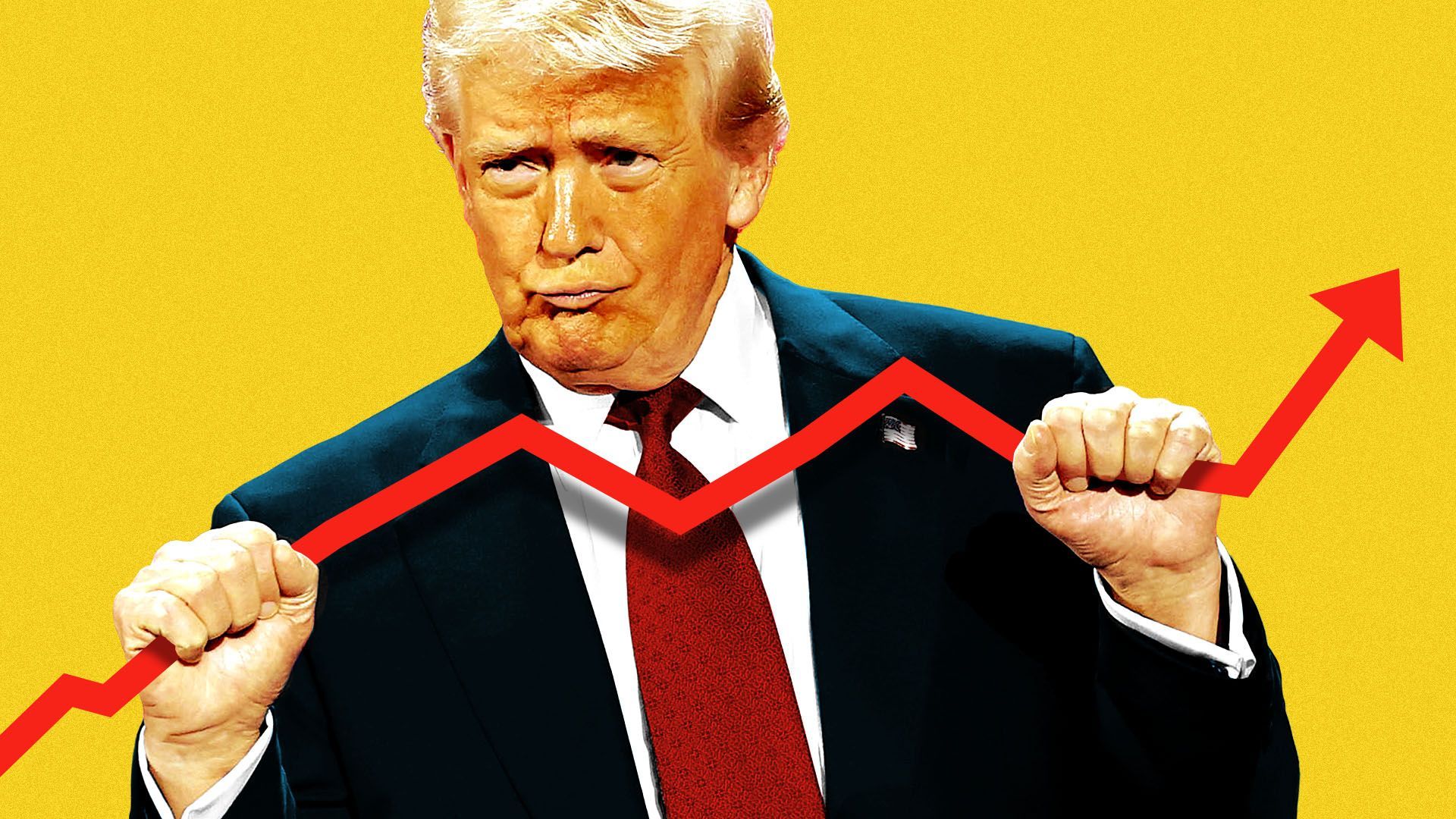
Illustration: Sarah Grillo/Axios. Photo: Win McNamee/Getty Images
When President Trump warns companies like Walmart not to hike prices in response to tariffs, he's acting in a long-standing tradition.
Why it matters: Politicians routinely use their bully pulpit or pull policy levers to control prices of critical goods.
- The difference is that Trump was the one who directly set the price hikes in motion by raising tariffs.
Driving the news: Trump has not been shy about using his presidential sway to influence prices.
- Over the weekend, he railed against Walmart for saying they would raise prices and demanded they "EAT THE TARIFFS."
- In an interview with Time magazine, Trump compared his administration with "the biggest department store in history" and said he sets prices with tariffs.
- "And on behalf of the American people, I own the store, and I set prices, and I'll say, if you want to shop here, this is what you have to pay."
- Earlier this month, Trump issued an executive order to lower drug prices, and during his campaign, he promised to lower food and gas prices.
Yes, but: The White House says the administration is making an effort to help the free market lower prices by relaxing regulations or encouraging more oil drilling, for instance. Tariffs are just one way to level the playing field with other countries who impose price controls or import restrictions, officials say.
- That is distinct from traditional notions of "price controls."
- According to White House spokesman Kush Desai: "Our full suite of supply-side reforms — rapid deregulation, domestic energy production, and tax cuts — along with our America First trade policies have now delivered multiple below-expectation inflation reports, robust jobs reports, trillions in historic investment commitments, and a UK trade agreement that opened up billions of dollars in export opportunities for American producers, with many more custom-tailored trade deals to come."
Flashback: When Joe Biden was in office, he made statements urging grocery stores to lower prices, and when Target announced it would do just that on a limited number of goods — basically a sale — the White House took credit.
- Meanwhile, presidential candidate Kamala Harris caught a tremendous amount of flak from conservatives and others over a proposal to ban price gouging. Trump called her a communist during the campaign.
- In 1971, Richard Nixon took the drastic step of freezing prices and wages for 90 days to push inflation down. It was "economically ineffective and politically disastrous," Politico wrote last year.
- Franklin Roosevelt and Congress also used price controls in World War II.
Between the lines: During the inflation spike in 2022, talk of price controls got a lot of pushback from the right.
- At the same time, the left railed against "greedy" companies for raising prices beyond what was necessary, a simplified version of a theory popularized by Isabella Weber, an economist at the University of Massachusetts Amherst.
State of play: Now the tides have shifted. Trump and his supporters are pushing back on the notion that companies must raise prices to deal with tariffs and should instead eat the costs themselves.
What they're saying: "In fact, with the major exception that Trump's own actions caused this, the message isn't that different from President Biden inveighing against grocery price markups during his watch," wrote Jared Bernstein, who chaired the White House Council of Economic Advisors during the Biden administration, in a Substack post this week.
- Trump's Truth Social post about Walmart, according to Weber the economist, "sounds awfully similar to what we have been arguing."
