As costs soar, Air Force says it "neglected" Sentinel infrastructure

Add Axios as your preferred source to
see more of our stories on Google.
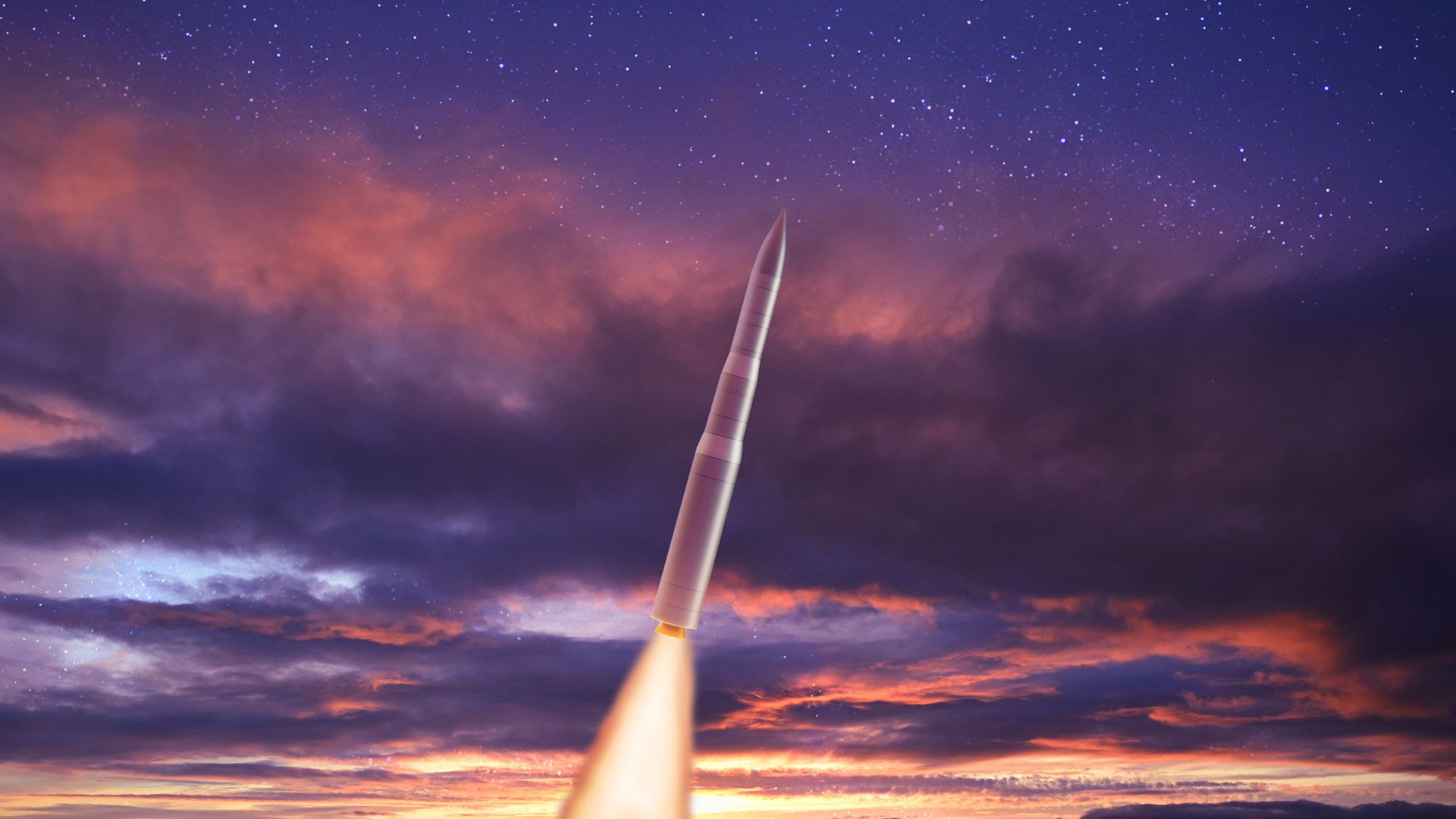
A rendering of the Sentinel missile, flying at twilight. Photo: Northrop Grumman
The Pentagon is spending billions of dollars on weapons relevant to yesteryear. One of the biggest offenders, according to critics, is a hive of sitting-duck nuclear weapons in the middle of the country.
Why it matters: Nukes are polarizing — even more so in an age of cheap, daily battlefield innovation and worldwide tensions creeping close to Cold War 2.0.
Driving the news: The U.S. Air Force and its collaborators suffered such intense tunnel vision working on the new Sentinel nuclear missile that they "really neglected" other pieces of the puzzle, like siloes and launch networks, according to the service's acquisitions chief, Andrew Hunter.
- Those missteps hurt the program and forced the Pentagon to publicly recommit to the effort.
Catch up quick: The Air Force wants to replace hundreds of aging Minuteman III missiles with the Northrop Grumman-made Sentinel, tipped with the National Nuclear Security Administration's W87-1 warhead.
- The initial price tag read $78 billion. But estimates ballooned to $141 billion, or even more without intervention.
- The Pentagon in July said Sentinel was necessary and peerless, and that the Air Force should proceed, albeit with major changes. The head of the program was fired, Defense One reported weeks prior.
- Hunter this month told the Defense News Conference failure thus far was "collective" and included flubs by the Air Force, Northrop, the acquisition community and more. Not even Boeing's participation would have helped, he said.
- "We underestimated the complexity of it because we only do it roughly every 75 years or so," Hunter added. "This is our chance to get it right."
Between the lines: Bloated prices and timelines are red meat to watchdogs. They also nourish a decades-old debate: Why have missiles in the ground when you have bombers in the air and submarines underwater?
Two experts, Mackenzie Knight and Stephen Young, told me such major defense overhauls are often plagued by management lapses and archaic thinking.
- "Good on them for admitting the exact mistake that was made," said Knight, a senior research associate with the Federation of American Scientists. "But I think there has to be more intense oversight from the earliest stages of these massive defense programs."
- "I don't think we're going to see Sentinel halted or canceled or anything like that," she added. "But I do think what we will see is further cost increases."
- "The fact that it's policy that we have a triad is, indeed, policy, but it's just inherited policy. I think the thinking is old," said Young, a senior Washington representative with the Union of Concerned Scientists.
- "If we had 10,000 nukes, it wouldn't have stopped Russia from invading Ukraine," he continued. (Saber rattling from Russian President Vladimir Putin also hasn't kept Kursk safe.)
Yes, but: Air Force leadership is going "line by line" to limit costs, an "exhaustive process," according to Vice Chief of Staff Gen. James Slife.
- Slife also said the only thing more expensive than an effective nuclear arsenal is the lack of one.
- "Periodically, we get questions, 'Why shouldn't we have a dyad?' The national policy is a triad. It's where we're going."
Be smart: Sentinel stumbles are a symptom of a larger fiasco playing out across the U.S. nuclear weapons ecosystem, from crumbling Cold War-era infrastructure to cleanup and storage squabbles to broken promises about plutonium pits.
