DAVOS, Switzerland – Companies are investing billions in AI applications to streamline operations, offer new tools, and avoid losing out on the AI hype cycle.
Why it matters: AI's rapidly advancing capabilities will have different applications for different industries, and can be applied to advance executives' agendas, several industry leaders said at Davos.
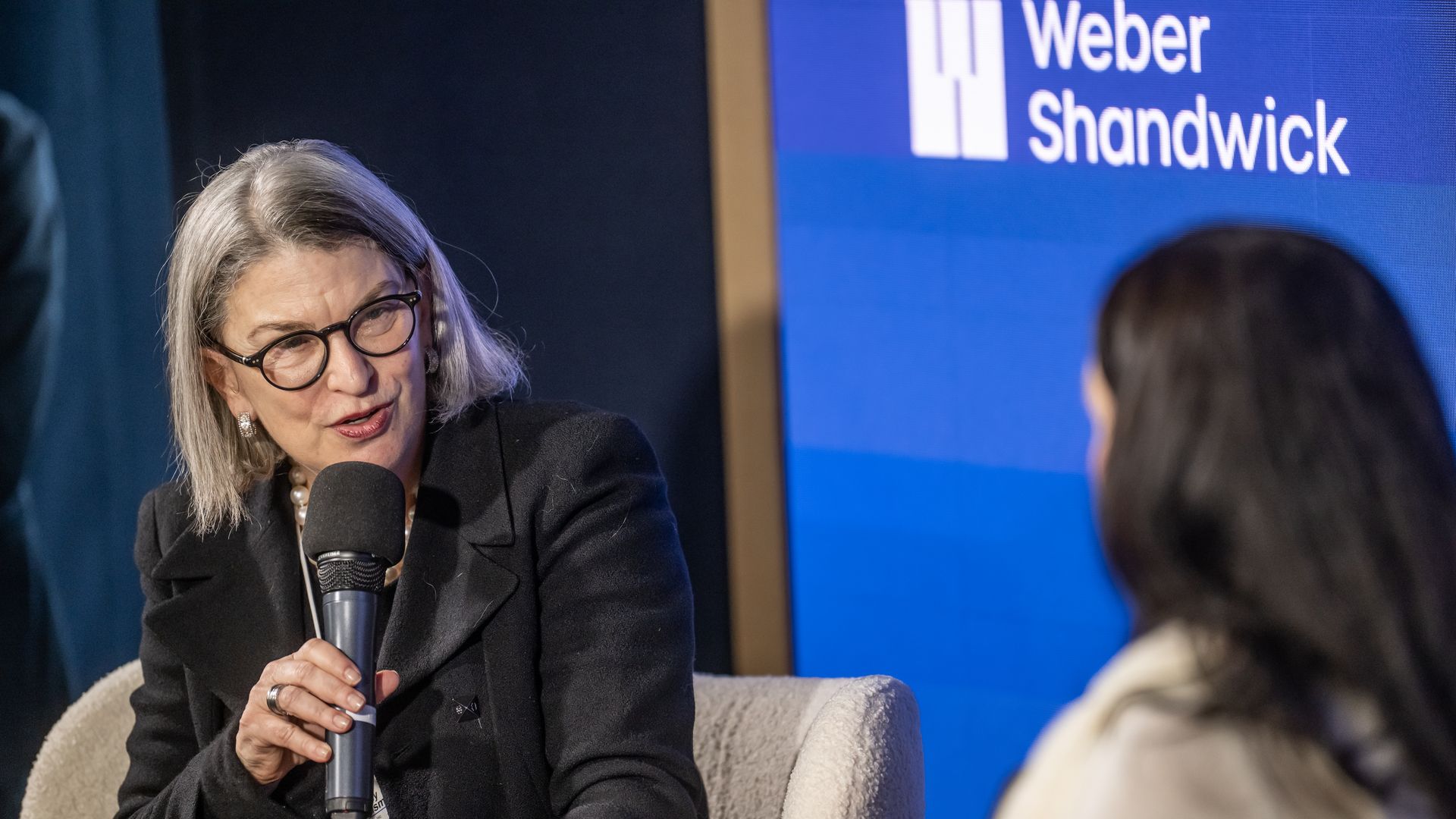
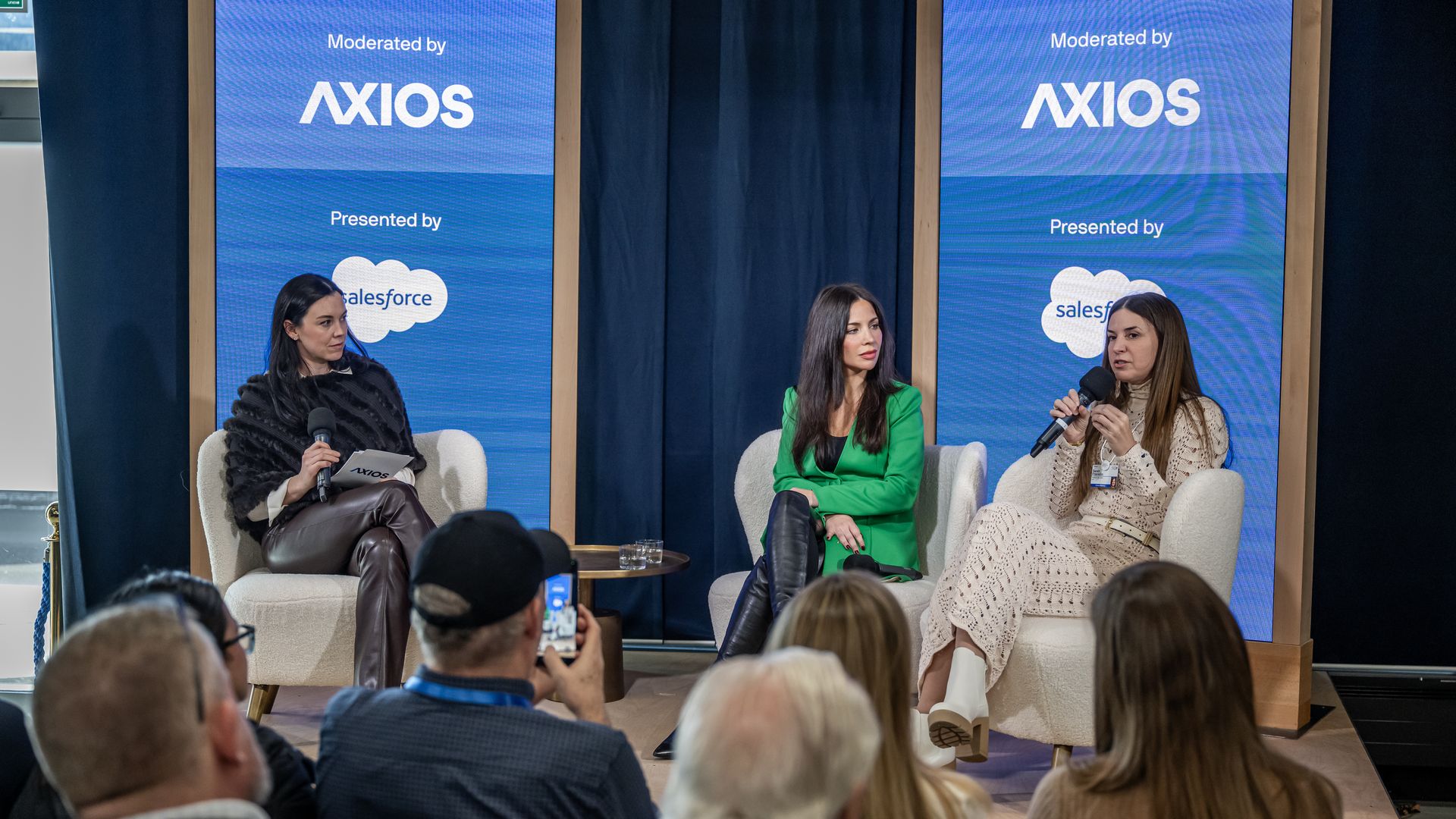
Axios' Dan Primack and Ina Fried moderated conversations with New York Stock Exchange Group president Lynn Martin, Accenture CEO Julie Sweet, and Google DeepMind COO Lila Ibrahim. The Jan. 21 discussions were sponsored by Lightspeed Venture Partners.
What they're saying: Adoption of AI is growing in business settings and has started advising high-level leaders in some cases.
1) AI agents are advancing quickly. Davos was very different last year, Sweet said, whendigital agents were "not the buzz it is now."
Sweet shared how an AI agent generated talking points to coach a senior leader on an upcoming conversation, and that she had no changes to the agent's talking points.
2) AI can monitor for security issues. "We've been using AI from our regulatory team to spot nefarious behavior in our markets," Martin said.
NYSE employees are catching more bad behavior now using AI as opposed to a few years ago, Martin said.
3) The application of AI can vary from business calls and regulatory environmentsto health care.
"The area I'm particularly excited about is using AI for scientific discovery," Ibrahim said.
"If we can better understand the universe, can we unlock possible solutions to things like health care and diseases, to climate, to food security and crops," she added.
Sponsored content:
In a View From the Top sponsored segment, Glean co-founder and CEO Arvind Jain explained how AI can serve as an augmentative tool for humans.
"That's the thing that I'm most excited about, [is] how humans can actually use AI to do things that they couldn't do before," Jain said.
One example Jain cited is analyzing employee calendar data to get rid of unnecessary meetings, which is a task he was hesitant to give an employee to do.
Walmart is increasing pay, bonus and stock awards for market managers that can bring their total annual compensation to more than $600,000, the retailer told Axios Thursday.
Why it matters: It's the latest move by the nation's largest private employer and retailer to retain and reward employees.
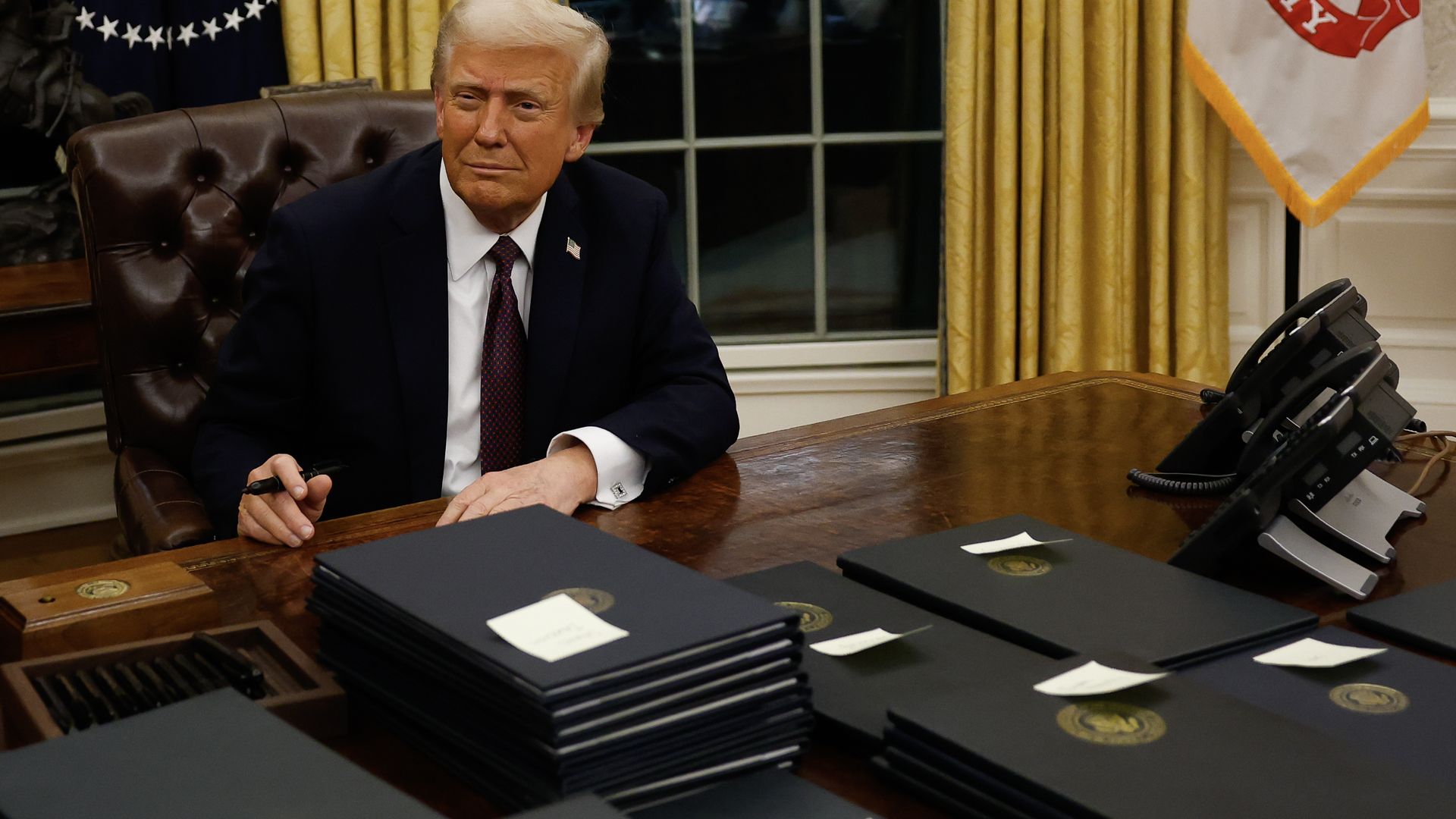
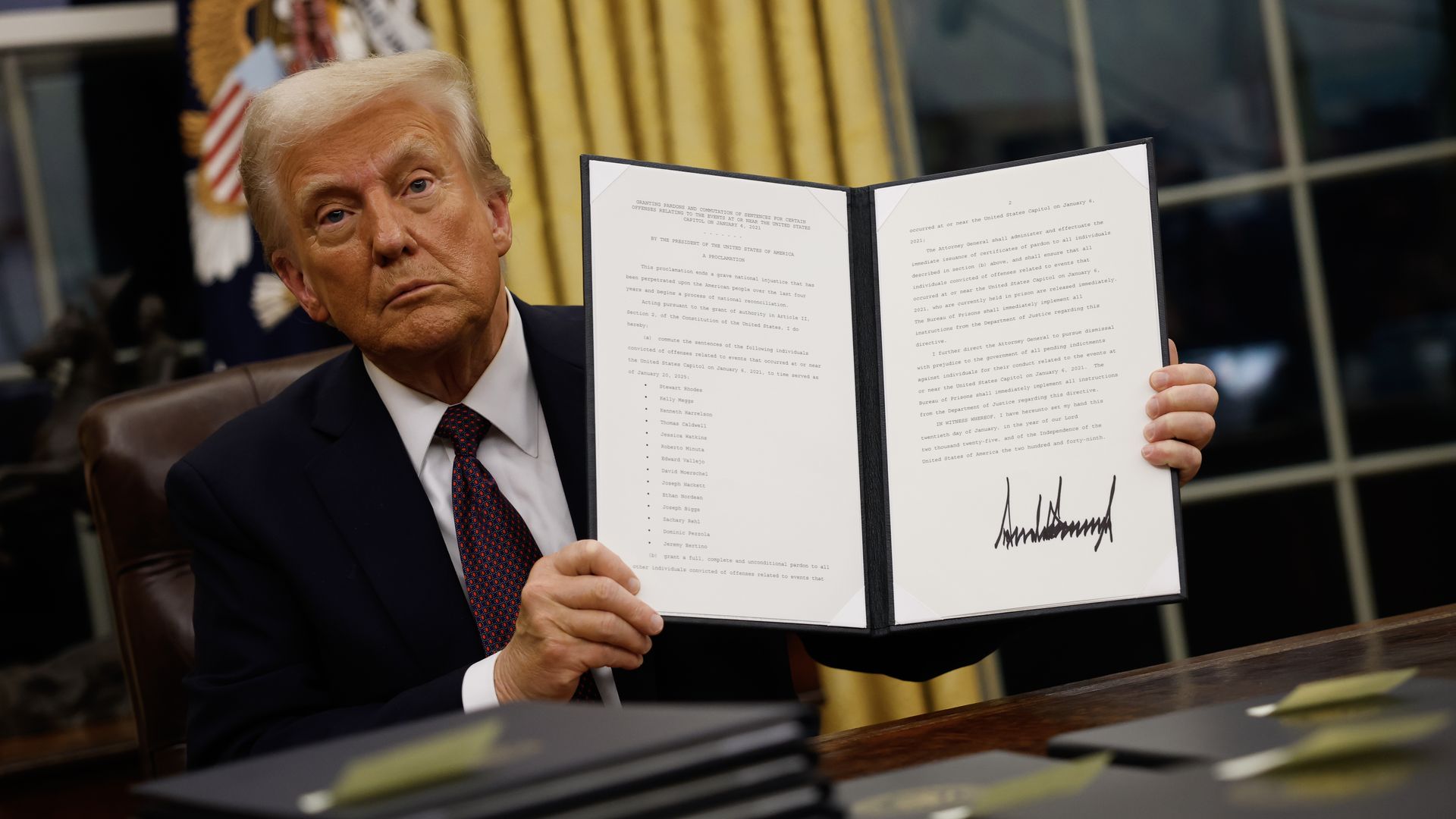
President Donald Trump signed an executive order Thursday establishing a crypto working group to be led by David Sacks, the administration's AI and crypto czar, but he did not create a bitcoin stockpile — yet.
Why it matters: The order charges the team, which will include the Treasury secretary, attorney general and head of the Securities and Exchange Commission, with coming up with an overal federal strategy for regulating crypto assets and stablecoins.
DAVOS, Switzerland – We are "just on the verge" of AI agents, OpenAI chief product officer Kevin Weil told Axios' Ina Fried on Jan.21.
Why it matters: AI agents have gained traction in recent months as the next big thing in the workplace.
Axios' Dan Primack and Fried moderated conversations with OpenAI chief product officer Kevin Weil and LinkedIn CEO Ryan Roslansky. The discussions were sponsored by Qualcomm.
What they're saying: "For us, I think 2025 is the year that we go from ChatGPT being this super smart thing that can answer any question you ask, to ChatGPT doing things in the real world for you," Weil said.
Weil added that AI agents will soon be able to do mundane tasks for humans that they don't want to do, like filling out forms or getting reservations at a restaurant.
"We're going to be able to do that, no question," Weil said.
AI is also changing the skills needed to excel in today's jobs, Roslansky said.
"If you break down everyone's job into those skills or tasks, even going back to 2015, on average across all jobs, the skills needed to do the job have changed by 25%, which is just fascinating to see," Roslansky said.
"I don't think that's going to slow down, it's only going to accelerate into the rest of the 21st century, and AI is a big part of that,:.
Sponsored content:
In a View From the Top sponsored segment, Qualcomm Technologies SVP and CMO Don McGuire spoke about the privacy benefits of on-premise AI where the AI deployment lives on an organization's own servers.
"There's so many benefits to on-device or on-prem AI. One is privacy and safety. You control your inputs, how things are trained, and as you develop and use the tool … you don't have to worry" if that IP will go somewhere where you don't want it to go, McGuire said.
President Trump wants to see lower interest rates. But the cost of borrowing money is not something he or any president controls directly — and the ways he can affect rates are subtle and counterintuitive.
Why it matters: Rates may well come down as the Trump administration progresses, but if so it will be because of changing policy from the politically independent Federal Reserve and global investors' outlook for the economy in the long-term.
CEOs across industries— from pharma to tech to banking — are committed to working with President Trump's new administration and are seeing very little internal pushback.
Why it matters: This is a dramatic shift from the employee activism seen during the tail end of the first Trump administration.
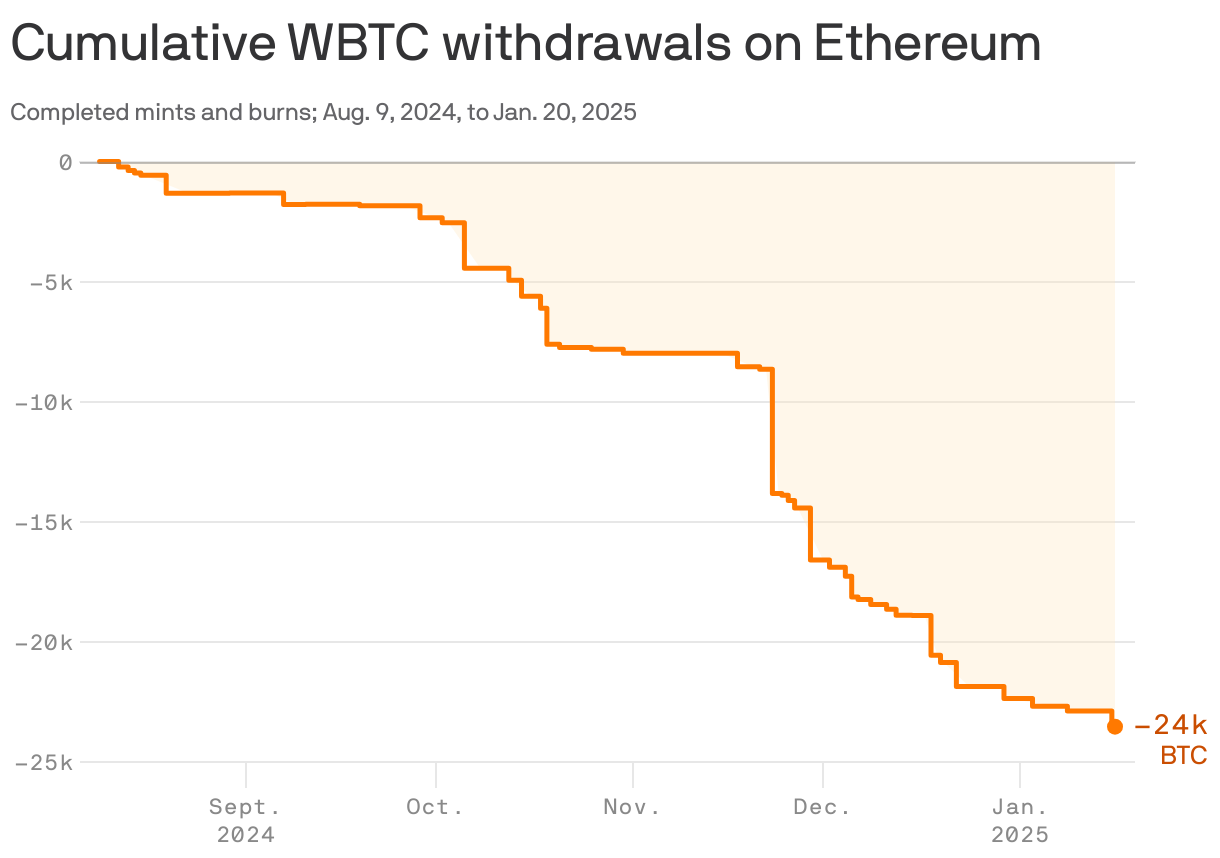
The main platform for minting derivatives of the original cryptocurrency is hemorrhaging assets.
Why it matters: Wrapped bitcoin (WBTC) has been crucial infrastructure for decentralized finance, allowing holders of bitcoin to borrow against it to trade and transact on other chains, among other things.
How it works: A trader's bitcoin gets locked up in a wallet on its native blockchain, and a corresponding bitcoin gets printed on a different blockchain, all executed by a smart contract.
The new Senate subcommittee focused on the blockchain world will be led by two solidly pro-crypto legislators: Sen. Cynthia Lummis (R.-Wyo.) will chair while Sen. Ruben Gallego (D-Ariz.) will serve as its ranking member.
Why it matters: Gallego had the backing of Fairshake and its affiliated pro-crypto PACs. His appointment is a win for the industry and puts an ally in a key gatekeeping position.
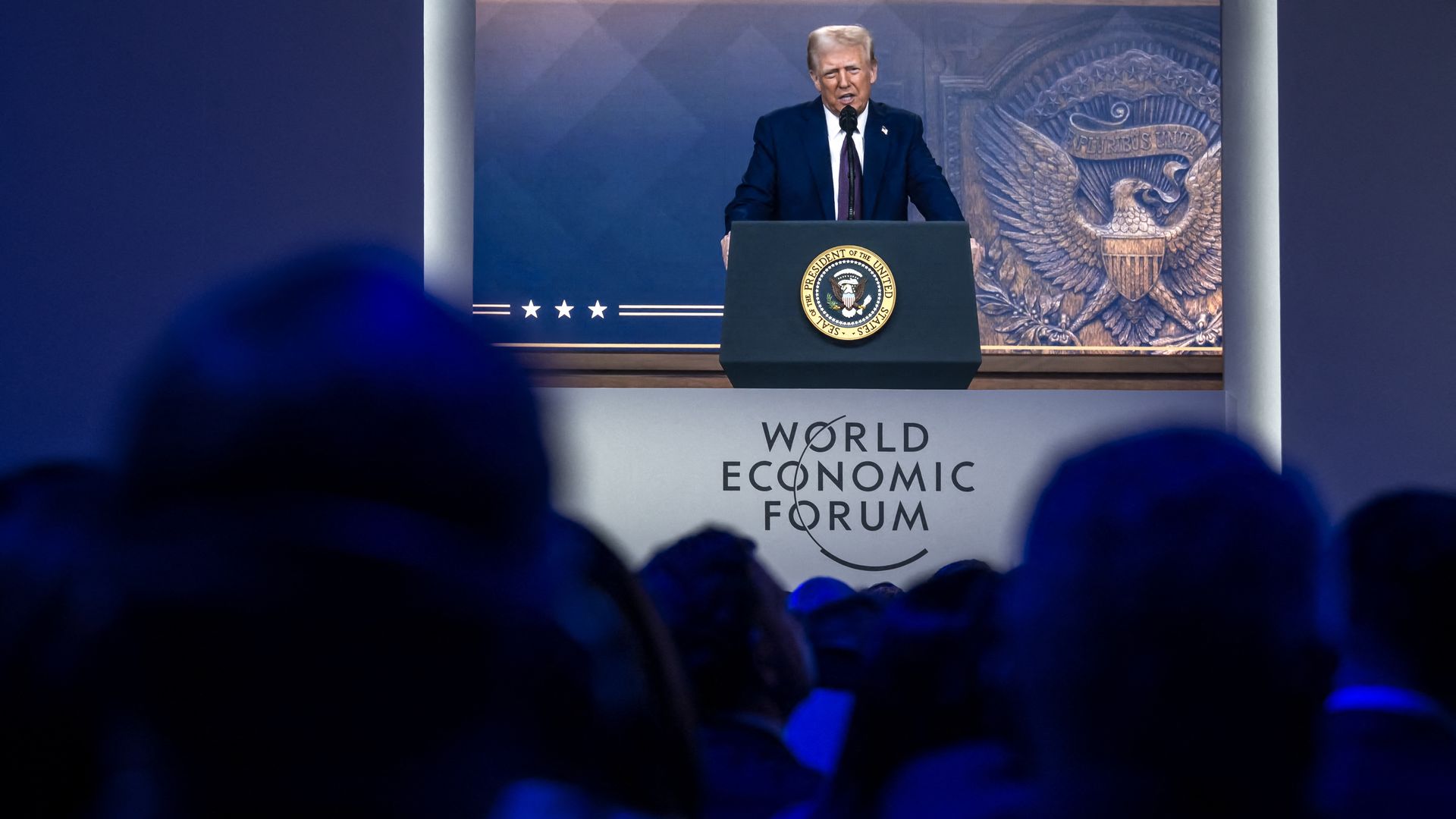
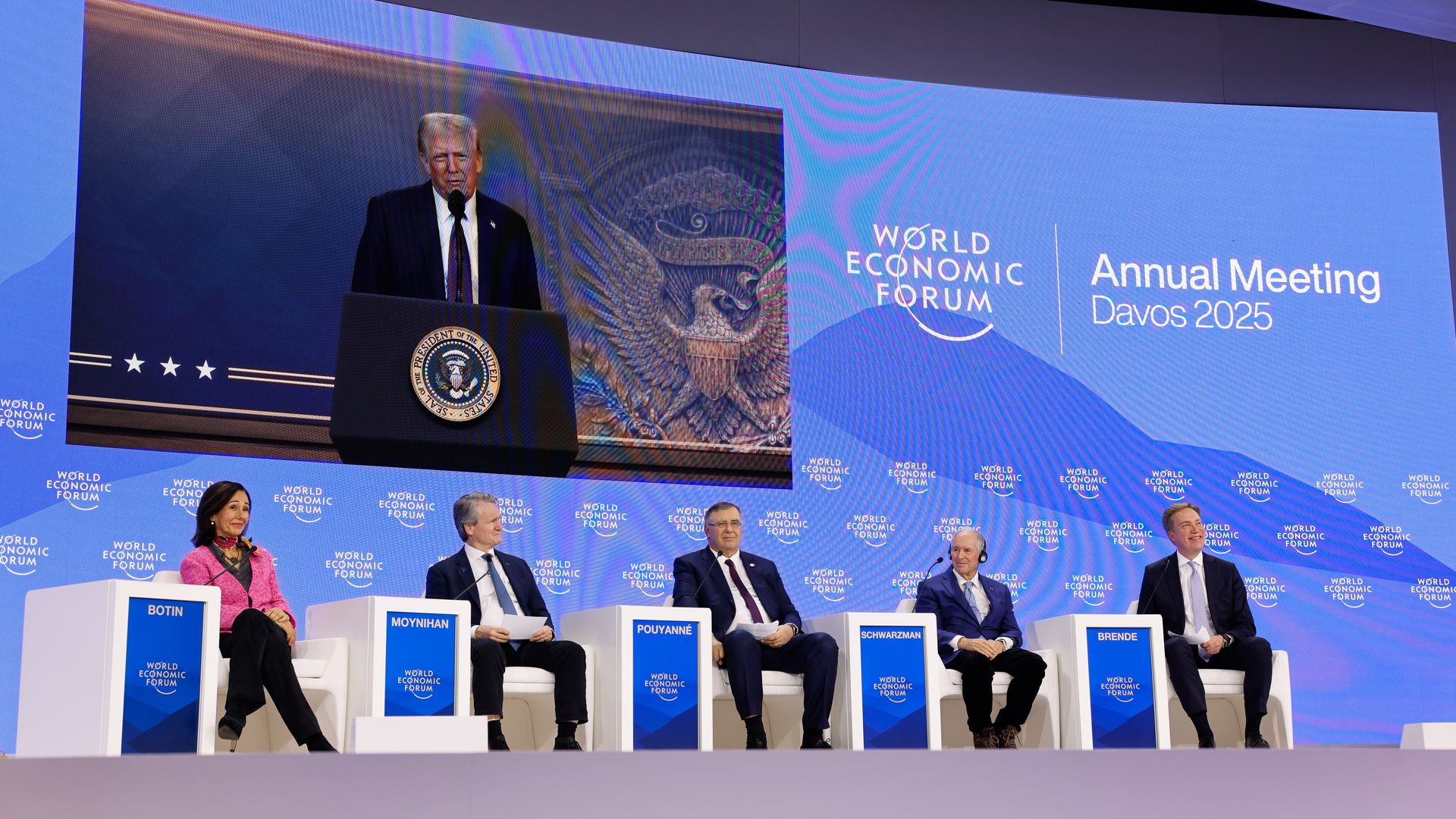
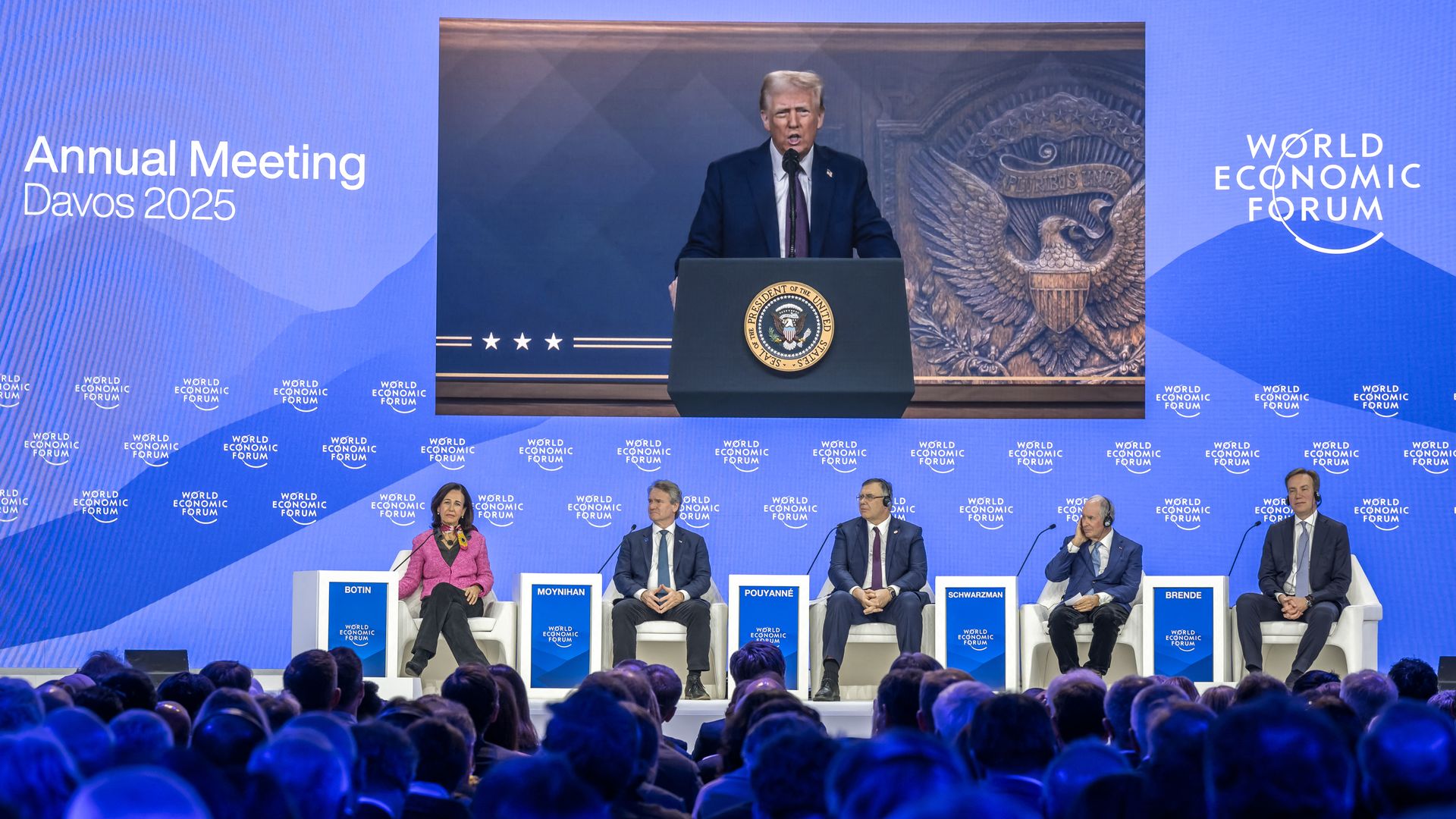
President Trump said in a virtual address at the World Economic Forum on Thursday that he will mandate the Federal Reserve lower interest rates imminently, a threat that undermines the Federal Reserve's political independence.
Why it matters: In his first major speech since the inauguration, Trump re-upped pressure on the central bank — a frequent feature of his first term, though it had previously been rare for presidents to comment on Fed policy.
President Trump celebrated the start of his administration Thursday while addressing the World Economic Forum in Davos, Switzerland, lauding his agenda while taking digs at former President Biden.
Why it matters: Trump vowed this week to usher in a "golden age" in the U.S. andimmediately issued a flurry of executive orders reshaping the country's immigration and environmental policies, civil rights protections and federal workforce.
Economic orthodoxy is out. Rule-busting and experimentation are in. That's a key takeaway from this week's gathering of top executives and world leaders at the World Economic Forum in Davos, Switzerland.
Why it matters: Economic mini-experiments are happening in nations big and small as government officials embrace tariffs, protectionism, anti-immigration and other policies.
Why it matters: Trump's desire to dismantlediversity, equity and inclusion initiatives in the federal government's employment practices could set the tone for private companies nationwide to do the same.
DAVOS, Switzerland – Businesses need to strategize their AI plans, particularly in developing a process for AI agents, Writer CEO and co-founder May Habib told Axios' Alison Snyder.
Why it matters: Some companies may be lacking proper guidelines and missing competitive opportunities, as tech giants are pointing to AI agents as the next big thing in 2025.
Axios' Ina Fried and Snyder moderated conversations with Deep Learning AI founder Andrew Ng and Habib in Davos. The Jan. 21 discussions were sponsored by Cisco.
What they're saying: Habib said businesses don't want AI agents making too many decisions, but need to figure out the fine line between what needs human approval and what doesn't.
"What we see as really the bottleneck here is getting people and companies and teams to really align on 'what is our process,'" Habib said.
"The tech building blocks to execute on that exist today, but the big body of work" is the gap in skills, she added.
More businesses are now seeing positive ROIs from their AI investments, Ng noted.
"If you're not in the business of training foundation models, because others have spent billions of dollars training these models, you can now get access to these models for cents or dollars … and build really valuable applications on top," Ng said when discussing applications like AI agents.
"So the ROI equation for people building applications actually looks really good, even though it still needs to be sorted for the people building foundation models."
2025 prediction: Habib said she expects enterprises using AI will have "built their own first [application] or agent" by this year and added that the acceleration is happening "pretty fast."
Sponsored content:
In a View From the Top sponsored segment, Cisco EVP and chief customer experience officer Liz Centoni said AI agents aren't all hype, but it will take a "long time before it becomes a reality" because AI agents exacerbate some current AI issues.
"When we think about the issues that we've been talking about with just AI in general around transparency…those just get even more exacerbated with agentic because with agentic, … it's like, you're talking about your intern [who] is now actually graduating to a full-time job," Centoni said.
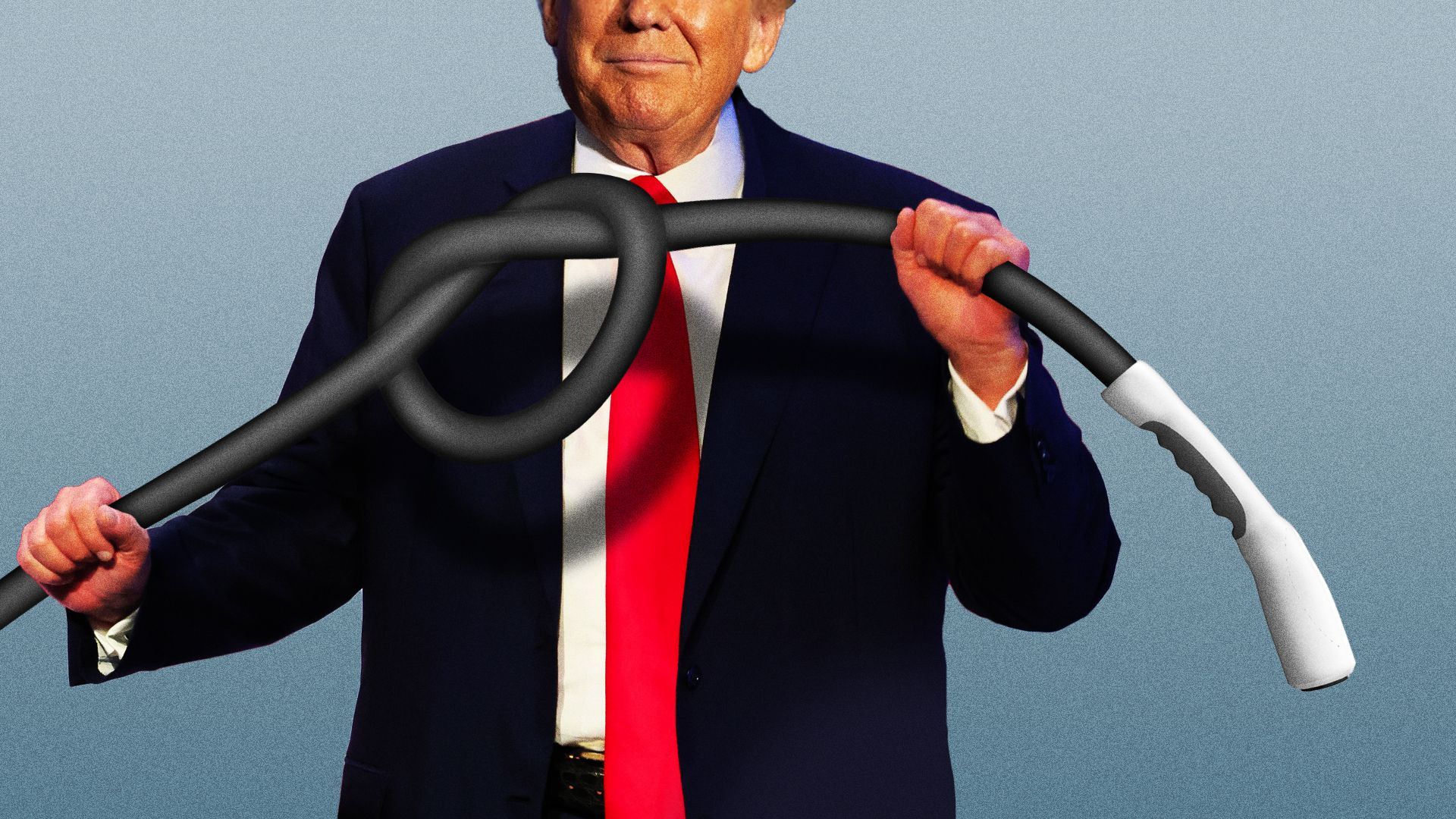
President Trump's order to revoke what he calls the "EV mandate" gives automakers a welcome reprieve from regulatory hurdles — but could make it harder for them to compete on a global scale with Chinese rivals.
Why it matters: The rise of lower-cost Chinese manufacturers is an existential threat to U.S. car companies that are already in the midst of a once-in-a-century transformation.