What to know about Trump's ability to move interest rates

Add Axios as your preferred source to
see more of our stories on Google.
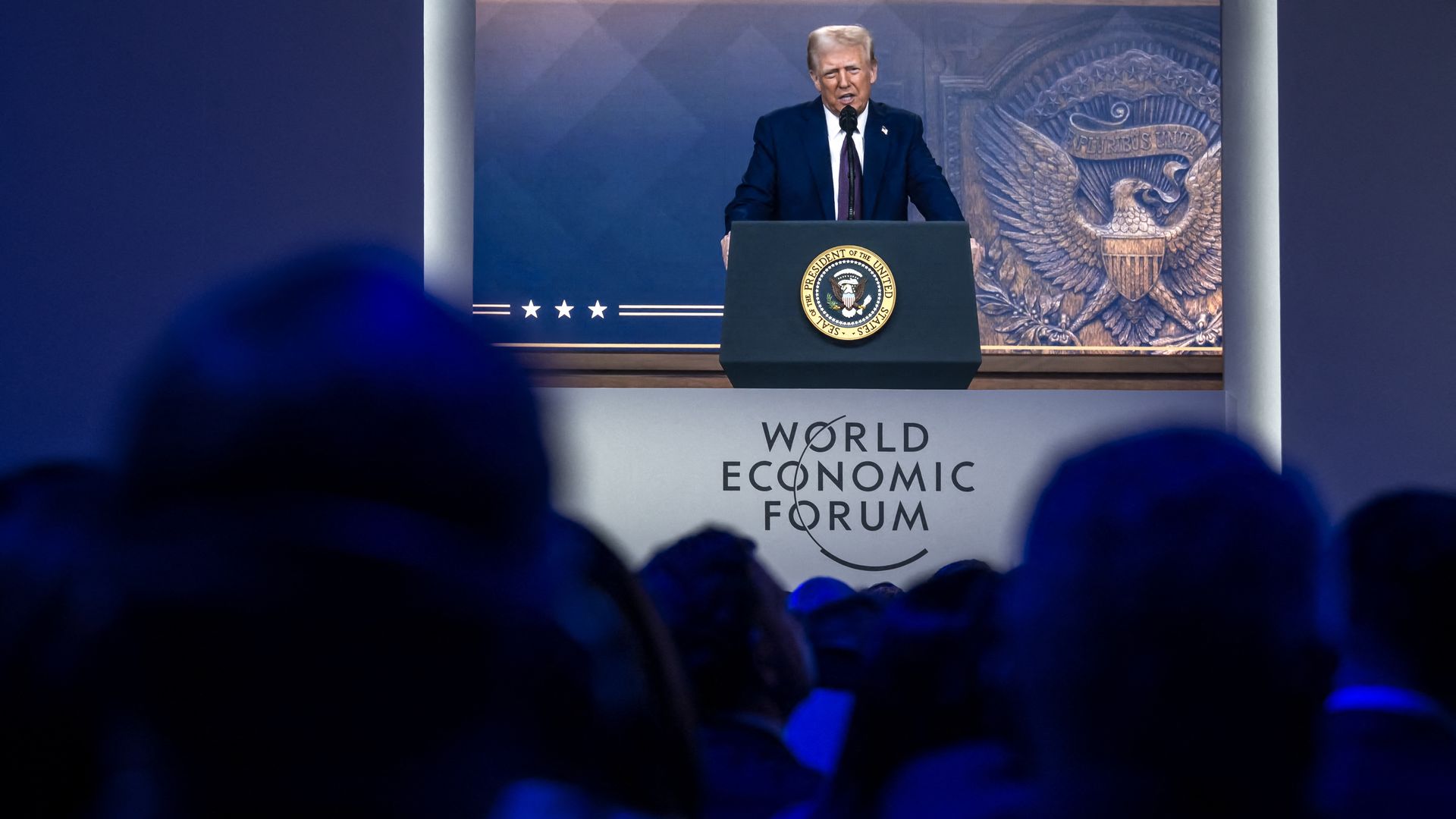
President Trump addresses the World Economic Forum Thursday. Photo: Fabrice Coffrini/AFP via Getty.
President Trump wants to see lower interest rates. But the cost of borrowing money is not something he or any president controls directly — and the ways he can affect rates are subtle and counterintuitive.
Why it matters: Rates may well come down as the Trump administration progresses, but if so it will be because of changing policy from the politically independent Federal Reserve and global investors' outlook for the economy in the long-term.
- Trump can certainly affect both factors, through appointments to the Fed and by shaping tax, spending, and other policies. But the pathways are indirect and will take time despite his demand Thursday for lower rates.
Driving the news: "I'll demand that interest rates drop immediately, Trump said Thursday at in a virtual address to the World Economic Forum in Davos, Switzerland. "And likewise, they should be dropping all over the world."
- Asked about rates in the Oval Office later Thursday, Trump said that "I'd like to see them come down a lot," saying that falling oil prices will mean lower inflation.
- "I would put in a strong statement" to the Fed calling for lower rates, he said, and "at the right time I would" speak to chair Jerome Powell about it.
Zoom in: Short-term interest rates are set by the Fed, which holds a policy meeting eight times a year where 19 officials vote on whether to lower or raise the federal funds rate, aiming to achieve their legal mandate of stable prices and maximum employment.
- Those policymakers include seven presidential appointees with staggered terms. No vacancies are scheduled to come open for another 12 months, and Powell's term doesn't end until May 2026.
- Last year there was speculation that Trump might make a legally dubious attempt to push out Powell prematurely, but he said last month he will not.
- The other 12 members of the Fed's rate-setting committee are presidents of reserve banks around the country, whose terms are also staggered and who are appointed by local boards of directors.
The intrigue: Even if Trump were to appoint Fed officials who were dead-set on cutting rates, it might not result in lower costs for common forms of borrowing if global investors think those officials will allow excessive inflation.
Zoom out: The Fed only directly controls short-term interest rates. The borrowing costs that matter most for consumers are medium-term (like car loans) or long-term (like home mortgages) interest rates.
- These rates are set in global bond markets by traders who are betting on countless factors, including how high and volatile inflation will turn out to be, the strength of growth and investment, and how much debt the U.S. government issues — and in turn how the Fed will react to all of that.
- If bond investors expect budget deficits to fall, for example, they will anticipate lower rates over the coming years, making mortgages and car loans cheaper immediately.
- Trump can very much influence the outlook for deficits, inflation, and growth, but through indirect means.
The bottom line: Trump can most effectively bring down interest rates by lowering the budget deficit, reducing price pressures across the economy, and appointing Fed governors whom markets view as credible bulwarks against inflation.
Editor's Note: This story has been updated with additional comments by President Trump.
