Understanding Powell's Fed plan for Trump 2.0

Add Axios as your preferred source to
see more of our stories on Google.
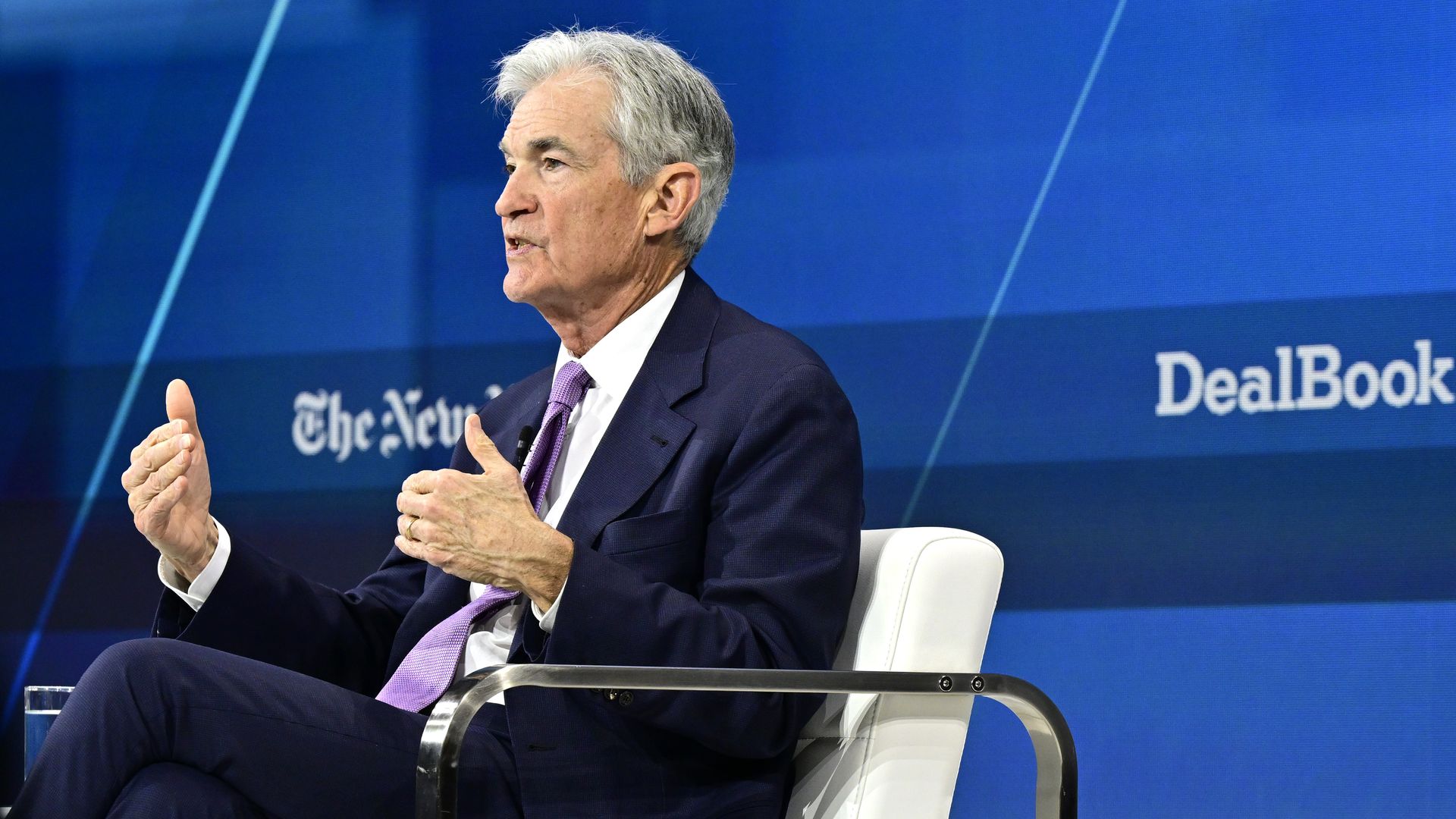
Powell at the Dealbook conference yesterday. Photo: Eugene Gologursky/Getty Images for The New York Times
Don't get baited. Stick to your knitting — but be clear and firm on issues where the law is on your side.
The big picture: That's the playbook that Federal Reserve chair Jerome Powell and the Fed used when President-elect Trump was last president and regularly pilloried the central bank for pushing interest rates too high. Powell has dusted it off for Trump 2.0.
- Powell's term extends through the first 16 months of the incoming administration.
- That sets up the potential for the same public tension between the Fed chief and president that was evident in 2018 and 2019, with huge stakes for the historically independent central bank.
Driving the news: In an appearance at the Dealbook conference Wednesday, Powell cited strong support in Congress for the Fed's ability to make decisions not subject to review by the executive branch.
- "I think there is very, very broad support for that set of ideas in Congress in both political parties on both sides of the Hill, and that's what really matters," he said.
- "It's the law of the land, and I'm not concerned that there's some risk that we would lose our statutory independence."
State of play: He also said he expects to have a constructive relationship with Treasury secretary nominee Scott Bessent, who has publicly mused about appointing a "shadow Fed chair" to undermine Powell's authority before his term concludes.
- "I fully expect that we'll have the same general kinds of relationships, institutional relationships, for example with the Council of Economic Advisers, but most importantly with the Treasury Department," Powell said.
- On Bessent, Powell said he was "confident that I will have the same kind of relationship with him once he's confirmed as I've had with other Treasury secretaries."
Between the lines: Powell kept his responses to the former president's public attacks in 2018 and 2019 dry and technocratic, emphasizing that the Fed was following the data to fulfill its Congressionally-set mandate.
- He avoided weighing in on areas that are outside the Fed's mission, particularly trade and tax policies.
- But when it came to threats to the Fed's independence, he was resolute. Then, as now, he said he would not resign his job even if the president asked him to and that the president has no legal right to fire him before the end of his term.
- He was sensitive to the risk of making a policy error by focusing on the optics of Trump's pressure. Indeed, the Fed did cut rates three times in 2019 after soft economic data.
The bottom line: So far, Powell looks set to deploy the same strategy for the second Trump term, which could test the Fed's role and independence in new ways.
