Friday's economy stories
Charted: Novo's promising results


Positive early-stage results for a new weight-loss treatment got Novo Nordisk investors excited today.
- The new treatment, amycretin, a weekly shot, delivered 22% weight loss over 36 weeks in Phase 1B/2A trials, compared with a 2% gain for patients on a placebo.
Why it matters: The Ozempic and Wegovy maker is trying to keep up in the feverish pharmaceutical race to deliver new treatments for obesity.
The impact: Novo's stock, which was up nearly 14% at one point in intraday trading, closed up 8.5% in the U.S.
TikTok's app is now a valuable relic
Having a phone with the TikTok app has suddenly become a hot commodity.
What's happening: TikTok is unavailable to download from the Apple and Android app stores, but it's working for anyone who already had it on their phone.
- And some of those enterprising folks are trying to sell their phones for thousands of dollars, according to multiple reports.
By the numbers: "Many" are "listed in the $2,000 to $5,000 range, but as to whether anyone is actually buying them at this price, it still seems unlikely," Wired reported.
Zoom in: The New York Times cited an IT engineer who got a $1,200 offer on Facebook Marketplace for his iPhone 15 Pro with TikTok downloaded onto it, which is "nearly twice as much as a refurbished iPhone 15 Pro without TikTok."
💠Nathan's thought bubble: If you needed any more proof of America's TikTok obsession, here you have it.

SEC paves way for Wall Street banks to hold crypto
The Securities and Exchange Commission reversed a controversial accounting rule Thursday, which had helped deter banks from participating in crypto services.
Why it matters: The move to rescind the guidance, known as SAB 121, comes as Wall Street prepares to expand their digital asset businesses in light of a changing regulatory landscape under President Trump.

ProRata AI plans to pay creators despite era of AI "shoplifting content," founder says
DAVOS, Switzerland – User protection is at the center of AI development for two AI company leaders who spoke with Axios in Davos.
Why it matters: Concerns about privacy and content ownership have fueled hesitations about AI for some potential users and many creators.
Axios' Ina Fried moderated conversations with Cohere co-founder and CEO Aidan Gomez and IdeaLab founder and ProRata AI founder Bill Gross. The Jan. 22 conversations were sponsored by Qualcomm.
Gross founded ProRata AI in an aim to ensure creators and artists are compensated for their work in an age of generative AI.
- "I feel that AI is unbelievable, unstoppable, incredible, but also shoplifting content. I feel that it's stealing human creativity and not compensating," Gross said.
- "[G]enerative AI should share revenue with the creators as well, so I'm on a mission to try and make that happen," he added.
How it works: ProRata AI has signed up over 400 publications to a 50/50 revenue share. The process looks at the output of the generative AI content, analyzes where the outputted content came from, and then shares half of the revenue with the creators.
- The process is similar to how other systems like Spotify or YouTube compensate artists on their platforms.
Privacy is another issue of concern with generative AI. "We're really focused purely on enterprise, in particular private deployments," Gomez said of his work at Cohere.
- "We're really here to unlock prod-level use cases that deliver value. A core piece of that is delivering on privacy," he said.
- "If these models, these systems, can't access the most sensitive and valuable data in an enterprise, it can't automate work on top of it, it can't actually do the valuable part of what these enterprises want the technology to do. So we deploy completely privately," Gomez added.
Sponsored content:
In a View From the Top sponsored segment, Qualcomm president of MEA & SVP of EMEA government affairs Wassim Chourbaji said that privacy is "a big challenge" when scaling AI.
- "The way we look at AI right now is how to scale it in a sustainable way in a way that ensures security and privacy," he said.
- "But the beauty about engineering is you find solutions for those, and that's what we are working very hard to address," Chourbaji added, saying that Qualcomm is working to address this challenge by "bringing the AI as close as possible to where the data is created."

Trump strips security from Fauci, Bolton, Pompeo: Tracker
President Trump confirmed Friday he stripped security protections from former National Institute of Allergy and Infectious Diseases Director Anthony Fauci, the latest in a pattern of retaliation against political adversaries.
Why it matters: All of Trump's targets have received death threats during a time of heightened political violence.


Target pulling back on some of its DEI efforts
Target is pulling back on some of its diversity, equity and inclusion (DEI) efforts, days after President Trump returned to the White House.
Why it matters: The retailer follows a litany of major companies that have already scaled back DEI initiatives, including Walmart, McDonald's and Meta.

Trump vs. the Fed 2.0
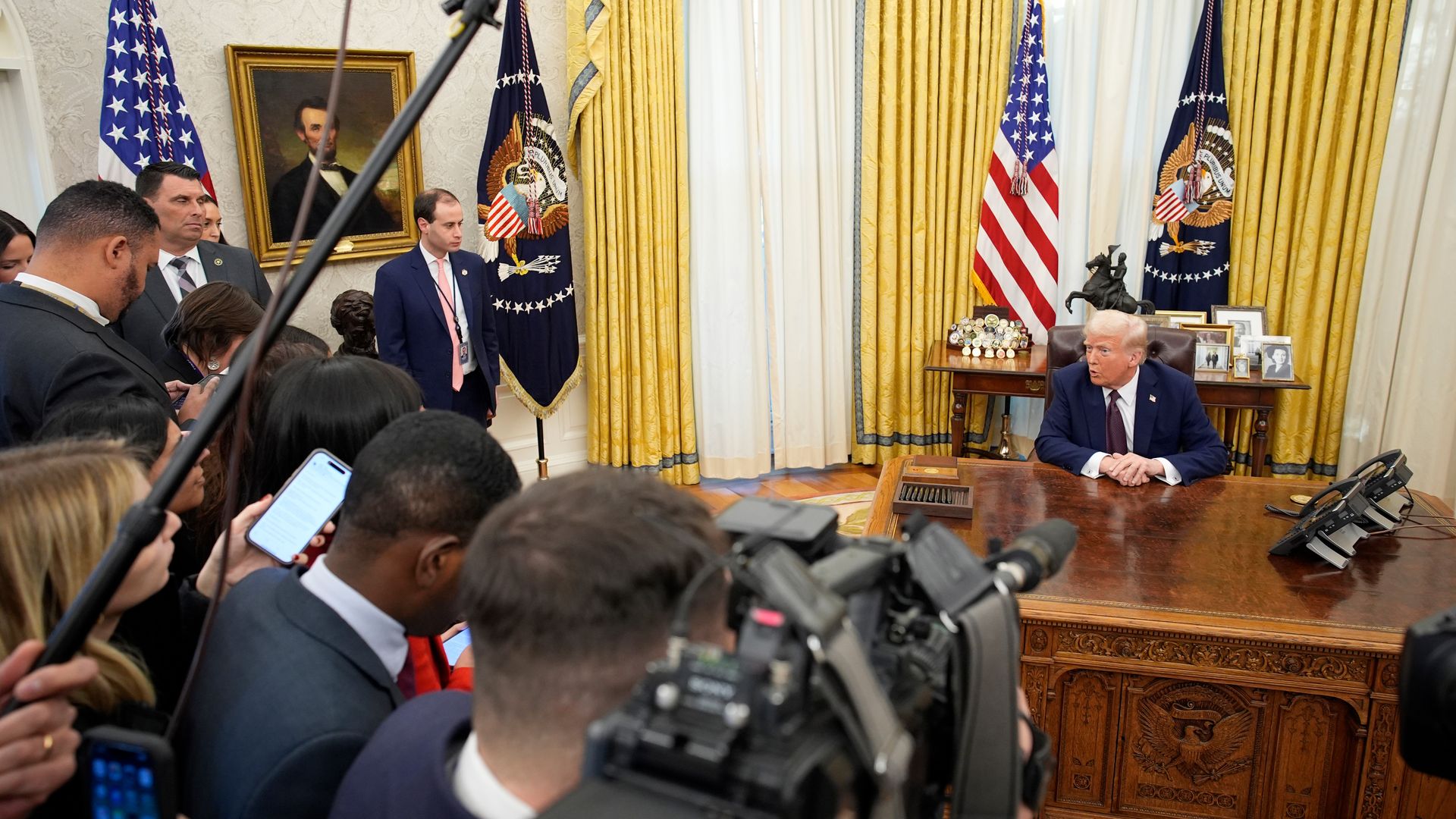
In case you were placing bets on how long into his second term it would take for President Trump to start weighing in on interest rate policy, we learned the answer Thursday: 71 hours.
Why it matters: Trump telling the Fed what he thinks it should do is nothing new. But the details of the president's message about interest rates, inflation, and oil prices are worth parsing.
The Justice Department indicts two Americans in North Korean IT worker fraud
The U.S. Justice Department released indictments against five people Thursday in connection with a years-long North Korean IT worker scheme.
Why it matters: The indictments are against a mix of people from North Korea, Mexico and the U.S. — highlighting just how global North Korea's operations have become.

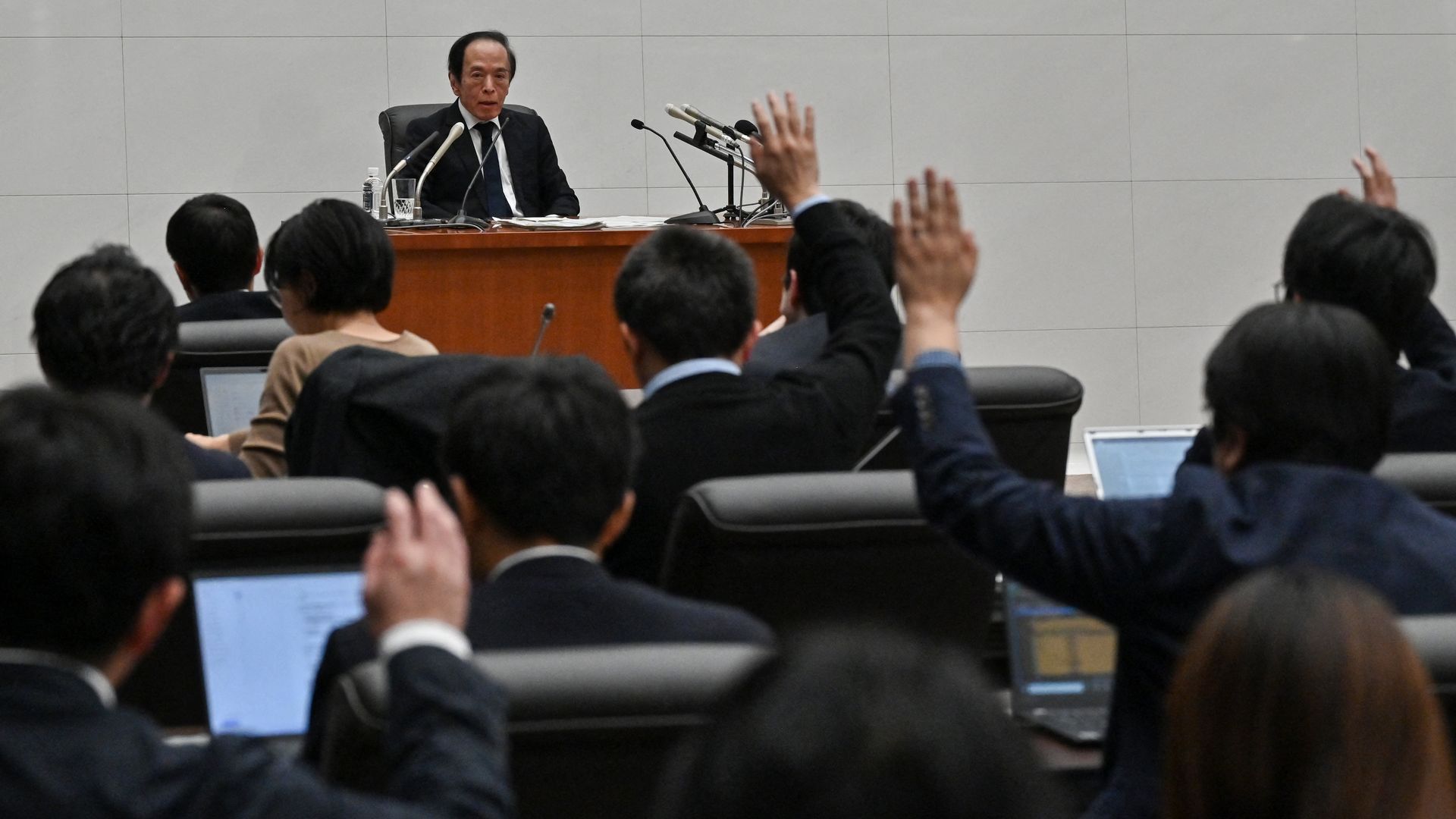
Bank of Japan raises rates, shrugging off Trump risks
In the eyes of Japanese economic policymakers, there have been few surprises from the nearly week-old Trump administration.
- That, in part, gave them confidence to raise interest rates again Friday.
Why it matters: The Bank of Japan had held off hiking rates late last year, preferring instead to wait out any economic surprises from the White House that might jolt global financial markets.

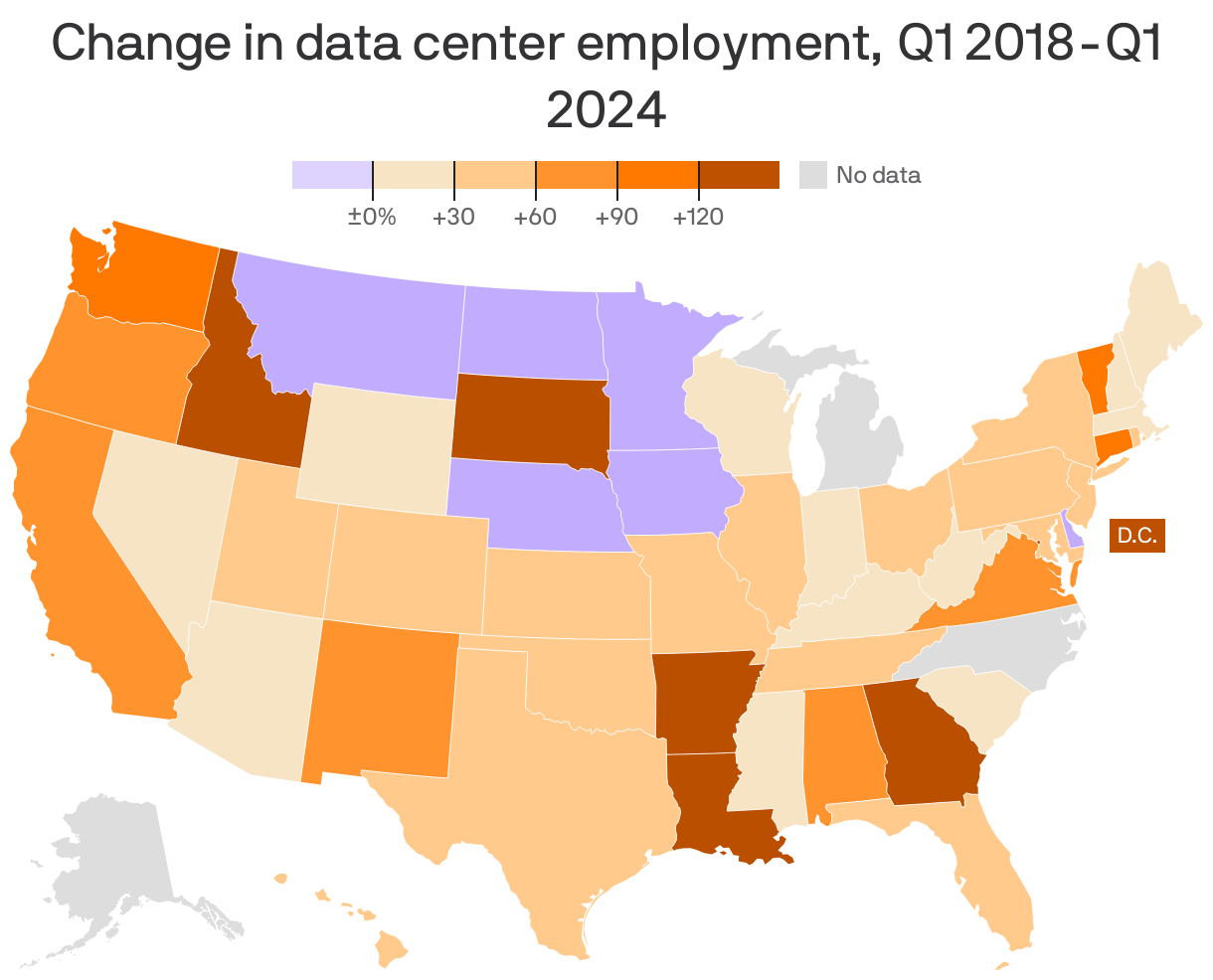
America's data center job hot spots

Data center work is a burgeoning field in parts of the American Southeast and elsewhere, but raw job numbers aren't generally much to write home about yet.
Why it matters: Companies, investors and government are pouring tons of money and resources into data centers to help power AI and other next-gen tech, but there's debate over how many jobs they'll create and whether they're worth the energy required to run them.


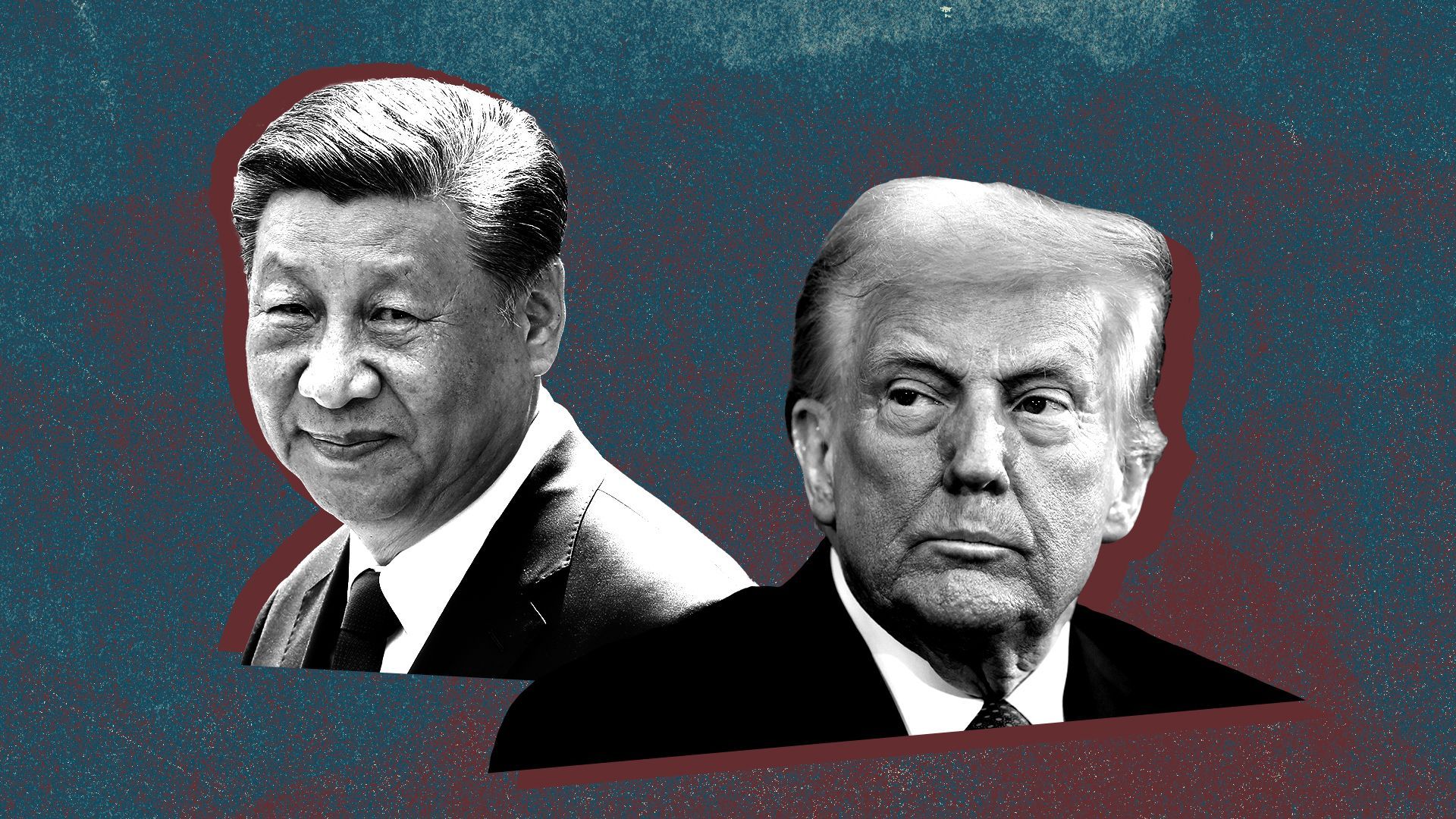
Trump 2.0 softens on China
President Trump left Washington four years ago touting a revolutionary new consensus on the threat posed by China.
- He returned this week seeming to downplay that threat — signaling a potential thaw in relations between the world's two leading superpowers.
Why it matters: The stakes are enormous. How Trump deals with Chinese President Xi Jinping over the next four years will have sweeping implications for the global economy, AI, climate change, national security and more.