No bitcoin stockpile yet, as Trump creates crypto working group

Add Axios as your preferred source to
see more of our stories on Google.
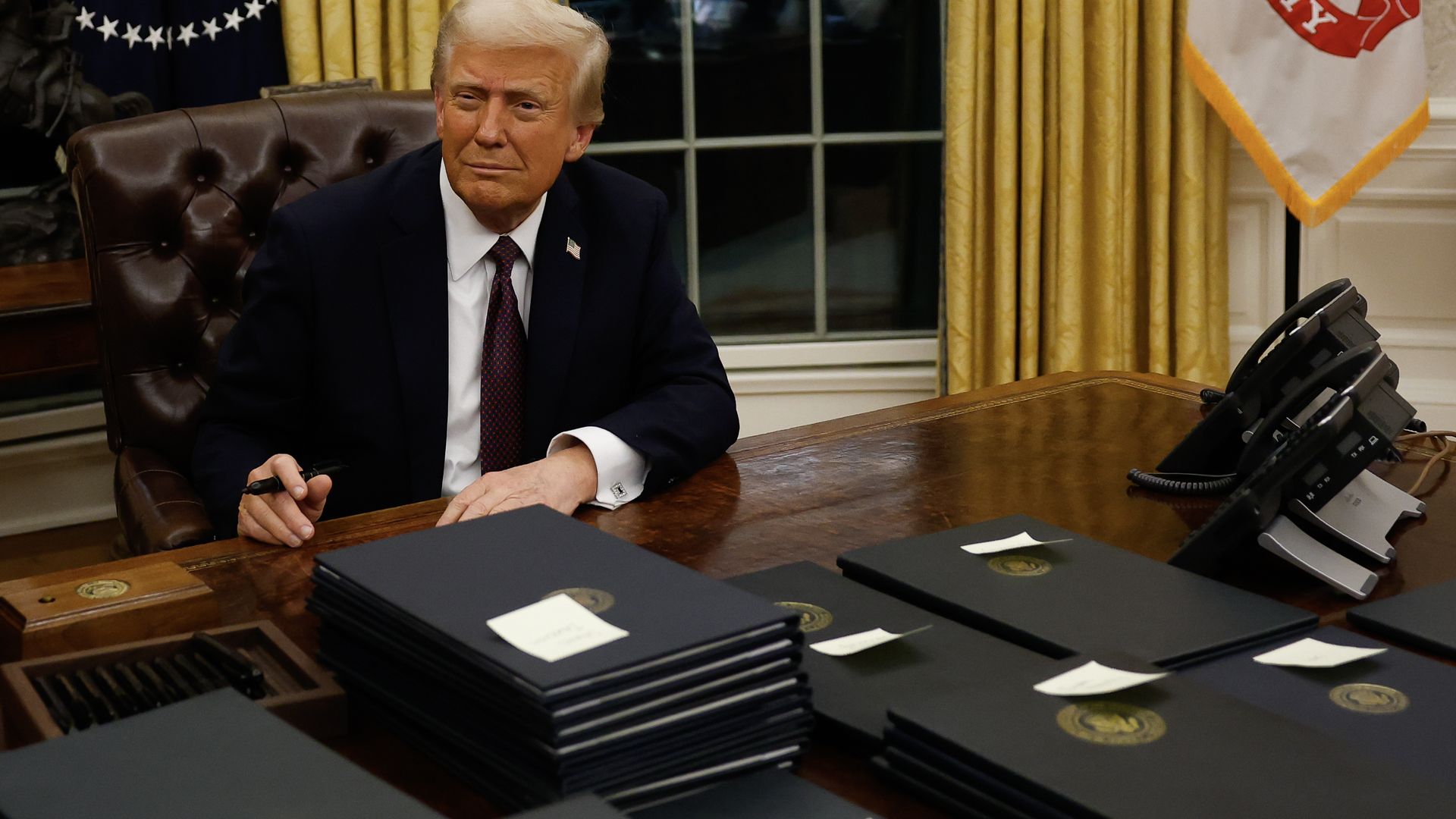
Donald Trump in the Oval Office on Inauguration Day. Photo: Anna Moneymaker/Getty
President Donald Trump signed an executive order Thursday establishing a crypto working group to be led by David Sacks, the administration's AI and crypto czar, but he did not create a bitcoin stockpile — yet.
Why it matters: The order charges the team, which will include the Treasury secretary, attorney general and head of the Securities and Exchange Commission, with coming up with an overal federal strategy for regulating crypto assets and stablecoins.
The latest: The order lays out an overall vision for organizing the U.S. government toward a pro-crypto policy, without going into many specifics.
- It overturns prior executive actions by the Biden administration and forbids further work on central bank digital currencies (basically, issuing dollars using a blockchain or similar technology).
What they're saying: "The digital asset industry plays a crucial role in innovation and economic development in the United States, as well as our Nation's international leadership," the order's preamble states.
- It establishes the President's Working Group on Digital Asset Markets.
- It also sets forth a timeline for updating rules across various government departments to foster the development of the industry.
Friction point: Bitcoiners eager for the Trump presidency will be disappointed that the order only calls for studying creating a national stockpile of digital assets, rather than immediately creating one.
- The U.S. government already holds $21 billion worth of crypto assets (mostly bitcoin), according to research by Arkham Intelligence, a blockchain intelligence firm.
- At the end of 2024, the US Marshals announced a plan to sell off 69,370 bitcoins, which immediately dampened price.
- Bitcoin holders have hoped the new president would halt such sales.
Between the lines: The order specifically notes that citizens should be free from "persecution" for deploying software, which could be a swipe at the Treasury Department's sanctions against the privacy protocol, Tornado Cash.
- The SEC has already made moves to write new rules with blockchain technology in mind.
What we're watching: The first report is due in 30 days, in which key agencies will identify relevant policies to address for the White House.
