The big picture: Investors know that November's election is a toss-up, thus creating uncertainty, but so far seem confident that they understand what a second term for either Biden or Trump would mean.
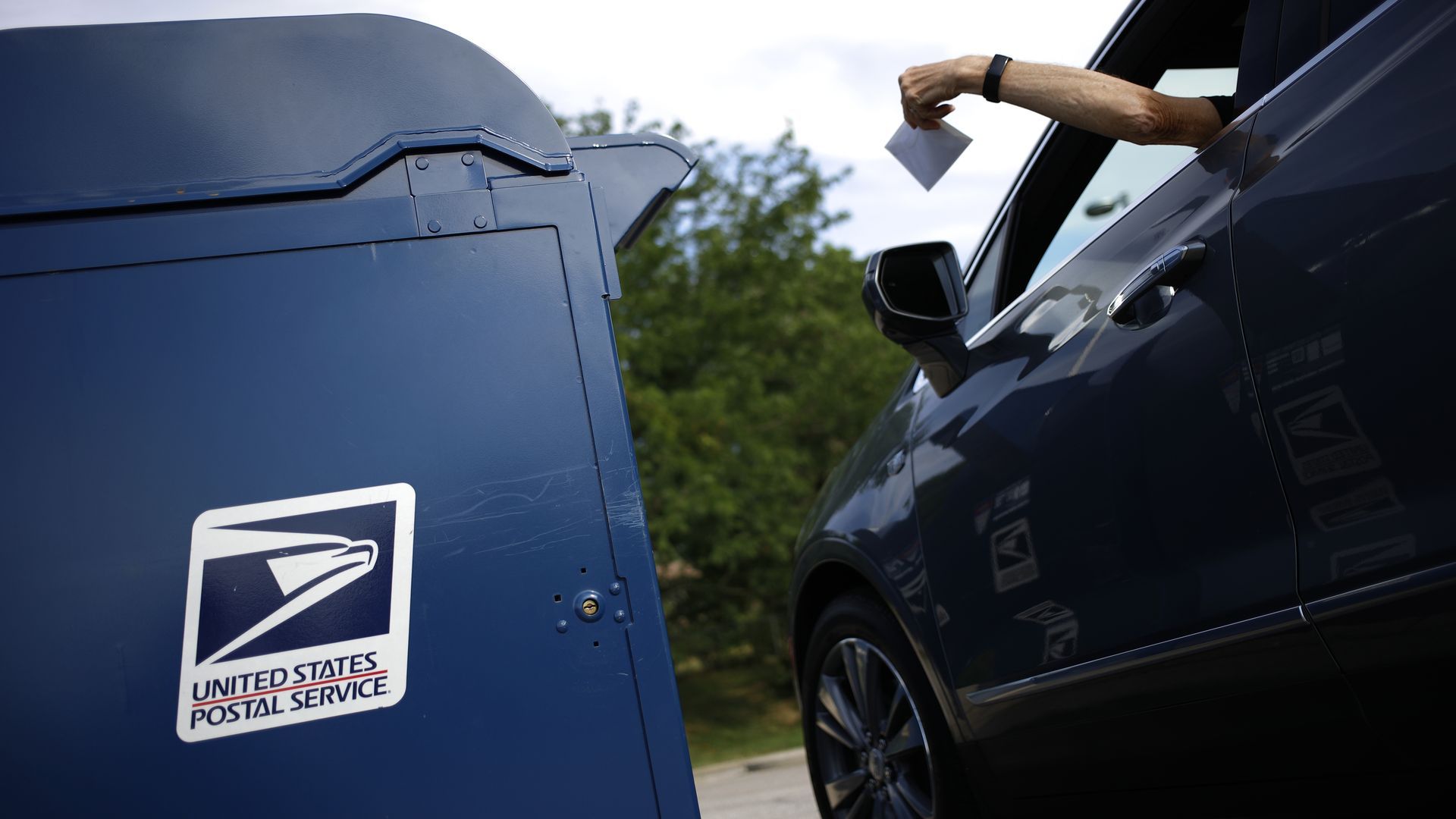
The price of postage stamps will go up by 5 cents in July after the Postal Regulatory Commission signed off on the United States Postal Service's proposal to raise rates.
Why it matters: The increase, approved by the commission this week, ties the record for the highest stamp hike ever.
Inflation resumed its downward path in April — if ever so slightly — and the white-hot consumer looks to be no more.
Why it matters: Should that continue, it might mean the U.S. economy is back on track for a gradual inflation cooldown even if the process is bumpier than initially thought.
Robert F. Kennedy Jr. was answering questions from reporters during a media briefing at Consensus yesterday as the verdict in the Trump hush money case rolled in.
A reporter asked for comment as the news broke.
What Kennedy said: At first, nothing.
"I've been disciplined about not commenting on court cases and talking about issues that I think are of concern to Americans and not issues that you know, are being used to divide us... so I'm not going to comment on it," he said.
At the end of the briefing, reporters were told a statement would be out shortly:
"The Democratic Party's strategy is to beat President Trump in the courtroom rather than the ballot box. This will backfire in November. Even worse, it is profoundly undemocratic," Kennedy's social media account said.
All eyes will be on President Biden on Monday — the deadline for a veto of the bill that would quash the SEC custody rule called SAB 121.
What we're watching: It can shake out in more ways than one.
Biden could sign it, and we can all say "peace ✌️" to SAB 121.
Biden could, as promised, veto the Congressional Review Act resolution that passed the House and the Senate with significant support from Democrats.
He could do nothing, which would allow it to become law.
The intrigue: Possible outcomes imagined by others include:
Biden vetoes the SAB 121 resolution, but the SEC doesn't enforce it.
Biden vetoes, but the SEC puts out a new statement that renders the previously issued "guidance memo" moot.
💭 Our thought bubble: That last path seems likely, if only because it saves the Biden administration from having to walk back a vow to veto...during an election year where crypto is increasingly becoming a part of the conversation.
Earlier this month, Google's cloud platform deleted the entire customer account, including some backups, of UniSuper.
Why it matters: Fortunately for the $135 billion Australian pension fund's 647,000 members, some of UniSuper's backups on Google Cloud's servers and elsewhere were salvageable, and the fund was able to recover its data, teaching us all a lesson about having multiple redundancies.
The Federal Reserve's go-to inflation gauge ticked down in April as consumers pulled back on spending, the Commerce Department said Friday.
Why it matters: The data is welcome news after a months-long stretch where inflation by this measure hadn't budged. Even so, prices across a slew of goods and services are still rising too quickly for the central bank's comfort.
Pending home sales fell to the lowest level in four years in April — the worst reading since the height of the pandemic lockdown.
Why it matters: Spring homebuying season is looking like a serious slump — it's the second-lowest reading since the National Association of Realtors started tracking the data in 2001.