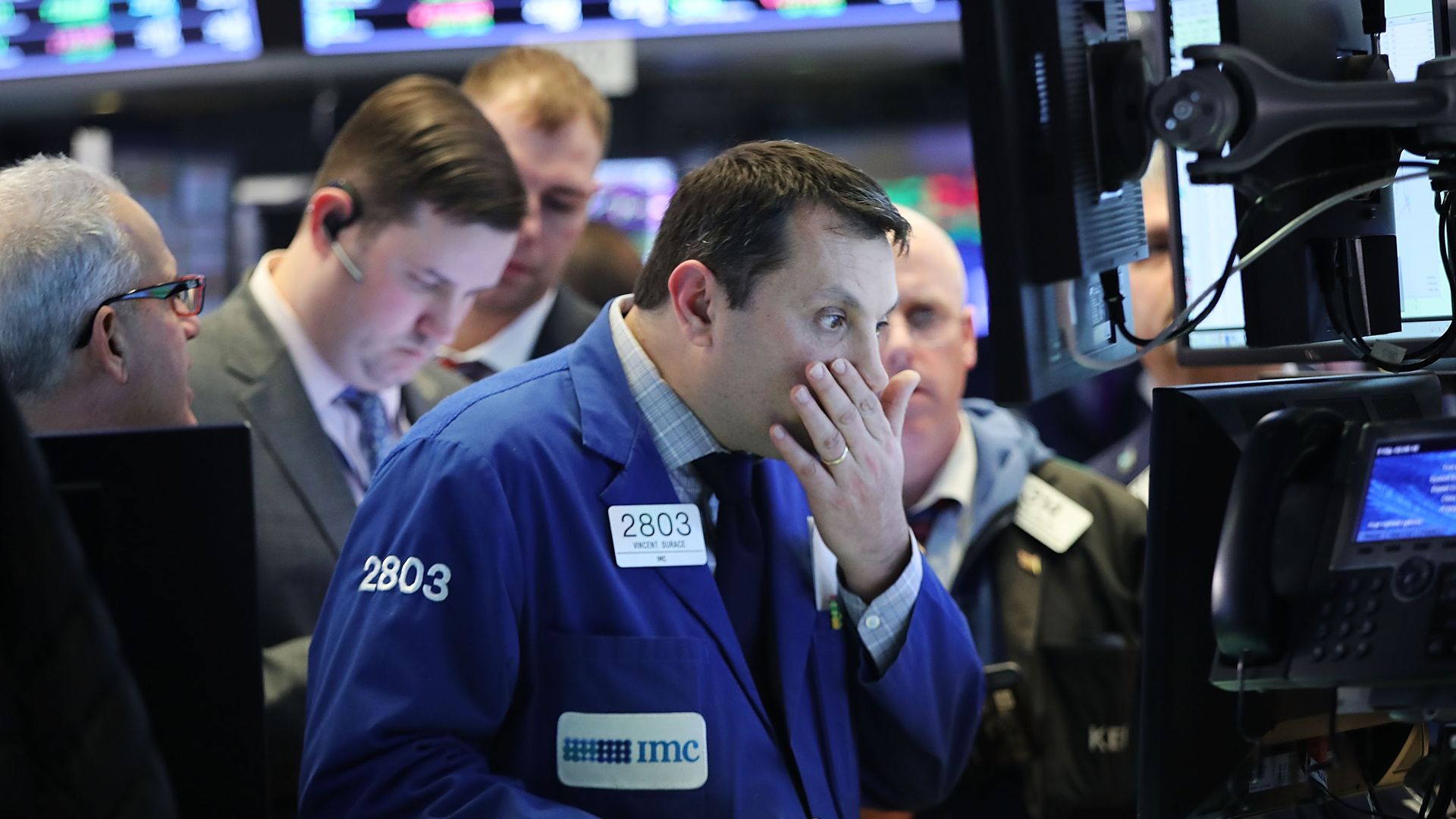
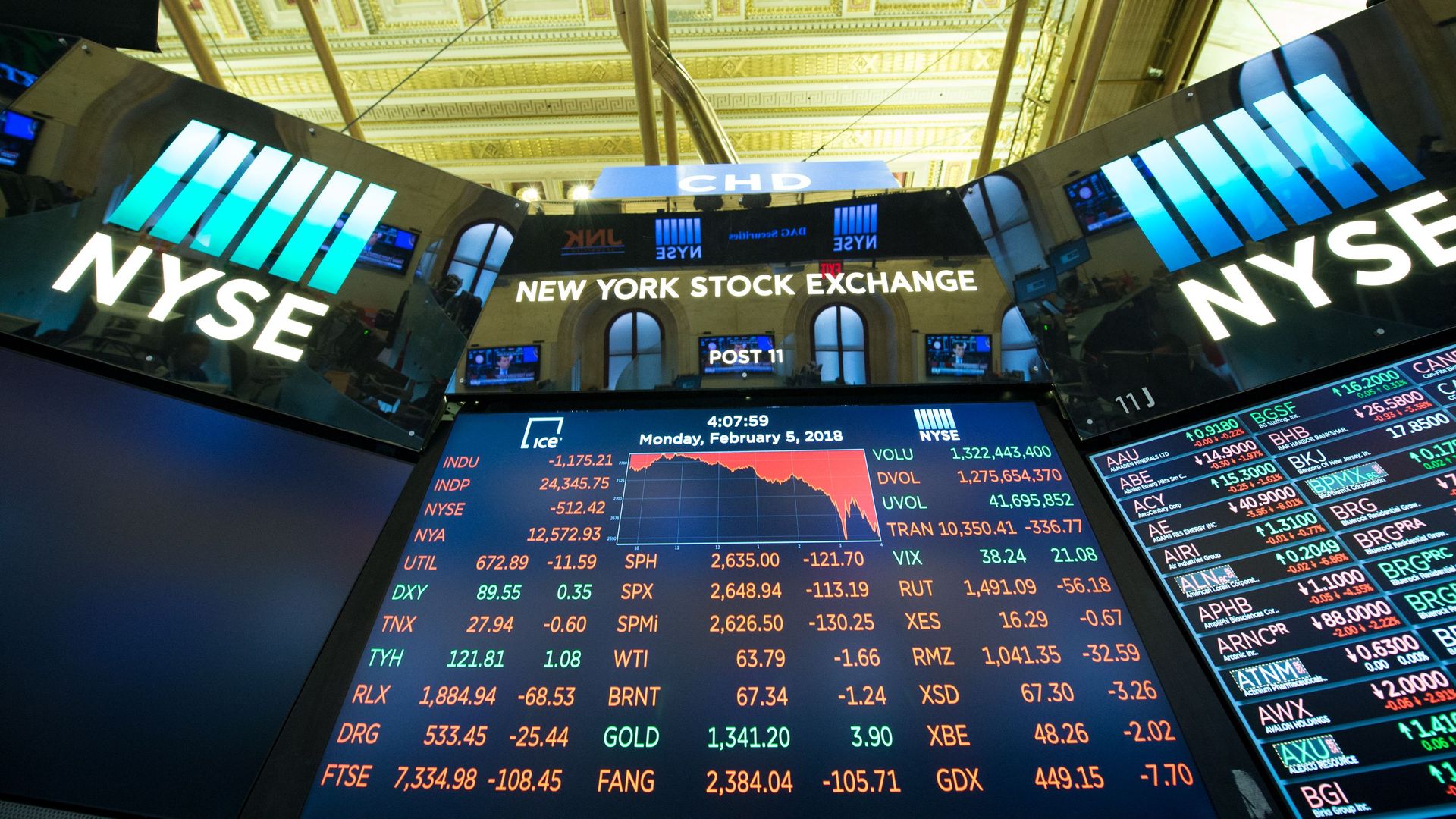
The Dow Jones Industrial Average on Thursday experienced only the second 1,000 point drop in its history. It was also the second one this week.
Bottom line: U.S. economic fundamentals might be strong, but the stock market got ahead of itself and is paring back due to concerns over rising interest rates.
A federal magistrate judge ruled Thursday that delivery company Grubhub had correctly classified a Southern California driver as a contractor.
Why it matters: This is a significant ruling for so-called "gig economy" companies, whose business models rely on classifying their workers as contractors. In the last few years, drivers and workers for several companies, including Uber and Lyft, have filed lawsuits against the companies, though none have resulted in a clear conclusion.
The Dow Jones Industrial Average is trading 609 points lower (as of 12:53 p.m.) as investor fears about inflation and higher interest rates continue to hammer the stock market. The big slide continues a string of volatile days for the Dow, which saw its largest daily point drop ever earlier this week.
One possible cause: U.S. Treasury notes neared multi-year highs on Thursday, signaling to some investors that more inflation should be expected down the road, per CNBC.
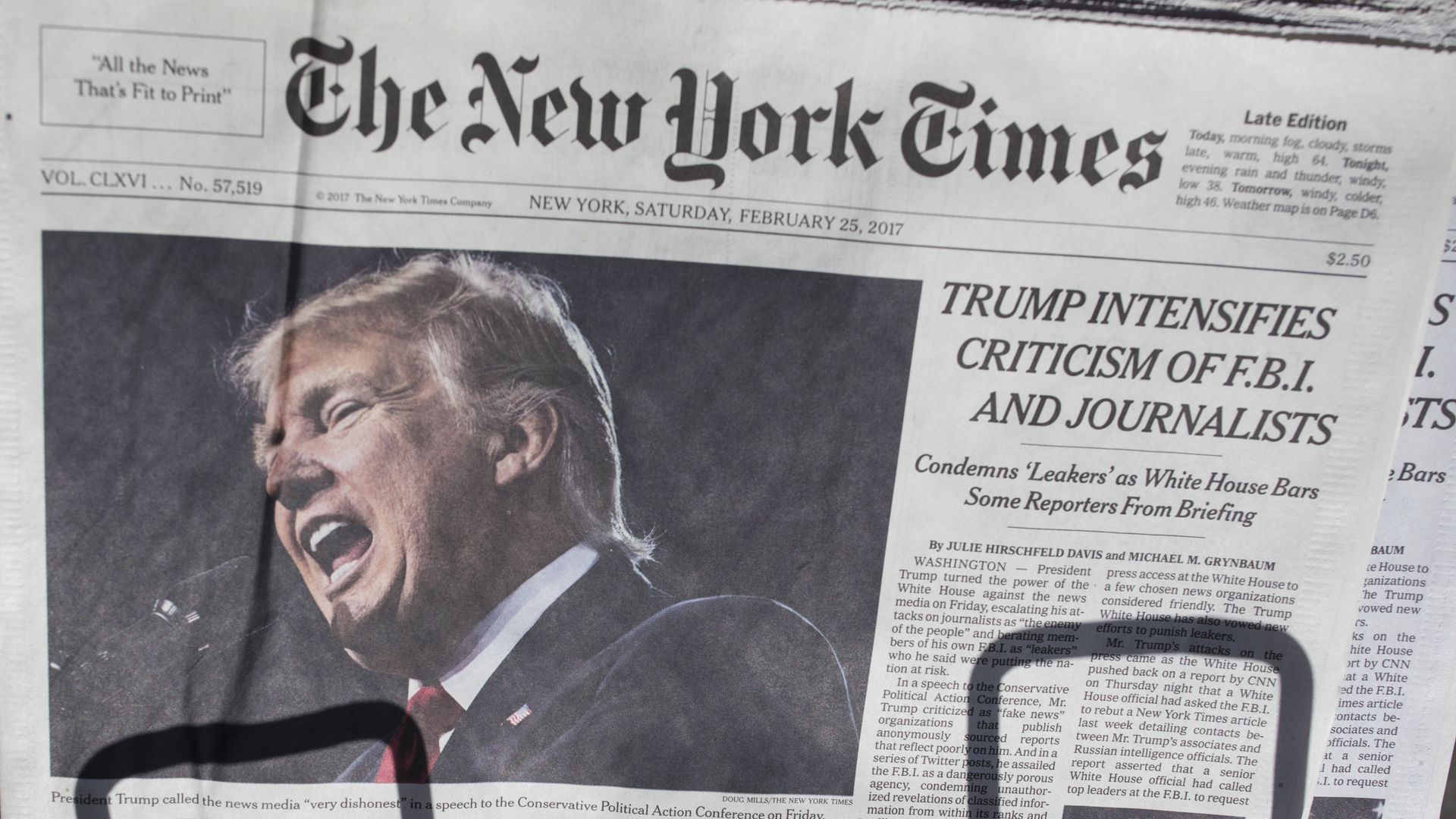
The New York Times brought in $1.7 billion in total revenue in 2017 — an 8% increase from 2016 — due to substantial growth in subscriptions, which now account for 60% of its revenue, the company announced.
Why it matters: With a drop in demand for physical newspapers, easy access to free news online, and the high costs of running a large media company, it's difficult for news agencies to be profitable.
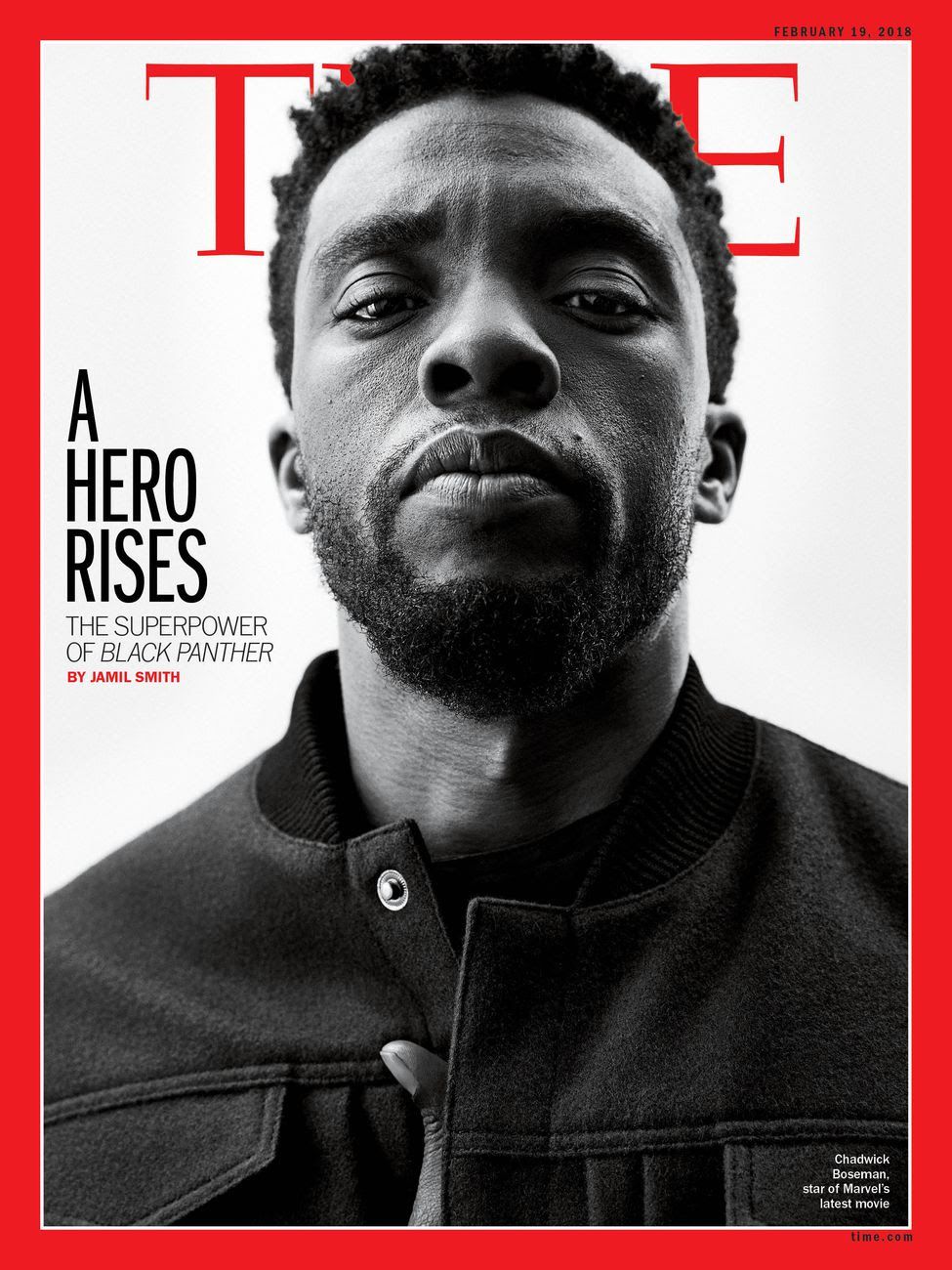
Black Panther,Marvel’s new superhero movie, now rated an astonishing 99% on Rotten Tomatoes, is out Friday. It's the first mega-budget movie — not just about superheroes, but about anyone — to have an African-American director and predominantly black cast, TIME contributor Jamil Smith writes.
Why it matters: “Those of us who are not white have considerably more trouble not only finding representation of ourselves in mass media and other arenas of public life, but also finding representation that indicates that our humanity is multifaceted."
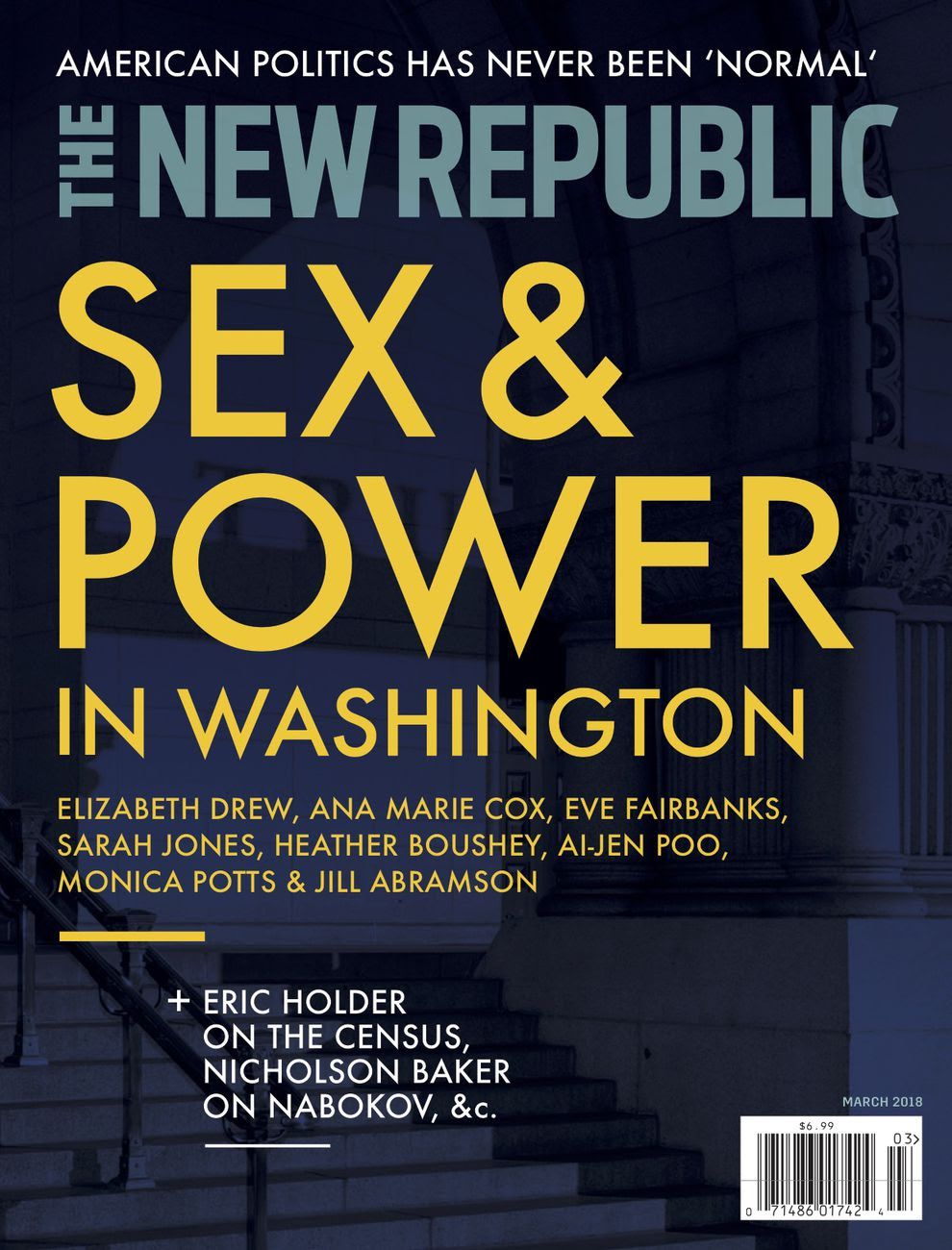
The New Republic's March issue includes "Capitol Offenses," a package of eight essays on sexual discrimination and harassment in D.C., across politics, policy and the media.
Why it matters: It's a deep dive into the hidden #MeToo crisis in D.C., where harassment exists in every industry and at every level of the economy.
The U.S. is headed for a potentially dangerous new social rift, this time between millennials and baby boomers, each wrestling for diminishing jobs and shrinking government assistance, according to a new paper.
Quick take: In the next decade or so, automation and demographics will become a new dimension to the economic and social pressures already roiling the U.S. and societies around the world, according to the study released today by Bain. This new conflict will pit millennial workers displaced by machines against boomers living on Social Security and Medicare. "Who votes, who wins, and who goes to the polls become a highly politicized issue potentially," says Karen Harris, managing director of Bain's Macro Trends Group.
Experts say a new labor accord granting German metals and electrical workers the right to a 28-hour week reflects a generational shift in how people balance their professional and outside lives.
Why it matters: "IG Metall’s agreements tend to be seen as benchmarks for the whole of German industry, and it is now expected to be rolled out in other sectors," writes the FTs Guy Chazan.
George Feldenkreis, the founder of Perry Ellis International, and Fortress Investment Group have offered to buy the apparel company for $430 million, or $27.50 per share (18.6% premium to yesterday’s closing price).
The backstory: Feldenkreis was ousted as executive chairman just six months ago, despite having installed his son as CEO (following activist pressure to split the chairman and CEO roles).
The stock market continued to fall at market open Wednesday morning, marking the fourth straight day of losses. Trump's response:
Why it matters: As Axios' Mike Allen reported yesterday, Trump made what many White House veterans considered the rookie mistake of repeatedly boasting about the peppy stock market, making the current losses a tricky spot for messaging. Meanwhile, Treasury Secretary Steve Mnuchin said yesterday, "The markets look like they're functioning normally."
Newspaper owner Tronc sold the Los Angeles Times to Dr. Patrick Soon-Shiong for $500 million, according to the AP. Soon-Shiong is also buying the publication's sister newspaper, the San Diego Union-Tribune.
The backdrop: The deal comes on the heels of ongoing tensions between the paper’s top ranks and journalists that has spilled into public view in recent weeks.
Riding the mania over Bitcoin, crypto-currency specialists — from developers to technical writers — have emerged as the hottest new field in the United States, according to Upwork, the freelance job listing site.
Former Vice President Joe Biden told CNN's Chris Cuomo in an interview on Tuesday that President Trump is "a joke."
Why it matters: He was responding to Sarah Sanders' remarks at her press briefing on Tuesday that Trump was "joking" when he called Democrats treasonous for their glum reactions during his State of the Union. Biden also told Cuomo he'd tell Trump not to talk to special counsel Robert Mueller if he were one of the president's lawyers: "The President has some difficulty with precision."