Wednesday's economy stories

This chatbot can help you argue a parking ticket
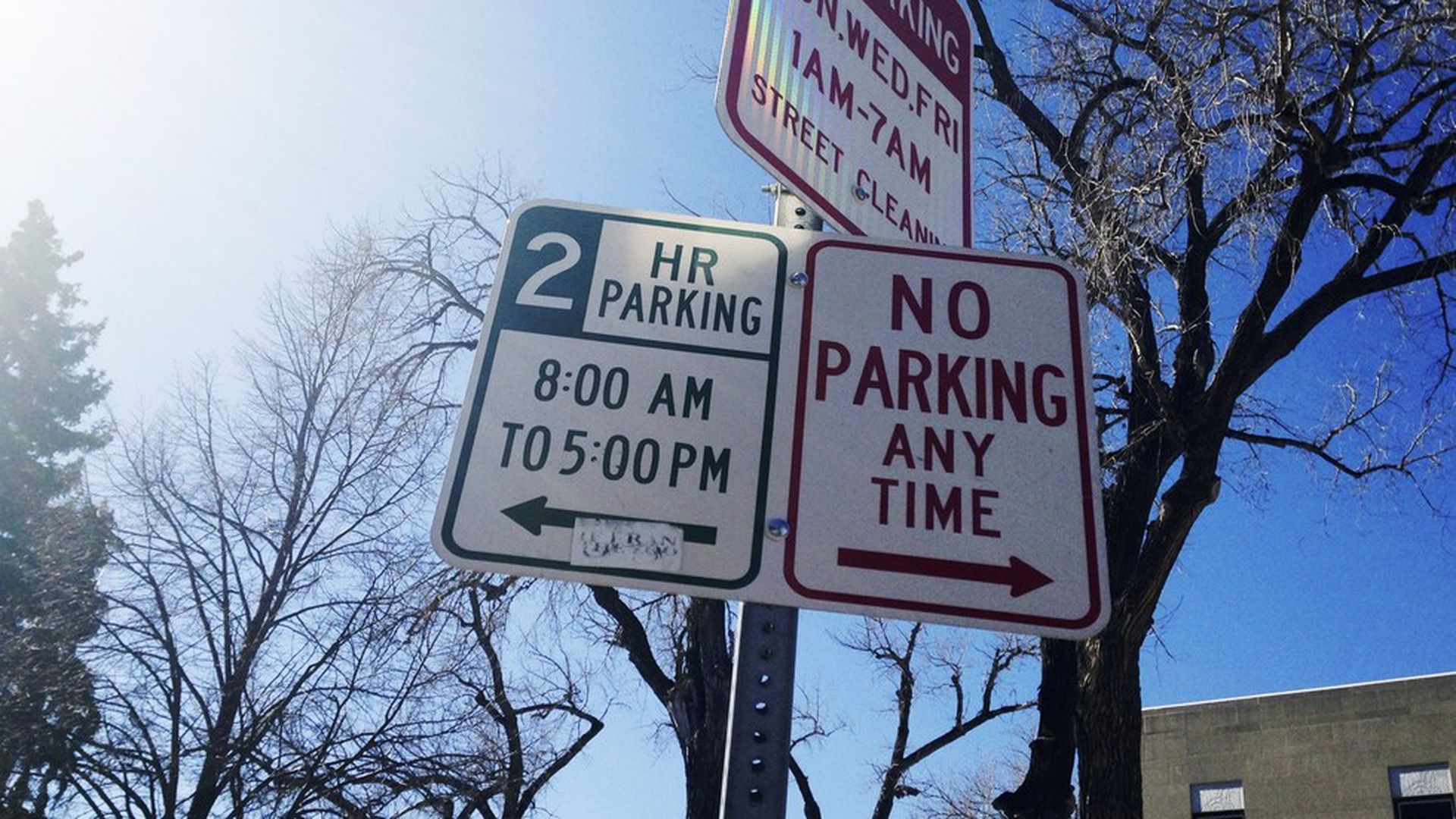
In the world of low-stakes legal claims, robots could be the best lawyers. DoNotPay — a chatbot created by Stanford junior Joshua Browder — has gotten people out of 375,000 parking tickets since 2015, free of charge, Yahoo Finance reports. That's about $10 million in value.
Browder hopes to make free legal help even more accessible, and he's adding 1,000 new categories to DoNotPay's repertoire. The categories range from reporting discrimination to disputing a credit card charge, and the bulk of the help that DoNotPay provides customers is writing "strongly-worded lawyerly letters" to stake their claims.
Why it matters: This isn't the first we've seen of AI in the legal world, but the role of robots in law has largely been limited to doing the research work to support litigators, as paralegals do. DoNotPay is an example of a bot that can in fact do the litigating.

Defense Dept. hires 6 research orgs for cyborg project
The Defense Department's research arm DARPA announced this week the forthcoming contracts for its ambitious Neural Engineering System Design (NESD) project, which seeks to create computer chips that can be implanted in the brain to enable direct communication between it and a computer, as well as to enhance human senses.
One example of a project under the NESD umbrella is led by Drs. Jose-Alain Sahel and Serge Picaud — it will seek to "enable communication between neurons in the visual cortex and a camera-based, high-definition artificial retina worn over the eyes," in order to augment human vision.
Why it matters: DARPA has funded the basic research that has led to such breakthroughs as the Internet and GPS. Observers hope that with the tens of millions of dollars the feds are investing in this technology, along with efforts by entrepreneurs like Elon Musk, it won't be long before these technologies are in widespread use.

Clinton aide: media ignored the Russia hacking story
In the latest episode of HuffPost's "Candidate Confessional" podcast, Hillary Clinton campaign communications director Jennifer Palmieri told the hosts she tried to feed the Russia hacking story to reporters during the 2016 campaign, but they didn't really care, focusing instead on Hillary's emails and the DNC leaks:
"It was so surreal. I felt as if I had been catapulted into another dimension where we would have these surreal conversations about the Russians and Trump and Mike Flynn and Carter Page and Donald Trump Jr. saying, 'We're really invested in Russia.' And no one in the press really cared."
On the other hand:
Trump and his team have accused the press of overplaying and even making up the Russia collusion story. The press wrote numerous stories on the DNC hacks, although Palmieri claimed the focus was on the contents of the emails, not on Russia's suspected role.

Algorithms threaten the jobs of 97k real estate appraisers
Real estate appraisal is a solid, middle class profession—one that requires a four-year degree and extensive on-the-job education, but also pays 40% more per hour than the median job. But appraisal licenser Brian Weaver wrote in an industry newsletter that "The future for appraisers specializing in residential mortgage work is coming to an end... No bang. Not even a whimper."
Algorithms deployed by firms like Zillow are getting better at analyzing characteristics of a home and its neighborhood to determine its value. The firm says that it on average predicts a home's value within 5% of its sale price, down from 14% a decade ago. Meanwhile, home-finance giant Freddie Mac recently began using automated appraisal for a small fraction of transactions.
Government to the rescue? Would-be automators will have to change government regulation if they want to cut human appraisers out of the picture. The industry says handing this important pillar in housing finance's architecture over to computers is dangerous, and important players like Freddie say that they plan to rely on human appraisers for the foreseeable future. But as computerized appraisal methods improve, potential savings could become irresistible.
College-educated Americans less concerned about automation
Education level creates a big divide in Americans' expectations for the future, according to "Making it in America: The View from America," a national survey developed by Burson-Marsteller, and conducted by research firm PSB:
"Thirty-eight percent of Americans with a college education or more think the American economy is headed in the right direction compared to 30 percent of those with a high school education or less. ... When it comes to job security and the role of automation, only 14 percent of Americans with a college education or more say a machine could replace their job in five years, versus 30 percent with a high school education or less."
Data: Burson-Marsteller/PSB; Survey conducted June 1-5, 2017; Chart: Chris Canipe / Axios
Scarborough publicly leaves GOP
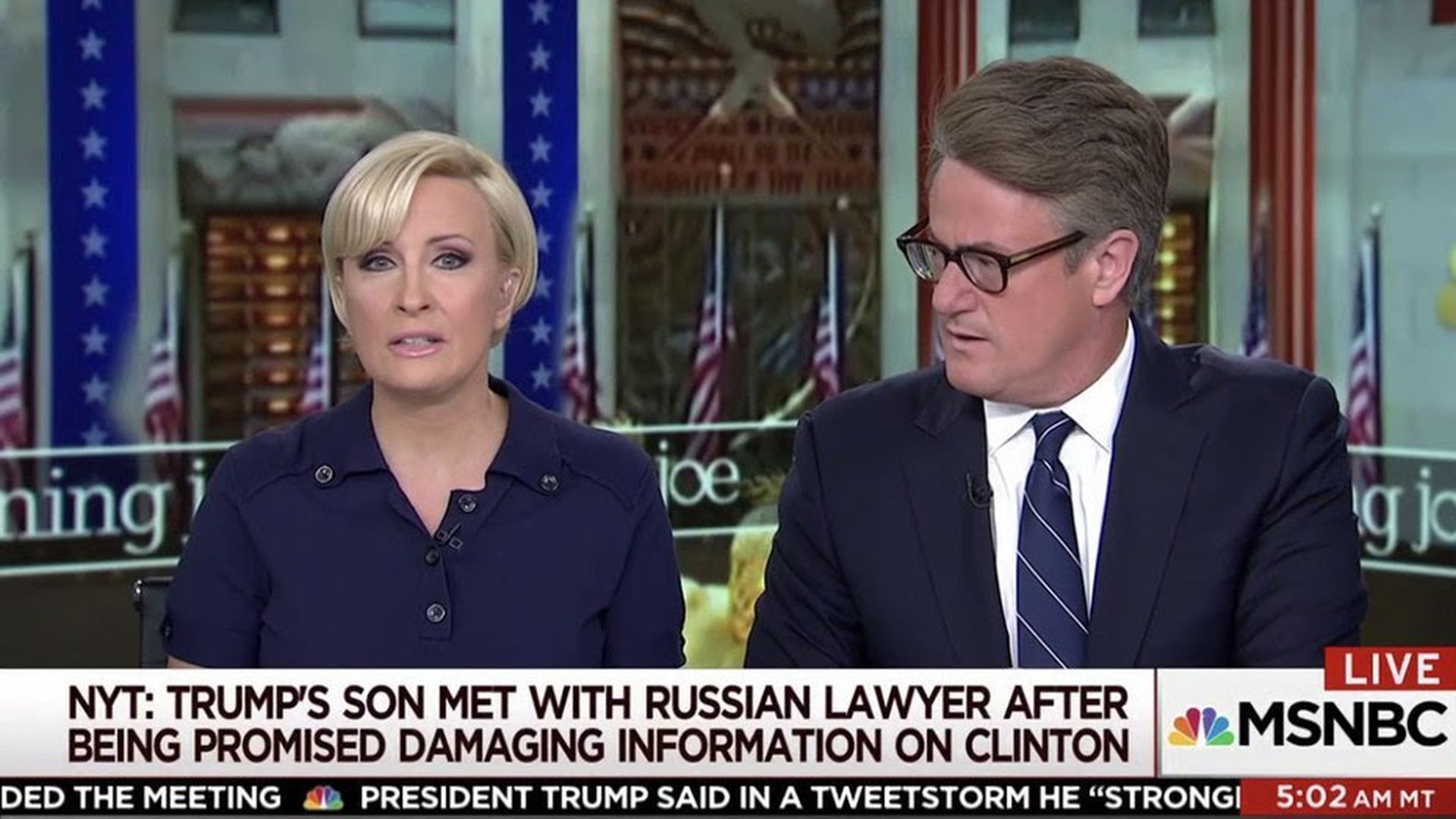
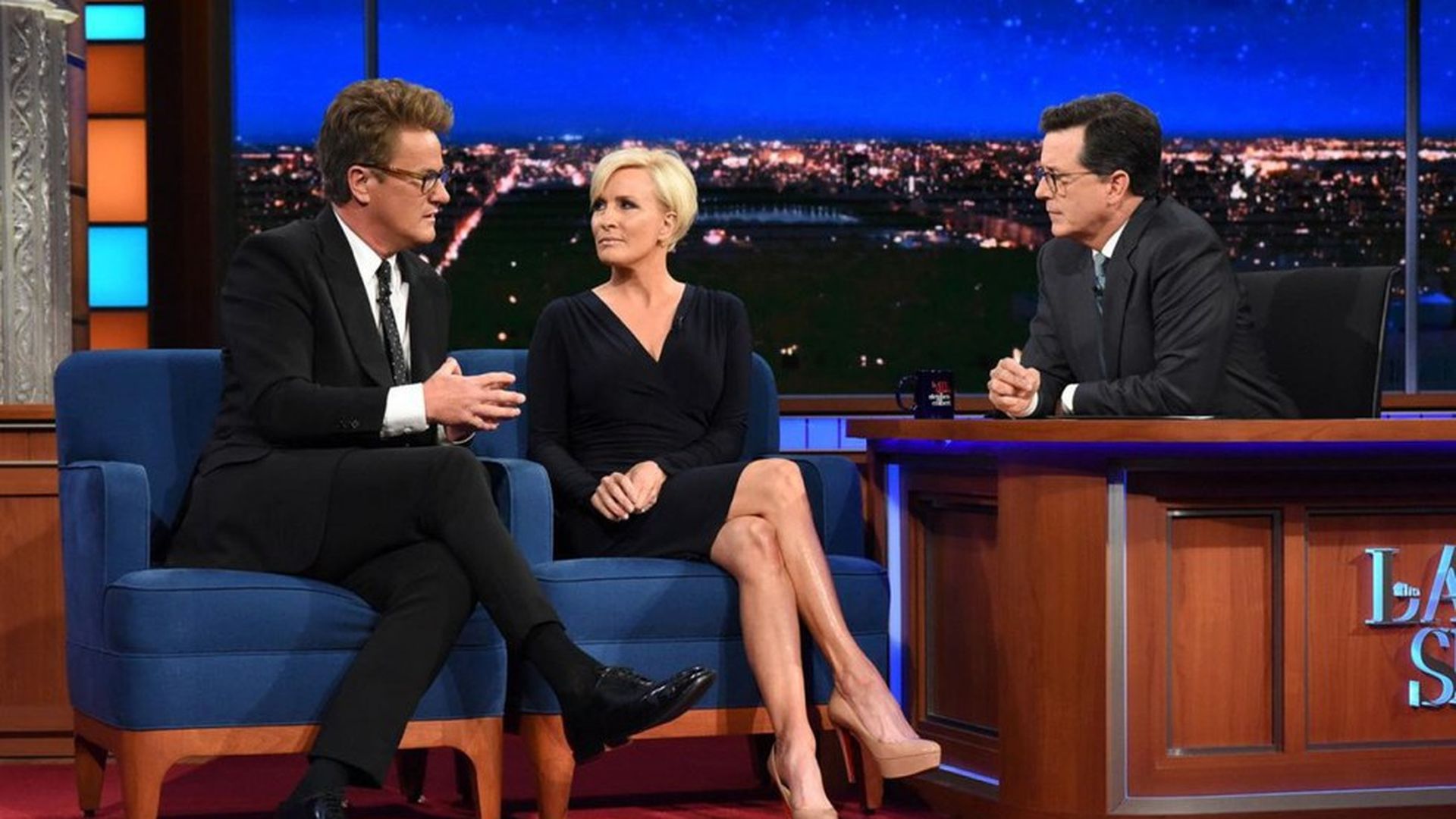
Morning Joe 's Joe Scarborough, appearing with co-host Mika Brzezinski on Stephen Colbert's "Late Show" Tuesday night: "This is well before Donald Trump was elected president that my party has betrayed their core values."
Colbert: "But aren't you a Republican?"
Scarborough: "Um I am a Republican but I'm not going to be an Republican any more. [Cheers, applause.] I'm going to become an independent." (Video)

Indiana lost 5,000 manufacturing jobs under Trump
Donald Trump brokered a deal to keep roughly 1,000 jobs at a facility in Indiana from moving to Mexico. But it failed to live up to the hype while other firms have quietly continued to outsource — a trend that drained the state of 5,000 manufacturing jobs since February. For example, reports on former workers of Manitowoc Beverage Systems show many have been unable to find gigs as good as the ones they lost after the firm shipped 84 jobs to Mexico.
Why it matters: Trump outperformed in the rust belt due to his anti-establishment, anti-free-trade message. But Hoosiers, like Cindy Doty, who was recently laid off by Manitowoc, don't see much change. "I just think there're suits at the very top of the company that are just looking out for how much they can make," she told the News and Tribune. "And they don't care about the people they affect."
Morning Joe's Mika lands three-book deal
"Mika Brzezinski has landed ... a three-book deal with Weinstein Books, which published her 2011 book "Knowing Your Value," per Emily Smith of N.Y. Post "Page Six":
- "The 'Morning Joe' anchor has signed a deal with Harvey and Bob Weinstein's publishing imprint said to be worth 'in the high six figures.'"
- "The newly closed deal will include a revised edition of 'Knowing Your Value: Women, Money, and Getting What You're Worth,' which will be released next spring with fresh interviews from female trailblazers about getting recognition in the business space and in personal relationships."
- "The updated book will also tie into Brzezinski's 2018 'Know Your Value' conference series for career-oriented women."
- "Brzezinski plans to follow up with two more books in fall 2018, one titled 'Comeback Careers' and a currently untitled book for millennials entering the job market."

Germany may be less of an economic miracle than we thought
A lot more Germans have obtained jobs over the last two decades, but they are working fewer hours, per the Financial Times' Alphaville blog. The post, based on a new paper by German economist Christian Odendahl, is titled, "The myth of the German jobs miracle."
The significance of Odendahl's findings is that Germany is often held up as an example of how to weather the cross-cutting storms of globalization, hyper-advancing technology, and migration. Among his conclusions:
- The number of jobs in Germany is up by 15% since a trough in the mid-1990s. But the total number of hours worked has grown by much less — by 2%. In other words, Germans as a whole are working fewer hours.
- And their jobs increasingly are not paid much: As of 2014, almost a quarter of Germany's workers are paid at or below €10.50 an hour, up from 15% in the 1990s.
Why it matters: If Odendahl's findings hold up, they cast a new cloud over the West's challenge of navigating the current global political turbulence, which is largely driven by four decades of stagnating wages and job loss.