Thursday's economy stories

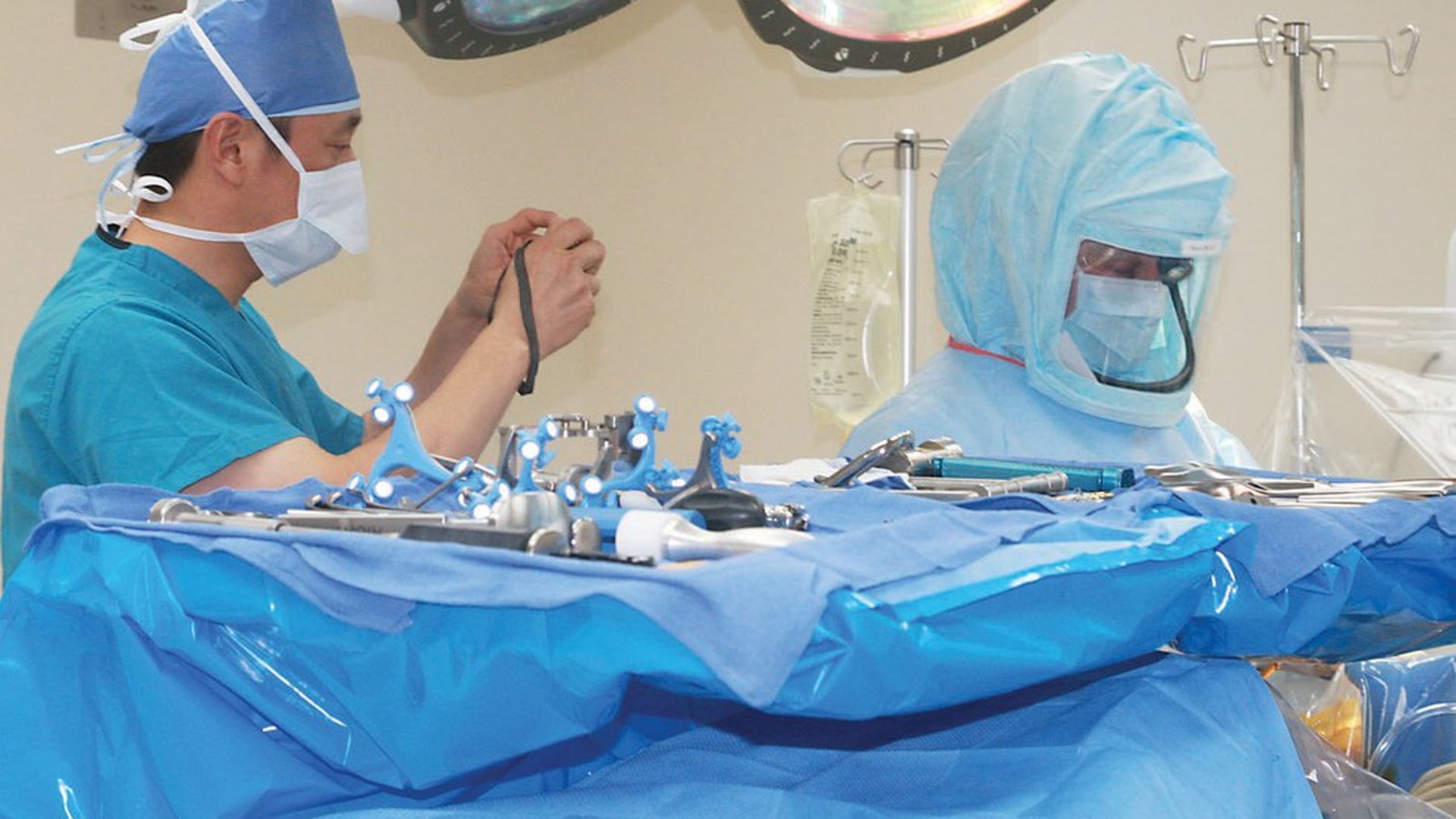
Activist investor buys stake in Zimmer Biomet
A fund associated with the activist hedge fund Jana Partners has bought an undisclosed stake in Zimmer Biomet, according to a federal merger filing. That occurred just one day after Zimmer, a medical device conglomerate, nudged out CEO David Dvorak due to another dismal quarter by Wall Street's standards.
Why it matters: Jana is known to shake things up, and Zimmer has already started down that path. Amazon acquired Whole Foods after Jana bought its stake, and the hedge fund was around when Time changed top leadership. Jana is also somewhat familiar with medical devices, owning part of NuVasive. Jana and Zimmer did not immediately respond to questions.

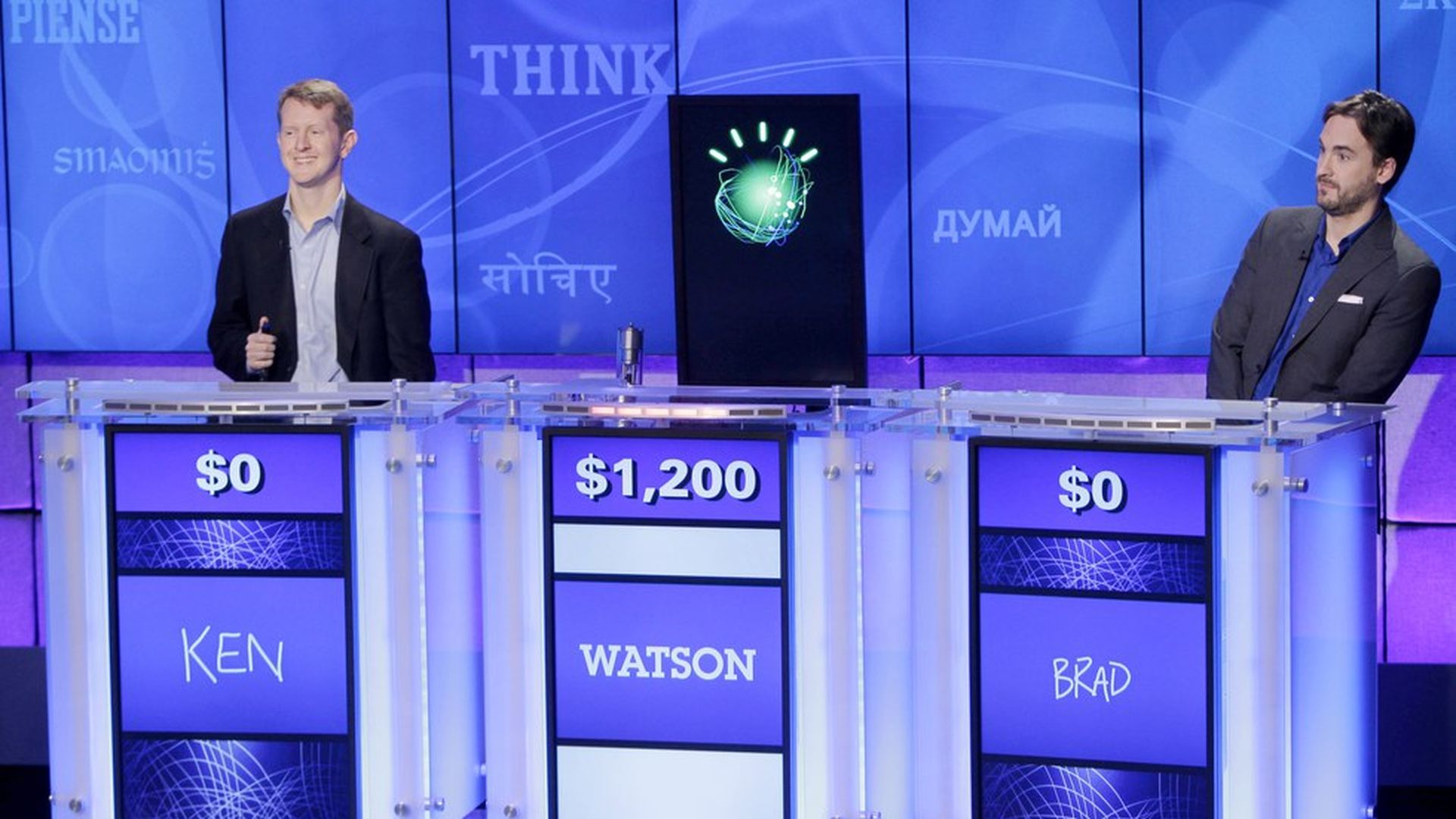
IBM's Watson gets no love on Wall Street
A debate rages in the tech community over whether IBM's Watson computing system is all hype, or the source of real and potential advances in the science of artificial intelligence. Venture Capitalist Chamath Palihapitiya, for instance, has called Watson a "joke" that is the product of IBM's PR operations rather than serious AI science.
MIT's Tech Review, however, recently argued Watson "will be a leader in applying AI to health care's woes," and that if it hasn't achieved hoped-for breakthroughs yet, it's only because "it needs certain types of data to be 'trained,'" and that this data has been difficult to access—a problem that all AI-intensive firms face, not just IBM.
Wall Street is skeptical: Just 5 analysts of 21 tracked by Money.net have a buy rating on IBM stock, while Jefferies analyst James Kisner cut his price target for the company again Tuesday, from $135 to $125, based on his skepticism of Watson. The stock was trading at $153.81 as of publication.

Artificial intelligence has race, gender biases
The ACLU has begun to worry that artificial intelligence is discriminatory based on race, gender and age. So it teamed up with computer science researchers to launch a program to promote applications of AI that protect rights and lead to equitable outcomes.
MIT Technology Review reports that the initiative is the latest to illustrate general concern that the increasing reliance on algorithms to make decisions in the areas of hiring, criminal justice, and financial services will reinforce racial and gender biases.
One example: A computer program used by jurisdictions to help with paroling prisoners that ProPublica found would go easy on white offenders while being unduly harsh to black ones.
Why it matters: There's been much talk, but no action from large tech companies and other institutions using these algorithms, in terms of systematically investigating what biases are being reinforced and what remedies might be.

This chatbot can help you argue a parking ticket
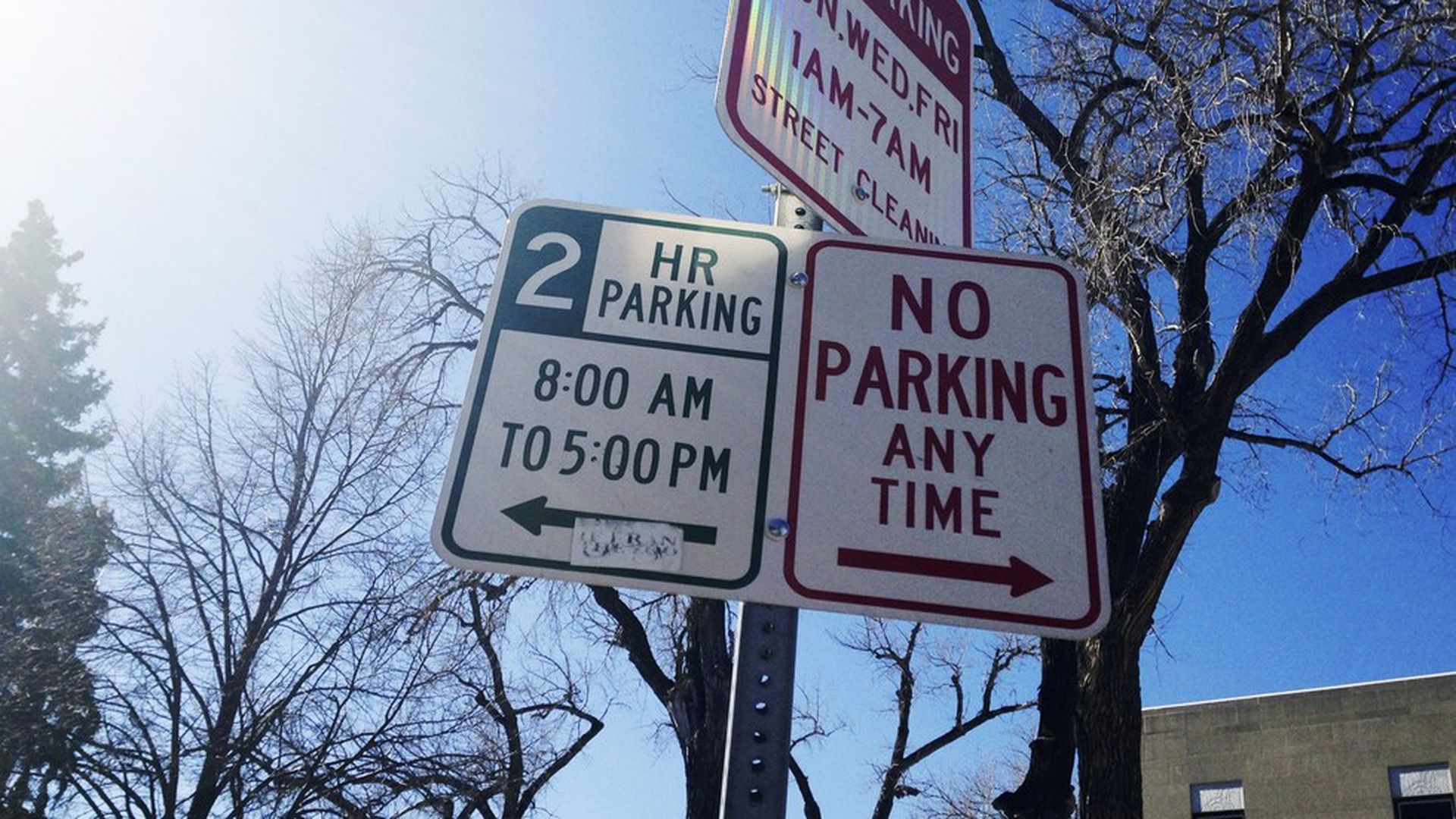
In the world of low-stakes legal claims, robots could be the best lawyers. DoNotPay — a chatbot created by Stanford junior Joshua Browder — has gotten people out of 375,000 parking tickets since 2015, free of charge, Yahoo Finance reports. That's about $10 million in value.
Browder hopes to make free legal help even more accessible, and he's adding 1,000 new categories to DoNotPay's repertoire. The categories range from reporting discrimination to disputing a credit card charge, and the bulk of the help that DoNotPay provides customers is writing "strongly-worded lawyerly letters" to stake their claims.
Why it matters: This isn't the first we've seen of AI in the legal world, but the role of robots in law has largely been limited to doing the research work to support litigators, as paralegals do. DoNotPay is an example of a bot that can in fact do the litigating.

Defense Dept. hires 6 research orgs for cyborg project
The Defense Department's research arm DARPA announced this week the forthcoming contracts for its ambitious Neural Engineering System Design (NESD) project, which seeks to create computer chips that can be implanted in the brain to enable direct communication between it and a computer, as well as to enhance human senses.
One example of a project under the NESD umbrella is led by Drs. Jose-Alain Sahel and Serge Picaud — it will seek to "enable communication between neurons in the visual cortex and a camera-based, high-definition artificial retina worn over the eyes," in order to augment human vision.
Why it matters: DARPA has funded the basic research that has led to such breakthroughs as the Internet and GPS. Observers hope that with the tens of millions of dollars the feds are investing in this technology, along with efforts by entrepreneurs like Elon Musk, it won't be long before these technologies are in widespread use.

Clinton aide: media ignored the Russia hacking story
In the latest episode of HuffPost's "Candidate Confessional" podcast, Hillary Clinton campaign communications director Jennifer Palmieri told the hosts she tried to feed the Russia hacking story to reporters during the 2016 campaign, but they didn't really care, focusing instead on Hillary's emails and the DNC leaks:
"It was so surreal. I felt as if I had been catapulted into another dimension where we would have these surreal conversations about the Russians and Trump and Mike Flynn and Carter Page and Donald Trump Jr. saying, 'We're really invested in Russia.' And no one in the press really cared."
On the other hand:
Trump and his team have accused the press of overplaying and even making up the Russia collusion story. The press wrote numerous stories on the DNC hacks, although Palmieri claimed the focus was on the contents of the emails, not on Russia's suspected role.

Algorithms threaten the jobs of 97k real estate appraisers
Real estate appraisal is a solid, middle class profession—one that requires a four-year degree and extensive on-the-job education, but also pays 40% more per hour than the median job. But appraisal licenser Brian Weaver wrote in an industry newsletter that "The future for appraisers specializing in residential mortgage work is coming to an end... No bang. Not even a whimper."
Algorithms deployed by firms like Zillow are getting better at analyzing characteristics of a home and its neighborhood to determine its value. The firm says that it on average predicts a home's value within 5% of its sale price, down from 14% a decade ago. Meanwhile, home-finance giant Freddie Mac recently began using automated appraisal for a small fraction of transactions.
Government to the rescue? Would-be automators will have to change government regulation if they want to cut human appraisers out of the picture. The industry says handing this important pillar in housing finance's architecture over to computers is dangerous, and important players like Freddie say that they plan to rely on human appraisers for the foreseeable future. But as computerized appraisal methods improve, potential savings could become irresistible.
College-educated Americans less concerned about automation
Education level creates a big divide in Americans' expectations for the future, according to "Making it in America: The View from America," a national survey developed by Burson-Marsteller, and conducted by research firm PSB:
"Thirty-eight percent of Americans with a college education or more think the American economy is headed in the right direction compared to 30 percent of those with a high school education or less. ... When it comes to job security and the role of automation, only 14 percent of Americans with a college education or more say a machine could replace their job in five years, versus 30 percent with a high school education or less."
Data: Burson-Marsteller/PSB; Survey conducted June 1-5, 2017; Chart: Chris Canipe / Axios
Scarborough publicly leaves GOP
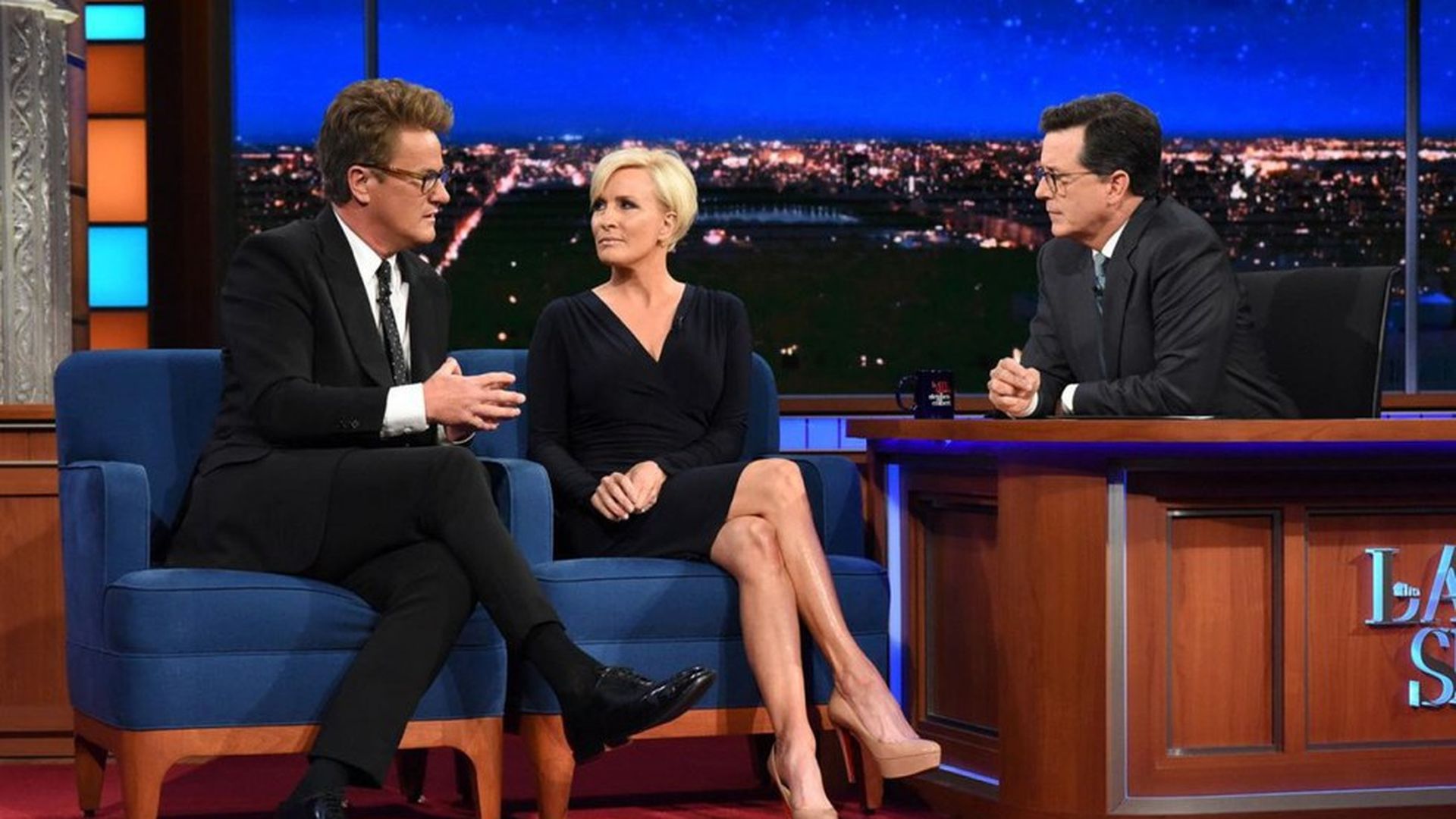
Morning Joe 's Joe Scarborough, appearing with co-host Mika Brzezinski on Stephen Colbert's "Late Show" Tuesday night: "This is well before Donald Trump was elected president that my party has betrayed their core values."
Colbert: "But aren't you a Republican?"
Scarborough: "Um I am a Republican but I'm not going to be an Republican any more. [Cheers, applause.] I'm going to become an independent." (Video)