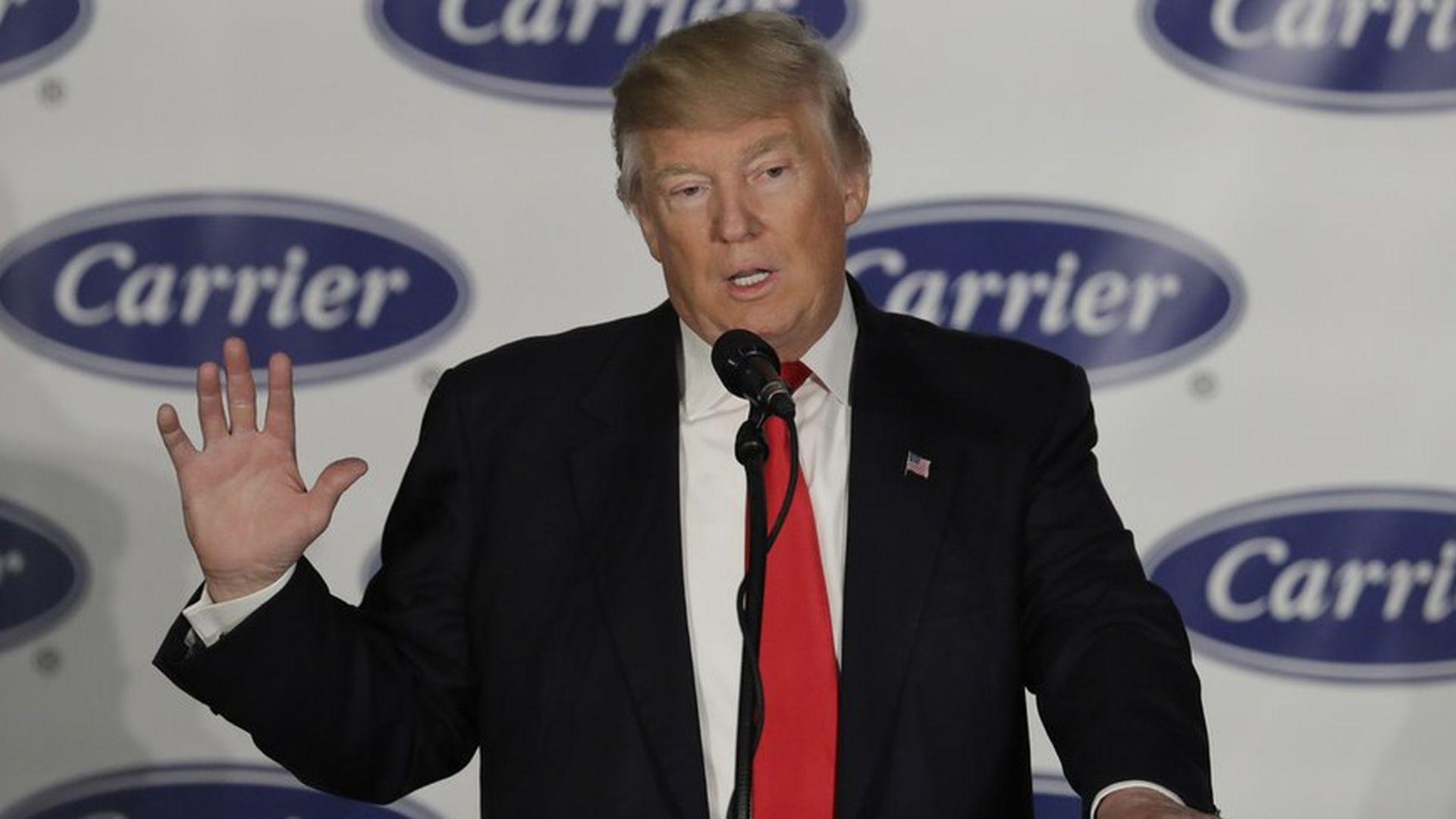
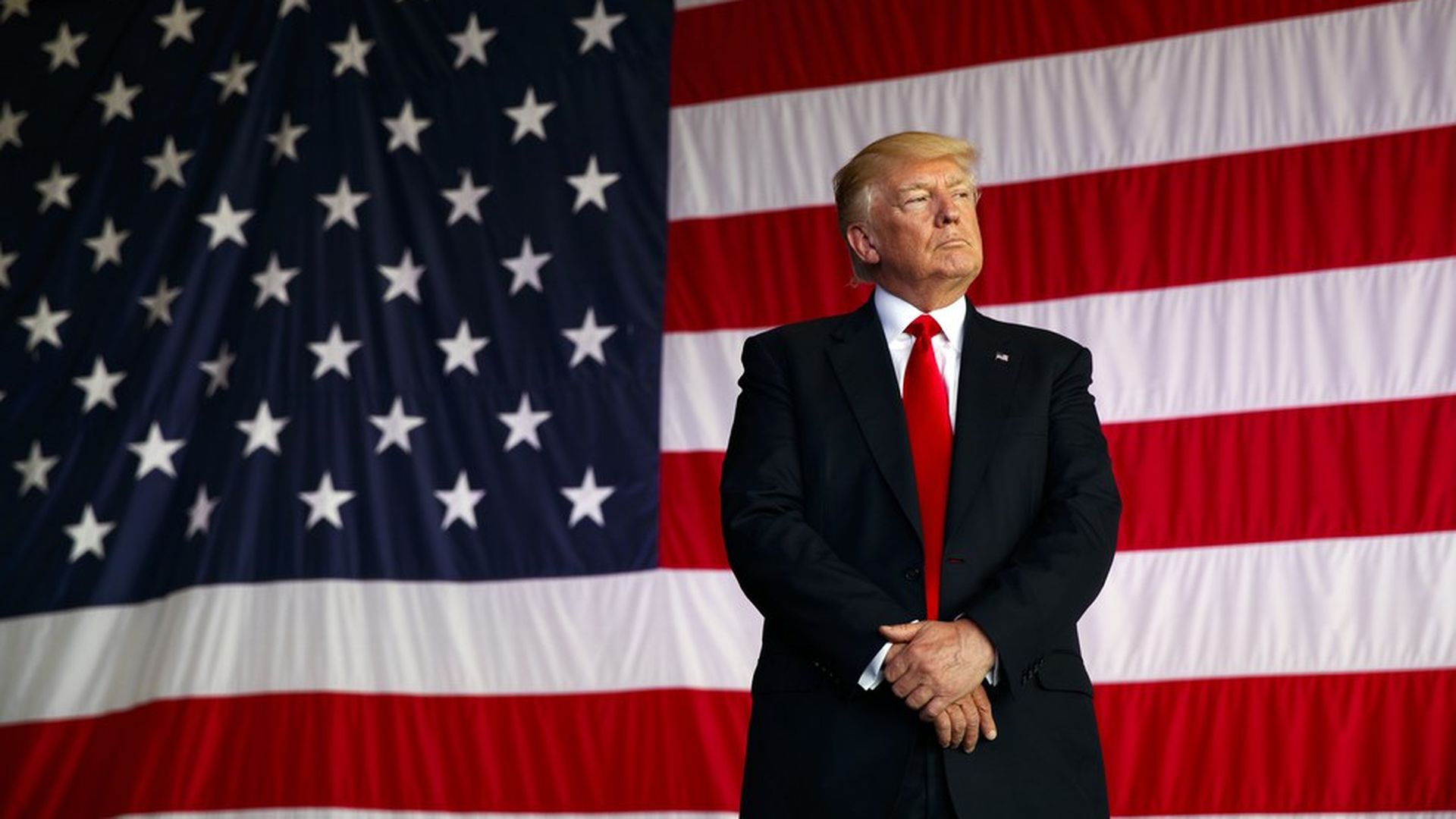
Donald Trump brokered a deal to keep roughly 1,000 jobs at a facility in Indiana from moving to Mexico. But it failed to live up to the hype while other firms have quietly continued to outsource — a trend that drained the state of 5,000 manufacturing jobs since February. For example, reports on former workers of Manitowoc Beverage Systems show many have been unable to find gigs as good as the ones they lost after the firm shipped 84 jobs to Mexico.
Why it matters: Trump outperformed in the rust belt due to his anti-establishment, anti-free-trade message. But Hoosiers, like Cindy Doty, who was recently laid off by Manitowoc, don't see much change. "I just think there're suits at the very top of the company that are just looking out for how much they can make," she told the News and Tribune. "And they don't care about the people they affect."
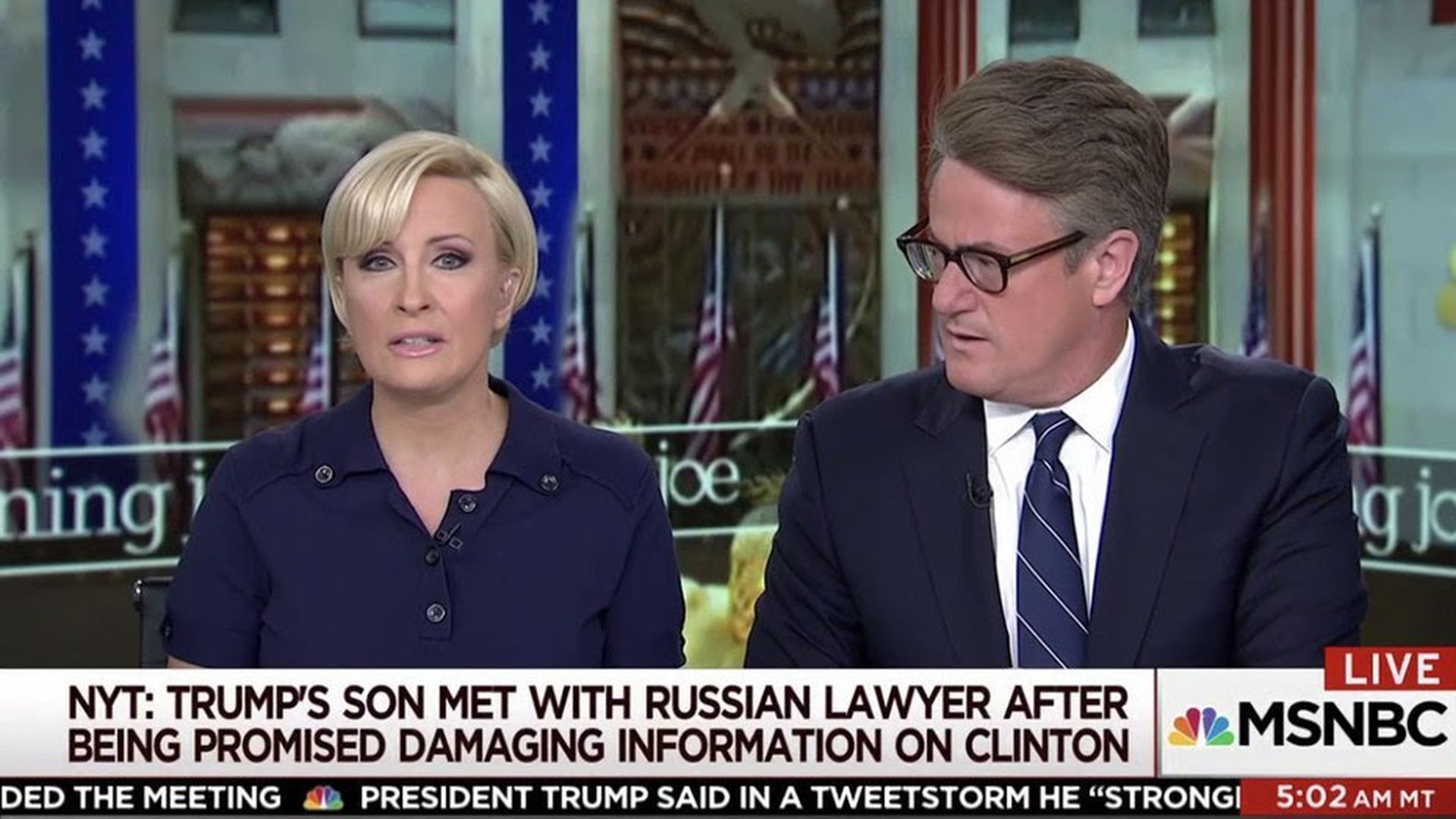
"Mika Brzezinski has landed ... a three-book deal with Weinstein Books, which published her 2011 book "Knowing Your Value," per Emily Smith of N.Y. Post "Page Six":
"The 'Morning Joe' anchor has signed a deal with Harvey and Bob Weinstein's publishing imprint said to be worth 'in the high six figures.'"
"The newly closed deal will include a revised edition of 'Knowing Your Value: Women, Money, and Getting What You're Worth,' which will be released next spring with fresh interviews from female trailblazers about getting recognition in the business space and in personal relationships."
"The updated book will also tie into Brzezinski's 2018 'Know Your Value' conference series for career-oriented women."
"Brzezinski plans to follow up with two more books in fall 2018, one titled 'Comeback Careers' and a currently untitled book for millennials entering the job market."
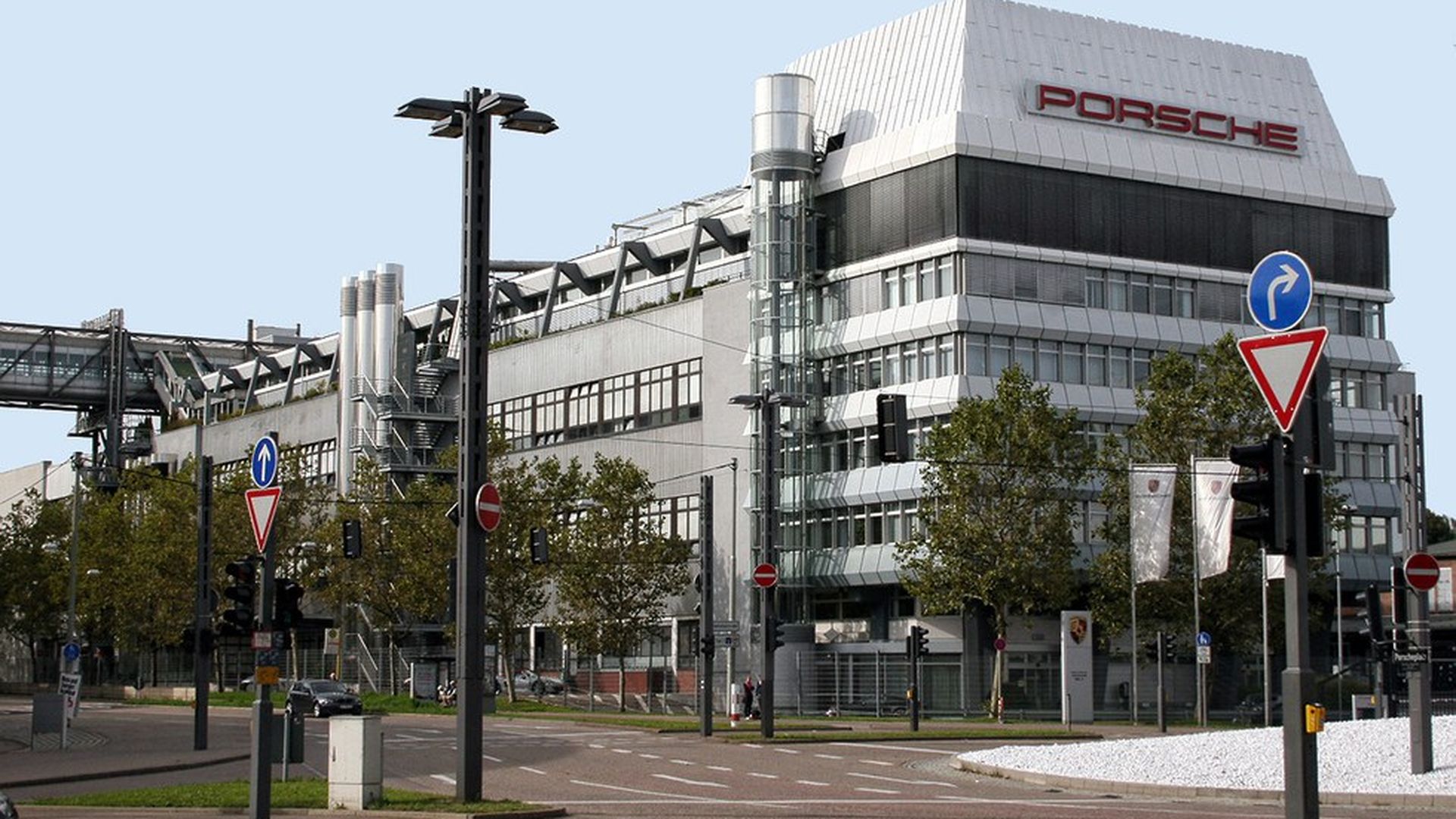
A lot more Germans have obtained jobs over the last two decades, but they are working fewer hours, per the Financial Times' Alphaville blog. The post, based on a new paper by German economist Christian Odendahl, is titled, "The myth of the German jobs miracle."
The significance of Odendahl's findings is that Germany is often held up as an example of how to weather the cross-cutting storms of globalization, hyper-advancing technology, and migration. Among his conclusions:
The number of jobs in Germany is up by 15% since a trough in the mid-1990s. But the total number of hours worked has grown by much less — by 2%. In other words, Germans as a whole are working fewer hours.
And their jobs increasingly are not paid much: As of 2014, almost a quarter of Germany's workers are paid at or below €10.50 an hour, up from 15% in the 1990s.
Why it matters: If Odendahl's findings hold up, they cast a new cloud over the West's challenge of navigating the current global political turbulence, which is largely driven by four decades of stagnating wages and job loss.
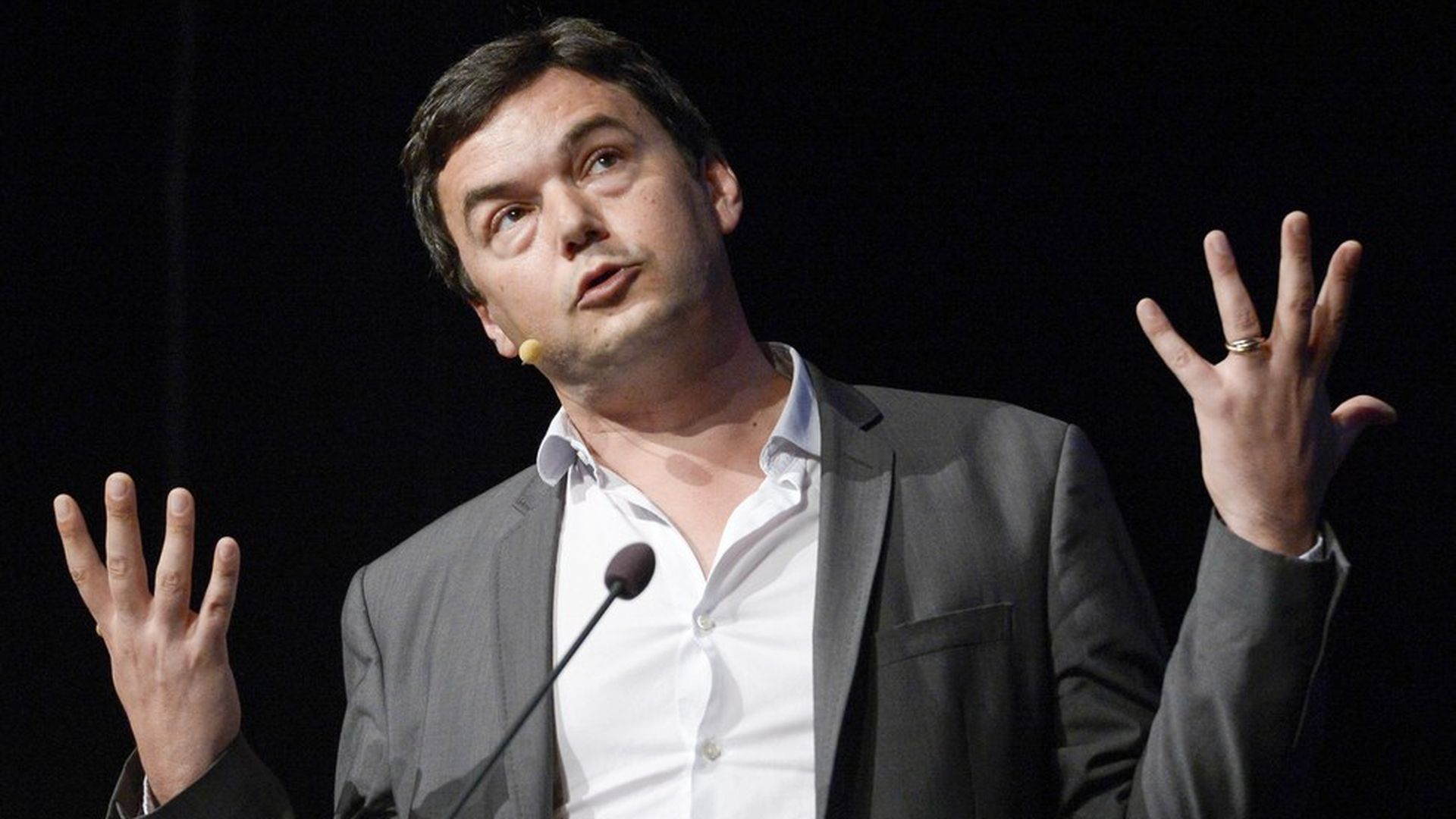
Thomas Piketty's 2014 book, Capital in the 21st Century, is the rarest of tomes — a 700-page best-seller on economic theory. The French economist was transformed into an international celebrity, arguing with uncanny timing that economic inequality has worsened since the 1970s, and contributed to social and political instability. The political upheaval of the last year has only made him seem more prescient.
But there is much debate over Pikkety's central premise explaining why inequality has grown worse. Among those challenging Piketty is Devesh Raval, an economist with the Federal Trade Commission, who tells Axios that the Frenchman wrongly blamed automation. Instead, says Raval, the culprit is globalization.
Between the lines: If Raval is right, and not Piketty, then we have already seen the worst, and inequality should stop becoming exacerbated. "If globalization and trade are the culprit, most of those effects should have already happened," Raval says.
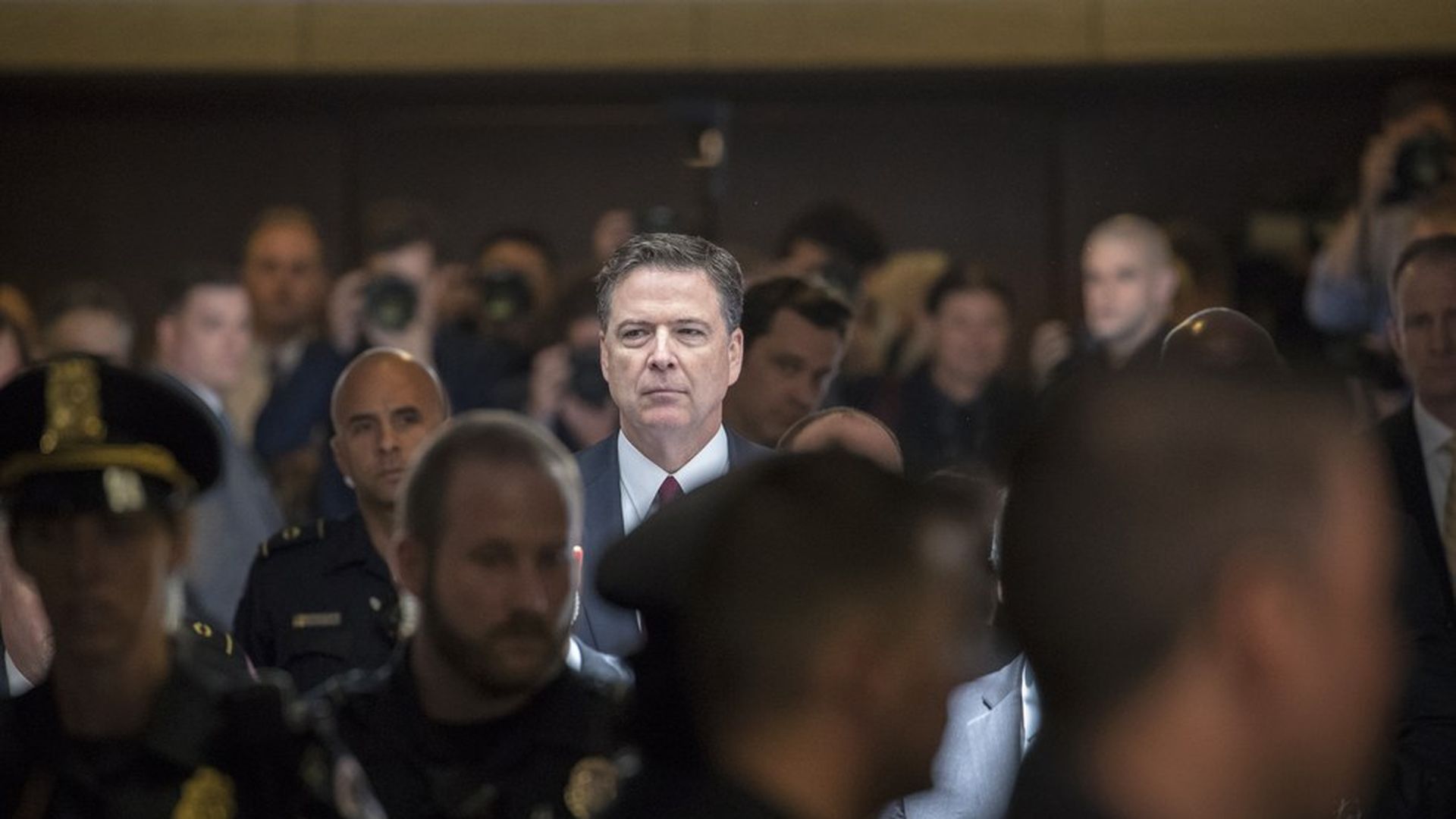
Daniel Richman, a Columbia Law professor and confidant of former FBI director James Comey, said Monday that none of the memos he received from Comey were marked classified, according to CNN. This comes after a report from The Hill that "more than half" of Comey's memos contained classified information.
After he was fired by Trump, Comey asked Richman to share the memos with the press to get his story out, Comey told lawmakers last month. Comey also testified that he intentionally left his memos unclassified to make the matter "easier to discuss."
One caveat: Some of the information in the memos may not have been classified when Comey wrote them or shared them with Richman, but it is possible the contents have since been upgraded to be classified, per CNN.
ProShare Advisors LLC is proposing a new trio of exchange-traded funds (ETFs) that would be used to bet against traditional retail, per Bloomberg.
Why it matters: Making money off America's floundering retail industry in America is "about the get a whole lot easier," as Bloomberg's Rachel Evans writes. Plus, there is reason to believe it would be lucrative — State Street's traditional retail ETF has lost more than 9% this year whereas an e-commerce ETF from Amplify has gained 30%.
How it would work: ETFs work like index funds to track a basket of assets, and are attractive to investors since their fees tend to be lower than those of mutual funds. One of the ProShare ETFs would short (i.e. bet against) shares of traditional retailers and go long on shares in companies that could benefit from increased e-commerce activity. The other two would use leverage to "boost the returns on their bets against the [traditional retail] industry."
In a desperate political age when who can say what's out of line or impossible, Politico's Michael Linhorst explores the strange idea of running a robot as president.
The subject of a robot president isn't new. Last year seemed to be ripe for such musings: IBM's Watson was proposed as a presidential candidate, and Gregory Turner-Rahman imagined the first robot president in book form.
Linhorst writes: "Yes, it sounds nuts. But the idea is that artificial intelligence could make America's big, complicated decisions better than any person could, without the drama or shortsightedness that we grudgingly accept from our human presidents."
Bottom line: We will never have a robot president. But the reach for a systematic approach to public governance may not go away.
Americans are sharply divided across partisan lines regarding the impact of institutions — like higher education, the media, and religion — on the United States, according to a new poll from the Pew Research Center.
Data: Pew Research Center, survey conducted June 8-18, 2017; Note: GOP and Dem. categories include those leaning towards those parties, 'Don't know' responses not shown; Chart: Andrew Witherspoon / Axios
Abercrombie & Fitch's share price is down more than 20% today. The plunge has been triggered by its announcement that it's no longer trying to sell itself. But it's also another reflection of the misery in brick-and-mortar retail.
This is a brand that until recently was fantastically popular with teens. But then it was struck by the brutal ephemeralness of fads, along with the decline of mall traffic. Among brick-and-mortar retailers in general, clothing merchandisers have been having among the worst trouble, short of the outright apocalypse facing big department stores (like Sears, which said Friday that it's closing 43 more stores, on top of the 150 stores it already planned to shutter, per the Wall Street Journal's Justina Vasquez.).
Bottom line: There is no easy answer for Abercrombie, which says it will now go it alone but ultimately may be faced again with the hard choice of finding a suitor.