Monday's economy stories


Comey's leaker: the memos weren't marked classified
Daniel Richman, a Columbia Law professor and confidant of former FBI director James Comey, said Monday that none of the memos he received from Comey were marked classified, according to CNN. This comes after a report from The Hill that "more than half" of Comey's memos contained classified information.
After he was fired by Trump, Comey asked Richman to share the memos with the press to get his story out, Comey told lawmakers last month. Comey also testified that he intentionally left his memos unclassified to make the matter "easier to discuss."
One caveat: Some of the information in the memos may not have been classified when Comey wrote them or shared them with Richman, but it is possible the contents have since been upgraded to be classified, per CNN.

Making money off retail failure just got easier
ProShare Advisors LLC is proposing a new trio of exchange-traded funds (ETFs) that would be used to bet against traditional retail, per Bloomberg.
Why it matters: Making money off America's floundering retail industry in America is "about the get a whole lot easier," as Bloomberg's Rachel Evans writes. Plus, there is reason to believe it would be lucrative — State Street's traditional retail ETF has lost more than 9% this year whereas an e-commerce ETF from Amplify has gained 30%.
How it would work: ETFs work like index funds to track a basket of assets, and are attractive to investors since their fees tend to be lower than those of mutual funds. One of the ProShare ETFs would short (i.e. bet against) shares of traditional retailers and go long on shares in companies that could benefit from increased e-commerce activity. The other two would use leverage to "boost the returns on their bets against the [traditional retail] industry."

A robot as president
In a desperate political age when who can say what's out of line or impossible, Politico's Michael Linhorst explores the strange idea of running a robot as president.
The subject of a robot president isn't new. Last year seemed to be ripe for such musings: IBM's Watson was proposed as a presidential candidate, and Gregory Turner-Rahman imagined the first robot president in book form.
Linhorst writes: "Yes, it sounds nuts. But the idea is that artificial intelligence could make America's big, complicated decisions better than any person could, without the drama or shortsightedness that we grudgingly accept from our human presidents."
Bottom line: We will never have a robot president. But the reach for a systematic approach to public governance may not go away.

Majority in GOP think news media, colleges harm the USA
Americans are sharply divided across partisan lines regarding the impact of institutions — like higher education, the media, and religion — on the United States, according to a new poll from the Pew Research Center.


Abercrombie & Fitch faces Wall Street mayhem
Abercrombie & Fitch's share price is down more than 20% today. The plunge has been triggered by its announcement that it's no longer trying to sell itself. But it's also another reflection of the misery in brick-and-mortar retail.
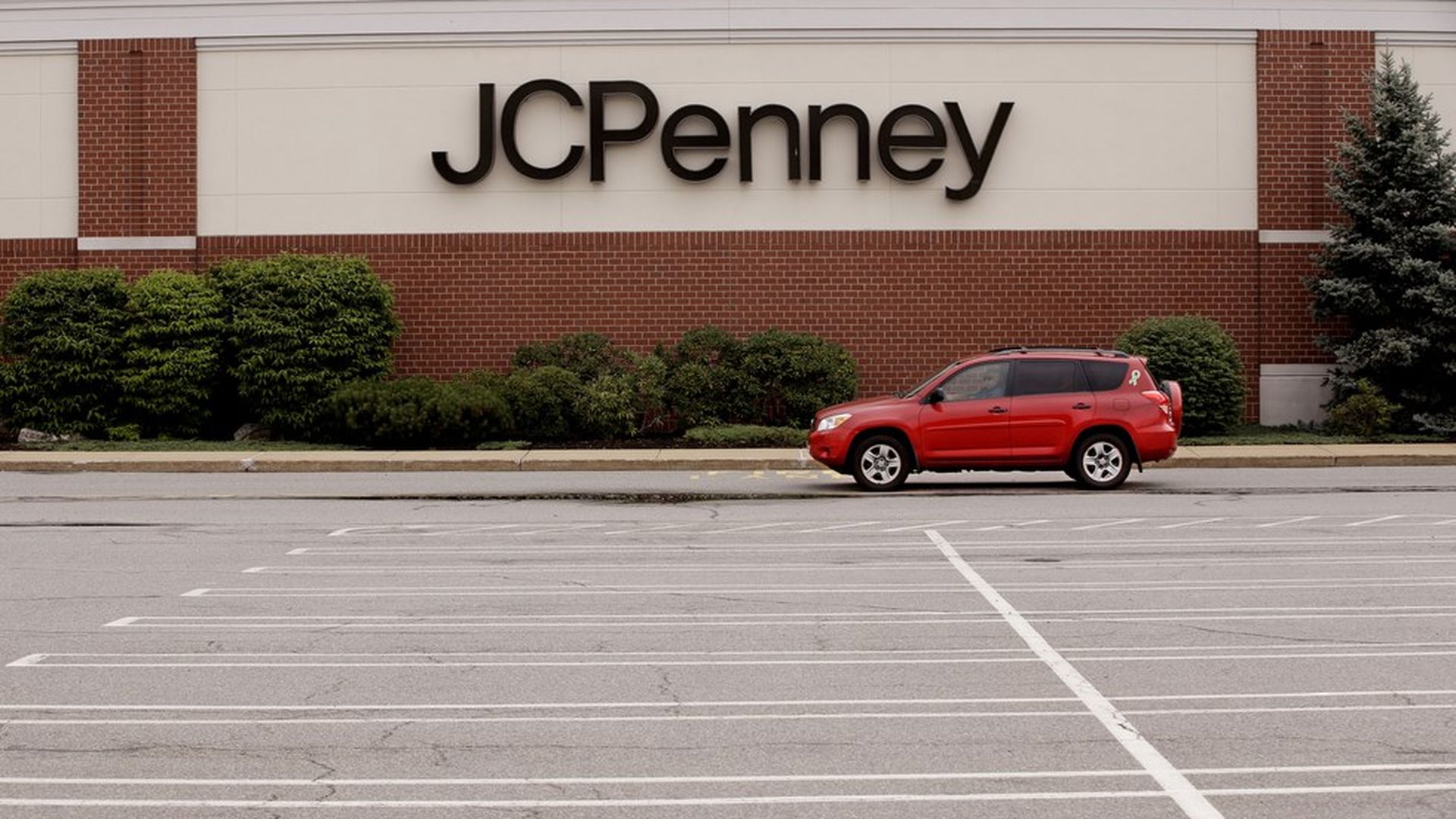
This is a brand that until recently was fantastically popular with teens. But then it was struck by the brutal ephemeralness of fads, along with the decline of mall traffic. Among brick-and-mortar retailers in general, clothing merchandisers have been having among the worst trouble, short of the outright apocalypse facing big department stores (like Sears, which said Friday that it's closing 43 more stores, on top of the 150 stores it already planned to shutter, per the Wall Street Journal's Justina Vasquez.).
Bottom line: There is no easy answer for Abercrombie, which says it will now go it alone but ultimately may be faced again with the hard choice of finding a suitor.

Google and Musk move to prevent AI apocalypse
Google's Deep Mind and Elon-Musk funded OpenAI are hard at work devising methods to make sure artificial intelligence never works against humanity's interest, Wired reports.
"If you're worried about bad things happening, the best thing we can do is study the relatively mundane things that go wrong in AI systems today," Dario Amodei of OpenAI's tells the magazine. "That seems less scary and a lot saner than kind of saying, 'You know, there's this problem that we might have in 50 years.'"
Why their work matters: The researchers are focused on inserting human judgement in machine learning processes. Instead of writing complicated "reward functions" that help AI judge whether its behavior is optimal, they have humans judge and rate AI performance before it amends itself. This collaborative process helps teach humans about how machines learn, while also preventing algorithms from going off the reservation.

Daron Acemoglu: Paul Revere of the robot revolution
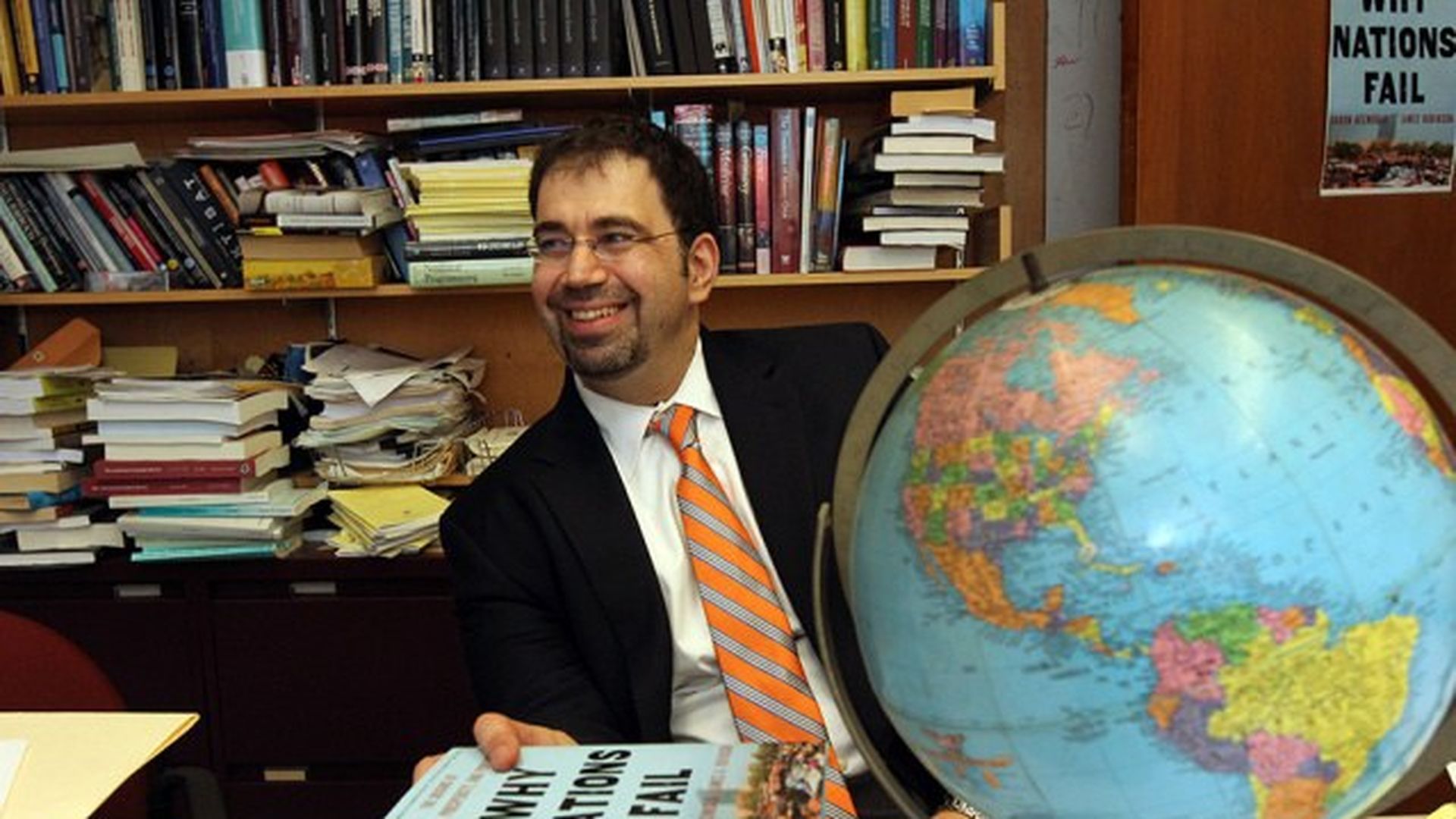
Imposing in size and resembling a retired linebacker more than the MIT economist that he is, Daron Acemoglu has built the reputation of an iconoclast. Over the last five years, he has taken on the grasping leaders of the world's failed nations, and, most recently, automation.
In March, Acemoglu, along with Boston University's Pascual Restrepo, made waves with a paper that described industrial robots punching a hole in employment and wage growth, and potentially costing millions of more jobs by 2025. While challenging the orthdoxy, the paper immediately became central to the early scholarship on the new wave of robotization. Policymakers, fellow economists and journalists rely on his core conclusion — that each robot will cost three to six jobs.
His central message: "History is not uniform," Acemoglu tells Axios: Technological development tends to bring broad prosperity, but that is not a law of nature. "The industrial revolution didn't lead to higher wages for many years between 1760 and 1850," and if it weren't for democratization, the rise of labor unions, and universal education, it may never have.
Since 2011, Acemoglu has been mentioned regularly as a candidate for the Nobel Prize. I spoke with him twice — at MIT and, in a catchup chat last week, by phone. Unsurprisingly, his office is lined with books, history next to economics, including stacks of Why Nations Fail, the 2012 work that he co-authored with the University of Chicago's James Robinson. That's the one that, challenging the theory of Jared Diamond and others, said nations fail not because of culture, history or geography, but simply because their leaders prefer to loot; there simply isn't the institutional strength to pull the country through bad leadership.
Acemoglu earned his Ph.D at the London School of Economics, but the most important economics lesson leading to his theory about the prosperity of nations came while growing up under the Turkish military dictatorship in the 1980s. He witnessed that the purpose of many institutions was not to do its job or make sure people were treated equally, but to extract wealth from the population.
- What he grasped: Winning nations — the key determinant of a country's prosperity — are inclusive, having universal property rights and democratic forms of government.
But Acemoglu worries that these institutions in the U.S. and Europe are under attack. One of the enemies at the gate: technology. It's a conclusion he would not have made ten or fifteen years ago. "Economists are trained to think of technology as always increasing employment and raising wages," he says by phone, "but there's no theoretical justification for believing this."
Robinson — his Why Nations Fail collaborator — met Acemoglu during a lecture Robinson was giving at LSE. Acemoglu sat in the front row and peppered Robinson with questions and challenges to his assumptions. (Thomas Piketty, the rockstar economist and author of Capital in the 21st Century, sat just a few seats down.).
The two went to dinner afterward, and a decade of collaboration followed. Robinson says what sets Acemoglu apart is the breadth of his curiosity: "His house is filled to the brim with books on all sorts of topics. Few economists have read half what he's read." Says his MIT colleague Joshua Angrist, "Daron breathed life into the field of political economy."
Lessons from the industrial revolution: Acemoglu saw that advancing technology did little to raise the prosperity of the common man. Now, it's important that everyone be engaged. "There's a real mismatch between our institutions and the technologies coming on board," he says. He calls for a menu of changes:
- Education reform that includes technical skills needed today
- An expanded social safety net
- Changes in how capital is taxed

Data reveal: how automation is suppressing wages
It's the great economic conundrum of our day: if the unemployment rate is so low, why aren't wages growing faster? The law of supply and demand tells us that as labor gets scarce, wages should rise. Yet, as we saw in the latest jobs figures on Friday, average U.S. hourly earnings have barely exceeded inflation for three years running.
What's going on? The answer may lie in the Wage Growth Tracker (below), an alternative gauge produced by the Federal Reserve's Atlanta bank. It substantiates what a lot of people have suspected: that older, higher-paid workers are leaving the workforce and being replaced with cheaper, younger workers who hold little bargaining strength when they can be quickly replaced by automation.
Data: Federal Reserve Bank of Atlanta; Chart: Lazaro Gamio / Axios

Everything Trump has called "FAKE NEWS"
President Trump first tweeted the words "fake news" on December 10, and since then has lobbed accusations of "fake news" (or more often "FAKE NEWS") over Twitter 66 times, referring to everything from the salacious Russia dossier to a lack of coverage of his crowd sizes.
Everything Trump has labeled fake news to date: