Friday's economy stories

The political minefield of AI regulation

Congress is turning its attention to artificial intelligence, as evidenced by Senator Maria Cantwell's proposed legislation to create an AI advisory committee, which "would serve as a first step in establishing federal policy in an increasingly important sphere," as as Axios' David McCabe puts it.
The news has some AI advocates like Kriti Sharma of Sage Group excited that the federal government can be an edifying force in the development of AI, but there's ample reason to be skeptical of this idea.
St. Louis' minimum wage is decreasing by 22%

Correction: An earlier version of this post mistakenly stated that the minimum wage is set to decline by 17%, rather than 22%.
Minimum wages are generally marching higher in states and cities across the U.S., but the wage floor in St. Louis is set to fall from $10 to $7.80 later this summer. That's after a Republican-controlled state legislature voted to make illegal a city-wide minimum wage law that went into effect 10 weeks ago.
The St. Louis Post-Dispatch chats with employers in the city, most of whom say they will cut the pay of workers they had raised just 10 weeks before. But some, even those who opposed the higher minimum initially, can't bring themselves to do it.
Why it's unusual: Few ideas poll better than raising the minimum wage, and the issue has had particular success in state and city legislatures and the voting booth in recent years. Watch to see if Missouri is the movement's high-water market.

Activist investor buys stake in Zimmer Biomet

A fund associated with the activist hedge fund Jana Partners has bought an undisclosed stake in Zimmer Biomet, according to a federal merger filing. That occurred just one day after Zimmer, a medical device conglomerate, nudged out CEO David Dvorak due to another dismal quarter by Wall Street's standards.
Why it matters: Jana is known to shake things up, and Zimmer has already started down that path. Amazon acquired Whole Foods after Jana bought its stake, and the hedge fund was around when Time changed top leadership. Jana is also somewhat familiar with medical devices, owning part of NuVasive. Jana and Zimmer did not immediately respond to questions.
IBM's Watson gets no love on Wall Street
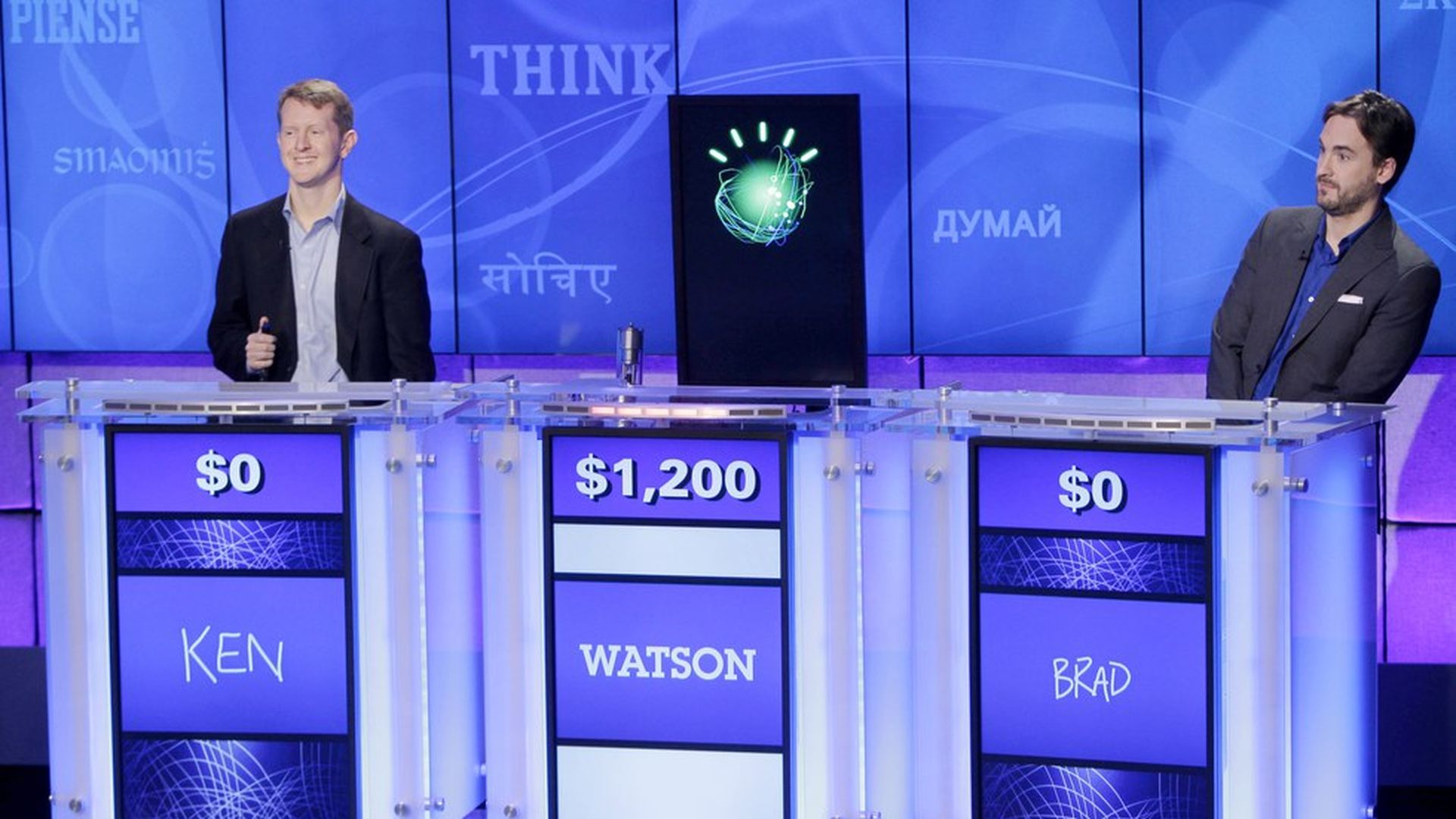
A debate rages in the tech community over whether IBM's Watson computing system is all hype, or the source of real and potential advances in the science of artificial intelligence. Venture Capitalist Chamath Palihapitiya, for instance, has called Watson a "joke" that is the product of IBM's PR operations rather than serious AI science.
MIT's Tech Review, however, recently argued Watson "will be a leader in applying AI to health care's woes," and that if it hasn't achieved hoped-for breakthroughs yet, it's only because "it needs certain types of data to be 'trained,'" and that this data has been difficult to access—a problem that all AI-intensive firms face, not just IBM.
Wall Street is skeptical: Just 5 analysts of 21 tracked by Money.net have a buy rating on IBM stock, while Jefferies analyst James Kisner cut his price target for the company again Tuesday, from $135 to $125, based on his skepticism of Watson. The stock was trading at $153.81 as of publication.
Artificial intelligence has race, gender biases

The ACLU has begun to worry that artificial intelligence is discriminatory based on race, gender and age. So it teamed up with computer science researchers to launch a program to promote applications of AI that protect rights and lead to equitable outcomes.
MIT Technology Review reports that the initiative is the latest to illustrate general concern that the increasing reliance on algorithms to make decisions in the areas of hiring, criminal justice, and financial services will reinforce racial and gender biases.
One example: A computer program used by jurisdictions to help with paroling prisoners that ProPublica found would go easy on white offenders while being unduly harsh to black ones.
Why it matters: There's been much talk, but no action from large tech companies and other institutions using these algorithms, in terms of systematically investigating what biases are being reinforced and what remedies might be.