Friday's economy stories

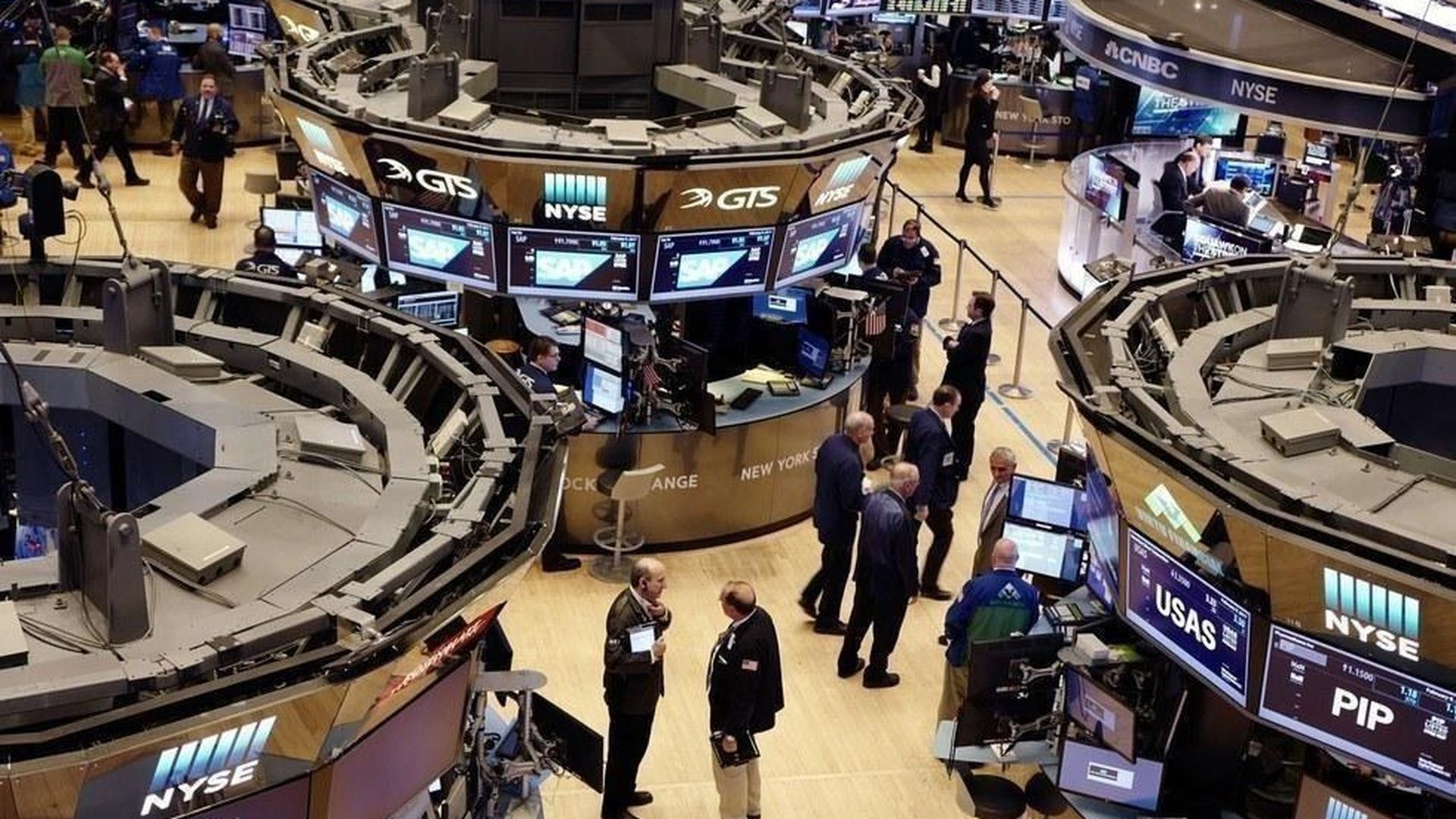
SEC to let all companies file confidentially for an IPO
The Securities and Exchange Commission has decided let all companies confidentially submit a draft IPO registration to get feedback from the Agency. This is similar to the so-called confidential IPO filing that "emerging growth companies"—businesses with less than $1 billion in annual revenue—have been allowed to make since the JOBS Act of 2012 was passed into law.
Why: "By expanding a popular JOBS Act benefit to all companies, we hope that the next American success story will look to our public markets when they need access to affordable capital," new SEC chairman Jay Clayton said in a statement. This more or less translates into a plea to get more companies to go public, with the number of public companies now 37% lower than at its 1997 high.

Real estate company Redfin files for IPO
Redfin, a 12-year-old company that provides an online real estate database and brokerage services, has filed for a $100 million IPO, though the amount is likely a placeholder.
Offering details: The Seattle-based company plans to trade on the NASDAQ under ticker symbol RDFN, with Goldman Sachs listed as left lead underwriter.
Financials: Redfin is not profitable yet, with net losses of of $24.7 million, $30.2 million, and $22.5 million for the years ended December 31, 2014, 2015, and 2016, respectively. Over the same fiscal periods, it generated revenue of $125.4 million, $187.3 million, and $267.2 million. In 2016, its customers bought or sold 75,000 homes worth more than $40 billion.
Backers: Redfin has raised about $167 million in total funding, and was most recently valued at just over $800 million, according to investment database Pitchbook. The company's investors include Madrona Venture Group, DFJ, Greylock Partners, and Tiger Global Management.

A weary retail sector looks to AI for salvation
Retailers are suffering the twin headwinds of slow productivity growth and a competitive e-commerce environment that pits stores against each other on price. With retail stocks sputtering — The SPDR S&P Retail ETF is down 4% over twelve months — it's no wonder retailers are turning to AI technology as a potential lifeline.
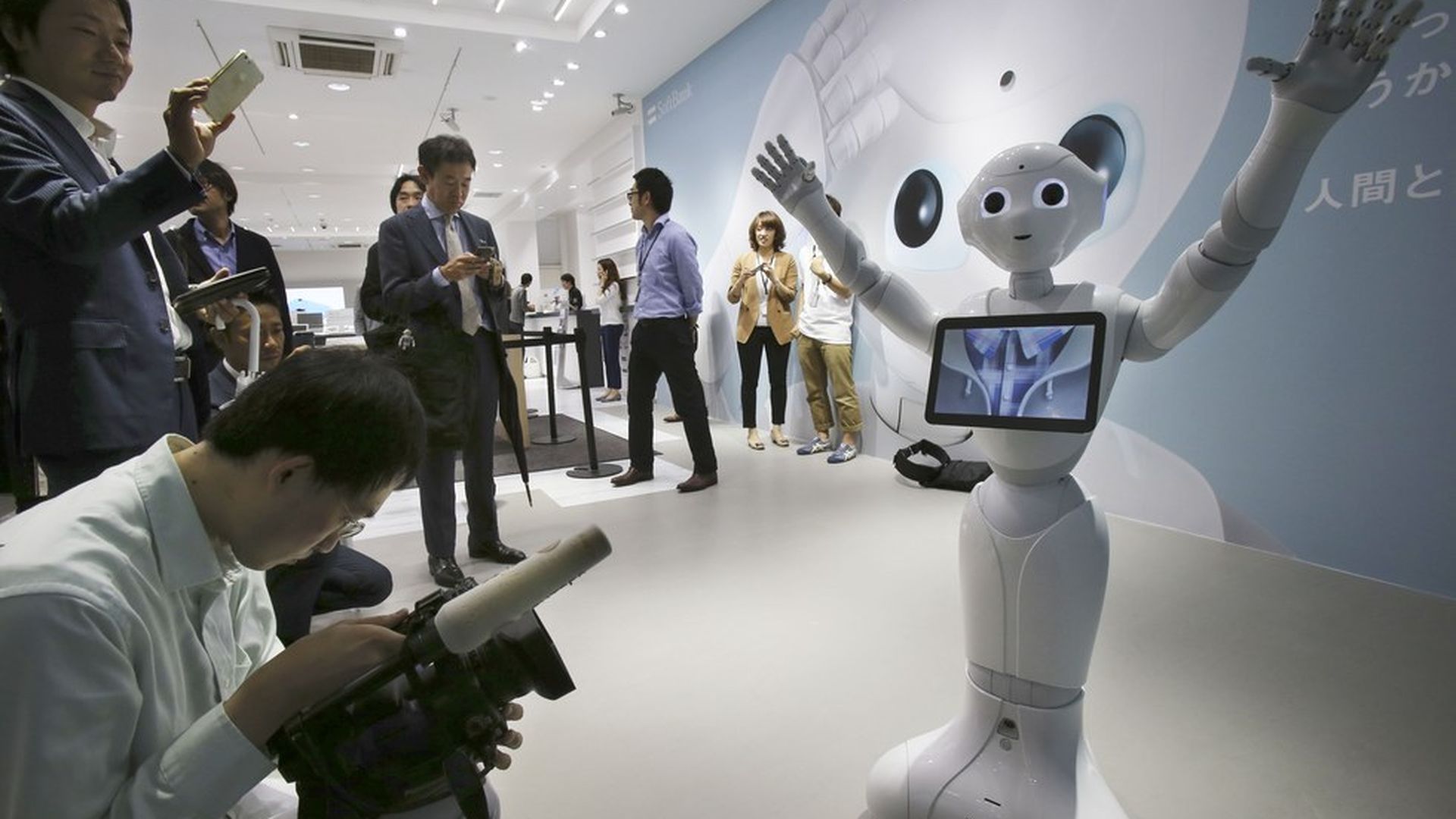
RetailWeek's Friday report on AI impacting retail touts tools like AI-enabled systems that sort through customer emails to surface those that are most urgent, without wasting man hours on triage decisions. And it highlights an experimental robot that answers simple questions while helping shoppers navigate a San Francisco-based Lowes.
Why it matters: Amazonization is leading to a retail environment where a few stores thrive at the expense of a great struggling mass of competitors. If traditional retailers want to break this spell, they will have to boldly experiment with these technologies in the hopes of gaining an edge.

2/3 of new manufacturing jobs are thanks to foreigners
A significant majority of the 656,000 new manufacturing jobs created between 2010 and 2014 can be attributed to investment from countries like Japan, the U.K., and Germany, according to a Reuters analysis.
Why it matters: President Trump and some of his advisers are "hell-bent on imposing tariffs — potentially in the 20% range — on steel, and likely other imports," Axios reported Friday morning, though the majority of his cabinet opposes the plan. Trump's complaints about unfair trade practices are not unfounded, but there's a reason why trade arrangements are hard to reform: Attempts to gain advantage at the expense of trade partners risks upsetting cross-border supply chains that support millions of jobs. And it's states in Trump's southeast stronghold, like South Carolina, that have the most to lose economically from disrupted global supply networks.

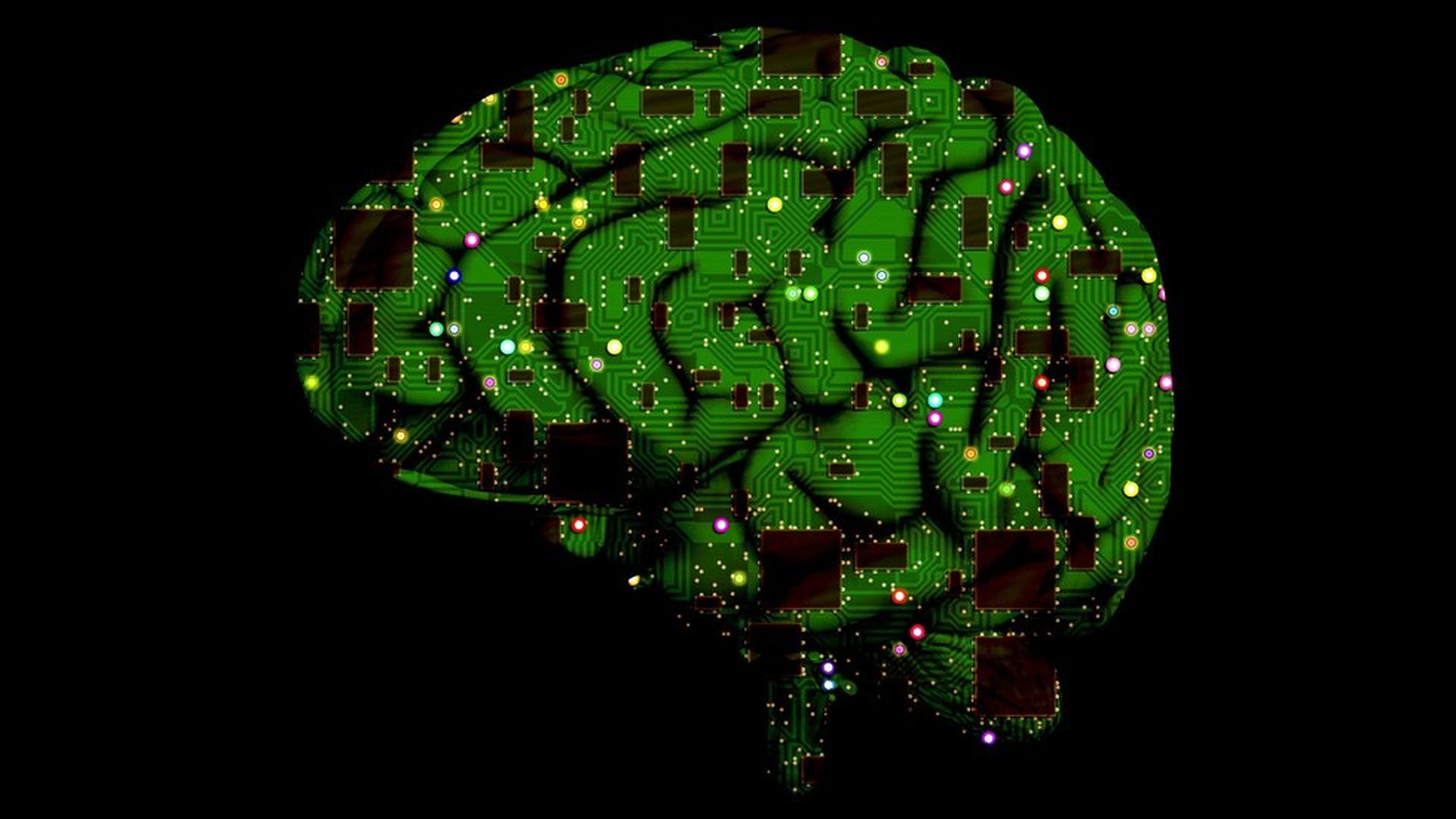
The battle behind making machines more human-like
Leading artificial intelligence researchers are debating whether machines — once they achieve super-human smarts — should be expected to explain themselves in robust discussion, or if spitting out an exceptional, if mysterious, answer is good enough.
The debate is part of the raging global discussion over a perceived challenge posed by machine intelligence to jobs, the human role in society, geopolitical power — to us.
Battle lines: Peter Norvig, head of research at AI powerhouse Google, has attracted attention with a June 22 speech in Sydney arguing that future intelligent computers shouldn't be expected to explain why they think what they think, since, after all, humans themselves don't do a very good job at explaining the true reasons for their decisions. Others argue that neural networks are simply a different way of thinking, and that even if we should be able to plumb the machine mind, there is no way for us to get at it.

Being Trump: the moment before he sent his sexist tweet
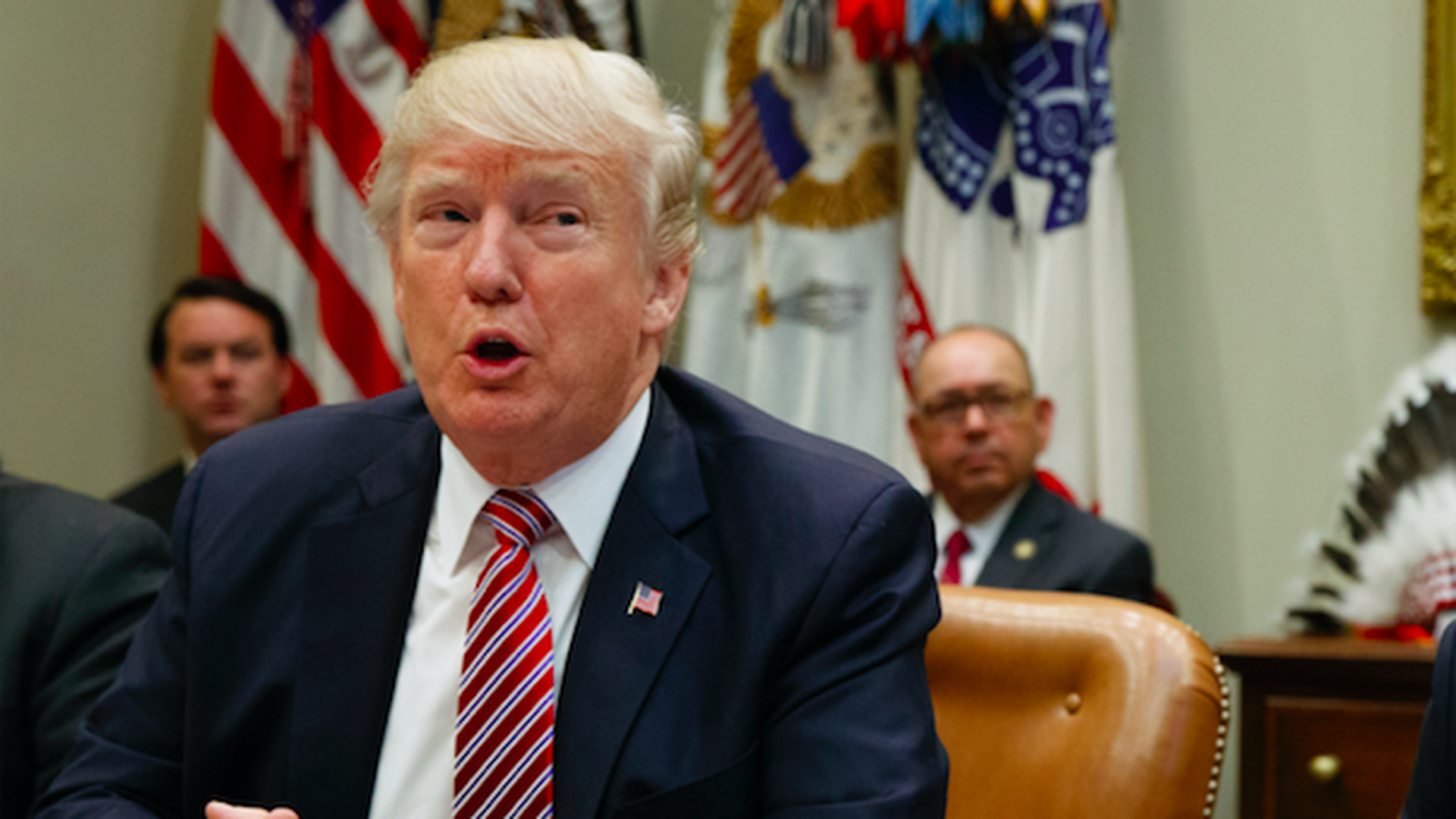
At 8:50 a.m. yesterday, the President of the United States confronted a day of tense and definitional decisions. His health-care plan faced life-or-death negotiations with nervous Republicans.
- Within hours, he'd host his first meeting with the leader of a nation at urgent risk of decimation by North Korea, which is flirting with nuclear war. He was about to give a speech designed as the centerpiece of a week dedicated to national energy policy. The trade war we just mentioned was brewing.
- But as the president watched TV, one topic consumed his mind and mood: two talk-show hosts who had insulted his psychological stability. Their average audience is just over 1 million — .3% of the nation's population.
- He banged out those infamous 53 words.


Trump overrules cabinet, plots global trade war
With the political world distracted by President Trump's media wars, one of the most consequential and contentious internal debates of his presidency unfolded during a tense meeting Monday in the Roosevelt Room of the White House, administration sources tell Axios.
- The outcome, with a potentially profound effect on U.S. economic and foreign policy, will be decided in coming days.
- With more than 20 top officials present, including Trump and Vice President Pence, the president and a small band of America First advisers made it clear they're hell-bent on imposing tariffs — potentially in the 20% range — on steel, and likely other imports.
- The penalties could eventually extend to other imports. Among those that may be considered: aluminum, semiconductors, paper, and appliances like washing machines.

GE's new Indian factory shows globalization in retreat
Donald Trump isn't the only world leader making hey from protectionist rhetoric and policy — more than 800 new protectionist trade measures have been implemented around the globe since November 2008, including many "Buy American" provisions signed into law by President Obama. The Wall St Journal reports that this dynamic is forcing companies like GE to build factories abroad to win contracts, even if their U.S. operations are more efficient.
One example is a $2.5 billion contract the manufacturer won from Indian Railways, which the company says it couldn't have won without first building a factory complex there in 2014. And if it wanted what is now one of GE Transportation's largest-ever contracts, building a second facility in the remote town of Marhuara, India — a location handpicked by a powerful Indian politician for development reasons — was its only choice.
Why it matters: Once poor countries like China, India, and Indonesia are building infrastructure and human capital necessary to handle sophisticated manufacturing, and they are demanding that multinational firms hire domestically if they want to sell domestically.


The messy history between Trump & Morning Joe
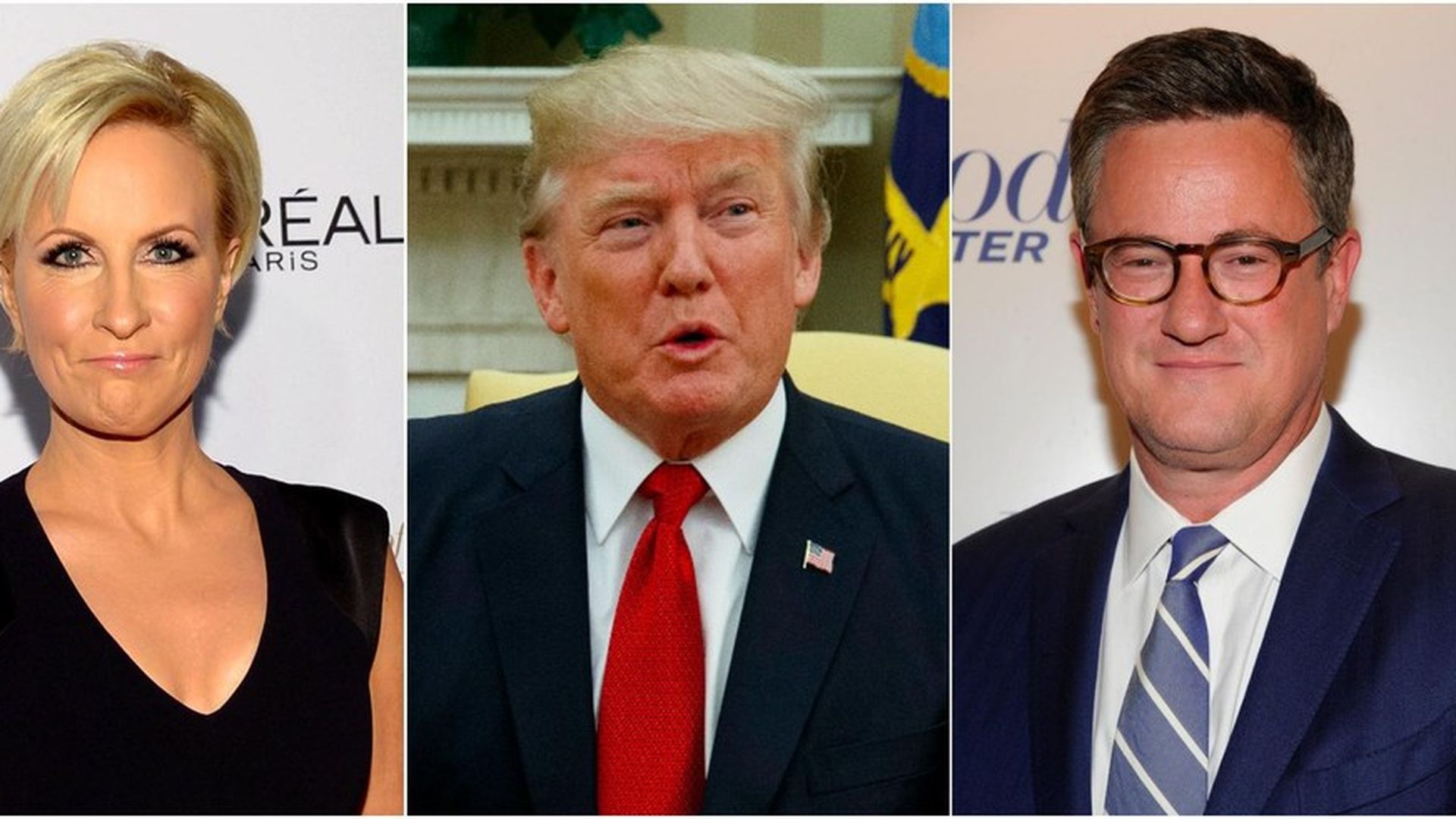
President Trump's cutting tweet toward Morning Joe hosts Mika Brzezinski and Joe Scarborough has run the news cycle with GOP senators and even Michael Flynn Jr. and Richard Spencer condemning his reaction. There has always been drama between Donald Trump and the Morning Joe crew. In 2015, there were claims of their relationship being too cozy. Here's what's gone down since.

The latest challenge to truck drivers — 15 mph golf carts
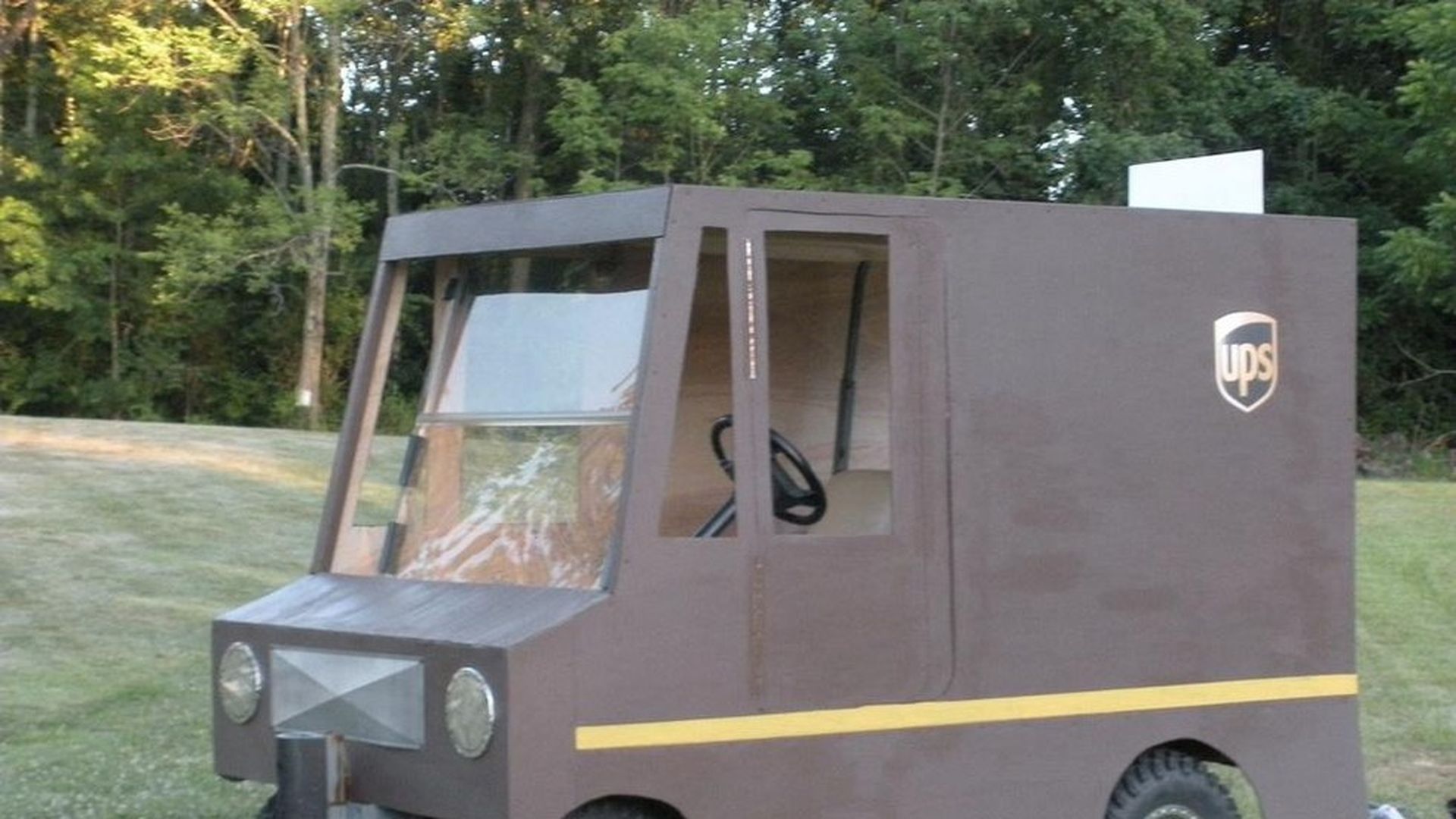
FedEx and UPS have won a battle in Kentucky to deploy slow electric golf carts operated by part-time, $15-an-hour drivers, a 20% cut to the starting rate of $18.75 paid to union drivers and less than half the average $35 rate, per the Wall Street Journal.
Kentucky's Republican-controlled legislature has passed a law pushed by the two delivery companies allowing them to operate the carts in neighborhoods and on slow-speed roadways.
Why it matters: The erosion of wages comes as the security of driving jobs has become a major issue — delivery trucks will relatively soon contain autonomous driving technology, threatening some 3.4 million professional driving jobs.

Blue Apron CEO talks IPO, Amazon and profits
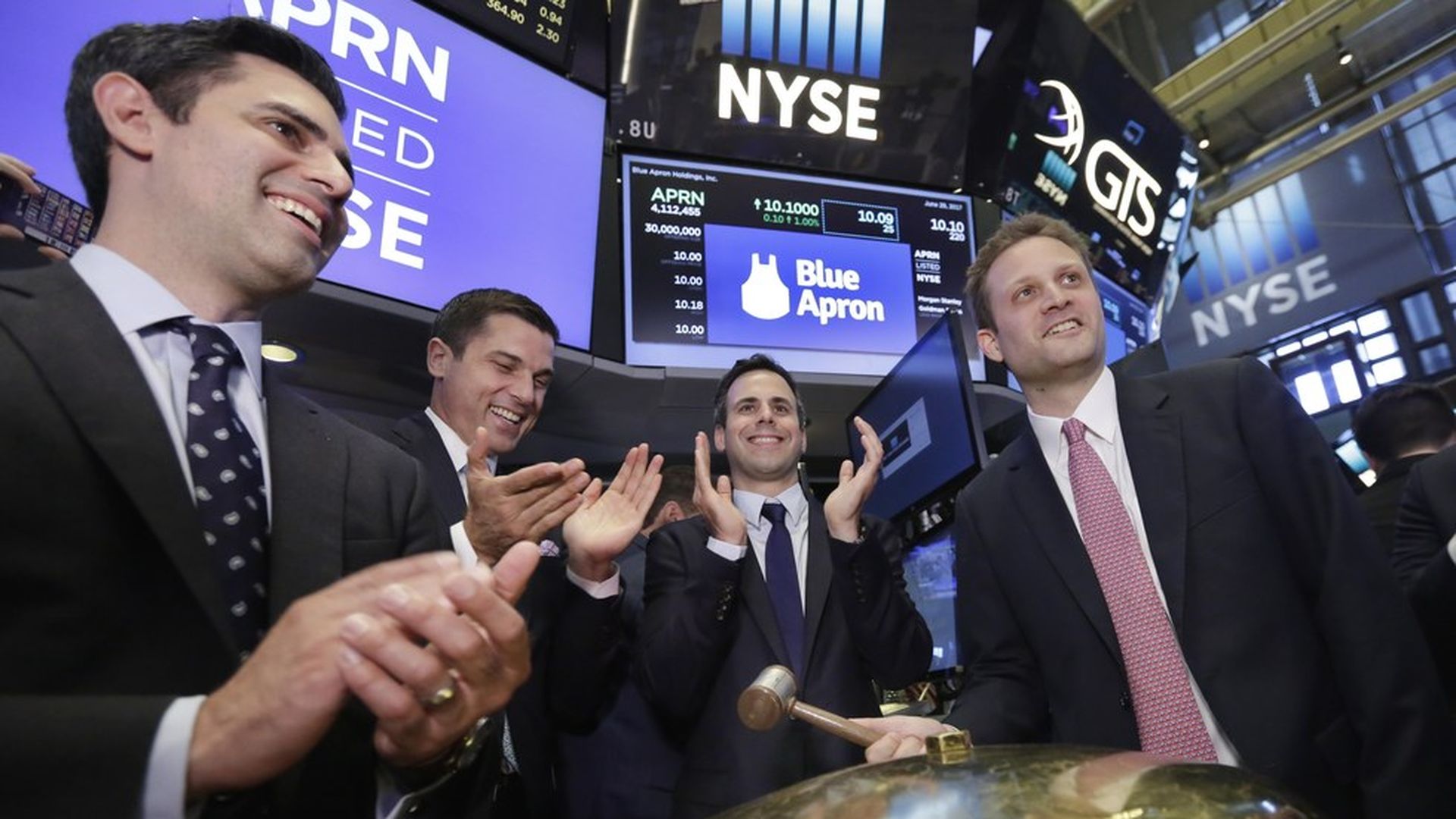
Meal-kit company Blue Apron began trading today on the New York Stock Exchange, after raising $300 million in an IPO that priced shares at $10. This was a pretty big disappointment for Blue Apron, which had originally filed to sell shares at between $15 and $17 (a difference that cut more than $1 billion of its valuation goal).
But Blue Apron co-founder and CEO Matt Salzberg was upbeat in a post-listing call with Axios. Highlights:

Morning Joe's segment bashing Trump that aired before his tweets
Here's the a clip from this morning's Morning Joe segment of Joe Scarborough and Mike Brzezinski mocking President Trump for the fake TIME magazine covers hanging in his country clubs. This came shortly before Trump sent his tweet ripping apart the show and personally attacking Mika.

GOP senators scold Trump for "Morning Joe" tweets
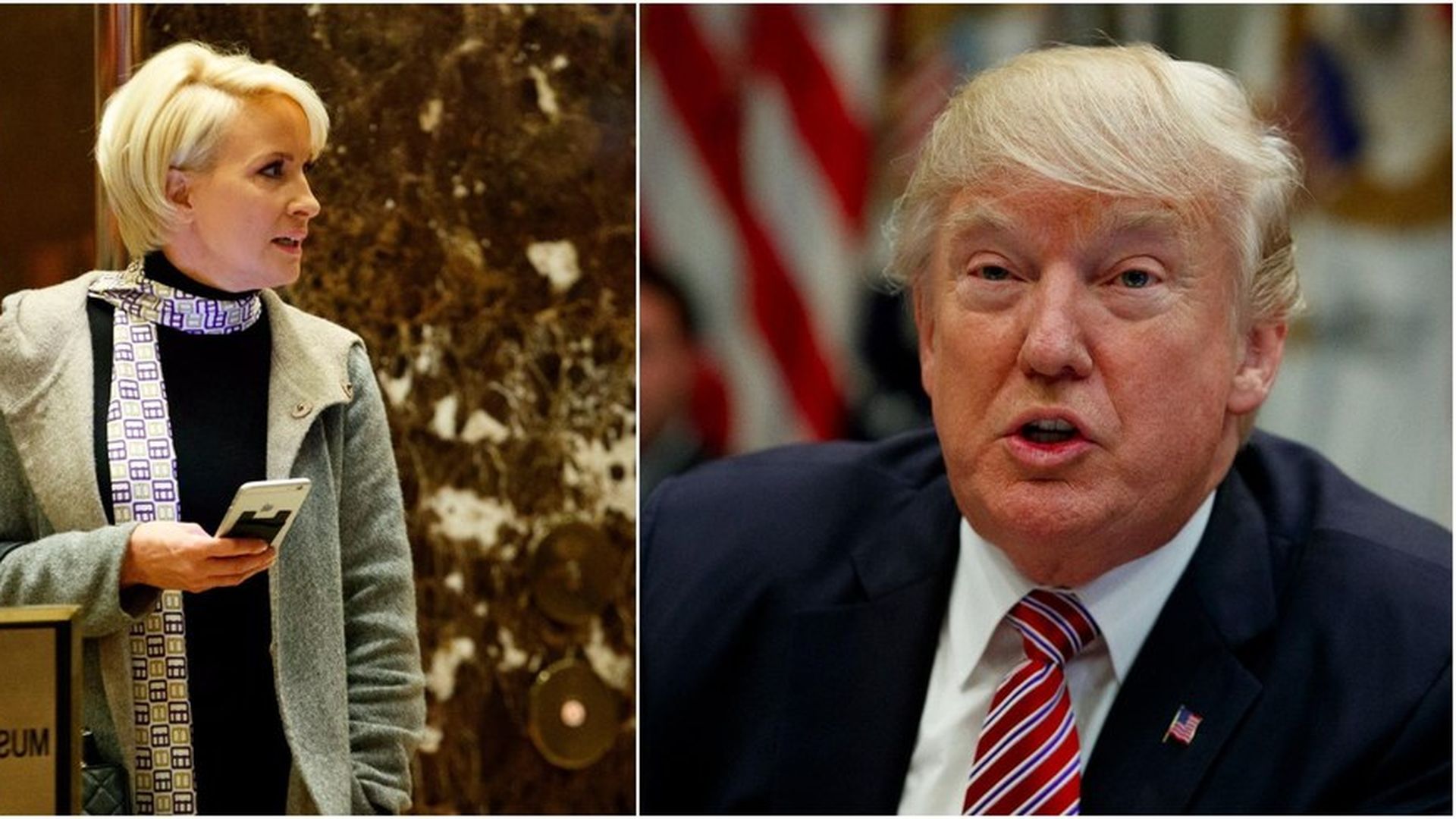
President Trump bashed Joe Scarborough and Mika Brzezinski this morning for "speaking badly" of him on Morning Joe, tweeting, "Then how come low I.Q. Crazy Mika, along with Psycho Joe, came to Mar-a-Lago 3 nights in a row around New Year's Eve, and insisted on joining me. She was bleeding badly from a face-lift. I said no!"
Quick thought bubble from Jonathan Swan: Trump continues to make a mockery of news reports that his staff would install some kind of vetting system for his tweets. Trump never allowed his impulses to be "managed" during his business career and he sure as heck won't now he's proven all the squares wrong and become President.

Doing away with CVs and those horrendous on-line applications
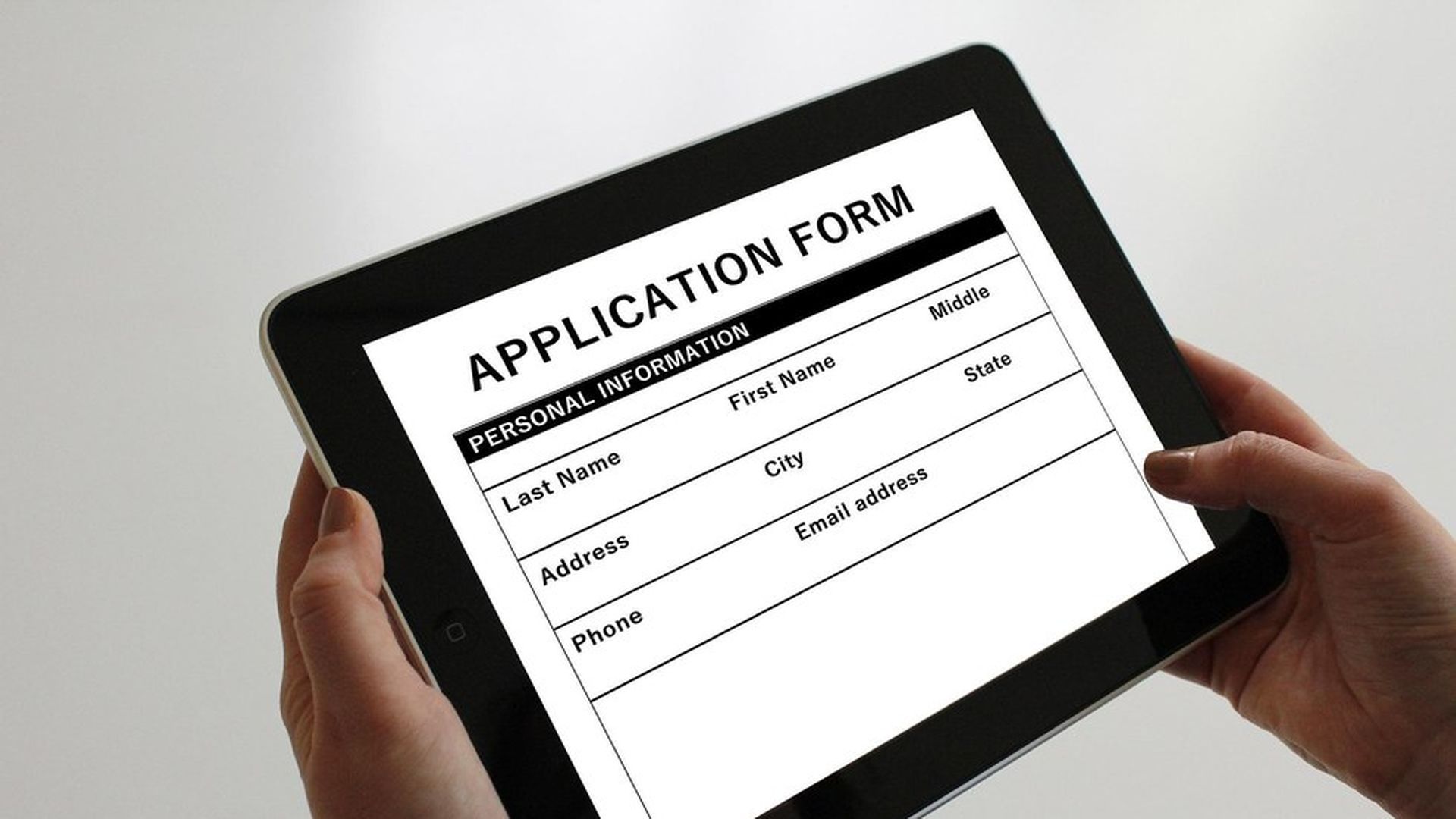
Interminably long on-line job applications are a horror for job-seekers. But it's not much better for hiring managers, who can only guess they are culling out the best job candidates.
Hirevue, Utah-based firm, has developed a machine-learning algorithm to appraise applications done by video. The system grades the applicants according to their suitability for the job, as set out by the hiring company. Human hiring managers can do the rest. "It allows hiring managers to not just randomly throw people out. You can spend time in ways uniquely human, rather than looking at resumes all day," said Lindsay Zuloaga, a data scientist with Hirevue.
As such systems improve, AI can take over more of the hiring process. Unilever, for example, is using online games and videos to weed out applicants before its human hiring people take a look at them. "It would be very cool if algorithm could get better and better at assessing people, and could hire someone," Zuloaga tells Axios."[A]n algorithm could say, 'This person is your best bet. They're going to stick around awhile,'" she said.

Even Nike can't resist the Amazon revolution
Sportswear giant Nike announced an agreement earlier this month to sell its products directly through Amazon.com, despite resisting the online retailer's entreaties for more than a decade.
The Wall Street Journal reports the decision was made after third-party sellers offering Nike products began to proliferate on the site, loosening the firm's control over pricing and distribution. Nike can't stop third-party sellers from reselling lawfully-purchased product, and following the liquidation of bankrupt Sports Authority's inventory last year, the market was flooded with Nike product that could be resold at deep discounts. Nike therefore decided to strike a deal to sell its products on Amazon in exchange for its help in stopping unauthorized third-party sales.
Why it matters: When consumers want to buy any type of product, be it electronics or apparel, an increasing share think of Amazon first.

Mining by machine: Automation hits coal industry
If you want to work in coal, forget using a shovel. As Bloomberg's Tim Loh writes: "Coal…executives are starting to search for workers who can crunch gigabytes of data or use a joystick to maneuver mining vehicles hundreds of miles away."
The coal industry's workforce composition is increasingly going to be skilled workers, and overall hiring is likely to dip. As Heath Lovell, a spokesman for coal producer Alliance Resource Partners LP, puts it: "Whether coal comes back or not is not necessarily directly related to jobs," since as tech makes the industry more efficient it will be able to produce the same amount with fewer employees.

Teaching computers how to really talk to humans
Last year, the buzz was that chatbots would achieve the unthinkable: using artificial intelligence, they would handle customer service in a way that did not drive customers totally nuts. That hype has died down, but the advances in natural language processing that led to it were real, and entrepreneurs continue to test new applications.
Amir Konigsberg, CEO of Tel Aviv-based Twiggle, is one such entrepreneur. His firm uses AI to teach retail search engines to better understand what potential customers want when they type into an online engine.
Why Twiggle matters: Backed by Alibaba, Twiggle says it is partnering with three of the world's top 20 retailers to improve their search capabilities. (Konigsberg says he can't divulge names because the product is still being tested by these companies). It wants the interaction between a customer and a search engine to resemble that between a customer and a sales person, solving difficult natural language processing problems along the way. Axios asked Konigsberg where this science is headed.