Demand for legal services is booming, but the trend is only benefiting a handful of elite law firms, writes J. Stephen Poor, Chair Emeritus at Seyfarth Shaw. That's because "increasingly clients are keeping work in-house or using alternative service providers," that provide commoditized legal services like document reviews or the drafting of legal documents.
Many partners have their heads in the sand, however. A recent study by Altman Weil showed that:
61.5% of law firms are only "moderately" serious (or less) about changing their strategy to incorporate technologies and processes that help provide legal services more efficiently;
Only 7.5% of firms have seriously explored artificial intelligence tools; and
65% of partners at law firms are resistant to adopting new technologies.
Why it matters: Lawyers are resisting change even as revenue outside the top two-dozen firms remains flat. There is a huge opportunity for lawyers and firms that learn to leverage automation technology to increase their productivity.
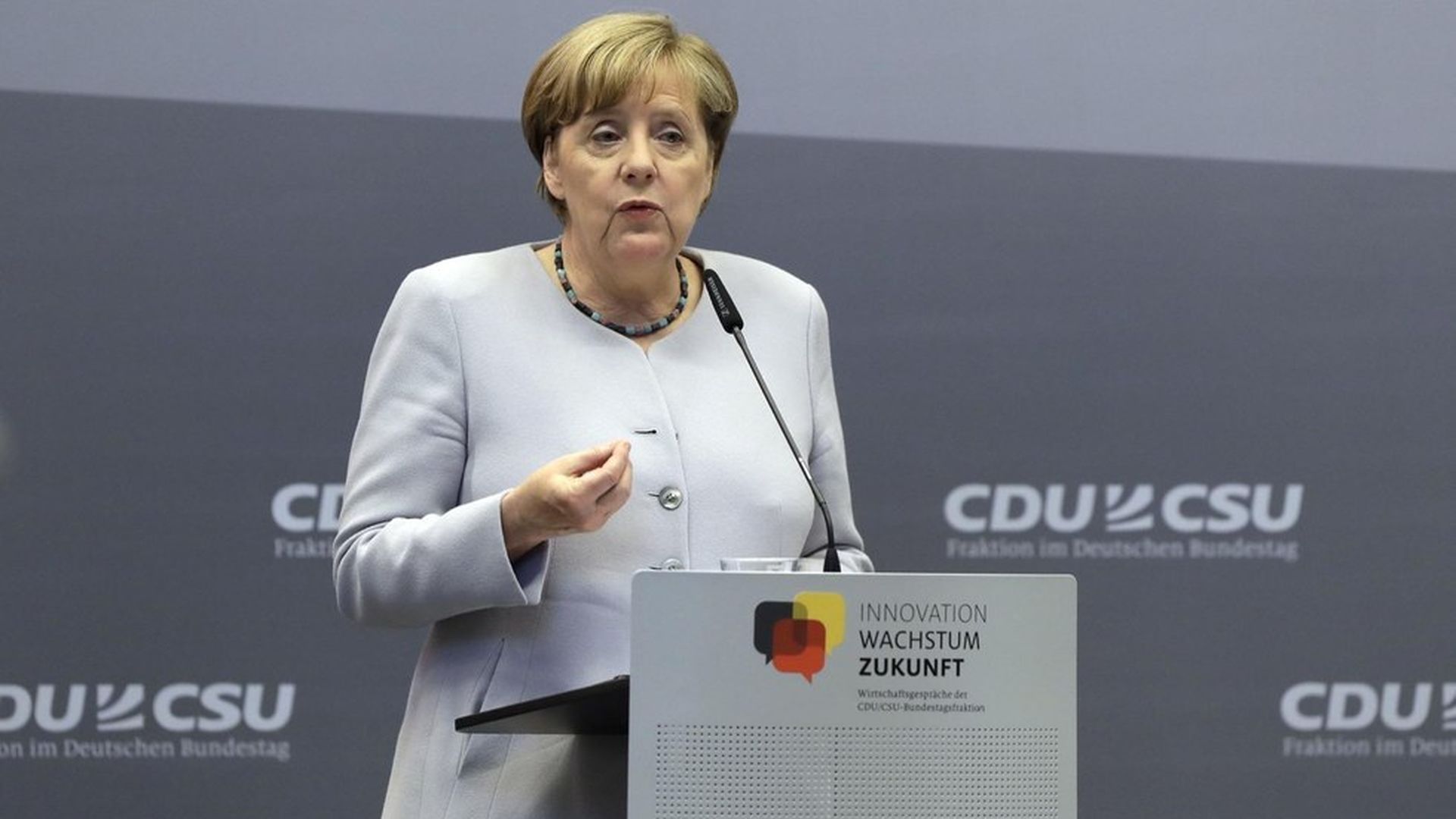
German Chancellor Angela Merkel took aim at the Trump Administration's trade rhetoric Tuesday, arguing during a speech to the business arm of her CDU party that Germany invests 10 times more in the U.S. than vice versa.
She pointed out that BMW's South Carolina factoryis responsible for more U.S. car exports than any other in the country, including factories built by U.S.-headquartered Ford and GM.
U.S. Commerce Secretary Wilbur Ross was scheduled to speak at the event, but cancelled at the last minute, and instead addressed the crowd "via a cracking live-stream from Washington D.C," Politico reports. The moderator cut off Ross' speech after twenty minutes.
Why it matters: The event is further evidence of strained U.S.-German relations, and that the German government has little appetite for working with the Trump Administration to reduce the U.S.-German trade deficit.
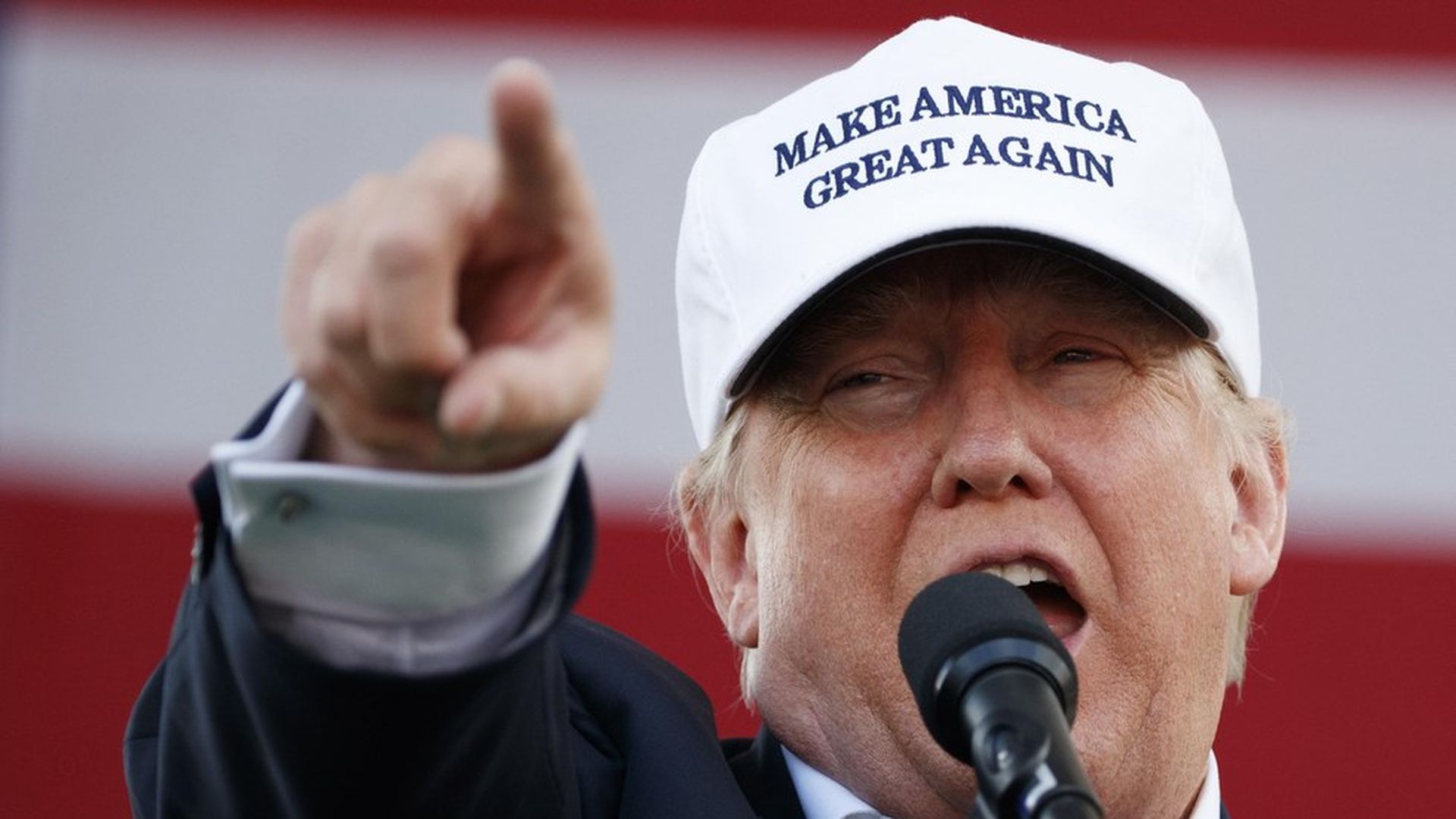
In the last few days, President Trump has used his Twitter to aggressively slam media, including CNN, the New York Times, Amazon and Washington Post. Trump loves giving nicknames to the people or news companies he decides to bash:
Why it matters: There has never been a President who so directly attacks specific news agencies the way Donald Trump has, and social media has only made it easier. Watch ABC's Jonathan Karl talk about what it's like covering Donald Trump, here.
Get smart: Trump's first tweet listed below criticizes Amazon/WashPost for not paying "internet taxes," which is a false claim.
There's a framed TIME Magazine cover from March 2009 featuring Donald Trump and the headline, "Trump is hitting on all fronts... even TV!" hanging in at least four of his golf clubs — but it's a fake, WashPost uncovered. Trump wasn't on the cover of TIME at all in 2009.
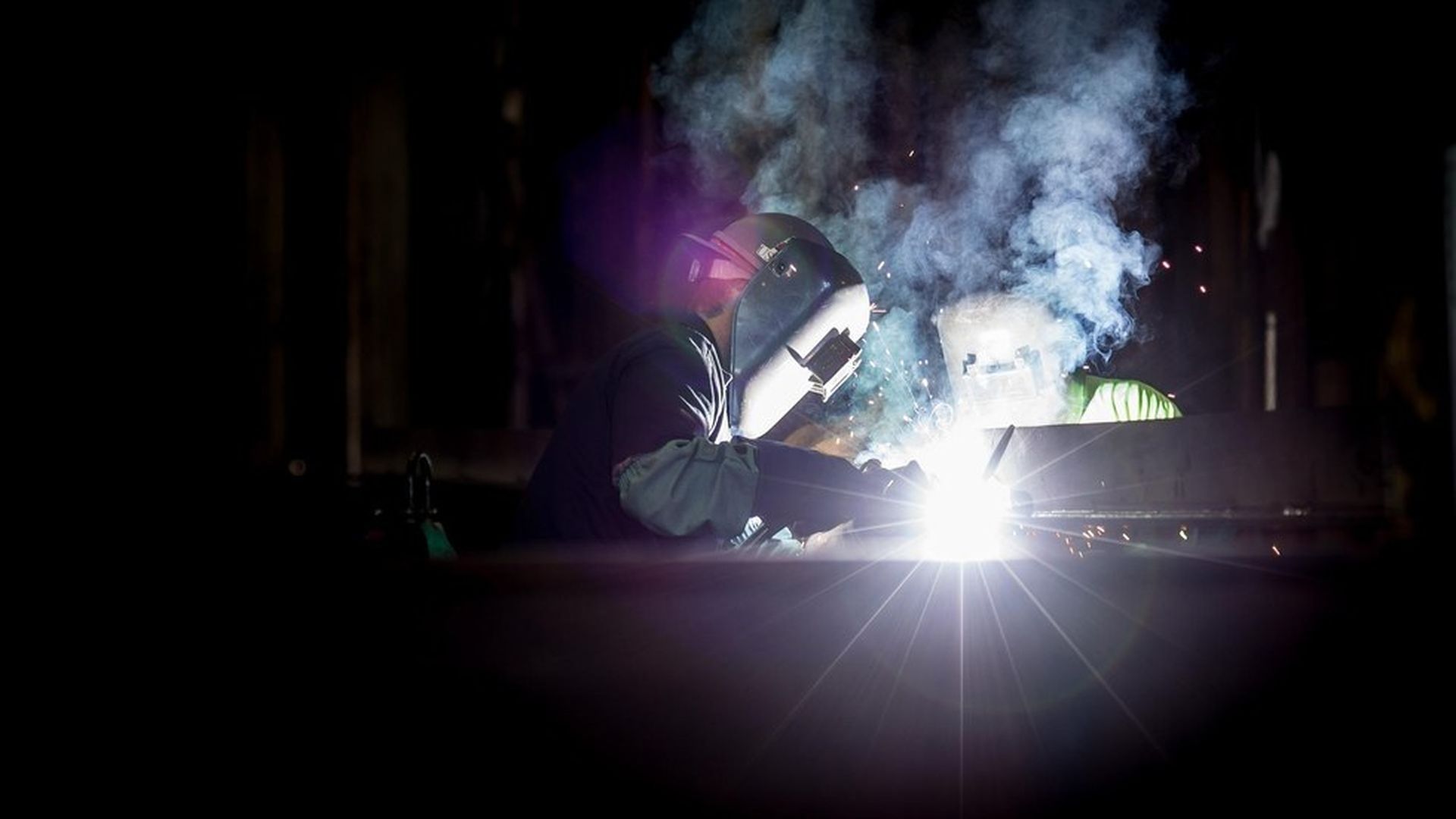
There are about 5.7 million unfilled jobs in the U.S., many requiring specific skills, but two thirds of companies complaining of the absence of trained workers— everyone from welders to data engineers — are doing little or nothing about it, according to a new study.
In a report earlier this month, the U.S. Business Roundtable, an association of American corporate CEOs, called the "skills gap" a "national crisis affecting our national future," one likely to stretch ahead a decade or more. Companies like IBM and JP Morgan are running education and training programs. But a study by CompTIA, an association of technologists, says more than half of the companies it surveyed said they struggle even to holistically assess added skills they require.
Bottom line: "The outlook for progress is bleak," the study says, when those in need of skilled workers not only are doing nothing about it, but don't fully understand what ails them.
The President of the United States, his media allies and the most fiery right-winger in the Trump clan — Donald Trump Jr. — are going after a major media institution using tactics we've never seen before in presidential politics.
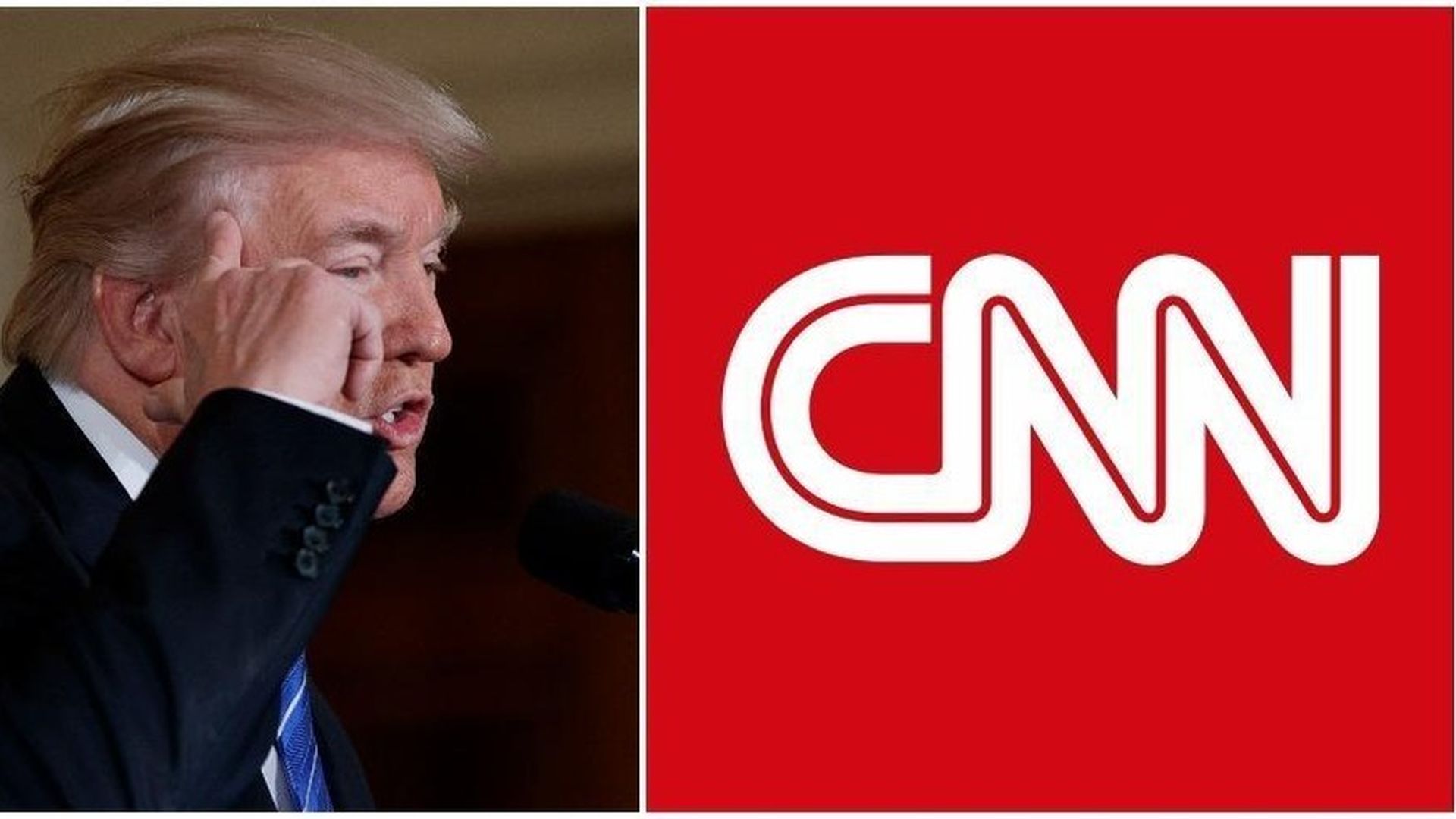
Trump tweeted Tuesday morning: "Fake News CNN is looking at big management changes now that they got caught falsely pushing their phony Russian stories." The President also retweeted a random guy on Twitter named Jeff who published a refashioned CNN logo — "FNN, Fake News Network."
Why these tweets matter: They follow four days of relentless and escalating attacks on CNN, bolstered by legitimate reporting:
President Trump went on a Twitter rant Tuesday morning targeting "FAKE NEWS!" CNN who recently had three reporters resign after the network retracted one of their Russia-related articles:
His third tweet, which was deleted then reposted once a typo was corrected: "So they caught Fake News CNN cold, but what about NBC, CBS & ABC? What about the failing @nytimes & @washingtonpost? They are all Fake News!
CNN's reply to POTUS: "@realDonaldTrump CNN just posted it's most-watched second quarter in history. Those are the facts."
Unilever is handing over an important part of its hiring process to a computer program in an attempt to increase diversity, The Wall Street Journal reports.
Why it matters: Research shows that humans possess biases that both make us pretty poor judges of a job applicant's capabilities, and also reinforce workplace diversity problems. Companies like Unilever are betting that by removing human judgement from part of the hiring process, they can both attract better and more diverse workers.
Last week, Berkeley economists published research showing that Seattle's aggressive minimum wage increases in recent years didn't lead to job losses. On Monday, the anti-minimum wage movement has a study of its own showing the opposite: new research from University of Washington saying that the 2016 minimum-wage hike from $11 to $13 caused employers to shed jobs and cut back on hours, the cumulative effect of which reduced the income of poor workers by $125 per month.
Why such different results? The two studies relied on different methodologies.