Monday's economy stories

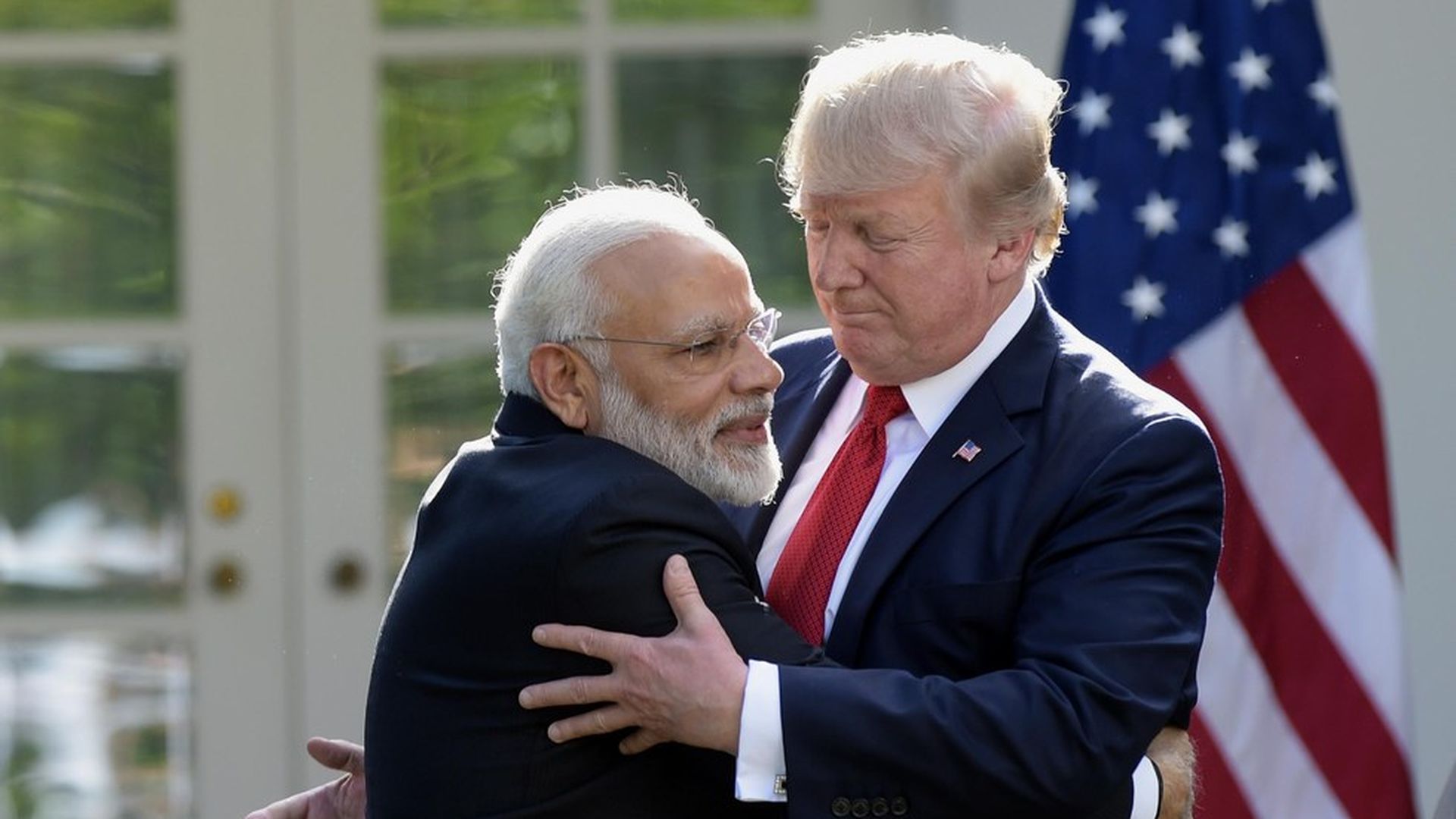
Smiles and hugs as Trump meets Modi
President Trump and Indian Prime Minister Narendra Modi delivered warm statements in the Rose Garden Monday evening, with Trump saying the U.S.-India relationship had "never been stronger." Trump gave a special shoutout to their social media skills — each has more than 30 million followers on Twitter.
- They took no questions.
- Modi invited Trump and his family to India, and asked Ivanka Trump to lead the U.S. delegation to a global entrepreneurship summit in India.
- Trump said he hoped the Indian-U.S. trading relationship would become "fair and reciprocal." In that vein, Trump said the U.S. looked forward to exporting natural gas to India but wanted to "get the price up a little bit." Earlier in the day, Trump thanked Modi for purchasing American military equipment.
National Enquirer backed Trump. Now it eyes mainstream pubs
The New Yorker's Jeffrey Toobin digs into "The National Enquirer's Fervor for Trump: The tabloid is defined by its predatory spirit. Why has it embraced the President with such sycophantic zeal?"
- Trump has been friends for decades with "David Pecker, the longtime chief executive of American Media, Inc., which owns most of the nation's supermarket tabloids and gossip magazines."
- The Enquirer "made its first political endorsement ever, of Trump, last spring. Cover headlines promised, "Donald Trump's Revenge on Hillary & Her Puppets' and 'Top Secret Plan Inside: How Trump Will Win Debate!'"
- Why it matters: "Pecker is now considering expanding his business: he may bid to take over the financially strapped magazines of Time, Inc., which include Time, People, and Fortune. ... Pecker would almost certainly direct those magazines, and the journalists who work for them, to advance the interests of the President and to damage those of his opponents."

From warehouse to your door, a human may never touch your online purchase
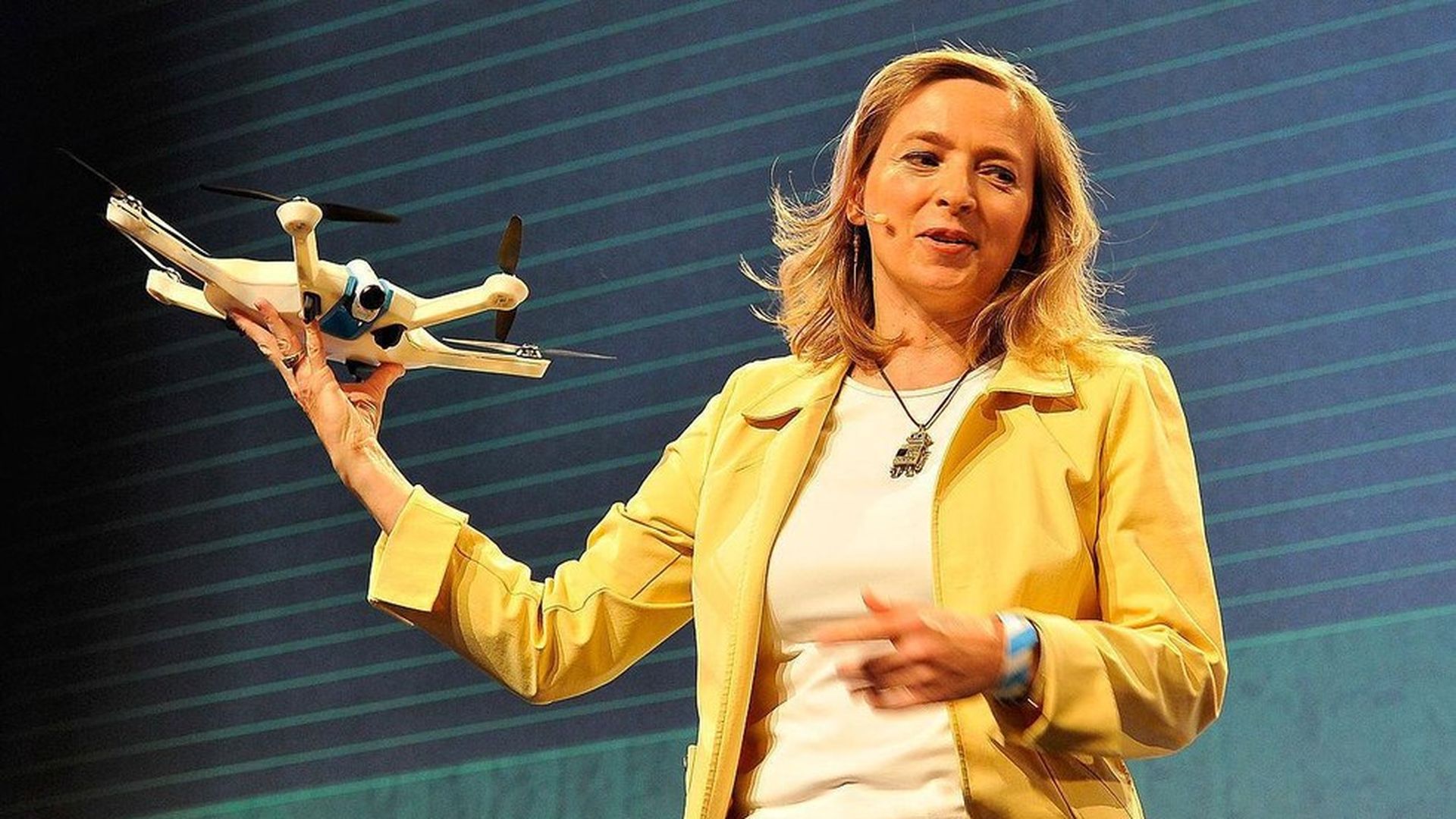
In a decade or so, the package delivery — from the time you click on an item you want until it arrives at your door — will almost never involve a human hand, according to a leading robot developer.
- Against widespread layoffs of U.S. retail workers, Amazon earlier this year said it's hiring 100,000 new workers in its warehouses over the coming year or so.
- But Helen Greiner — co-creator of the Roomba home vacuum, one of the best-selling robots of all time, and now CEO of a Massachusetts drone company called CyPhy — suggests that robots will not only hold most warehouse jobs, but also drive delivery trucks and carry packages to your door.
- Or drones will drop them to you, safely checking for children before shouting out, "Clear the landing area."
- "It's really not far-fetched because there are companies working on each part of it today," Greiner tells Axios.

Why Wall Street still needs human traders
A rush into algorithmic trading is setting up a concentration of faith in computerized investment, a trend that could backfire in intensified volatility and lowered returns.
What's going on: By 2025, Wall Street firms are expected to shed 10% of their work force — 230,000 jobs — as they embrace intelligent algorithms, trading that relies on crunching mountains of data and sometimes anticipating the actions of human traders (see chart, below), according to the financial consultancy Opimas.
Migrants, big cities, and our direst problems
Our age is one big contradiction:
- Around the world, people are flocking to big cities. But we are abandoning other cities — our rust belts and rural towns.
- The developed world — the number of Europeans, Japanese and Americans — is shrinking and aging. But Africa's population is doubling and young.
- We face a potential jobless future because of automation; but we have an acute current shortage of workers.
And these are not mere statistical curiosities:
- Alienation in rust belts and secondary cities underlies the anti-establishment wave roiling the U.S. and Europe.
- The cost of supporting and caring for our growing elderly populations could overwhelm state budgets.
- Chaos and worsened political instability could erupt in the gap before we fully adjust to vast automation.
In a NYT op-ed today, Kai-Fu Lee, the CEO of Sinovation, a venture capital firm, writes that we will have no choice but a gargantuan transfer of wealth from rich individuals and nations to the poor. But Jose Lobo, a professor at the Santa Fe Institute, told me that things that look like enormous problems may actually be answers.
In that vein, Lobo said:
- Migration, such as the massive flow of Middle Eastern, Afghan and African migrants into Europe starting in 2015, should be embraced as a large part of the solution to a fast-shrinking work force, he said. Until now viewed as an acute crisis, they are actually a way to have the taxes to support European pensions. "We are going to have less Spaniards, less Russians, less Italians. But migrants tend to be young, and to have babies," Lobo said.
- Urbanization — the historical shift of the planet's population to big cities — could result in a massive reduction in poverty. We spend much time attempting to "save" our rust belt towns and cities, and to help prop up their continued population level. But these people are much more likely to obtain reasonable jobs and services in bigger, prosperous cities (Lobo cites this 2015 paper by World Bank economist Paul Romer).
Bottom line: In Lobo's scenario, Africa's over-population problem becomes a solution to Europe's and Japan's depopulation; and the ultra-massive growth of cities becomes a poverty alleviation program.