Saturday's economy stories

New startup trend: sell one digital currency for another

Entrepreneurs have a new trick to raise money quickly, and it all takes place online, free from the constraints of banks and regulators. Since the beginning of 2017, 65 startups have raised $522 million using initial coin offerings — trading a digital coin (essentially an investment in their company) for a digital currency, like Bitcoin or Ether.
One recent example: Bay Area coders earned $35 million in less than 30 seconds during an online fund-raising event, NYT reports. They sold Basic Attention Tokens (BAT coin) which will grant buyers access to an innovative ad-free web browser the coders are intending to create, but have yet to launch.
And that's the catch: these investors are buying promises in the form of coins for a product or service that doesn't exist.

Volkswagen quickens job cuts with an eye on electrics, self-driving
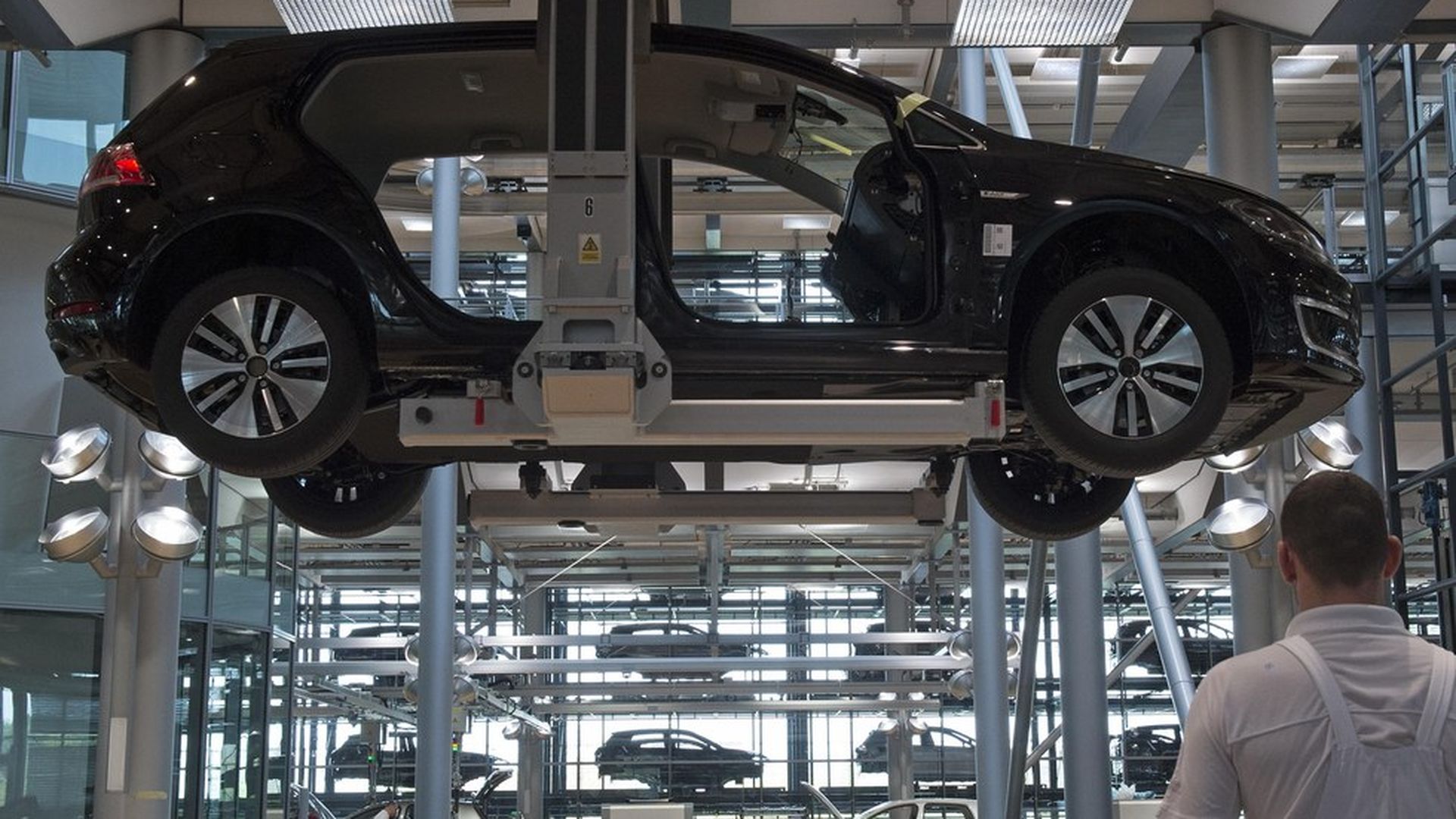
Volkswagen is moving faster to cut up to 23,000 jobs and shift the savings to electric and self-driving car technology, Reuters reports. The company plans to create 9,000 new positions in advanced batteries and mobility services.
Volkswagen isn't alone among carmakers cutting jobs — GM and Ford have both announced significant layoffs, also with an eye toward increasing their focus on electric-car and self-driving technologies. Last month, Ford abruptly fired CEO Mark Fields and replaced him with Jim Hackett, head of its automated-vehicle division.
Why it matters: The U.S. car market peaked last year, but these cuts are about more than the ebb and flow of auto sales. The globe's top auto executives see an existential threat in the form of upstart electric and self-driving car technologies. They know that winning the next five or ten years won't be about building a better internal combustion engine or creating the best marketing campaign, but the next-generation of automotive technologies.

Spicer: Carrier will maintain its job quota in Trump deal
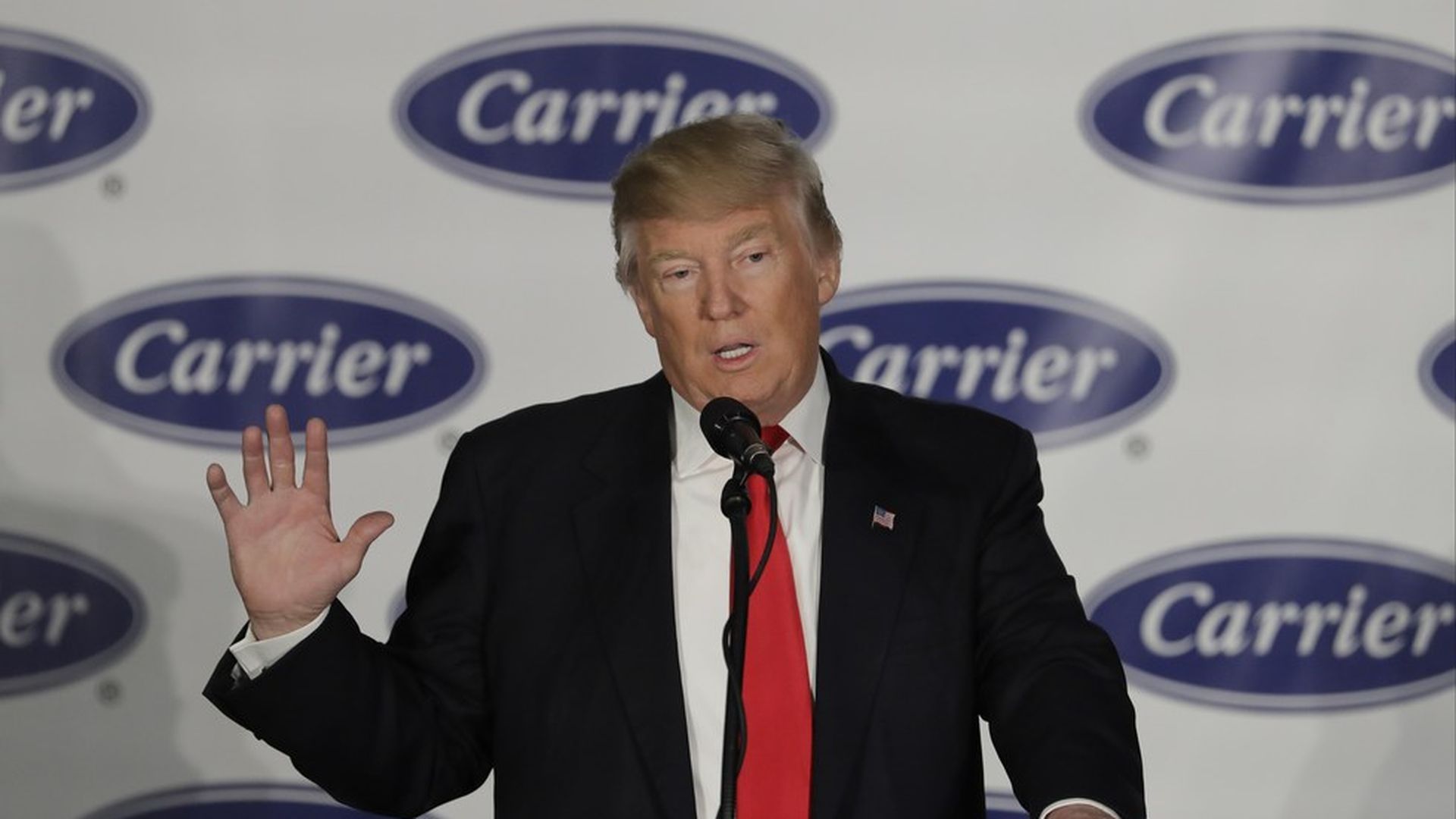
Sean Spicer told reporters Friday that the deal Carrier, the heating and air-conditioning manufacturer, made with Trump in November is still in tact, and that news of the company laying off more than 600 employees from its Indianapolis plant was announced last year.
Yesterday, reports surfaced that Carrier was cutting more than 600 jobs from its Indianapolis plant. Spicer clarified Friday that the lay offs were announced last year and would not affect the company's agreement to maintain the deal's 1,069 job quota.

Gig economy senior citizens are typically handymen and wedding officiants

When American workers decide or are forced to strike out on their own, their most frequent job is handyman, and a lot of the people taking that work are senior citizens, according to Thumbtack, the local services website.
Marco Zappacosta, CEO of Thumbtack, said almost a fifth of the 260,000 people and businesses using Thumbtack are 55 or older, reflecting a trend in which people are looking for ways to stay in the work force longer. Thumbtack operates in every county in the U.S., apart from two, he said. It has raised more than $270 million in venture capital.
After handymen, senior citizens are building contractors, photographers, painters and cleaners. But the gig jobs in which senior citizens predominate: professional wedding officiant (45% of them are senior citizens) and musicians.
- The phenomenon is global (see the photo above, of a street musicians festival in Novi Sad, Serbia): "They want to keep working and to make sure they don't get left out of the digital revolution in the workplace," Zappacosta said.
- Their biggest problem: is finding new customers.
These truckers are helping Silicon Valley to automate their jobs

Bloomberg Businessweek profiles startup Starsky Robotics, which is using machine learning to train its semi-trailer trucks to one day be completely self-driving. Starsky is earning revenue hauling loads while it tests its self-driving technology, but because its vehicles are still in beta, they are manned by a truck driver and an AI specialist for safety and research purposes.
The arrangement makes for strange bedfellows, as the folks who drive trucks and those in cutting-edge computer science tend to live worlds apart, culturally speaking. But apart from being a sociologically revealing portrait of America in 2017, Starsky's staff might also foreshadow changes to the workplace that will arrive in other industries in the years to come.
Study: $13 minimum wage didn't cause Seattle job losses
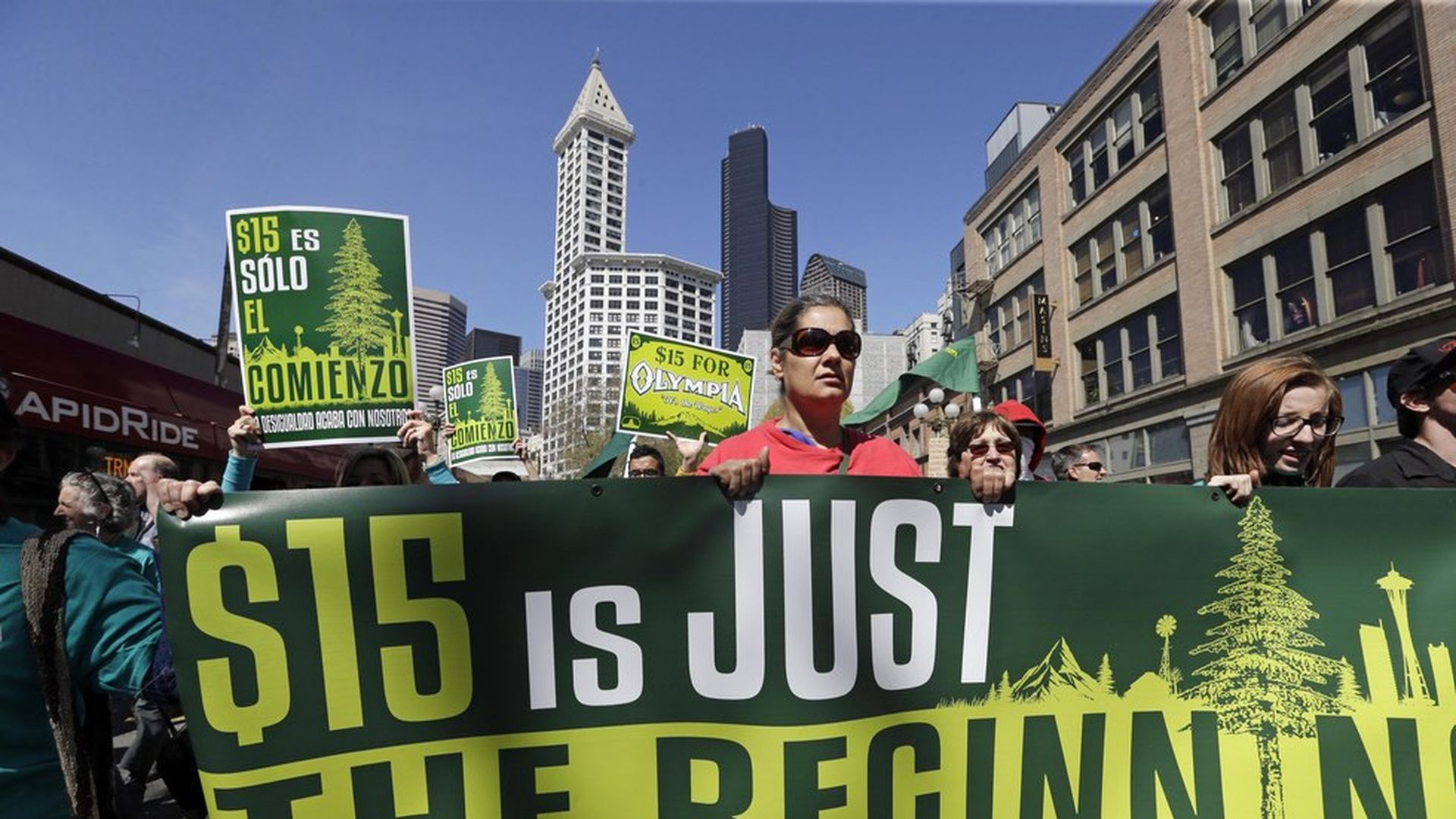
Seattle has been the vanguard of the newly energized minimum wage movement, hiking its pay floor from $8.55 in 2010 to between $11 and $15 in 2017. Other cities have followed suit — in all, nine big cities and eight states have passed minimum wages between $12 to $15, depending on the size of the employer and other factors.
Berkeley's Institute for Research on Labor and Employment is out with a new study on the effects of Seattle's wage policies, and found that there was no job loss as a result of the mandate.