Wednesday's economy stories

Walmart said to acquire online women's retailer ModCloth
Jet, a online division of Walmart, has acquired ModCloth, an online retailer of women's fashion known for its quirky vintage aesthetic, as Jezebel first reported.
Despite having been around for 15 years, ModCloth has reportedly struggled to make a profit and raise additional funding on top of the nearly $80 million it's raised in total. It's unclear how much Walmart paid for the company.
Why it matters: This latest acquisition is helping to paint a picture of Jet's—and by extension, Walmart's—strategy for online retail. Instead of building out every possible category in-house, Jet and Walmart are looking to cobble together specialized retailers with their own brands. Prior to its sale to Walmart in September, Jet acquired online furniture seller Hayneedle, and has since added shoe seller ShoeBuy and outdoor apparel retailer Moosejaw.

Verizon, CBS sign multiyear content deal
Verizon and CBS announced a multi-year carriage deal to continue to retransmit CBS content and distribute Showtime, Smithsonian Channel and CBS Sports Network on Verizon Fios TV. Verizon will also provide access to live streaming on CBS.com and the CBS App, as well as future digital platforms that have not yet been announced. Financial terms were not disclosed.
What's in it for CBS? Retransmission revenue fees will bolster diminishing TV ad revenues as audiences move towards TV content consumption on second screens and on social media platforms. Providing access to CBS digital platforms will help CBS grow its digital audience, which is part of the network's long-term goal.
What's in it for Verizon? Verizon will maintain its competitive edge in the race for telecom companies to team with content providers to win subscribers. Sprint is partnering with Spotify and Sling TV, AT&T is trying to merge with Time Warner and T-Mobile's Binge-on platform gives subscribers access to a plethora of content from PBS to Apple Music to Disney.

Trump: "The assault on the American auto industry is over"
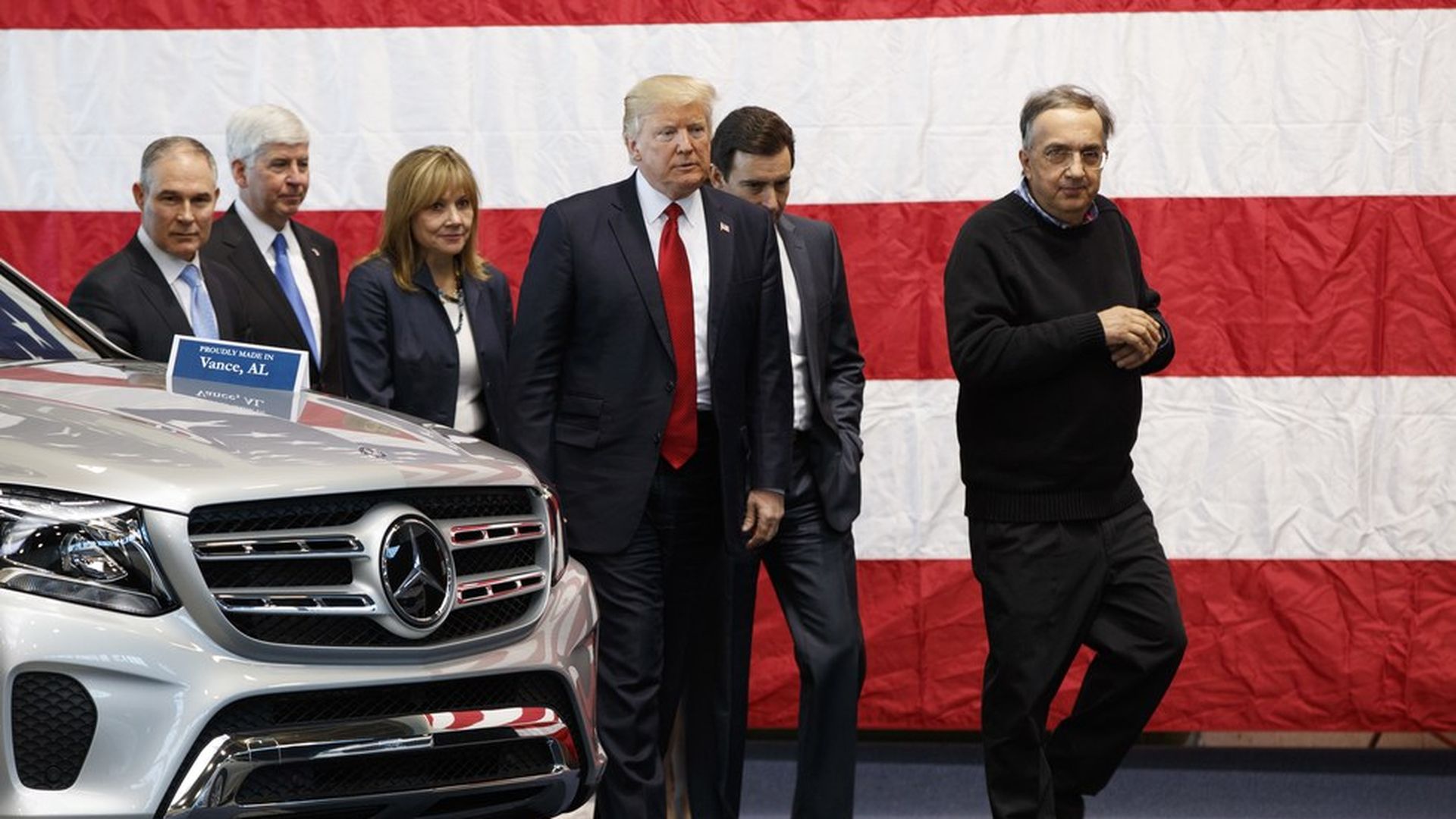
Trump announced he and the EPA are re-examining midnight hour Obama-era federal requirements on fuel economy standards requiring a fleet-wide average of 36 mpg in real-world driving by 2025 for cars and trucks. A rollback is expected no later than April 2018.
"The assault on the American auto industry is over," as Trump put it in his speech at a former GM plant that's part of the American Center for Mobility, which is a staging ground for self-driving vehicles.
Trump told auto CEOs that they "have to build plants here." He added, "I know I gave you a hard time but you have to build them here," according to The Washington Post. He also gave a classic campaign-style speech, harping on NAFTA and the TPP.
Trump is en route to Nashville to lay a wreath on Andrew Jackson's tomb to mark what would be his 250th birthday.
What to watch: Trump announced he will have a "big" auto industry announcements next week about jobs.

7 Obamacare lessons for the GOP on health care reform
Sarah Kliff and Ezra Klein at Vox laid out the lessons Republicans can take away from the construction of Obamacare to help their quest to build Trumpcare. But since you probably don't have time to read 9,000+ words…
- In health policy, every tweak is always going to create a winner and a loser.
- Any serious and lasting changes to health policy are going to require 60 votes in the Senate.
- Any party that tweaks the health system has to be ready to become both a savior and boogeyman.
- People love the status quo when it comes to their health insurance, so changes must be incremental and transparent.
- The private sector can help, but it can also decide that it no longer wants to play ball.
- Americans want health care to personally cost less for them — they're much less concerned about overall costs.
- Focus on bringing down medical prices; that's the key to bring down premiums and deductibles.
Their parting message for the GOP: "Don't overpromise and don't mislead."

The mental opportunity cost of taking Trump's bait
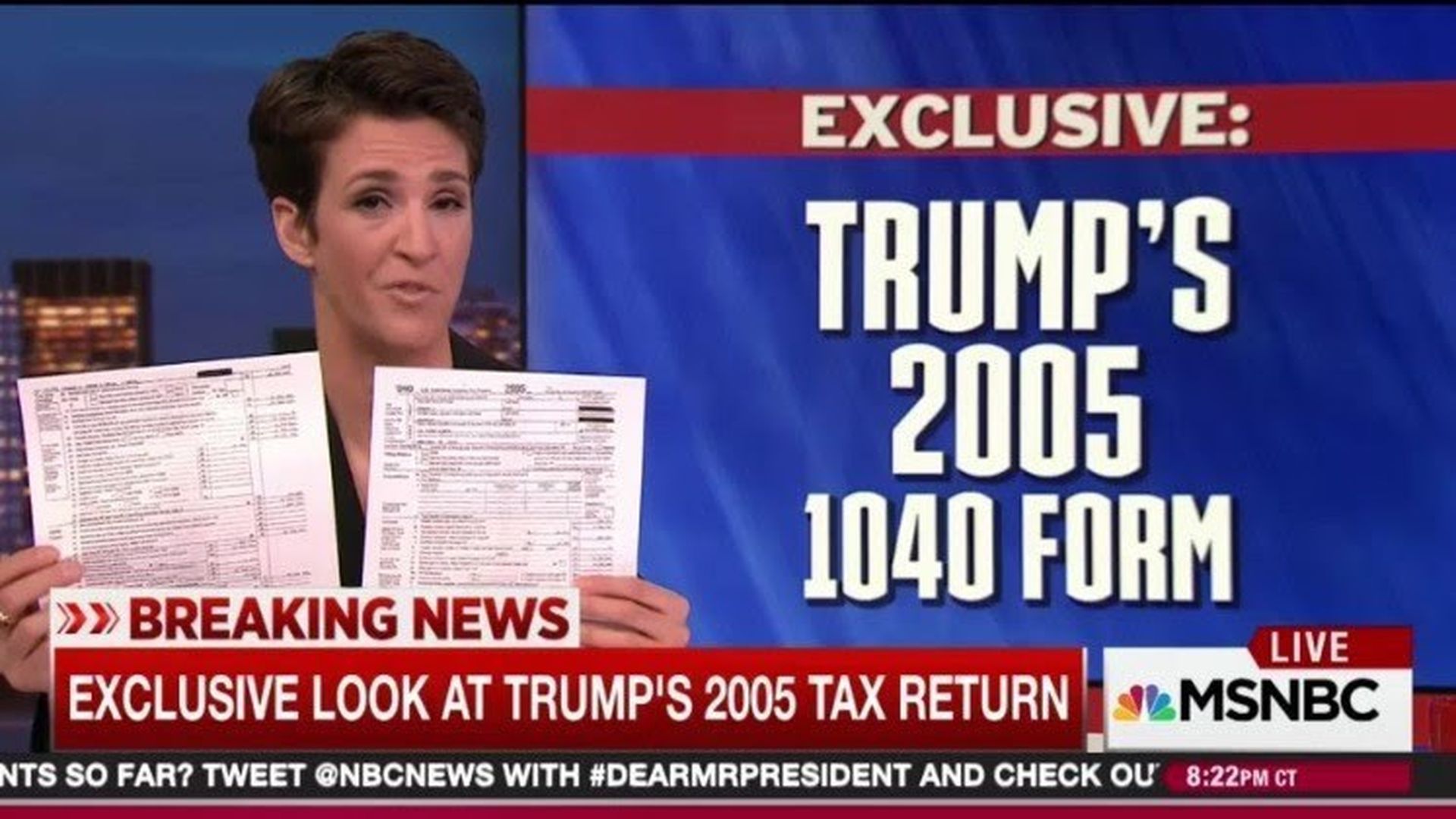
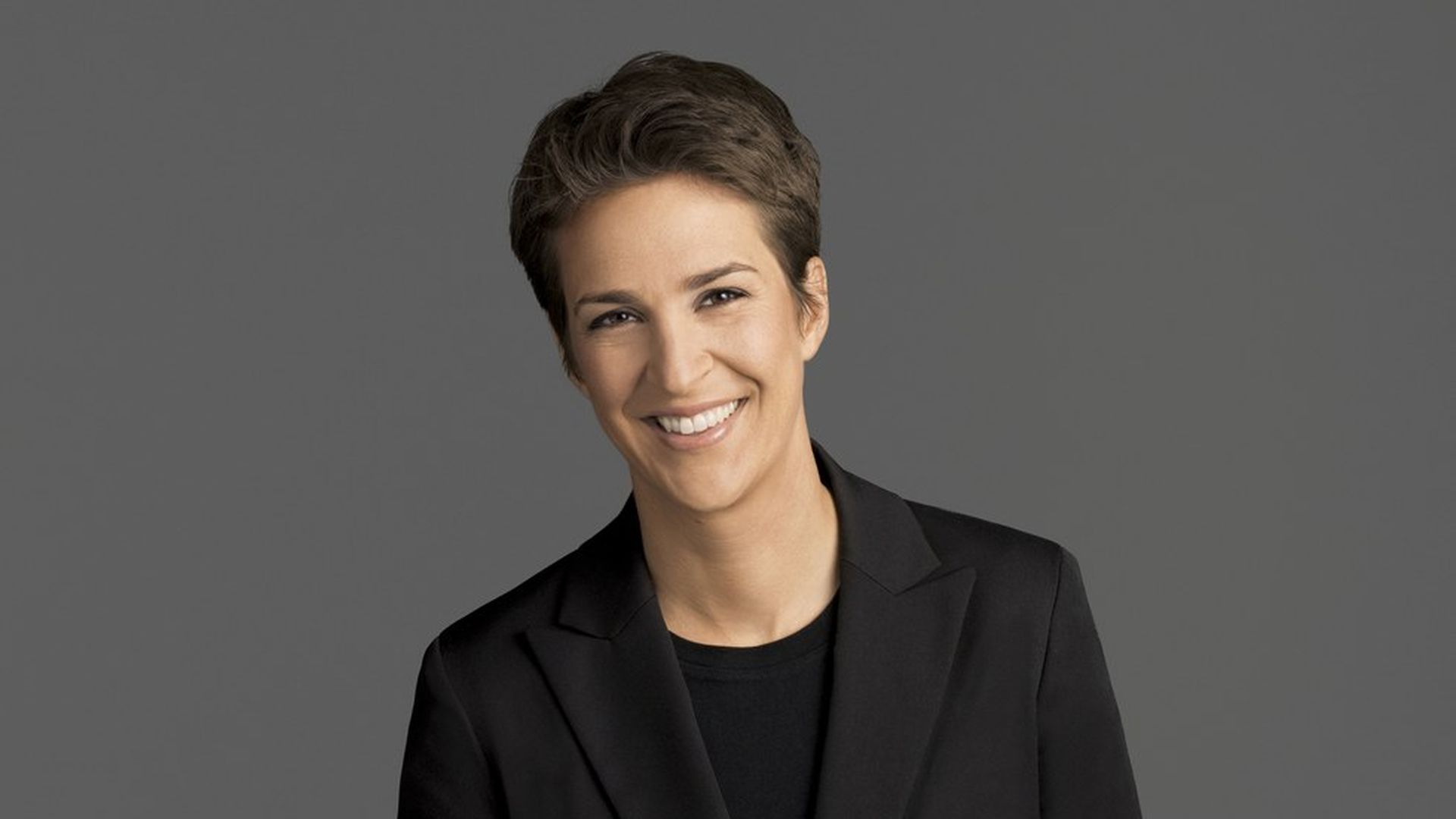
It's Day 55 of the Trump presidency, and we still take the bait. MSNBC's Rachel Maddow tweeted before her show last night: "BREAKING: We've got Trump tax returns," implying a cache. It turned out to be two pages, and the White House preempted her by releasing the info first:

Rachel Maddow's questions on Trump's tax returns
- If there are inexplicable dumps of foreign money into the president's coffers... couldn't those be explained through his tax returns?
- Is the president in a position where we need to make sure that he's not paying off foreign powers?
- Has he received money from sources?
- Has he received loans?
- Does the president have foreign bank accounts? If so, what banks?
- What is his relationship with Deutsche bank?
- What is his relationship with foreign sources of income?

Maddow tweets get White House to cough up Trump's 2005 tax numbers
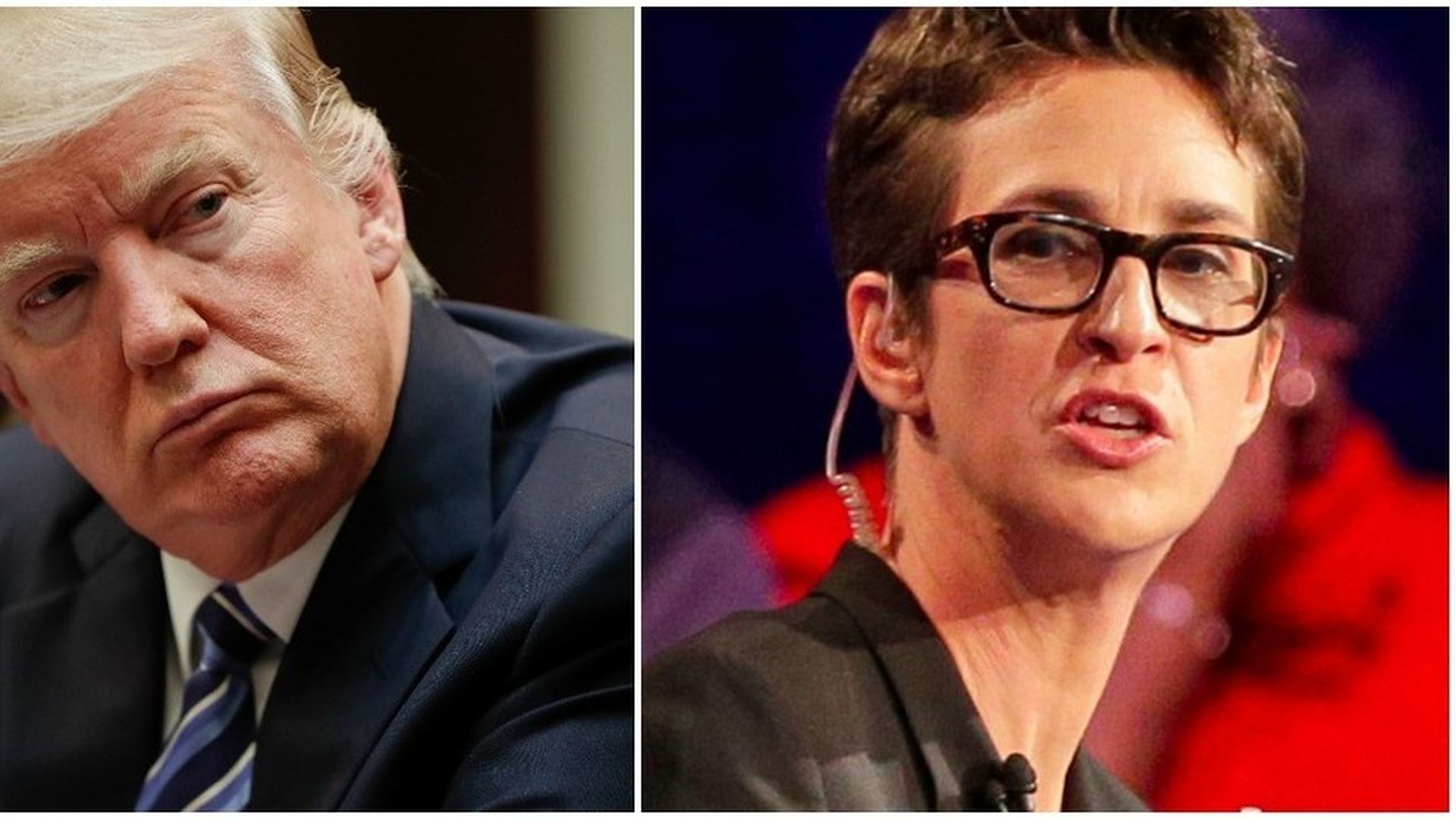
The White House, MSNBC host Rachel Maddow and The Daily Beast have combined to make public that President Trump paid $38 million in taxes in 2005 on $150 million of income. $5.3 million of that was in federal income taxes, while $31 million came from the Alternative Minimum Tax, as first reported by the David Cay Johnston, a researcher who writes for The Daily Beast.
Why it matters: President Trump has never released his tax returns, saying they're under audit. The NYTimes obtained some of his old returns during the election, showing he wrote off a huge loss that would have allowed him to avoid federal income taxes for nearly 20 years.

Neiman Marcus is seeking a buyer
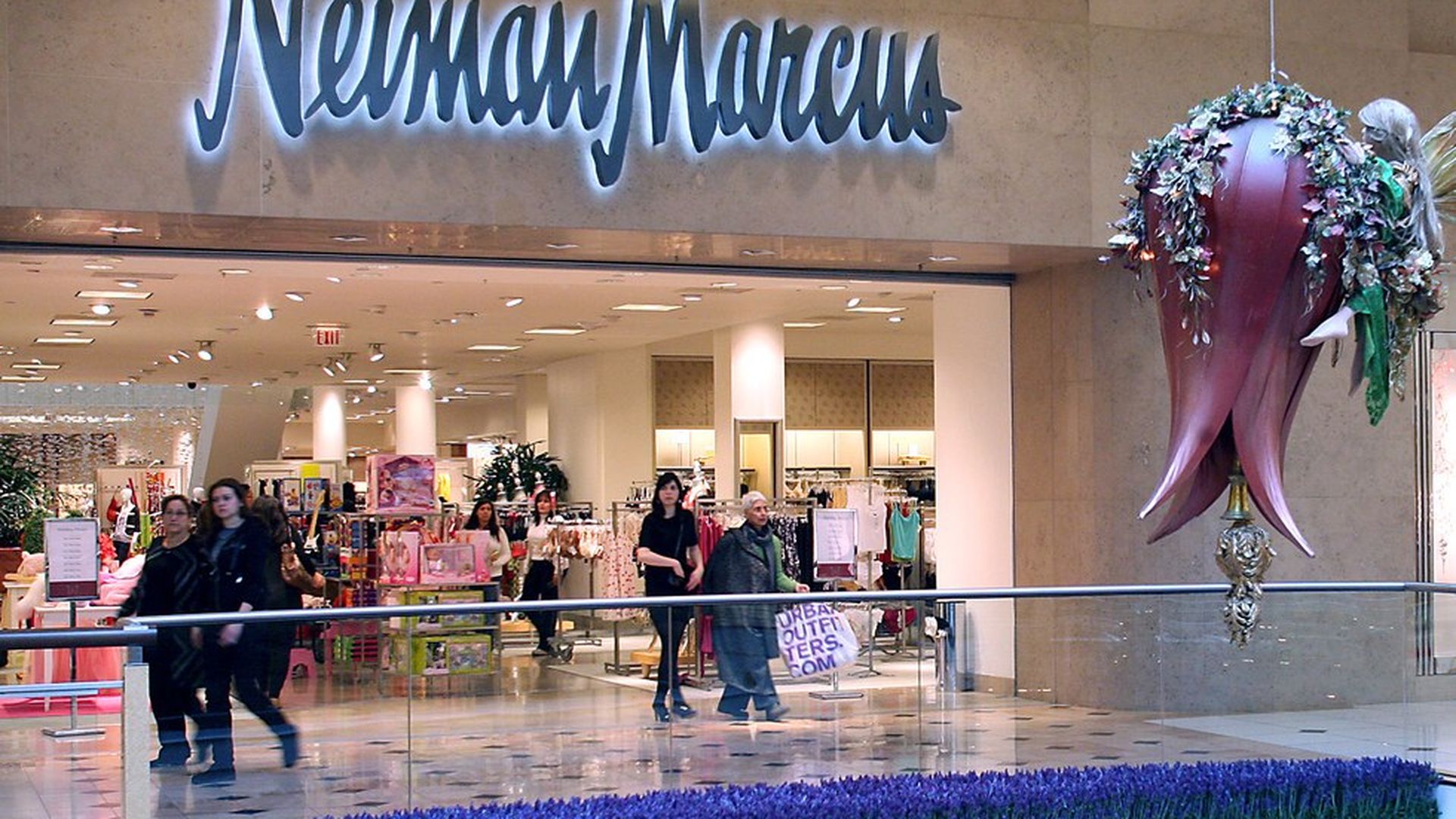
Luxury retailer Neiman Marcus today said that it is exploring "strategic alternatives" that could include a sale of the entire business. This comes two months after the Dallas-based company pulled an IPO registration that had been on file since August 2015, and amid a much broader slump among physical retailers (particularly those concentrated within shopping malls).
Second time's the charm? This isn't the only recent sale attempt for Neiman Marcus, which is struggling under a $4.9 billion debt load that relates to it having been repeatedly bought and sold among private equity firms (its current owners are Los Angeles-based Ares Management and a large Canadian public pension fund). For example, Hudson's Bay Co. ― owner of Lord & Taylor and Saks Fifth Avenue ― has held off-and-on talks about buying Neiman Marcus, and reportedly is in the mix again. Hudson's Bay also has been linked to takeover talk involving Macy's.
Bottom line, from Fortune retail reporter Phil Wahba back in January: "Neiman has admitted luxury shoppers are harder to win over now than before, more impatient to buy items they see on the runway and less willing to wait eight months for those items to be in stores. And the Internet has made comparison shopping that much easier, eroding shopper fealty."
New York City is suing Verizon
New York City has slammed Verizon with a lawsuit that alleges the company broke a 2008 contract to provide citywide fiber coverage, reports TechCrunch. The city claims that the telecom giant not only failed to "timely complete installations as requested" by subscribers, but also failed to provide its FiOS services to residents at all. The suit was filed Monday in the New York Supreme Court.
"Verizon promised that every household in the city would have access to its fiber-optic FiOS service by 2014. It's 2017 and we're done waiting," said New York City Mayor Bill de Blasio in a statement yesterday.
Verizon hit back in a letter to the commissioner of the NYC Department of Information Technology and Telecommunications, Anne Roest, stating that it had interpreted the agreement to mean that it would lay its fiber-optic network along the same route previously used for its copper line, and that the city's aims are impractical.
"Digging up City streets and sidewalks on the scale that you are demanding would cause enormous and unnecessary disruptions to vehicle and pedestrian traffic, and would impose immeasurable inconvenience and hardship on countless residents and businesses," said Craig Silliman, Verizon's executive vice president of public policy and general counsel.
So what? This could be a message to other broadband companies, including Google, that you will be held accountable if you don't finish what you start.
Top NYT editor: I look at Breitbart "everyday"
Dean Baquet, the top editor at the NYTimes, was on a SXSW panel yesterday, as noted by Politico. As part of it, he addressed whether he considered Breitbart News a journalistic competitor:
"Breitbart? Not so obvious. I'm not convinced," said Baquet, because "they're not in an honorable pursuit of the truth. They're propaganda." Nonetheless: "I look at them everyday."

The battery tech Samsung wishes it had last year
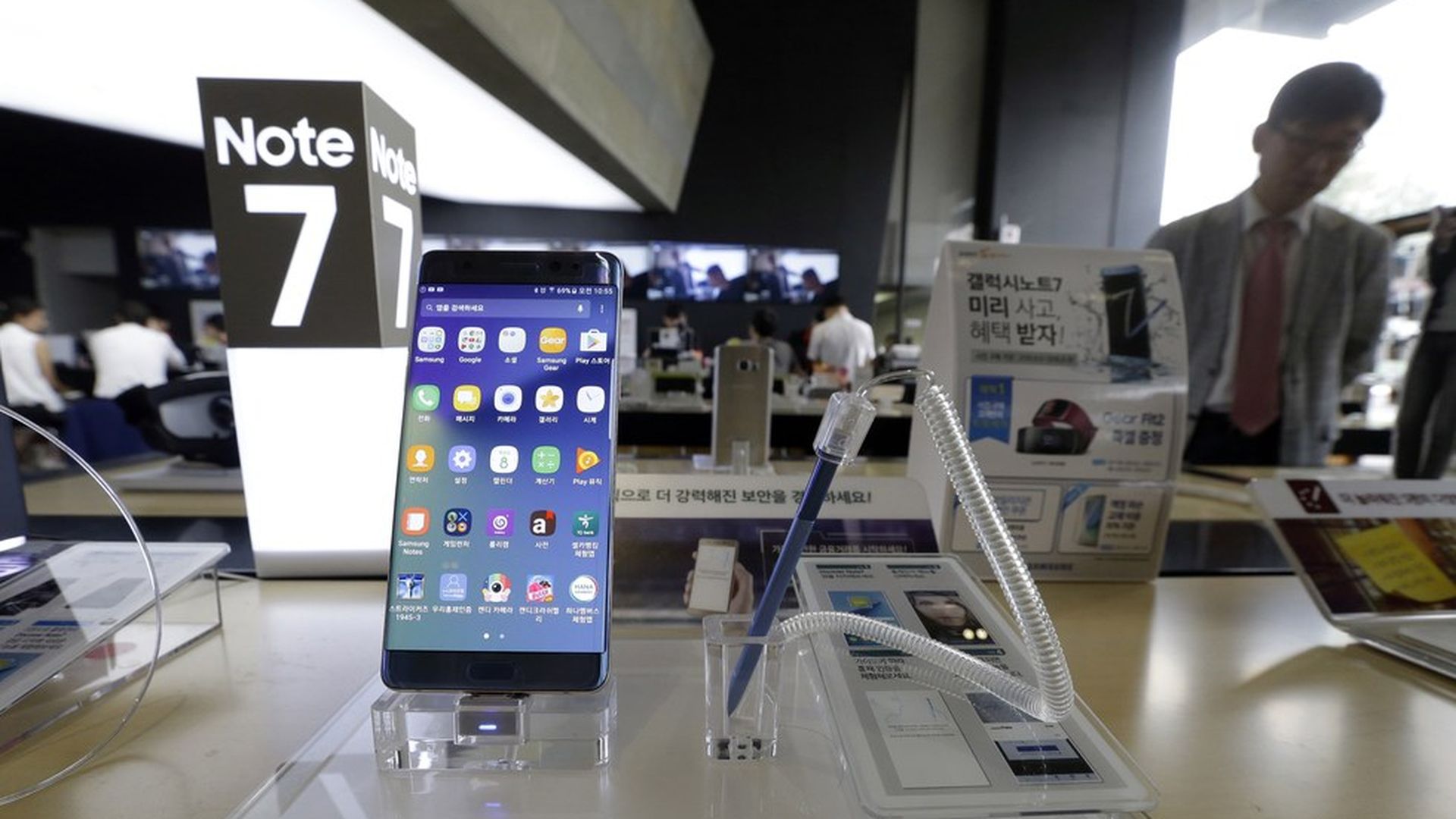
A small San Diego-area company named Amionx plans to reveal a new technology later on Tuesday that it says can be put into smartphones and prevent standard lithium-ion batteries from overheating. Amionx is a spinoff of American Lithium Energy Corp. which has used the technology in more than 20,000 batteries for the military. Former Qualcomm president Steve Altman is an investor and president of Amionx's board of directors.
What's new about it: Ahead of the announcement, Amionx executives told Axios they have developed a fuse that kicks in when a battery hits a certain voltage, temperature or current threshold. That prevents problems caused by external heat, overcharging or an internal short. The approach, the company tells me, adds minimal cost and can be integrated into traditional battery manufacturing techniques and could be commercially ready in as little as six months.
The key question is whether the smartphone manufacturers will find Safe Core as appealing as Amionx makes it sound. The company is relying on licensing its technology to others and so far the company has yet to sign on any of the major phone makers.

How Trump's data operation helped him win

According to conversations with over two dozen staffers and advertising experts involved with the data and advertising operations of both presidential campaigns, the Democratic party's data machine that worked so well in 2008 and 2012 may have ended up working against Hillary Clinton in 2016. Here's what the campaigns did: