Five women, including two former actresses on "The Cosby Show," have filed a lawsuit against comedian and actor Bill Cosby, alleging sexual assault, battery and false imprisonment that went back as far as 1969.
The big picture: A new law in New York enables adult survivors to sue their abusers within a one-year window even if the statute of limitations on their claims has expired. Over 50 women have publicly alleged that Cosby sexually abused them, often after dosing them with drugs.
Sweeping layoffs in tech are leaving thousands of people holding H-1B work visas stranded and scared.
Why it matters: In the event of a layoff, H-1B holders have 60 days to find new companies to sponsor their visas. If they can't, they can try switching to a different kind of work visa or look into non-work visas, such as a self-sponsored green card.
How does a retail brokerage stop its customers from leaving when the markets turn south? By giving them a retirement product designed to last for decades.
Driving the news: That's the latest move from Robinhood, which launched a new retirement account this morning.
Sports merchandising giant Fanatics has raised $700 million in a new round of funding that now values the company at $31 billion, Axios has confirmed. The investment was first reported by the Wall Street Journal.
Why it matters: Fanatics will use the funds to invest in M&A at a time when dealmaking has cooled amid growing recession fears.
A coalition of business owners in California announced yesterday they had enough signatures for a ballot measure to overturn a historic law that will give fast-food workers more power.
Jennifer Choi yesterday was named permanent CEO of the Institutional Limited Partners Association (ILPA), a trade group representing around 600 institutions that manage over $2 trillion in assets.
Why it matters: Choi, who had been acting CEO since June, now leads the only organization dedicated to foundational investors in alternative assets like venture capital and private equity. The endowments and pension funds and charitable foundations that pay their 2-and-20 in exchange for outsized returns (or so the theory goes).
Axios asked Choi about ILPA's top priorities for the coming year:
Ledger had its two highest demand days ever immediately following the FTX bankruptcy (the Sunday and Monday), and then November became its best month of sales.
Why it matters: It's a good time to be a crypto hardware wallet maker. One clear lesson for digital-asset owners after FTX crashed is this: third-party crypto storage is risky. And now Ledger is pouncing with a brand new hardware wallet for do-it-yourselfers.
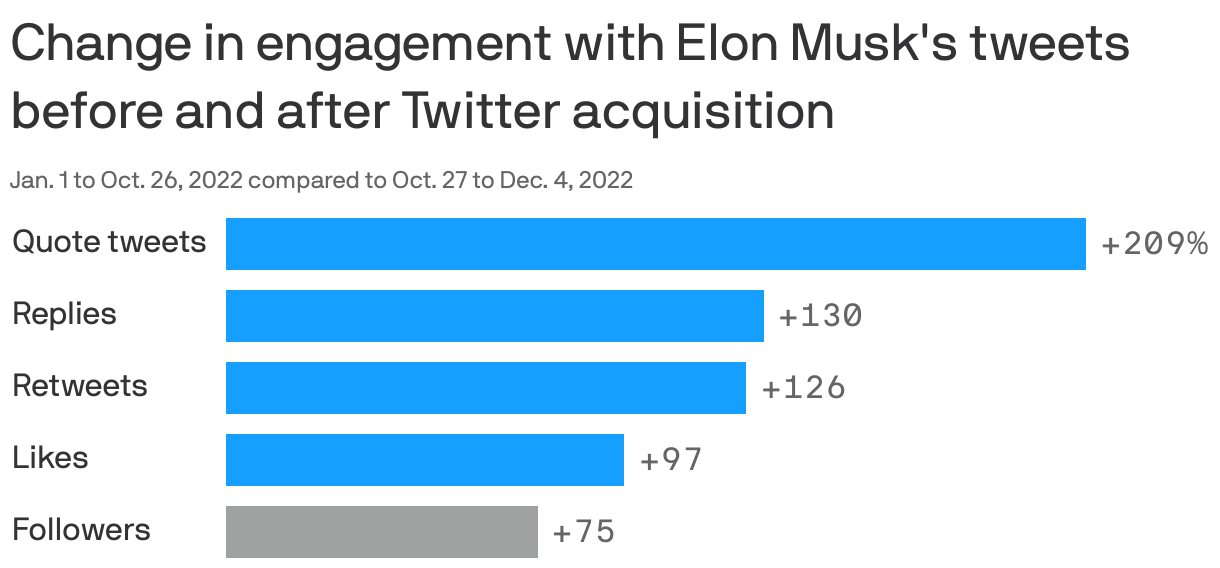
Note: Change in followers calculated between Jan. 1 and Dec. 4, 2022. Analysis excludes Musk's own replies and retweets; Data: Twitter, Social Blade, Axios research; Chart: Erin Davis/Axios Visuals
Since Elon Musk took over Twitter, engagement with his tweets has increased significantly, growing much faster than his actual follower count, according to an analysis by Axios.
Why it matters: For Musk, owning Twitter, and using the app to present and defend his plans for the company, has energized his personal platform.
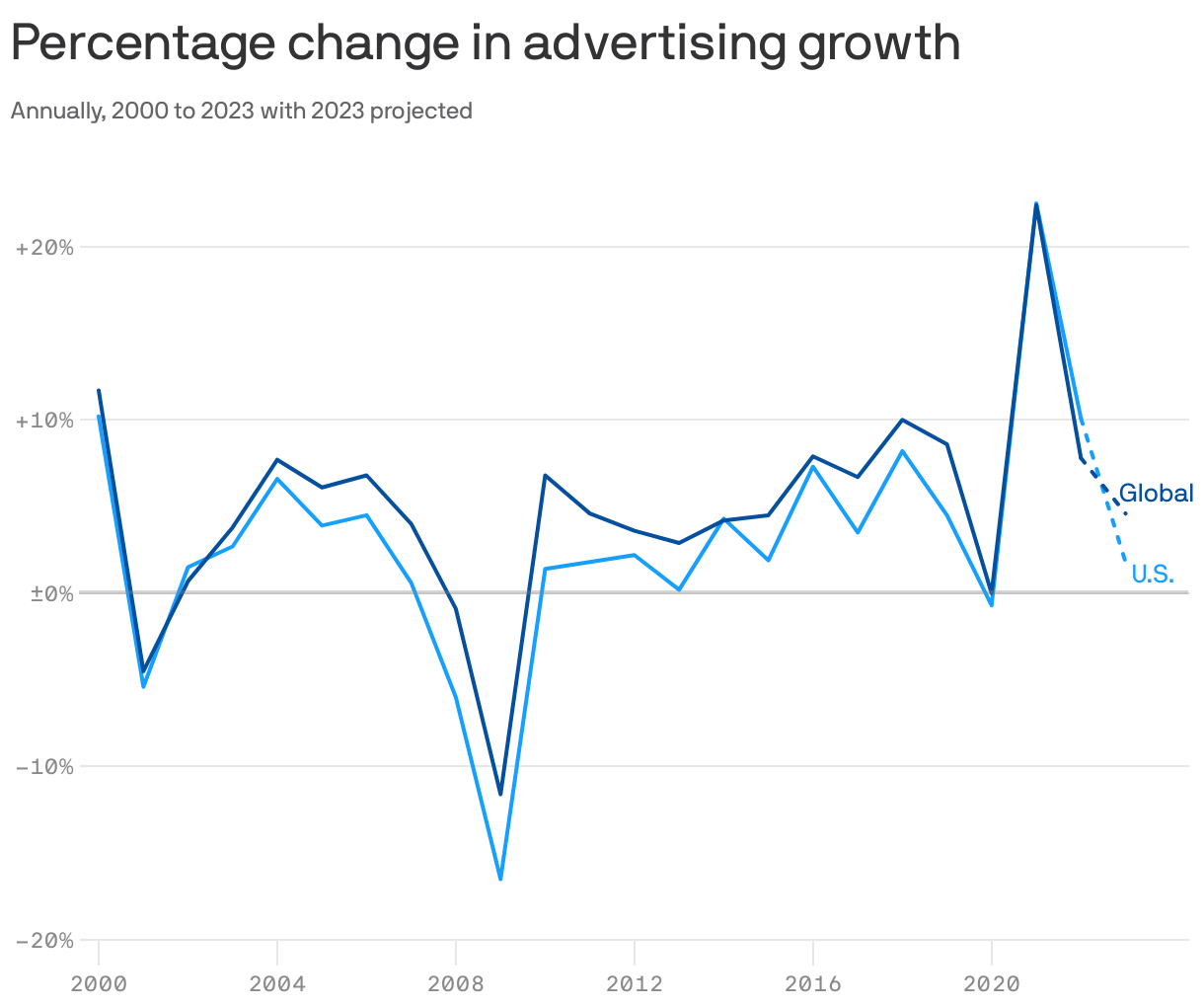
Data: GroupM; Note: U.S. includes political advertising; Chart: Tory Lysik/Axios Visuals
Growth in global ad spending is going to be slower next year than originally anticipated, according to two new forecasts, a troubling sign for media and tech firms that rely on advertising to fuel their businesses.
Why it matters: Much of the slowdown is driven by economic uncertainty, rather than true economic indicators that would cause an advertising recession.
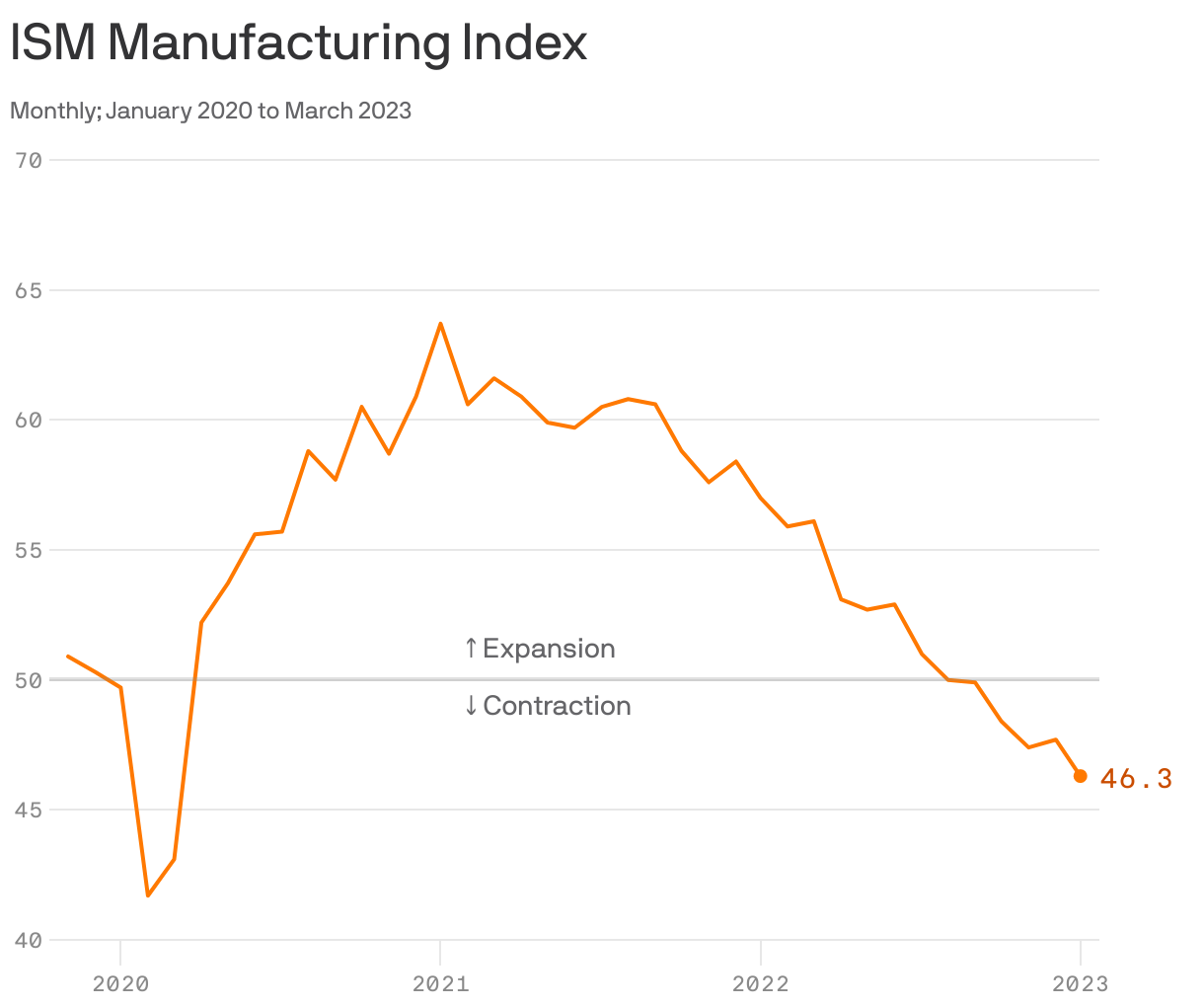
Data: Institute for Supply Management; Chart: Axios Visuals
There's a growing split between two major segments of the economy: manufacturing and services.
What's happening: Economic activity in the service sector grew in November, slightly above analysts' expectations, per the Institute for Supply Management's latest survey of activity at these businesses — which includes companies in retail, health care and transportation.
The Russian oil price cap that went into effect Monday could, over time, be an important Western counterweight to OPEC in determining world oil prices.
Driving the news: After months of wrangling, the mechanism to try to cap prices of Russian crude oil shipped by sea went into effect on Monday.
From frozen sandwiches that don't need to be nuked to pies and waffles that go from freezer to plate, food manufacturers are racing to introduce products in the nascent "thaw and eat" category.
Why it matters: Americans have gotten used to eating more meals at home during the pandemic. Now that schools and offices are beckoning people back, they're seeking easier-than-ever options.
Lawmakers have added a measure to Congress' must-pass defense funding bill that would force Big Tech firms like Google and Meta to pay hundreds of local news outlets for their content,sources tell Axios.
Why it matters: Barring last-minute Capitol Hill maneuvering, the news-funding measure is now on track to pass after failing for years to gather enough support to become law.
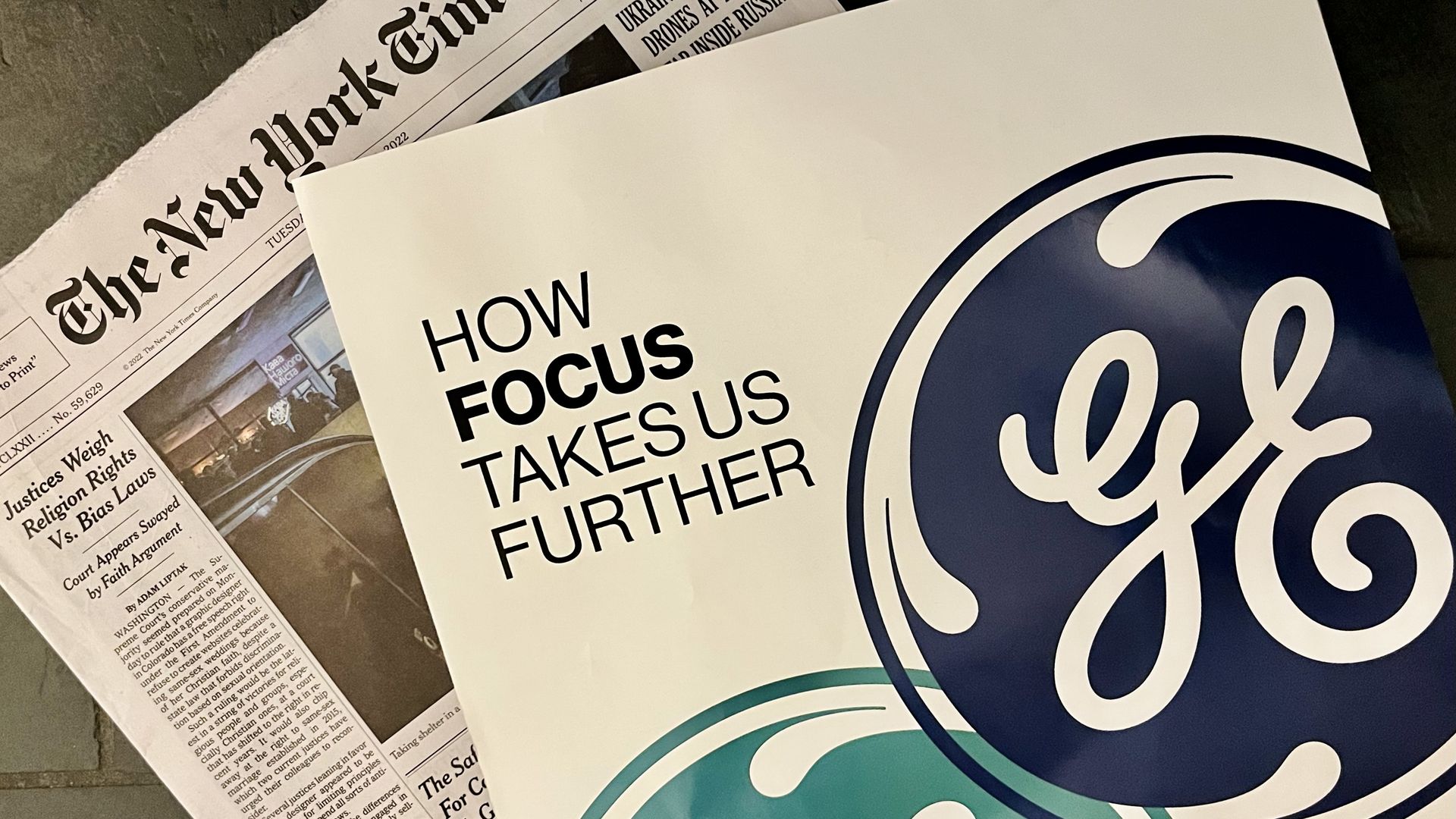
The New York Times on Tuesday unveiled a unique version of its weekday print paper featuring more than two dozen ads from just one advertiser — General Electric.
Why it matters: It’s the first time in the paper’s 171-year history that any advertiser has gotten to own all of The Times’ print real estate exclusively — in addition to most of its premier digital advertising real estate.
Elon Musk is the latest patron for an alternative-media ecosystem — right-leaning but not conventionally Republican — that has emerged in the last two years.
The big picture: Feeding on resentment against mainstream media, new media players have established a power base via Substack newsletters, podcasts and other independent channels.