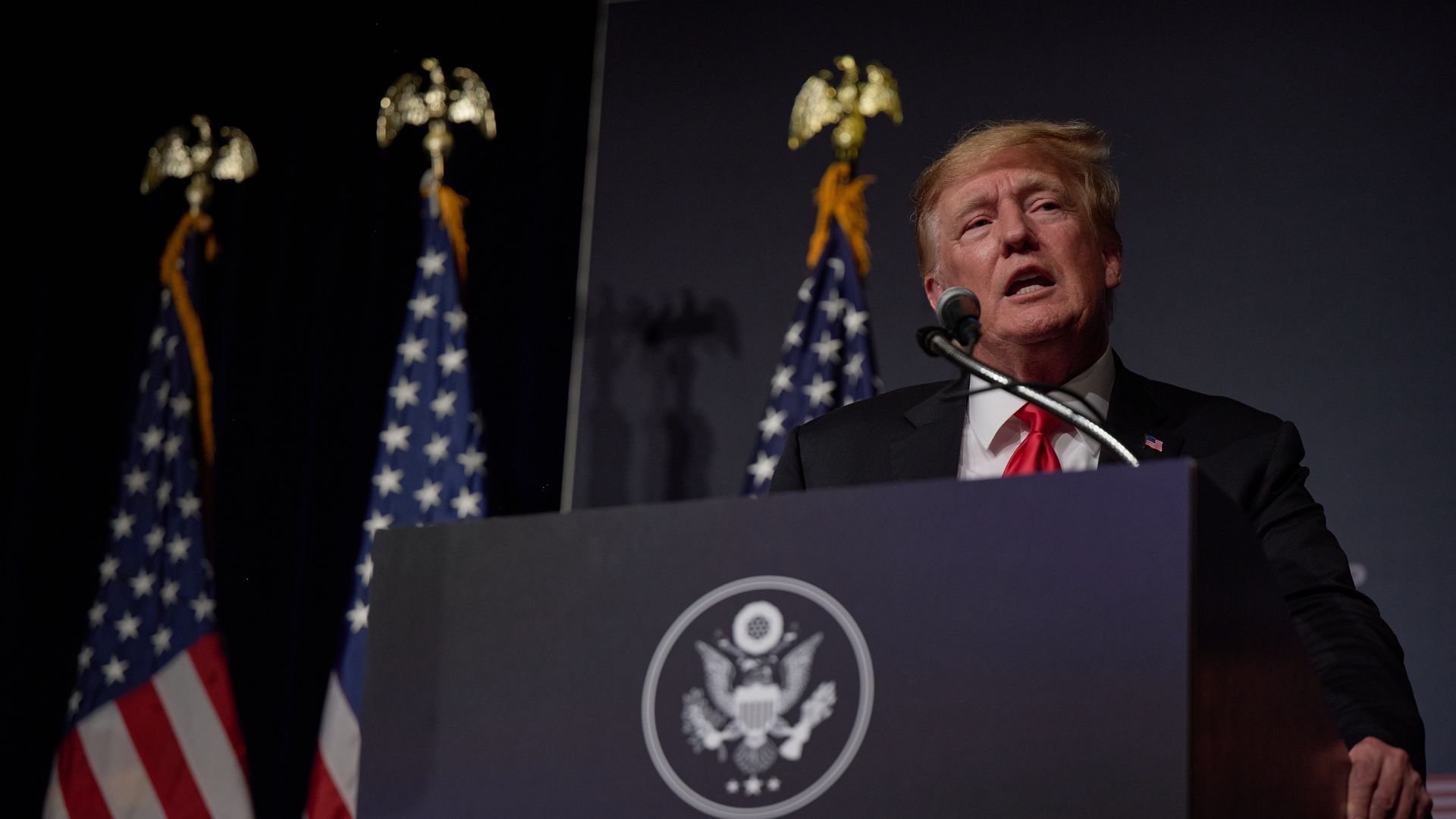
The Pulitzer Prize Board rejected former President Trump's calls Monday to rescind awards from the Washington Post and New York Times over their coverage of Russian interference in the U.S. election.
Why it matters: Trump has repeatedly claimed that the two newsrooms' reporting, which tracked Russian connections to the Trump campaign and jointly won the 2018 National Reporting prize, was a "politically motivated farce" aimed at driving a "false narrative."
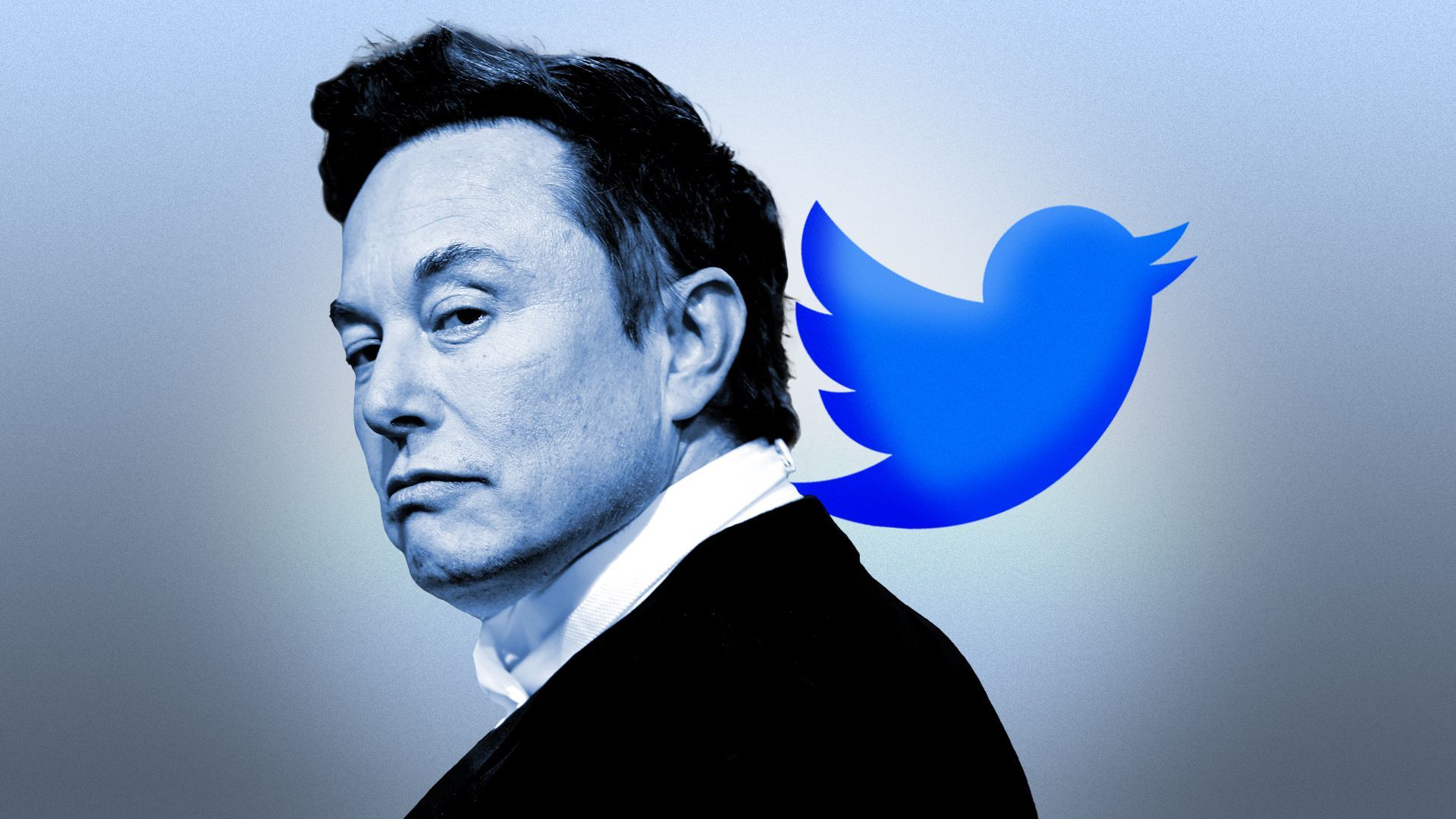
Twitter on Monday filed a reply to Elon Musk's Friday response to the company's lawsuit against the billionaire, saying Musk's request to delay a trial "fails at every level."
Why it matters: A Tuesday hearing at a Delaware Chancery Court will determine whether the trial moves forward in September.
Disney secured a record $9 billion in advertising commitments during its Upfront ad sales event this year, thanks in large part to its upcoming ad-supported tier for Disney+ and sports.
Why it matters: Upfront presentations were created decades ago for networks to sell their ad inventory to major agencies and companies ahead of their big fall season programs. Now, streaming has super-charged those efforts.
Uber on Monday reached a settlement with the Department of Justice over accusations that the ride share company overcharged passengers with disabilities.
The big picture: The Justice Department sued Uber in November, alleging that the company violated the American Disabilities Act by charging "wait time" fees to passengers with disabilities who need more time to get into vehicles.
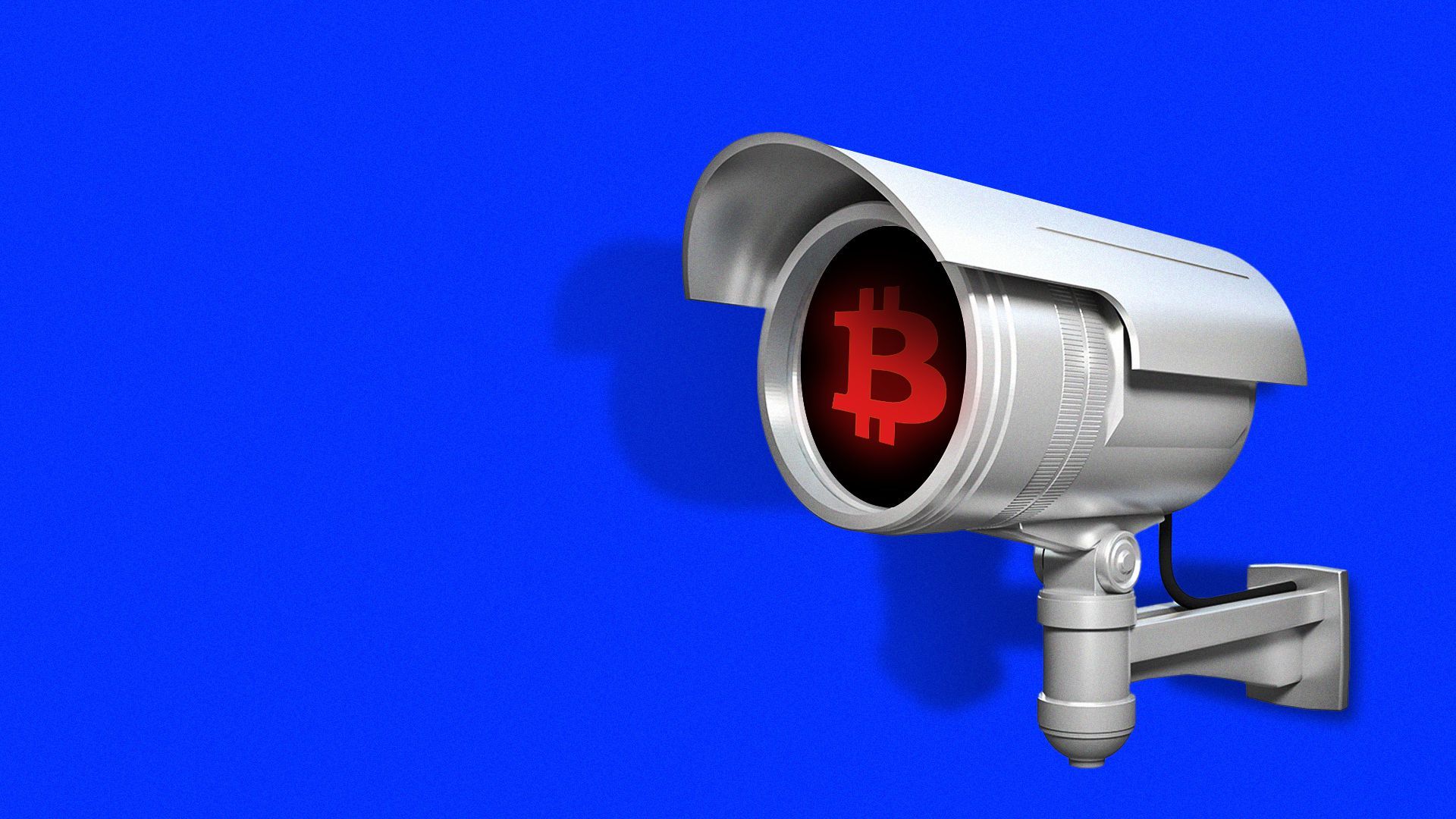
The straight path to get folks in the U.S. direct access to bitcoin via an easy button would be for exchanges to submit to surveillance.
Why it matters: That would address the Securities and Exchange Commission's ask for a spot bitcoin ETF, but it's a big one. The ask is something of an unpopular proposition, bordering on unreasonable without more specificity, crypto industry leaders tell Axios, speaking under conditions of anonymity.
Acast, a Swedish podcast hosting and monetization company, on Monday announced that it signed a deal to acquire Podchaser, a U.S.-based company that serves as a database for podcasts.
Why it matters: The deal will give Acast's podcast marketer clients access to better data to target ads. It also opens up a new revenue stream for Acast, which primarily makes money through ad sales.
A recession would be worse than the inflation the U.S. is seeing now, which is actually showing signs of easing up, some progressive economists are now arguing.
Why it matters: The Federal Reserve has been hiking interest rates to tamp down inflation, and is expected to continue — but this runs the risk of triggering a downturn. And at this point, that "cure" might be worse than the illness Dr. Powell is treating.
Should bought-and-paid-for corporate white papers get published under the auspices of the venerable National Bureau of Economic Research? That's the question raised by new disclosures from the Uber files leak.
State of play: A major NBER research paper c0-authored by Alan Krueger, the former chair of the White House Council of Economic Advisers, was revealed last week to have been paid for by Uber as "part of a production line of political ammunition that could be fed to politicians and the media," in the words of Guardian investigative reporter Felicity Lawrence.
The investment grade (IG) corporate bond market usually gives off safe and boring vibes. This year, not so much.
Why it matters: The trillions-deep IG market is where the biggest and most credit-worthy U.S. companies borrow money. But just like in the mortgage market, where extreme rate volatility is wreaking havoc on both borrowers and lenders, things have gotten chaotic under the hood of the IG market, too.
There's a big-dollar arms race in high-tech cat waste "solutions," from color-changing litter that can detect diseases to AI tech that tracks Fluffy's toileting habits.
Why it matters: As COVID-era cat ownership has surged, companies large and small have flooded the market with products aimed at improving pet health and reducing the top reason people return cats to shelters: Litter box unpleasantness.