An ex-Southwest Airlines flight attendant won a $5.1 million verdict against the airline and her union Friday after a Dallas jury found it had discriminated against her regarding an anti-abortion rights stance that stems from her religious beliefs, the AP reports.
Driving the news: The former employee, Charlene Carter, filed the suit after she was fired in 2017 following a clash with the union president over union members' attendance at a demonstration in 2017 in Washington, D.C., for abortion rights, among other issues.
Buy now, pay later (BNPL) is an industry where the rate of growth is exceeded only by the pace at which valuations are falling. Axios Markets unpacks everything you need to know in this deep dive.
What happens if you combine three financial innovations of dubious utility — BNPL, NFTs, and fees in lieu of interest? Answer: Supermojo!
Why it matters: Wherever there's an arena into which mainstream BNPL companies fear to tread, startups will fearlessly enter. Supermojo finances NFTs; Grabagun.com (slogan: "shoot now, pay later") uses a service that helps customers finance guns at fees that can amount to the equivalent of triple-digit interest rates.
BNPL startups have only existed in a low interest rate environment. Rising rates will put their business models to the test.
Why it matters: Some will feel the pain of interest rate hikes more intensely than others, depending on how they fund themselves. But no one is immune.
BNPL valuations, like other beneficiaries of the pandemic's boom times, are getting a reality check.
Driving the news: Klarna, a Sweden-based buy-now-pay-later company, announced this week a stunning 85% valuation cut as part of raising $800 million in new funding.
Buy-now-pay-later, or BNPL, is a rapidly growing but controversial way for consumers to borrow money to pay for goods and services. Think of it as the Gen Z credit card.
Why it matters: The young BNPL industry has yet to be tested through an economic downturn. The next recession, if and when it comes, could put serious strains on borrowers and lenders alike.
Lego on Friday revealed the final details for its highly anticipated model of Dunder Mifflin Scranton, the workplace from the popular TV series "The Office."
The big picture: Lego has built a huge business selling sets that allow adults to build plastic-brick versions of their pop culture favorites, and "The Office" has proven to be one of TV's more enduring franchises.
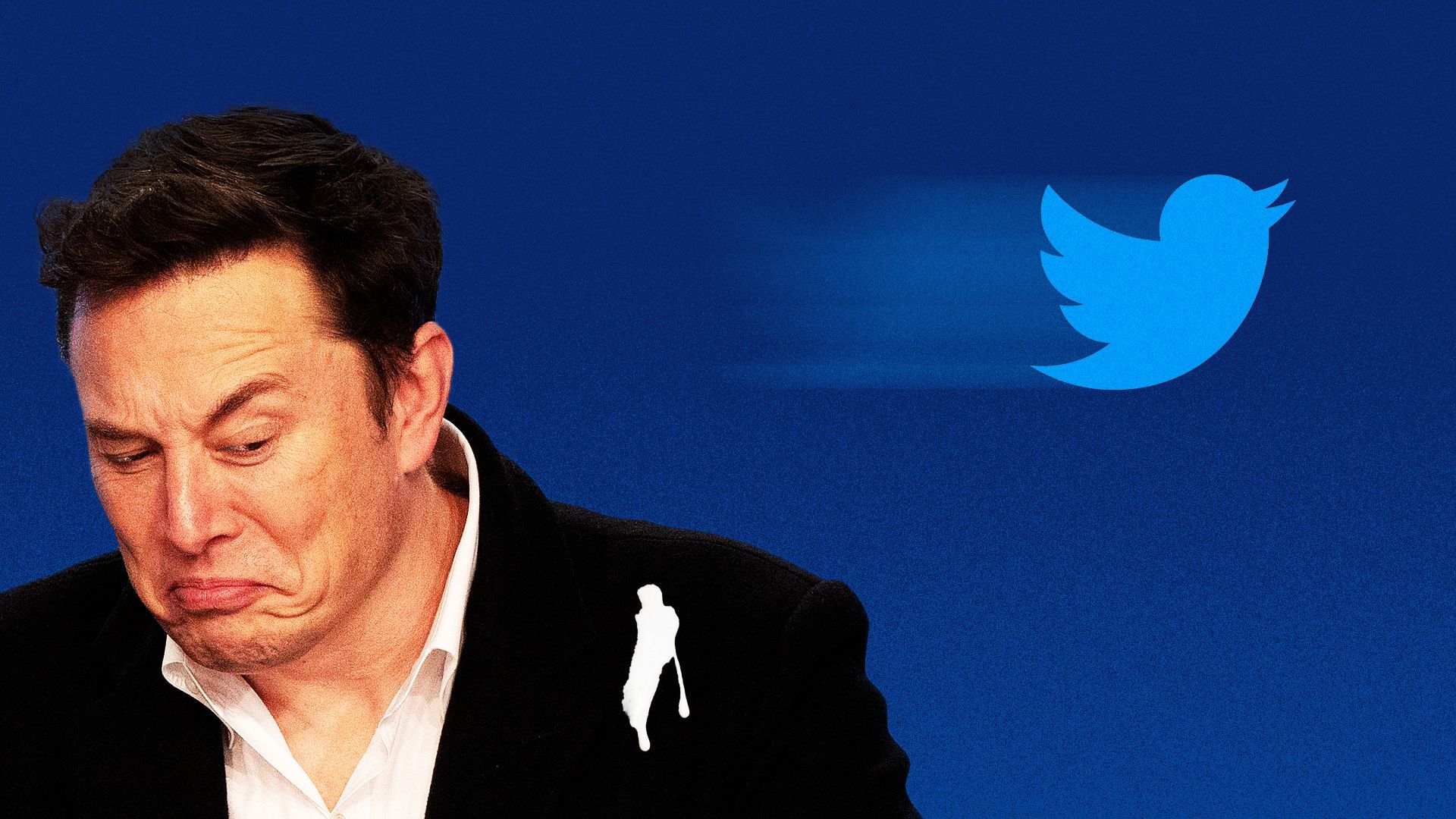
In a reply filed on Friday to Twitter's lawsuit, Elon Musk's legal team is pushing back on the company's attempt to have a quick September trial.
Tesla's CEO is asking instead that it take place in February, per mediareports.
Why it matters: Twitter appears intent on getting this sorted out as soon as possible, but Musk wants to have more time for discovery — presumably for a better shot at building his case.
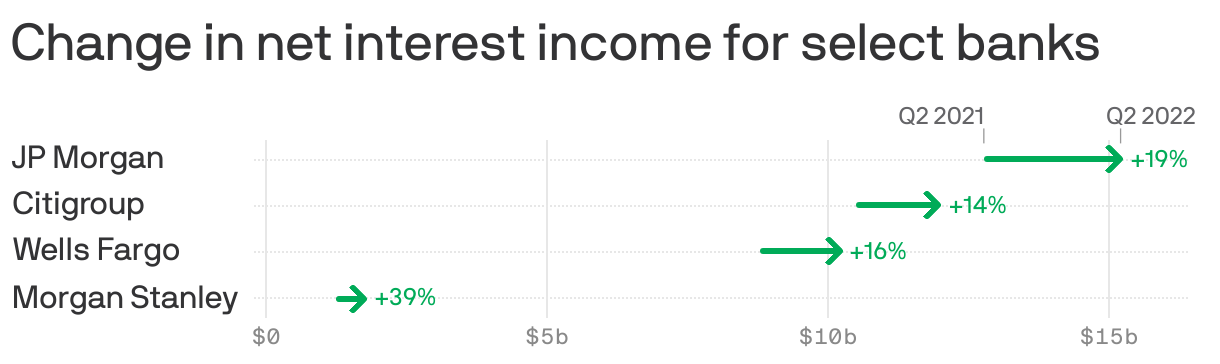
Each reported a yearly jump in net interest income — the difference between what they charge people to borrow money and what they pay people to deposit money — thanks to higher interest rates set by the Fed.
Why it matters: It's an upside to rate hikes, which have been cooling demand for other banking products and services.
By the numbers: Citigroup's net interest income grew 14% from last year to nearly $12 billion, for example.
That increase more than offset a roughly $700 million (or 46%) dip in investment banking revenues as corporate clients shied away from financing amid market volatility this year.
What to watch: Bank of America and Goldman Sachs report Monday morning.
American caffeine lovers are learning to imbibe their coffee with a little something extra.
Driving the news: This week, Bon Appétit published an exegesis about the “bobafication” of coffee, which has its roots in Asia’s popular bubble tea culture.
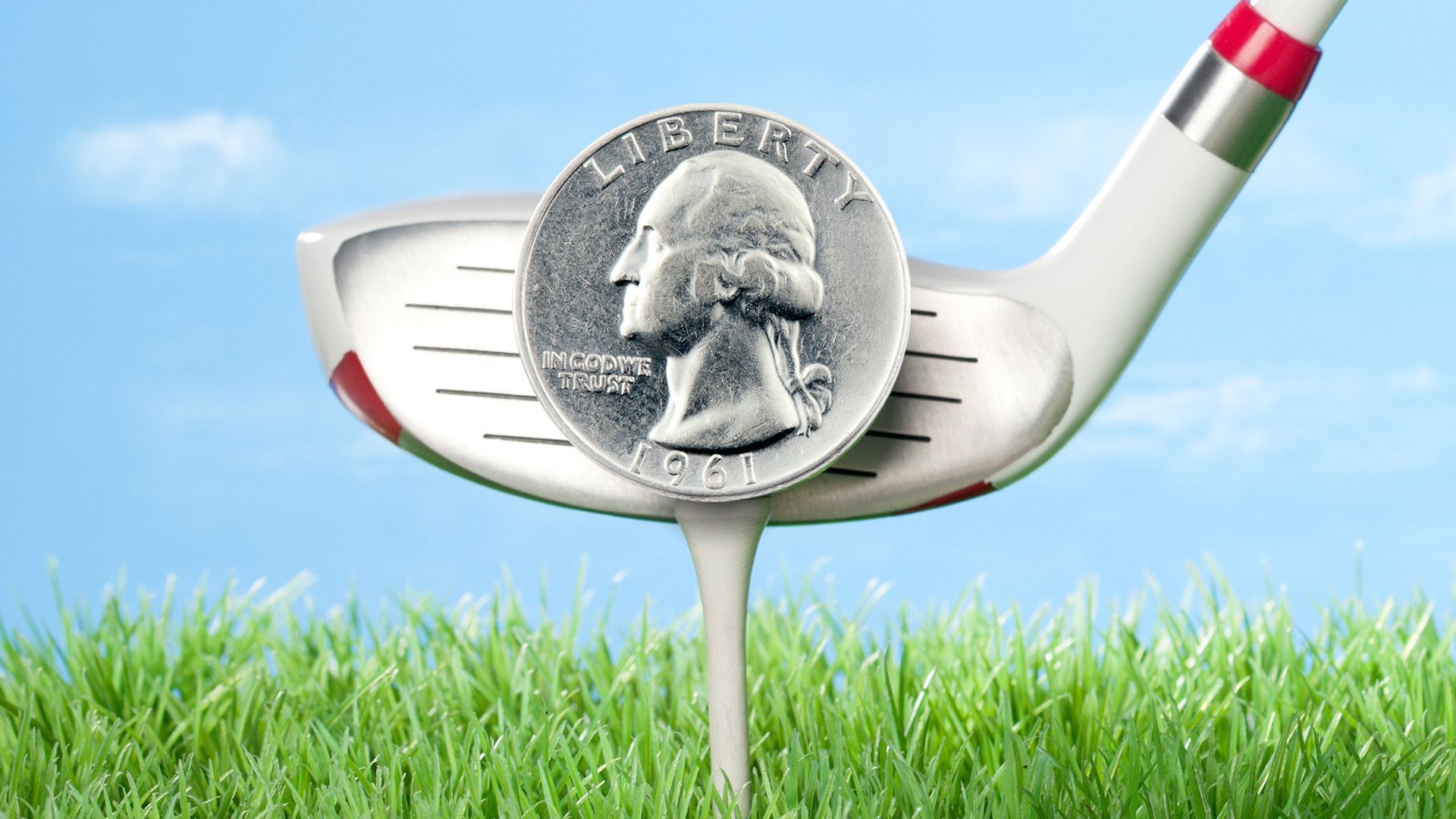
Despite the public narrative, LIV Golf is not trying to take down the PGA Tour, the upstart league's executives tell Axios.
Why it matters: The Saudi-backed tour, which began play last month, has thrown the golfing world into a civil war, after 17 players (and growing) risked PGA banishment by signing up for the far-more-lucrative LIV tour.
Driving the news: The British Open teed off Thursday from the famed St. Andrews course in Scotland. The R&A is following the USGA's lead, and allowing LIV golfers to compete.
But R&A chief executive Martin Slumbers did not come out in favor of the new league, saying during a press conference Wednesday that it "is not in the best long-term interests of the sport" and "entirely driven by money."
Slumbers did not rule out changing the eligibility requirements as soon as next year either.
Greg Norman, LIV's CEO and a two-time Open champion, was not invited to St. Andrews.
Zoom out: The upstart tour has managed to lure some recognizable names from the PGA Tour with hefty signing bonuses and bigger purses, including Phil Mickelson, Dustin Johnson, Bryson DeChambeau, Brooks Koepka and Rickie Fowler.
LIV events feature a much different style of play vs. PGA events, including so-called "shotgun starts," where every golfer tees off at the same time, and no cuts.
That ends up in a match that takes about half of the time of a normal PGA match day.
Context: "It's the same sort of thinking that comes from people that have always held a monopoly in that space, which is anything new is bad, except for what the monopoly is going to do next. We feel that there's a space for it all," Atul Khosla, LIV's president and COO, said.
"Because we are bringing new eyeballs to the game. How is that bad for the game?" he adds.
Yea, but: Saudi Arabia's involvement has drawn criticism due to the Middle Eastern country's poor record on human rights and the murder of journalist Jamal Khashoggi.
"They are prudent investors around the world in multiple industries and view us as no different than a prudent investment," Khosla said." At the end of the day, we are here to play golf, to enhance the fan experience and to enhance experience for our players."
Between the lines: Unlike athletes that play in the NBA or NFL, professional golfers are considered independent contractors. It is this distinction that LIV execs argue makes the PGA's move to ban players that take part in LIV events an antitrust violation.
Earlier this week, the Justice Department opened an investigation into the PGA over antitrust violations. LIV argues that the PGA is engaging in anticompetitive behavior.
"They are independent contractors, they have been since the beginning. I don't see how one group can say that this is the only way to play. That this is the world you need to live in," Khosla said.
For the PGA's part, a spokesperson told Axios in a statement, "We went through this in 1994 and we are confident in a similar outcome."
By the numbers: LIV has so far held two events, with a third planned later this month in New Jersey. But without a major media deal, its audience has been extremely small compared to the PGA.
LIV matches have streamed on YouTube, Facebook and LIV's own website. It has more than 30 different international partners that cover 180 different territories.
On YouTube, LIV's event in Portland over the July Fourth weekend averaged 66,000 concurrent viewers over the three days, with 88,000 on July 2.
PGA events — excluding majors — meanwhile, averaged 2.4 million viewers on CBS and NBC last season, including 2.8 million for Sunday telecasts, per Nielsen.
What they're saying: "I think the real question is can they both find audiences without cannibalizing each other. There’s a real opportunity to end up driving more interest in golf given LIV isn’t just a copycat version of the PGA. The flip side is both tours could end up re-creating the disastrous split of Indy Car and CART of several decades ago that crippled that sport for years," Pat Crakes, a former Fox Sports executive who now works as a consultant, says.
What's next: Everyone will be paying attention to whether or not Augusta National lets LIV players compete in the Masters next April.
Retail spending at gas station has gone vertical in recent months, as gas prices surged to the never-before-seen $5-a-gallon market nationwide.
Driving the news:Retail spending data released Friday showed that spending at gas stations rose nearly 50 percent in June, compared to June 2021.
Why it matters: Surging costs of gasoline — something many Americans can't cut back on much — devours disposable income and cuts in to consumer spending elsewhere, if prolonged.
Yes, but: There's little indication that such a scenario is unfolding right now. Even excluding gas prices, retail sales were up a solid 0.7%, suggesting consumers are still willing to spend, come hell or high inflation.
Tariq Trotter is best known as Black Thought, lead MC of hip hop group and "The Tonight Show" house band The Roots. Now he hopes to also become known as a successful venture capitalist.
Driving the news: Trotter tells Axios that he's become a general partner with Impellent Ventures, a firm that seeks to back Rust Belt startups that could benefit from capital connections and mentorship from East Coast tech hubs like New York and Boston.
Retail sales — a barometer for consumer spending — bounced back last month, rising 1% as inflation soared to a new four-decade high, the Commerce Department said on Friday.
Why it matters: Economists are watching these figures closely to see how the consumer — a consistent bright spot in an economy that's feared to be slowing — is faring. The numbers, which aren't adjusted for inflation, are a sign consumer demand is holding up.
It's been a wild two years in the building business. Construction input costs — think steel, lumber, gas, asphalt — are 46% higher than they were pre-COVID, according to an analysis of the Producer Price Index from the Associated Builders and Contractors.
Why it matters: For most of this time, residential builders could pass on these growing costs to homebuyers, as demand was booming. Now, the music has stopped — rising rates have cooled demand for housing in a big way.
You might have noticed chatter about inverted yield curves lately. It's now worth paying closer attention to.
Driving the news: Growing fears about inflation have hammered a key measure of the yield curve in recent days, pushing it suddenly much closer to "inversion" territory.
Aspiring first-time homeowners are sailing into fierce macroeconomic headwinds as prices and mortgage rates rise, while higher rents make it harder to save for a down payment.
Why it matters: Homeownership is a foundation for middle-class Americans to build long-term wealth. If people can't afford homes, that American dream becomes even less attainable.
The number of gas stations has been in steady decline for decades, and the volatility in gas prices — along with the rising popularity of electric vehicles — will squeeze them even further.
The big picture: President Biden is accusing gas stations of profiteering from high oil price, and at least four California cities have banned new stations. But most gas stations aren't owned by big multinational corporations, and the ups and downs of fuel prices is likely cutting into many of their bottom lines.
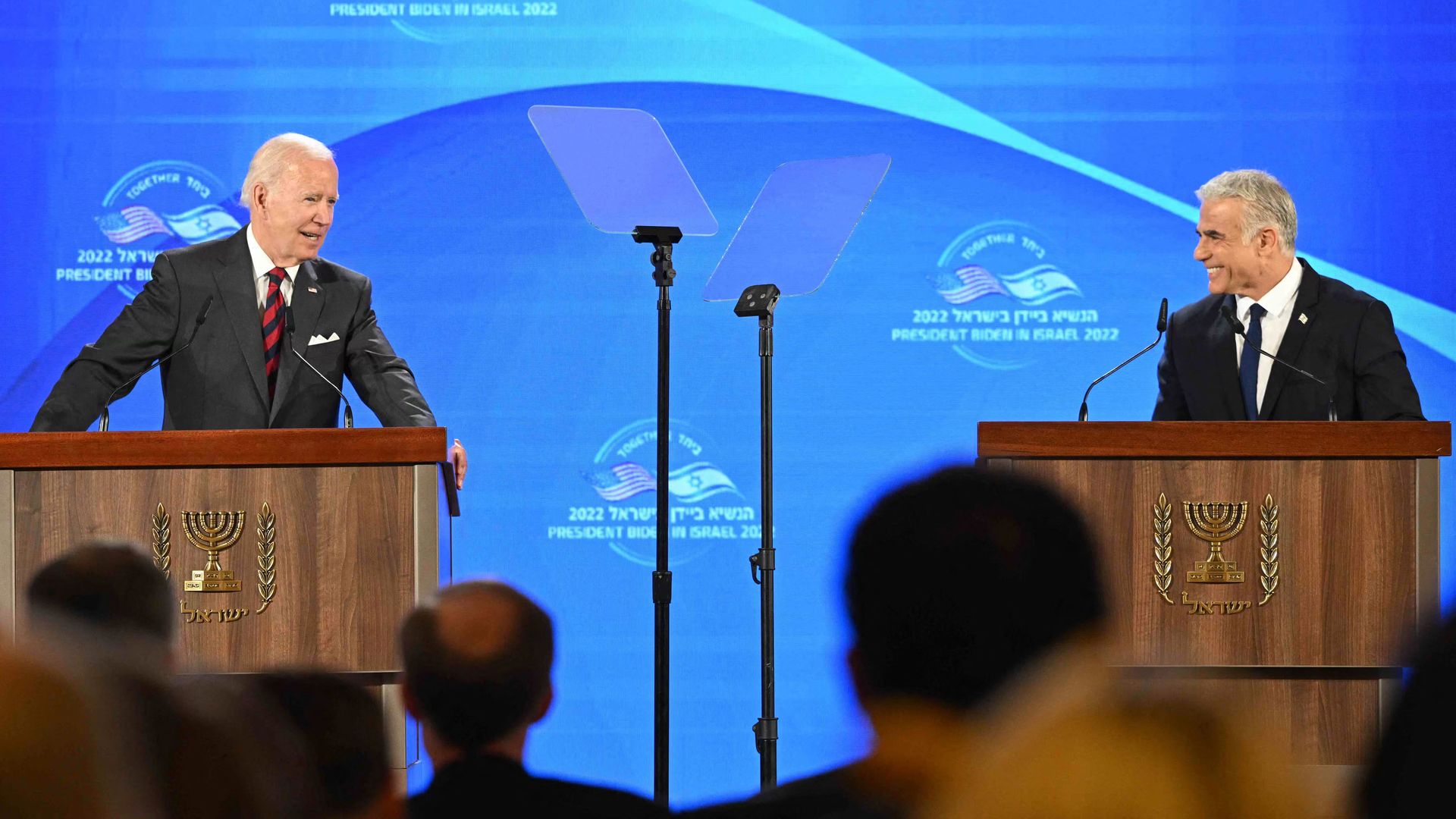
President Biden said Friday Saudi Arabia's decision to allow Israeli airlines to use its airspace "can help build momentum toward Israel's further integration into the region," including in Riyadh.
Why it matters: The historic decision marks the first time Saudi Arabia has allowed unlimited use of its airspace by Israeli airlines to fly to and from the country. Biden in a statement vowed to do all he can "through direct diplomacy and leader-to-leader engagement, to keep advancing this groundbreaking process."
Economic growth in China slowed sharply last quarter — with the economy expanding 0.4% from a year ago, the government said — as the country’s "zero COVID" policy spurred lockdowns in major cities that lasted for much of the three-month period.
Why it matters: Aggressive efforts to stamp out COVID-19 infections brought factory production and consumer spending to a crawl in the world’s second-biggest economy.
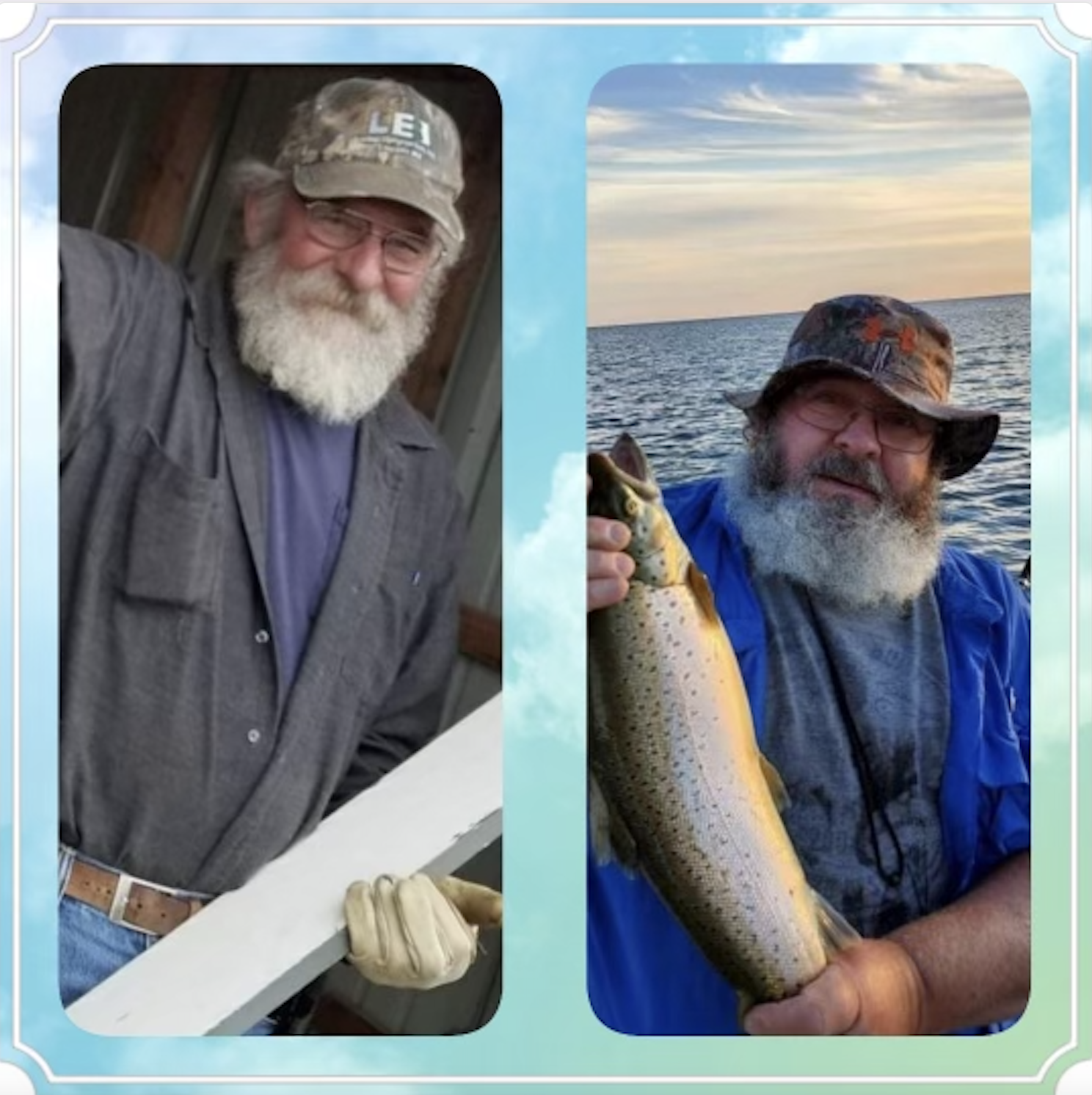
The Worcester brothers — David (left) and Jeff. Photos: Julie Zagorianakos
I have spent years trying to teach my kids that true wisdom and smarts comes in many forms.
One form is two barrel-bellied, cheap-beer-swilling, gray-bearded, f-word hurling, meat-eating, big-hearted, proud, rural Mainers. They died within 3 days of each other this month.
Why it matters: Jeff and David Worcester, the "Worcester brothers," taught me — and my kids, family and friends — about old cars and exotic motors, Maine lore, remote fishing lakes and hidden four-wheel trails to nowhere.