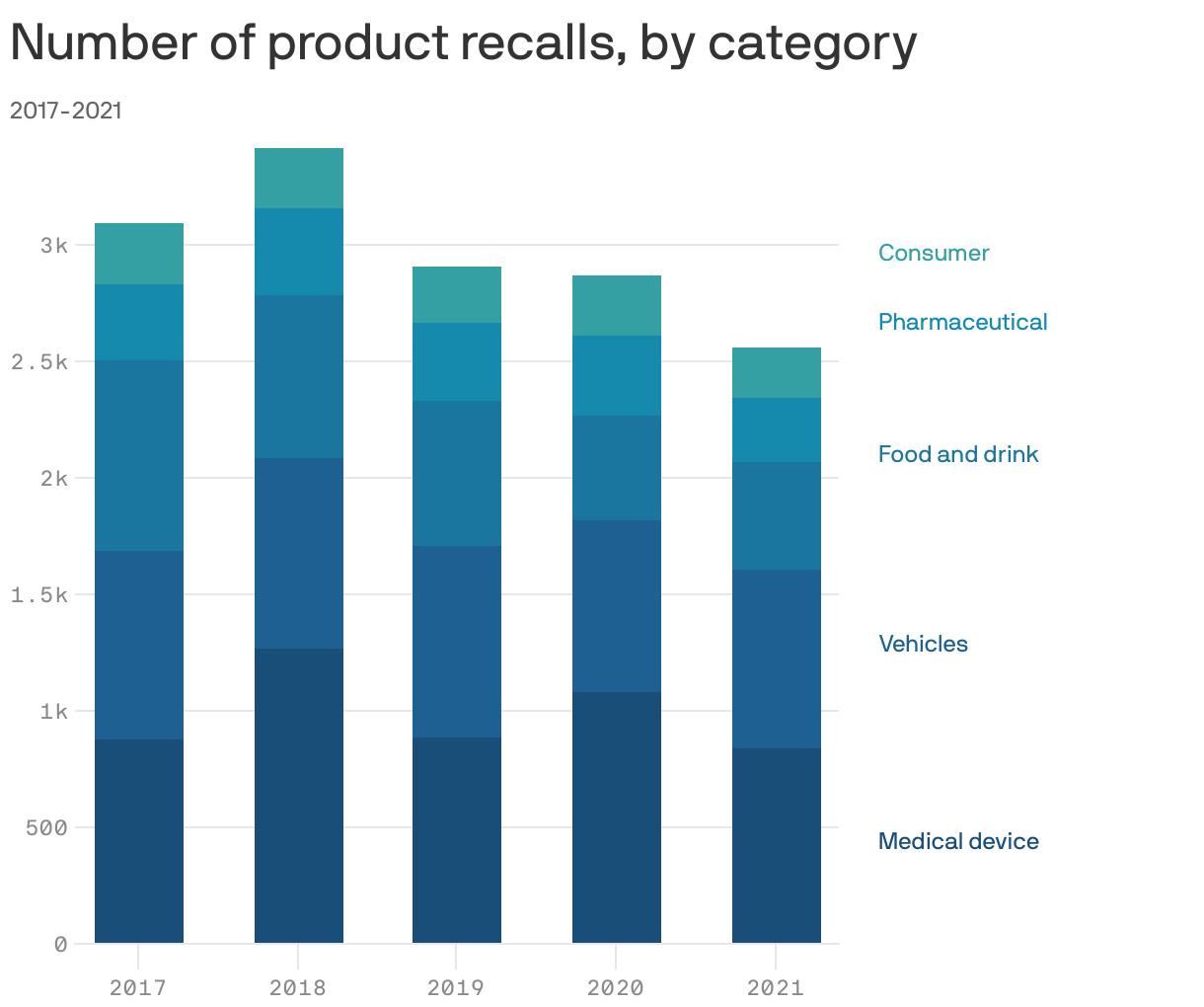
Data: Sedgwick Brand Protection 2022 State of the Nation recall index; Chart: Baidi Wang/Axios
The number of recalls in major product categories fell in the first full year of the pandemic.
Why it matters: Product safety oversight is a critical function of federal regulators. But in 2021 most regulatory inspections were conducted remotely, making oversight more logistically difficult.
The agency charged with enforcing civil rights laws in the workplace issued new guidelines on Monday, warning that discrimination against caregivers, including mothers, may be unlawful — and something to watch out for as more women return to work.
Why it matters: "We really want to make sure that the pandemic does not lead to a long-term widening of gender and racial pay gaps," Charlotte Burrows, chair of the Equal Employment Opportunity Commission, told Axios in an exclusive interview about the new guidance.
Tel Aviv-based SupPlant, an ag-tech startup that makes smart sensors for crops, raised $27m in Series A funding, the company told Axios.
Why it matters: Agricultural firms often find themselves on the front lines of climate crises from unusual freeze events to scorching temperatures. Managing crop irrigation with predictive software could insulate the $1t industry from potential future shocks.
Specialty pharmacy startup House Rx raised $25 million in Series A funding led by Bessemer Venture Partners, company co-founders Ogi Kavazovic and Tesh Khullar tell Axios.
Why it matters: Specialty medications present a special hassle since insurers dispense the majority of such drugs, often on a delayed basis and without coordination with providers.
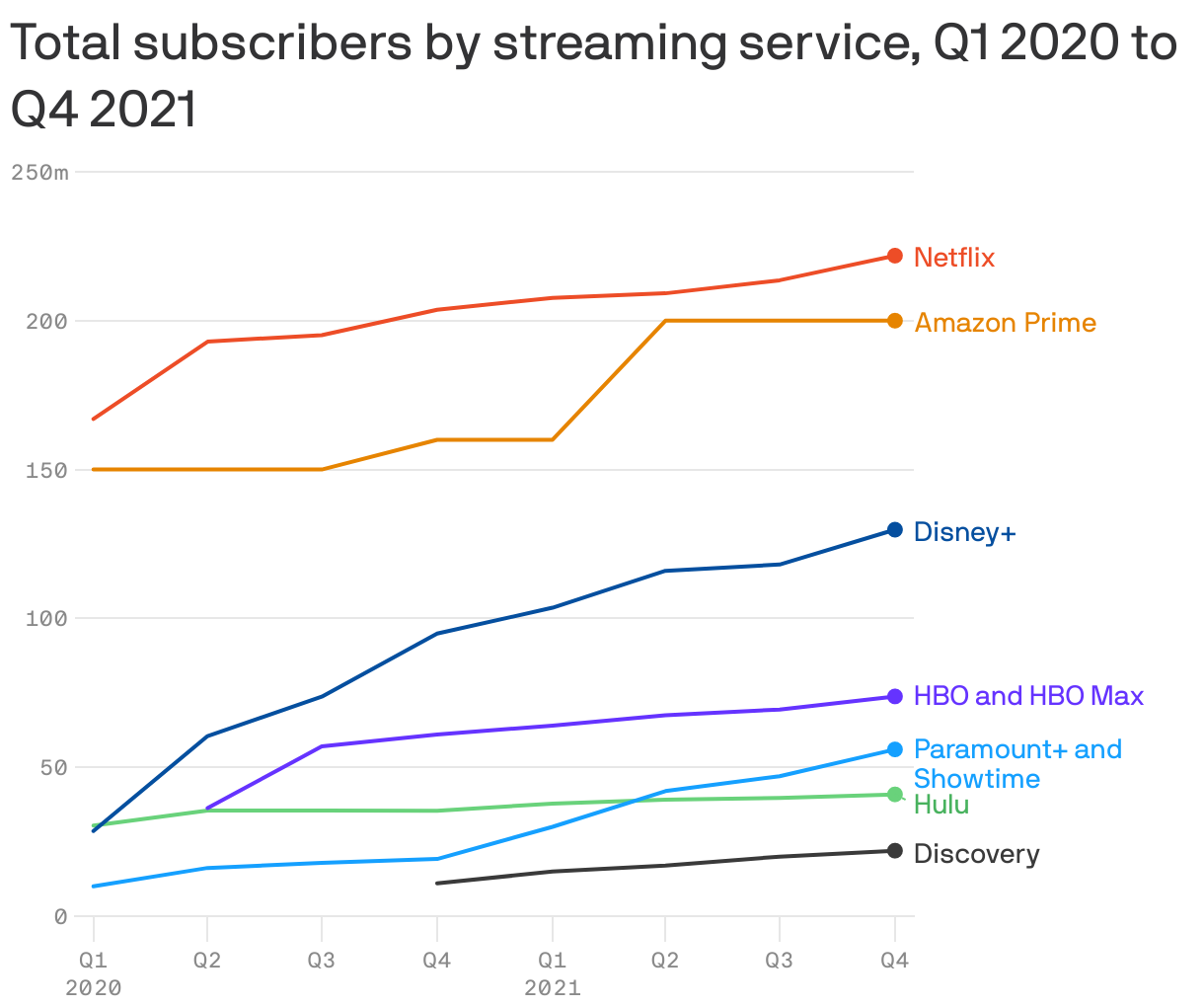
Data: Company filings; Note: Paramount+ & Showtime was formerly CBS All Access + Showtime, Discovery includes discovery+ as well as other Discovery streaming services. Hulu only includes on-demand subscribers.; Chart: Axios Visuals
HBO Max, the general entertainment streaming service from WarnerMedia, and Discovery+, the streaming service from Discovery that includes mostly non-scripted shows, will combine after WarnerMedia and Discovery merge next month.
Why it matters: The merger is meant to give both companies the scale necessary to compete with entertainment giants like Disney, Netflix and Amazon Prime — so it makes sense they would combine their streaming platforms to get bigger.
Watching the horrors unfold in Ukraine has been debilitating — wanting to help but not having any tangible way to do so other than social media shows of support.
Driving the news: Alex Iskold, a New York City venture capitalist who immigrated from Ukraine in the early 1990s, has created a program whereby you can get money directly into the hands of needy Ukrainian families.
Yuga Labs, the NFT company behind the Bored Apes Yacht Club, acquired the rights to the CryptoPunks and Meebits collections, from Larva Labs.
Why it matters: Bored Apes and CryptoPunks are the world's most valuable NFT collections, with Meebits not too far behind. Yuga now controls NFTs with around $5.5 billion in market cap.
Komodo Health, the health-care map maker last valued at $3.3 billion, has hired banks for an upcoming initial public offering, sources tell Axios.
Why it matters: Komodo is arguably the most anticipated health tech IPO of 2022, and could be one of the first big names to pull the trigger and potentially help to reopen the IPO markets this summer.
Carbon Collective, a San Francisco-based investment advisor, is launching a 401(k) service to give workers at small companies a way to fund climate solutions via their retirement savings.
Why it matters: The Carbon Collective aims to expand the relatively limited environmental, social and governance (ESG) options available to many employees at small companies of fewer than 300 people.
The corporate pullout from Russia happened faster than anyone could have imagined, drawing comparisons to the wave of company disinvestment in South Africa in the 1980s.
Driving the news: Since Russia's invasion of Ukraine last month, more than 300 global companies announced some kind of withdrawal from the country, according to the tally kept by management professor Jeffrey Sonnenfeld and his team at Yale.
Morale among American consumers — sometimes referred to as "people" — deteriorated early this month, as the already dour post-COVID mood was not improved by worsening inflation or the arrival of a major European land war.
Driving the news: That University of Michigan survey showed that overall consumer sentiment dropped for the fifth time in the last six months in March, falling to an almost 11-year low.
The Federal Reserve's policy committee meets this week and will almost certainly raise interest rates by a quarter of a percentage point. It will be a first baby step in what looks to be a long and arduous path to reduce inflation.
Why it matters: The Fed's navigation of an economic tightrope will determine whether the next couple of years feature a recession, sustained sky-high inflation, neither or both.
Both regular people and Wall Street sophisticates are ratcheting up expectations for inflation, in what wonks worry could be the start of a self-fulfilling prophecy.
Driving the news: A market-based reading of inflation expectations — often referred to as a five-year breakeven — shot to the highest level on record this week.
Russia's invasion of Ukraine threatens to pull the rug out from under our previously pretty sweet economic recovery. It's kind of a Godfather 3 moment — just when you think you're out, they pull you back in.
Why it matters: We just went through a massive economic upheaval. The recovery is still fragile — supply chains aren't fully recovered, and inflation is at record highs. Now, add on the fallout from both the war itself and the crippling economic sanctions levied against Russia for its unprovoked attack.
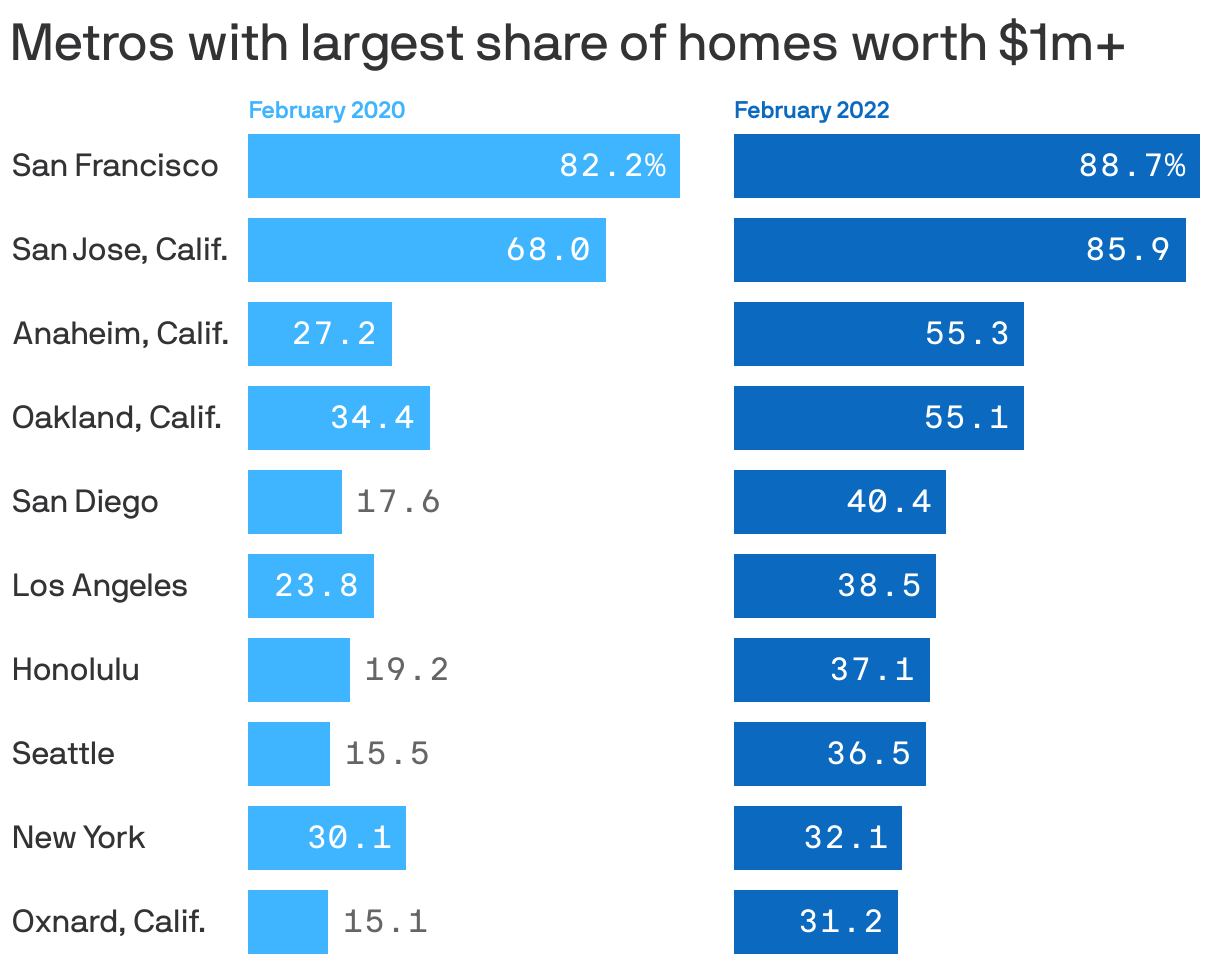
The number of U.S. homes worth more than $1 million nearly doubled since before the pandemic, to 8.2% in February from 4.8% in February of 2020, according to Redfin.
Why it matters: While rapidly appreciating home values are a windfall for those who own them, they also mean that more and more Americans are priced out of the market.
Incomes are rising, but not as quickly as home prices — leaving many people stuck as renters.
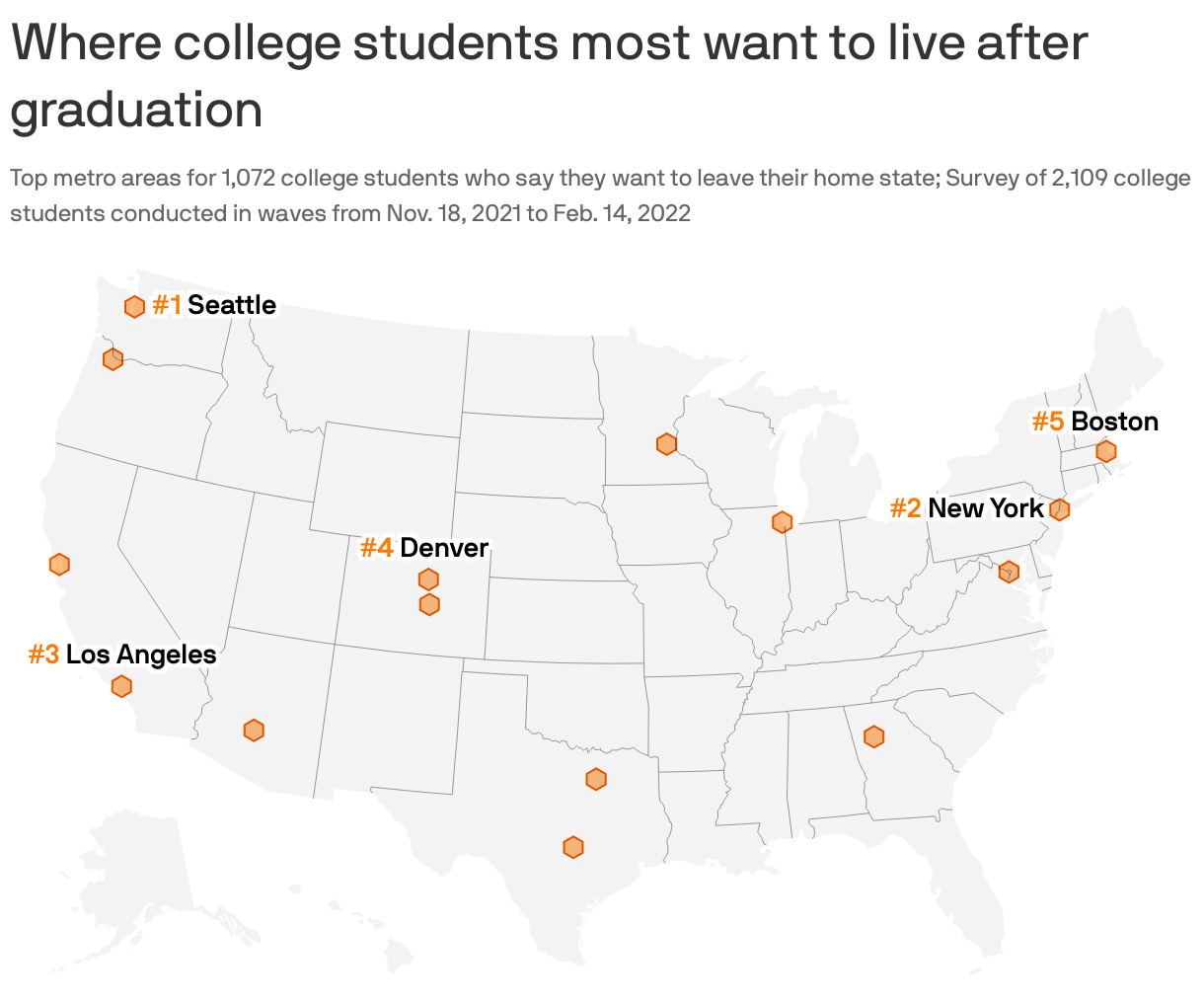
Seattle is America's most desired post-graduation destination for college students, according to the new Axios-Generation Lab Next Cities Index, which tracks rising U.S. work and culture trends through geographic preferences.
Why it matters: The Emerald City, with its superstar tech-hub status, cool climate, green-energy embrace and music and art scene, eclipsed two top-dollar coastal destinations — New York and Los Angeles — among young adults looking to move. Seattle also drew a more bipartisan appeal.
Pandemic restrictions in two of China's largest cities, Shenzhen and Shanghai, imposed Sunday have forced Apple suppliers including Foxconn to suspend production, per Nikkei Asia.
Why it matters: The seven-day lockdown of the key port city and southern tech powerhouse Shenzhen and the partial lockdown of financial hub Shanghai and other Chinese cities over COVID-19 spikes will exacerbate supply chain and inflation issues, per Axios' Dan Primack.



/2022/03/11/1647037364012.gif?w=3840)