The search for normalcy may be over. Time spent at home shrank observably toward the close of 2021 as people got out and traveled in ways unseen since 2019.
Why it matters: Declining cases of COVID in the U.S. in the fall prompted more people to get out — just before the Omicron variant popped up.
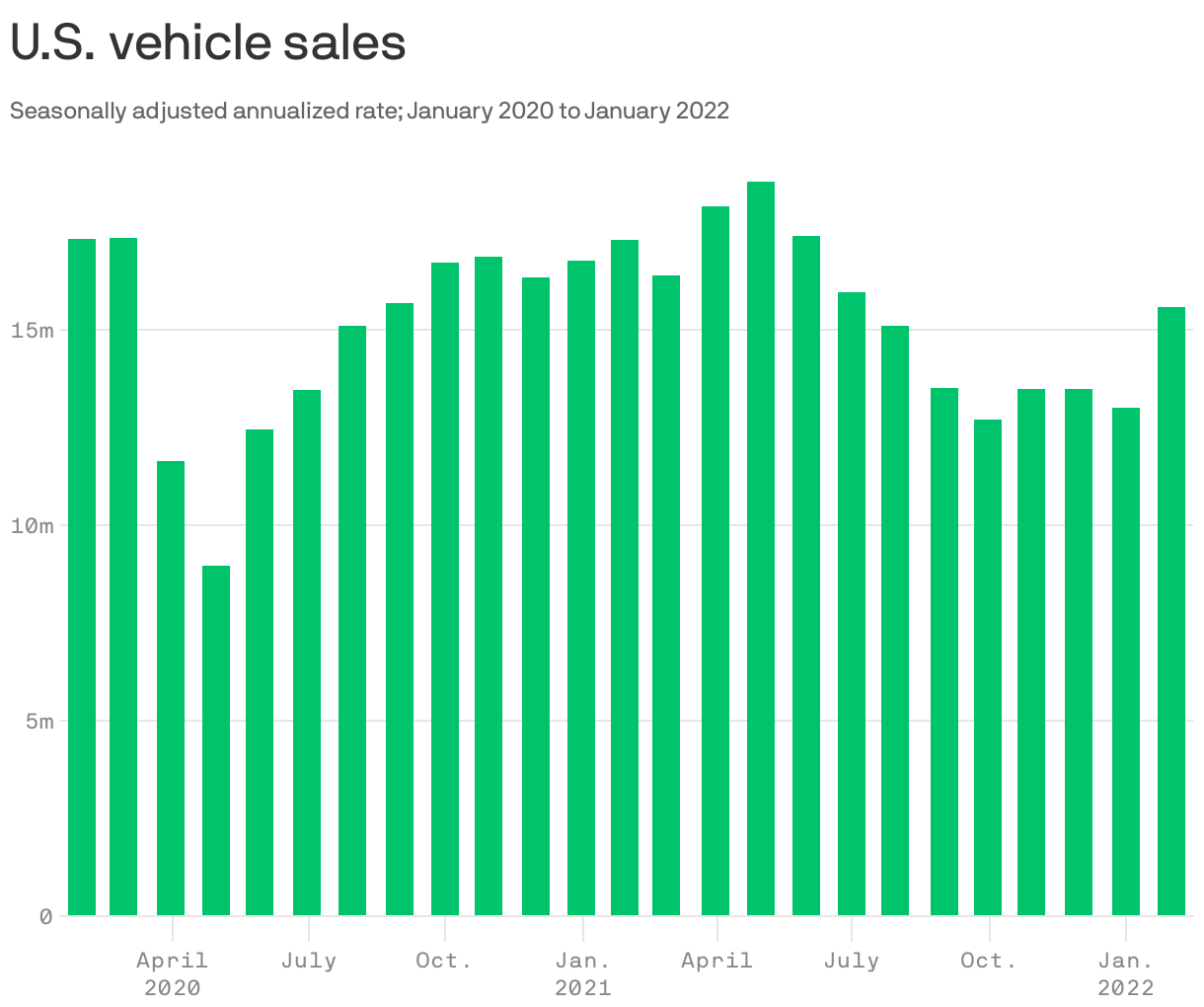
That behavior in aggregate also points to how the economy is shifting away from being driven by a demand in goods to a demand for services.
Driving the news: Business results from the past few months from Disney, Uber and Lyft out this week show theme park attendance and airport rides that match or exceed pre-pandemic levels.
By the numbers: Disney reported its best quarter ever for revenue in its domestic parks and resorts, with all of its parks open during its October through December period.
Both Uber and Lyft said airport trips more than doubled from last year.
Lyft said airport rides made up 9% of ride volume which is only slightly below the 9.4% share in the same period two years ago in 2019.
The big picture: Not only are these three companies an important measure of how much demand there is for services, they also provide a good indication of how willing in-person workers are to come return.
What they’re saying: “We had 85% of our cast members pretty much say, yes, immediately, when we [asked] them back,”Disney CEO Bob Chapek told investors.
The number of active drivers on Lyft’s platform reached a COVID high in the fourth quarter, the company’s CFO Elaine Paul reported.
Uber’s CEO Dara Khosroshawi said its global “active earner base” at 4.4 million people, is now the biggest it’s been since the second quarter of 2020.
What to watch: The return of international travel to the U.S., which would further boost services activity across the board.
The rights to J.R.R. Tolkien's work are precious indeed.
Catch up fast: With apologies to Gollum, a wide range of rights to the "Lord of the Rings" author's material is heading to auction and expected to command more than $2 billion, Variety reports.
Toyota and Ford continued production cuts on Thursday as anti-vaccine mandate protesters persisted to block a U.S.-Canada border crossing that serves as a key link for the auto industry., per CNBC.
The New York Times is at least temporarily allowed to publish documents related to the conservative group Project Veritas, a court ruled Thursday.
Driving the news: A New York State appeals court temporarily stayed an order by a state trial judge, meaning the Times will not need to give up or destroy copies of legal memos written by a lawyer for Project Veritas.
Piano, a subscription technology company that helps publishers monetize their websites, has acquired SocialFlow, a company that helps publishers monetize their social media content.
Why it matters: The integration will help Piano's customers reach readers on social media who are willing to pay for subscriptions. Before the deal, Piano primarily helped publishers market to possible subscribers on their websites or apps.
A lot of hopes are riding on inflation easing in 2022. That sure didn't happen in January, however.
The 0.6% rise in the Consumer Price Index last month undermines the idea, which the Biden administration and the Federal Reserve have been betting on, that inflation will remain contained to a handful of industries and fade with time.
TotalEnergies said on Thursday it's buying SunPower's commercial and industrial solar business for $250 million as the France-based multinational oil giant expands its U.S solar portfolio.
Why it matters: European oil majors are increasingly moving into renewables, EV charging and other areas outside their core fossil fuel businesses.
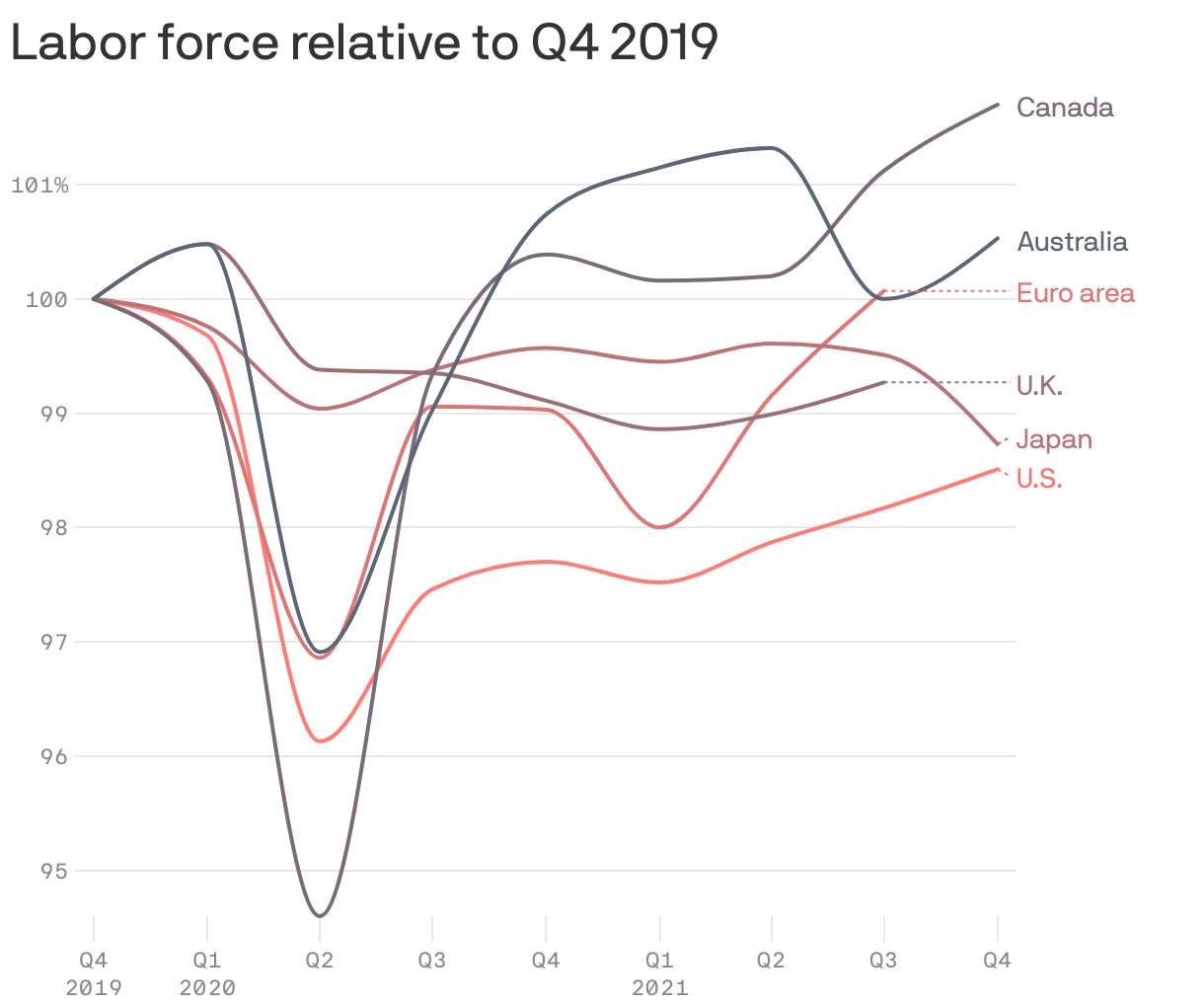
Labor markets in advanced economies bounced back super-fast relative to pre-pandemic levels, but the U.S. is slightly behind.
Why it matters: Consider it took years for jobs to come back after the 2008 financial crisis. This is like no other economic recovery in history, said Claire Li, an assistant vice president at Moody's who helped put together this data.
Forbes on Thursday said it received a $200 million investment from Binance, one of the world's largest cryptocurrency exchanges, to help support its SPAC IPO.
Why it matters: The money will replace half of the $400 million initially raised by institutional investors to help finance Forbes' SPAC.
Just as American auto manufacturers showed signs of momentum in beating back supply chain snarls, Canadian anti-vaccine protesters are blocking a key connection to Detroit.
Driving the news: The convoy of Canadian truckers that shut down Ottawa recently to protest vaccination requirements and public health measures closed a key bridge connecting Canada to the U.S. for a fourth day Thursday.
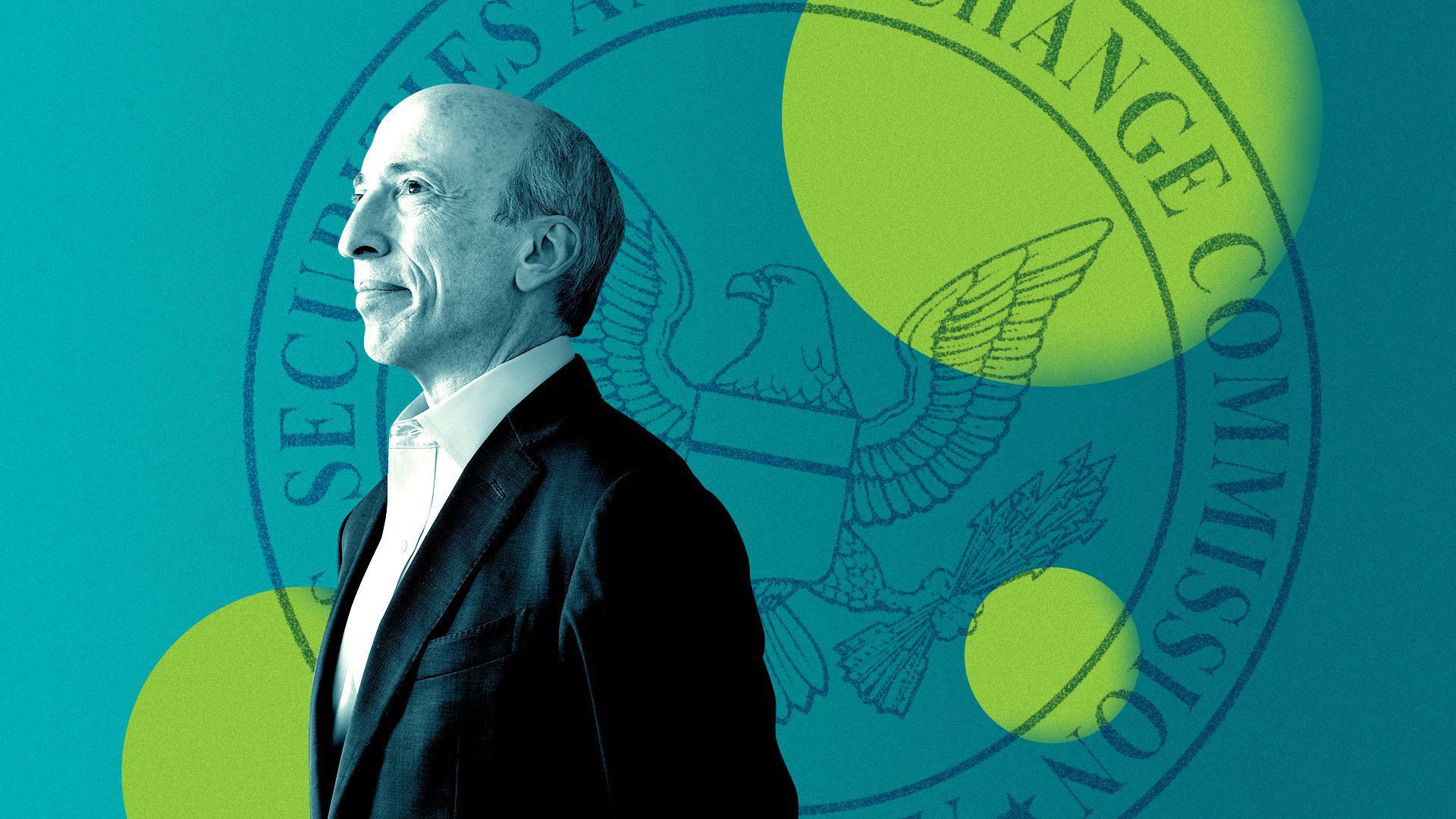
SEC chair Gary Gensler had a big day Wednesday, as his agency proposed a new level of transparency for private market funds, new rules around cybersecurity reporting, and announced it was considering a change in "market plumbing," a direct response to last year's meme stock mania.
Why it matters: Gensler's moves are just the latest sign that the former banker isn't letting up on his efforts to police the markets; with 50 new rule proposals expected this spring.
Almost a year to the date of its public market debut, Dallas-based Signify Health has agreed to acquire Caravan Health, Signify CEO Kyle Armbrester tells Axios.
Why it matters: The deal suggests that there's still interest in value-based care (VBC) arrangements that pay providers for quality, not quantity.
These days pizza can arrive by car, delivery bot and even drone. Now you can also get a piping hot pie from a vending machine.
What's happening: PizzaForno, a Toronto-based company, is rolling out its automated pizza vending machines across North America, including in Michigan and other U.S. locations. For $10 to $13, they can serve up a hot, 12-inch pizza in under three minutes.
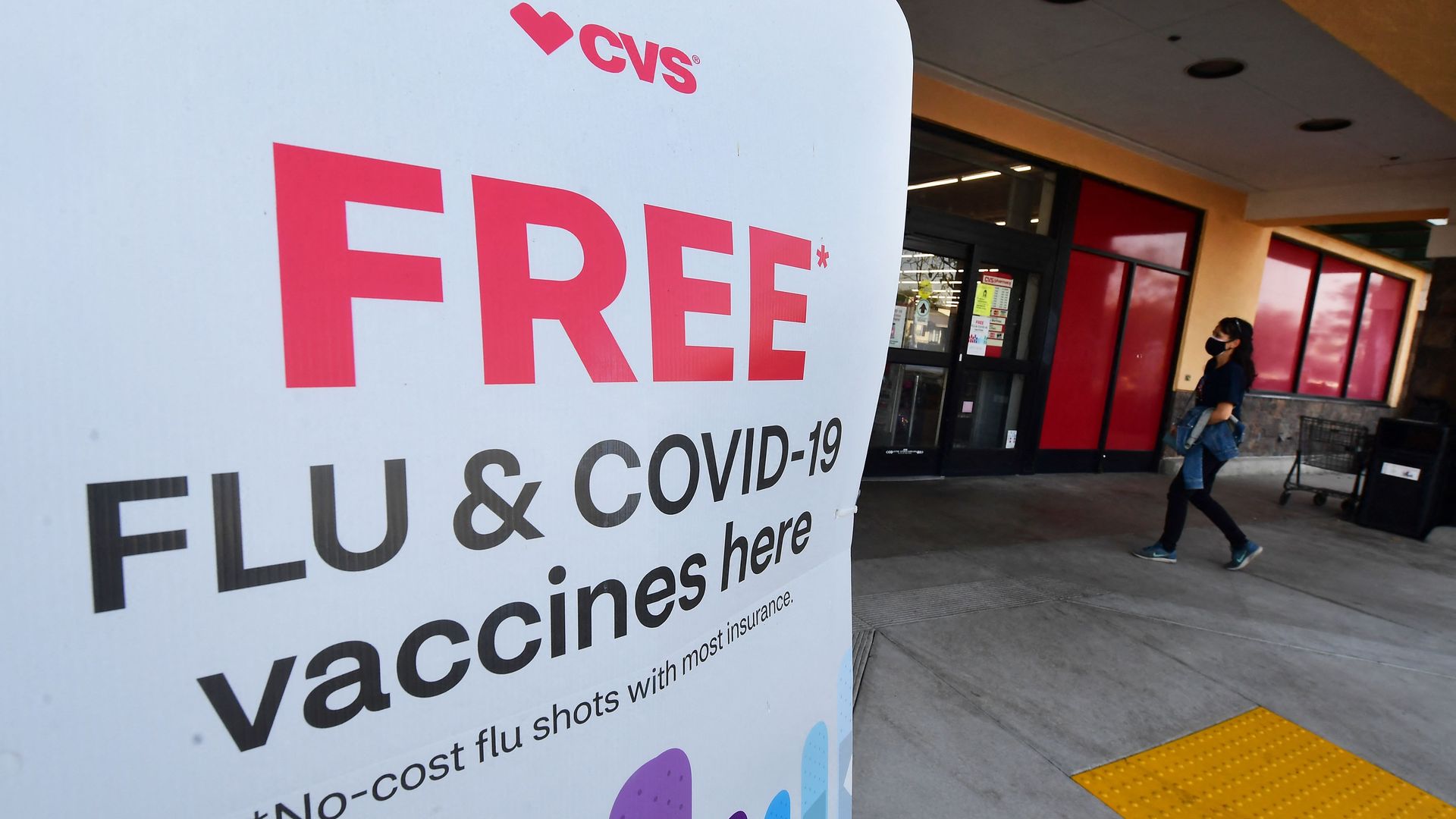
Tens of millions of people have flocked to pharmacies over the past year to get COVID vaccines and tests, and pharmacy chains are salivating at the thought of retaining some of those people as long-term customers.
The bottom line: "We have seen a lot more traffic in the stores, and that's manifesting itself in more prescriptions and increased basket sizes in some instances," CVS Health CFO Shawn Guertin told Wall Street yesterday.
Tesla is being sued over allegations of systemic racial discrimination at the company’s California facilities, a state regulatory agency announced late Wednesday. Tesla said ahead of the lawsuit that such action was "misguided."
Driving the news: California Department of Fair Employment and Housing (DFEH) director Kevin Kish said in an emailed statement that the agency filed the lawsuit Wednesday in the Alameda County Superior Court following an investigation launched after "receiving hundreds of complaints from workers."
Canada's transport minister said Wednesday that vaccine mandate protests disrupting a key U.S.-Canada border crossing this week are hurting supply chains, as nearby auto factories began halting production.
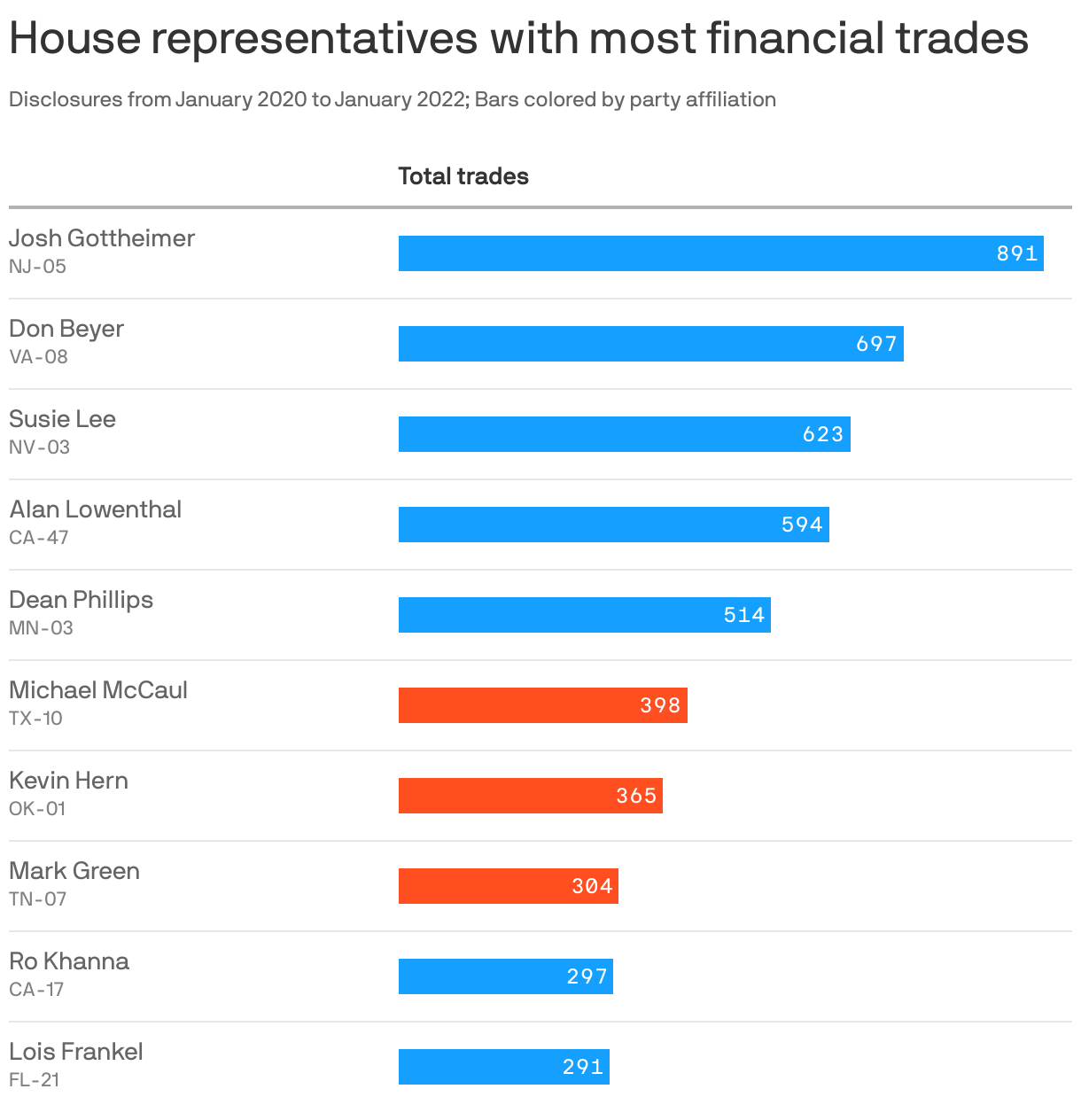
Note: Excludes representatives no longer in Congress. Data: House Stock Watcher; Table: Thomas Oide/Axios
Rep. Josh Gottheimer (D-N.J.) has reported more stock purchases and sales during the past two years than any other member of the U.S. House of Representatives, according to an Axios analysis of data from the House Stock Watcher.
Why it matters: Bipartisan momentum is building around legislation that would ban lawmakers from owning and trading individual stocks. House Speaker Nancy Pelosi is now backing some of the efforts after long fighting stock bans, as was reported on Wednesday.