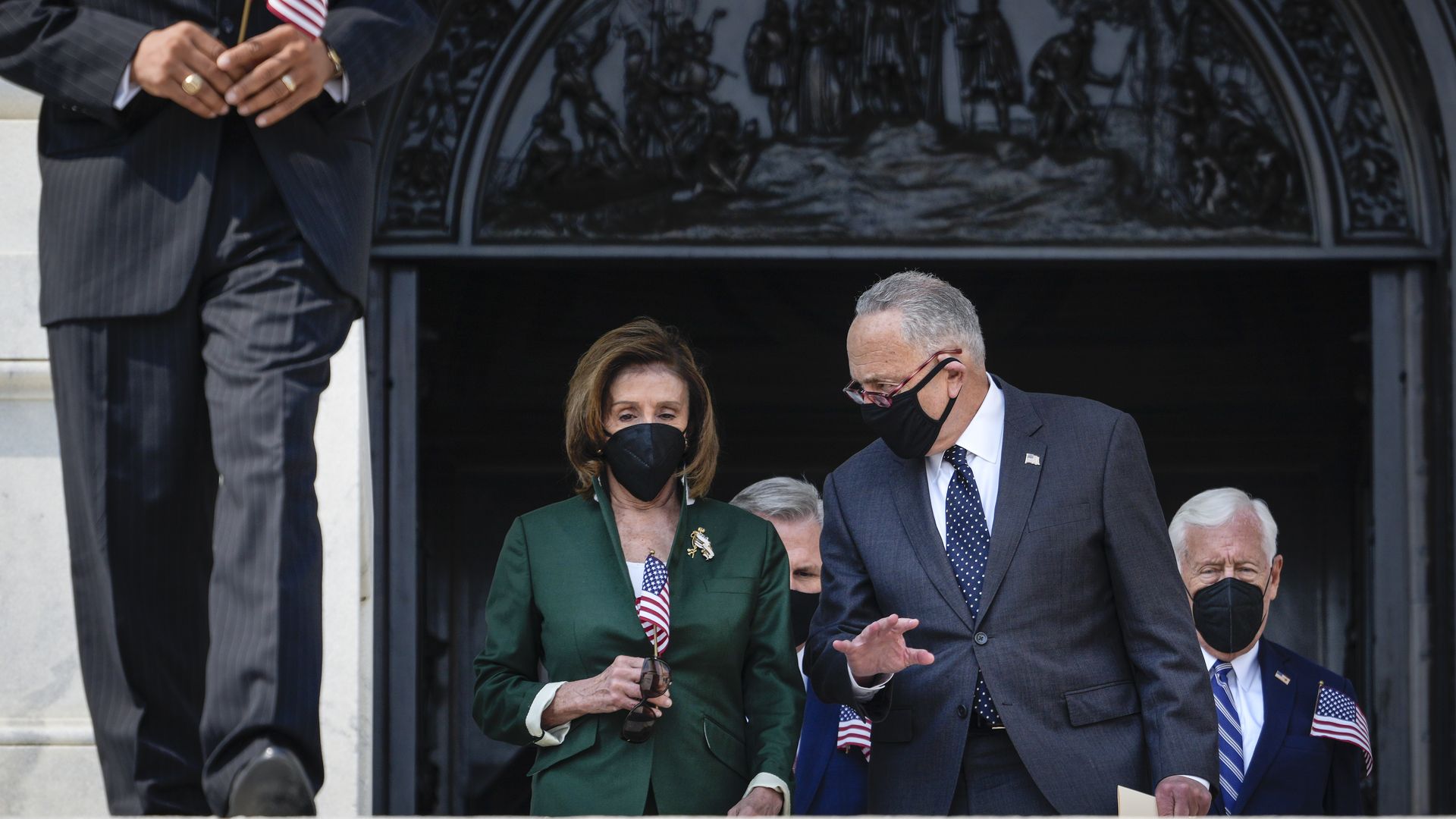
Democratic leadership in the House and Senate are working on a short-term funding bill — which needs to pass before Oct. 1 to avoid a government shutdown — that includes a debt-limit increase.
Why it matters: The country will default on its debt in October for the first time in U.S. history if Congress doesn't increase the federal debt limit. Republicans and Democrats have entered a standoff — daring the other side to blink.
Rebellion Defense, a developer of AI solutions for U.S. defense, tells Axios that it has raised $150 million in venture capital at a $1 billion pre-money valuation.
Why it matters: Defense is becoming more about code than combat, and Rebellion is part of a new generation of startups working to keep the U.S. and its allies ahead of their adversaries.
Canva, an Australian design software company, raised $200 million at a $40 billion valuation led by T. Rowe Price.
Why it matters: This makes Canva the world's fifth most valuable private startup, behind Klarna and ahead of Instacart. It also stands apart by being profitable, led by a woman CEO and based in Sydney.
Arcadia, a startup that provides people avenues to access renewable energy without having to change power companies, has raised $100 million to fuel its expansion.
Driving the news: New investors Tiger Global Management and the Drawdown Fund led the Series D round for the company founded in 2013 that has now raised $180 million overall.
Fittingly for a dayin which Securities and Exchange Commission chair Gary Gensler pulled no punches in his congressional testimony, the main theme running through the Blockworks crypto conference on Tuesday was undoubtedly regulation.
Why it matters: The crypto world both hates and needs regulation in equal measure.
The pace at which consumer prices rose in August cooled off by more than expected. But economists are stopping short of declaring that inflation has been transitory.
Why it matters: Since the beginning of the year, the rate of inflation has been above average.
SmartNews, the Japanese news discovery app founded in 2012, on Wednesday announced a $230 million in Series F round funding at a $2 billion post-money valuation, bringing its total capital raised to date to more than $400 million.
Why it matters: SmartNews is now one of the most valuable standalone news aggregation apps, and plans to use its new money to expand its U.S. presence.
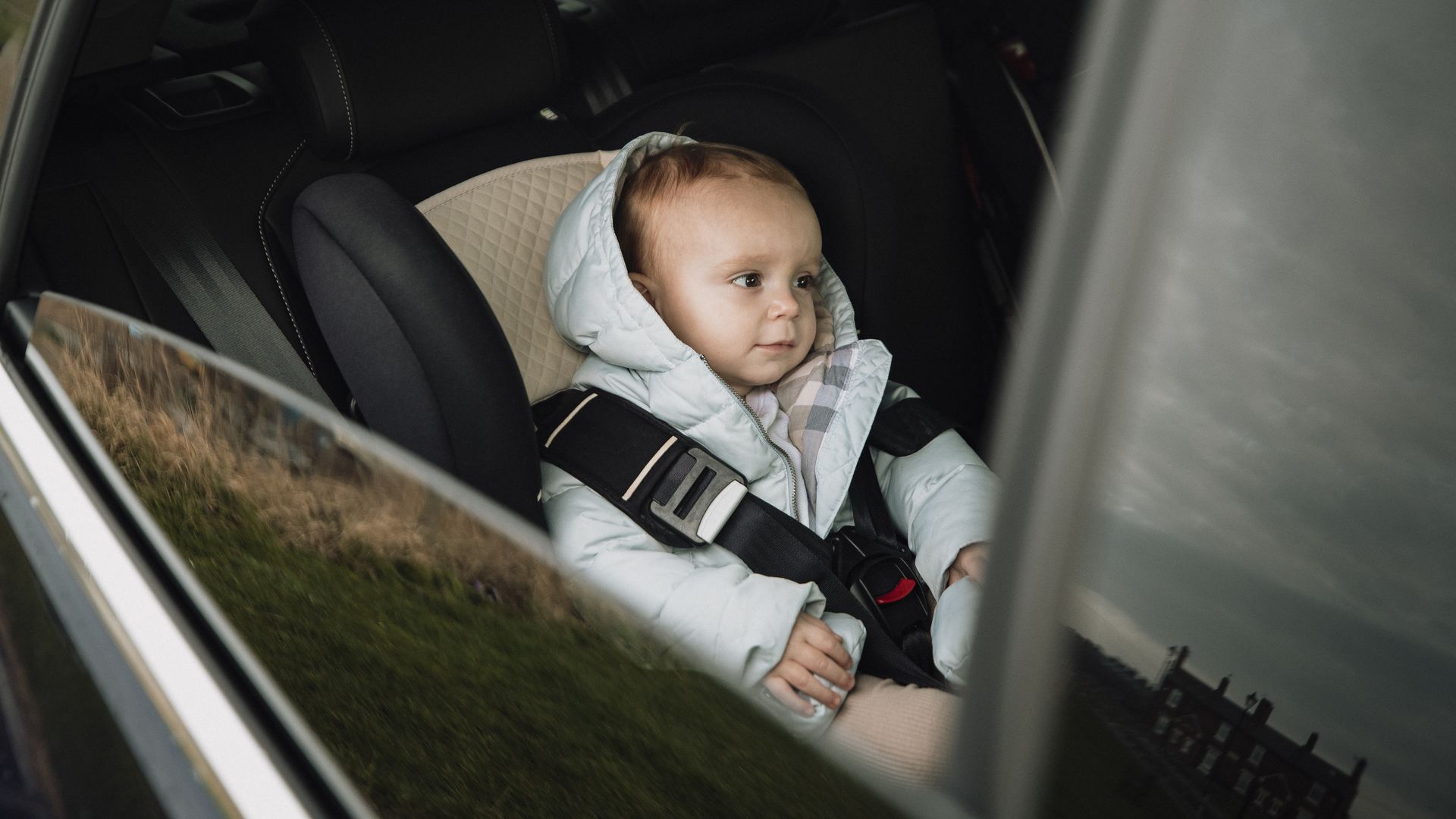
All vehicles could soon be equipped with warning systems aimed at preventing children from dying in hot cars, but safety advocates say a law working its way through Congress won't do enough to save lives.
Why it matters: Nearly 40 children die every year of heatstroke because they were left in the back seat by a parent or caregiver — or climbed inside a car on their own. Since 1990, approximately 1,000 kids have died nationwide, according to KidsAndCars.org.
Four have died this month to date, including a baby who suffocated in a car after her mother was shot and killed in Orlando, Florida, and twin toddlers who died in a hot car in South Carolina.
Driving the news: The bipartisan infrastructure bill that passed the Senate last month would require new motor vehicles to have an alert system that would remind people to check the back seat upon exiting the car.
The House expects to take up the bill this month.
The law would replace a voluntary commitment by automakers to equip virtually every new car with a rear-seat reminder system by the 2025 model year.
Where it stands: Many new models now come with such reminders via a text message in the instrument cluster, typically accompanied by a chime, when the engine is turned off.
I drove a 2022 Nissan Pathfinder recently that annoyingly honked six times at me whenever I walked away from the vehicle; I finally realized it was the rear-seat reminder.
I repeatedly dismissed the warning on the steering wheel, but to permanently shut it off, I would have had to tinker with the car's settings.
How it works: Most rear-seat reminders are triggered by "door logic" — that is, the system recognizes that the driver opened a rear door at the beginning of the trip.
Yes, but: that technology doesn't know whether the driver opened the door to put groceries or a purse in the back seat — or to buckle in a child.
And it doesn't address the issue of unattended children climbing into a car by themselves — about 25% of all hot car deaths.
What's needed: Cars need more than just a dashboard reminder that can be easily ignored or dismissed by the driver, says Emily A. Thomas, automotive safety engineer at Consumer Reports.
They need technology that can actually detect the presence of a car occupant.
So far, only Korean models sold under the Hyundai, Kia and Genesis brands have ultrasonic sensors that can detect movement inside the vehicle — but they are not standard on all models.
The new Genesis GV70 SUV goes a step further with a more sensitive radar sensor that is able to detect a baby's breath.
What they're saying: Carmakers can — and should — do more, said Janette E. Fennell, president of KidsAndCars.org.
"You can't purchase a vehicle today that doesn't automatically turn off your headlights when you get out of the car. Who decided it's more important not to have a dead car battery than a dead baby?"
What to watch: The occupant detection systems that could prevent children from dying in hot cars operate on the same technology that autonomous vehicles will need in the future to detect and monitor passengers, she noted.
Efforts to help Black and brown people succeed as cannabis entrepreneurs are not working — despite efforts in weed-legal states to encourage diversity in ownership and management.
Why it matters: People of color have been disproportionately targeted by the "war on drugs," so, as the pot industry expands, cities and states have tried to make social justice a priority in granting licenses.
But people in underrepresented groups often lack access to the capital they need to go up against "big marijuana."
They also lack the family-and-friends connections that give others a boost.
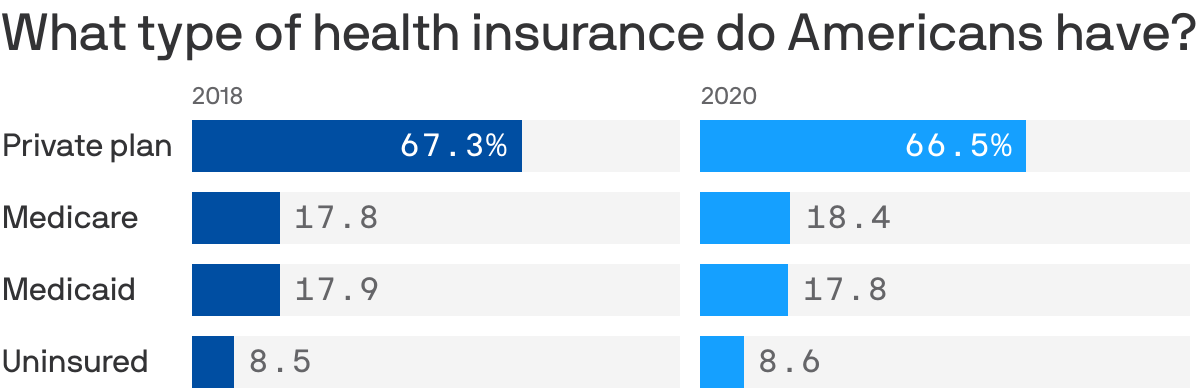
Roughly 8.6% of Americans didn't have health insurance in 2020, a figure that has stayed consistent since 2018, according to the latest U.S. Census Bureau data.
Why it matters: Government assistance, in the form of beefed-up Medicaid eligibility and heavily subsidized plans in the Affordable Care Act markets, kept people insured despite the pandemic-fueled recession.
Democrats plan to raise $1 trillion over 10 years by making the federal income tax code more progressive. But they won't get the money quickly — their plan actually decreases total income tax revenues in 2023. And when the money does come, it will come from the very rich.
Why it matters: Estimates released by the bipartisan Joint Committee on Taxation on Tuesday show the House Democrats' plan raising $12 billion less than the current tax regime in 2023. But it will raise $133 billion more in 2029.
Some Senate Democrats are urging President Biden to reappoint Federal Reserve Chairman Jerome Powell for a second term, suggesting that replacing him could erode the independence of the institution.
Why it matters: Public support from centrist Democrats has the potential to cinch reappointment for a figure credited with helping the country navigate the huge economic hit of the coronavirus pandemic. Powell's just completing what some termed a summer audition.