Medicare has initiated the process to determine whether the federal program for older adults and the disabled will deny, limit or allow full coverage of Aduhelm, the new Alzheimer's drug approved by the FDA despite no proof it effectively treats the brain disease.
The bottom line: The federal government will make a final coverage decision by no later than next April, and the public can submit comments now and after a proposed decision in January.
Elon Musk appeared in court Monday to defend Tesla's 2016 purchase of SolarCity — and to downplay his own power over the company that's practically synonymous with his name.
Why it matters: If the court finds that Musk acted to benefit himself, rather than Tesla, in the SolarCity deal, he may have to personally reimburse Tesla for the $2.6 billion acquisition.
Companies see Gen Z as the next big cash cow. Struggling department stores are now getting into the race to court them.
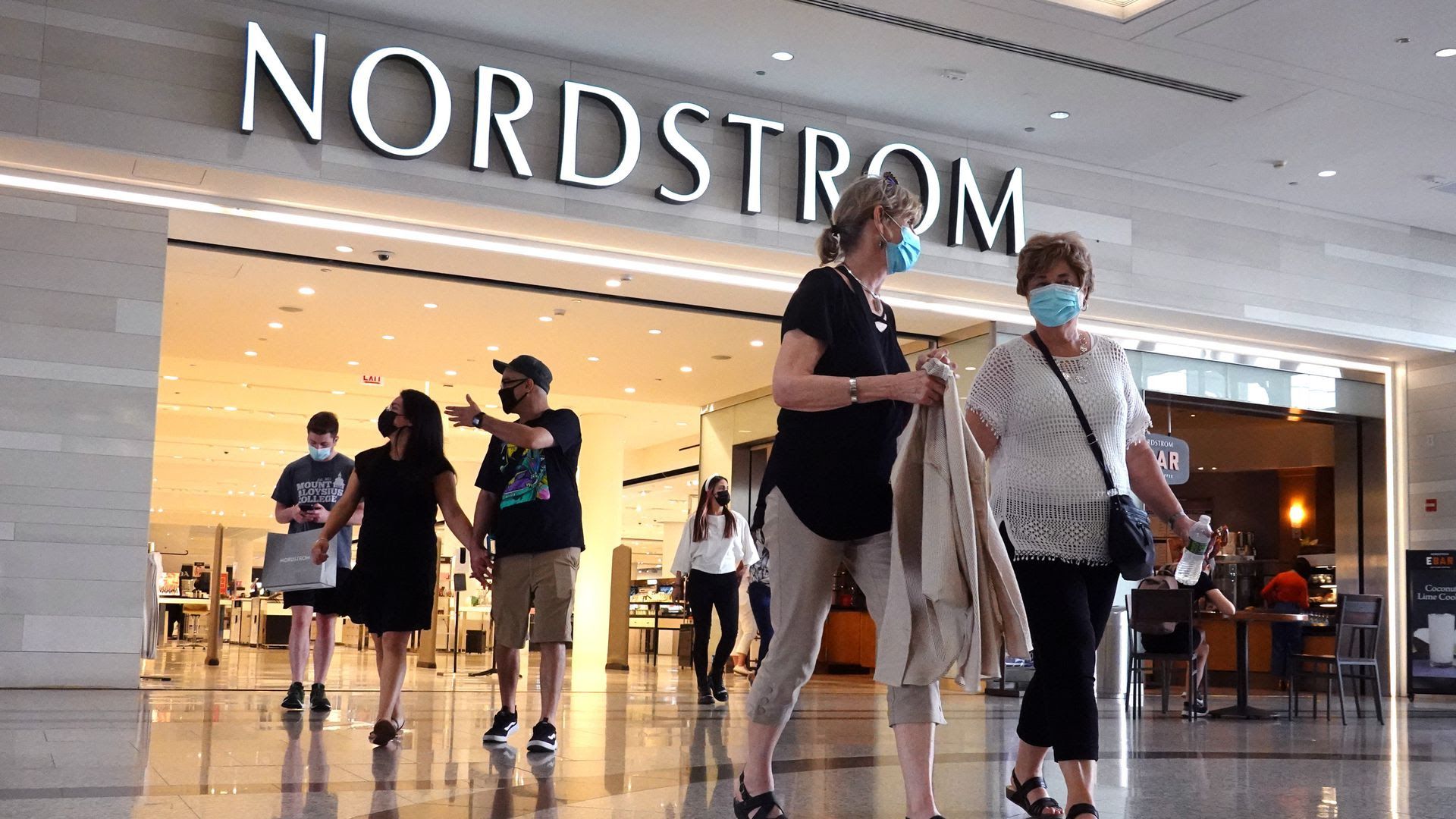
What’s new: Nordstrom said Monday it notched a deal with ASOS — the online, budget-friendly fashion house that's laser-focused on young shoppers and boasts millions of active customers.
Private equity firm Bruin Capital on Monday announced an agreement to buy sports betting information company Oddschecker from FanDuel owner Flutter Entertainment.
Why it matters: Oddschecker is the top oddsmaker in the U.K., acting as a sort of Expedia or Kayak for gambling. This deal is intended to popularize its offerings in the U.S.
Bipartisan legislators are pushing a receptive SEC to make major changes to Rule 10b5-1, which was established in 2000 to help companies create executive trading plans that wouldn't fall afoul of insider trading rules.
The backdrop: Academic research has determined that insiders often are able to limit losses via 10b5-1 plans. This is particularly true for single-trade plans, which often are adopted and executed just before quarterly earnings releases.
Chinese antitrust regulators blocked the proposed $5.3 billion merger of Huya (NYSE: NUYA) and DouYu (Nasdaq: DOYU), two game streaming companies backed by Tencent.
Why it matters: This reflects how China's crackdown on local tech giants is expanding well beyond data privacy and offshore listings. It's also a big win for Amazon's Twitch, which could have faced a viable challenge from the combined Huya/DouYu.
Blues Wireless, the latest startup from Lotus and Microsoft veteran Ray Ozzie, is announcing $22 million in Series A funding today.
Why it matters: The company, whose launch Axios first reported back in 2019, aims to build 5G modules that can easily add wireless connectivity to all manner of devices.
A new project,Ransomwhere, aims to put a dollar figure on the profit-driven attacks that have become a headache for businesses, governments and non-profits around the globe.
Why it matters: While ransomware is clearly a growing problem, there hasn't been a good way to keep tabs on how much is being paid, and to whom.
Treasury Secretary Janet Yellen is planning to meet directly with the heads of multilateral development banks (MDBs) to press for stronger steps on climate change.
Why it matters: Her announcement of the gathering shows how Treasury hopes to help steer more public and private capital toward emissions-cutting and adaptation in developing nations.
Three weeks after naming Lina Khan to FTC chair, President Joe Biden has made her pro-competition philosophy the centerpiece of a sweeping executive order.
Why it matters: Biden is promulgating Khan's vision of anticompetitive behavior across "more than a dozen" different agencies. The order does not have the force of law; instead, it has the force of narrative.
Pandemic lifestyles caused a slew of Americans to gain — or lose — weight. That resizing is helping drive retail sales up, as consumers adjust their wardrobes.
Driving the news: Levi Strauss' revenue last quarter grew 156% from a year ago, to $1.3 billion, the company reported Friday.
The demand for oil has been rising as consumers emerge from their homes, and businesses rev up to serve them. However, oil companies are dragging their feet on ramping up production, new data from Baker Hughes showed Friday.
Why it matters: When production doesn't keep up with demand, it drives prices higher. Oil companies used to respond enthusiastically to rising prices by drilling more, in an attempt to cash in.
Earnings season kicks off this week, and corporate America is expected to report a jump in profits. The results will provide important color on what's going on behind the scenes.
Why it matters: The rapid reopening of the economy has come with its complications including supply chain bottlenecks and inflationary pressures that have made operating a business anything but smooth.
Disney's latest Marvel blockbuster, "Black Widow," not only set a new pandemic-era box office record this past weekend, it also proved that same-day streaming and theater movie releases will undoubtedly live on past the pandemic.
Why it matters: Black Widow's success proves that with the right movie, streaming releases can bring in a lot of money for big movie studios.
While Apple, Google, Amazon and Facebook all started as tiny operations in garages and dorm rooms, it's hard to imagine any of them being displaced by new startups today. President Biden's sweeping new executive order targeting big business is the most ambitious effort yet to clear space for challengers to thrive — but still faces daunting odds.
Why it matters: Tech's giants are now dominant economic forces, and the Biden administration says their market concentration may be undercutting the next generation of competitors. Biden's order calls for federal agencies to take action to reduce industry concentration, but today's tech industry is built around a "big fish eat little fish" ecology that will be hard to change.
More than half of unvaccinated Americans live in households that make less than $50,000 annually, according to the latest Census Bureau data.
Why it matters: Making it easier for the working poor to get the COVID-19 vaccine, without dinging their already-low incomes, could help boost the country's vaccination rates.