Health insurers' massive pandemic windfallmay be interrupted, thanks to an uptick in people seeking the medical care they put off and higher COVID-19 testing and treatment costs.
Why it matters: It turns out that an uncontrolled pandemic gets expensive for insurers, patients, and employers.
BlockTower Capital has raised a $25 million fund focused on decentralized finance, or "DeFi," projects and assets, Axios has learned.
Why it matters: Decentralized approaches to financial use cases like exchanges, lending and prediction markets, have become more popular as tech seeks to displace traditional intermediaries.
American technologists have begun sounding alarm bells about the U.S. falling behind China on artificial intelligence, including when it comes to defense applications.
Axios Re:Cap goes deeper with Brandon Tseng, co-founder of a defense drone software startup called Shield AI, to better understand the technical, policy and ethical issues at stake.
Fans are willing to pay for more exclusive content or experiences from their favorite celebrities, with the prime example being the way in which the price of concert tickets is spiraling ever upwards. But often the live-event model falls short, for fans who don't live in major cities or when a pandemic strikes, and want something more permanent.
What's new: Some celebrities are turning to NFTs, digital tokens that can be unique or that can come in editions of thousands or more, which are reasonably permanent and come with the promise of never degrading. They can also come with perks like limited-edition vinyl or even a custom song.
Gas prices are hitting new post-pandemic highs across the country, but this isn't a story of America reopening. It's really just a function of the price of oil going up.
By the numbers: Gasoline cost $2.71 on average as of Monday, per the Energy Information Administration. The highest average price was $3.59 in Los Angeles, while the lowest was $2.33 in Houston.
All of these prices represent the highest level seen since 2019.
The big picture: The price of crude oil reflects more than half of the cost of a gallon of gasoline. (The rest is refinery costs, distribution costs, and taxes.)
Demand for oil has actually been declining, per the New York Fed, but supply has been falling even faster, with the result that prices have now topped $64 for a barrel of Brent crude.
Central bank digital currencies, or CBDCs,represent the ultimate ratification of digital finance: Its adoption by the most venerated guardians of the international monetary architecture.
Why it matters: Crypto-evangelists often talk about CBDCs in awed terms. But it's far from clear that the bitcoin-and-ethereum crowd would ultimately benefit from money going digital.
Square Inc., the mobile payments company run by Twitter CEO Jack Dorsey, said Thursday it plans to acquire a majority stake in Tidal, the subscription music streaming service run by rap star Jay-Z.
Why it matters: Dorsey says the deal will help find "new ways for artists to support their work."
Exxon on Wednesday said the company sees a $2 trillion "addressable market" in carbon capture and storage by 2040, and argues the company has strong expertise that positions it well.
The big picture: Exxon is vowing increased spending to expand its carbon capture efforts in coming years and looking into other areas, though it has eschewed the renewable power efforts of European peers.
Zencity, a company that tracks citizen sentiment on social media for local governments, announced Thursday it is acquiring civic polling firm Elucd.
Why it matters: Keeping tabs on citizen's feedback and responses to government actions has become a key job for local leaders who are dealing with multiple crises brought on by the pandemic.
Investors holding the ultra-popular Nasdaq 100 and S&P 500 index funds have been hard hit over the last two weeks as tech shares have been roiled by rising U.S. Treasury yields.
Why it matters: Even though the economy is growing and many U.S. stocks are performing well, most investors are seeing their wealth decline because major indexes no longer reflect the overall economy or even a broad swath of public companies — they reflect the performance of a few of the country's biggest companies.
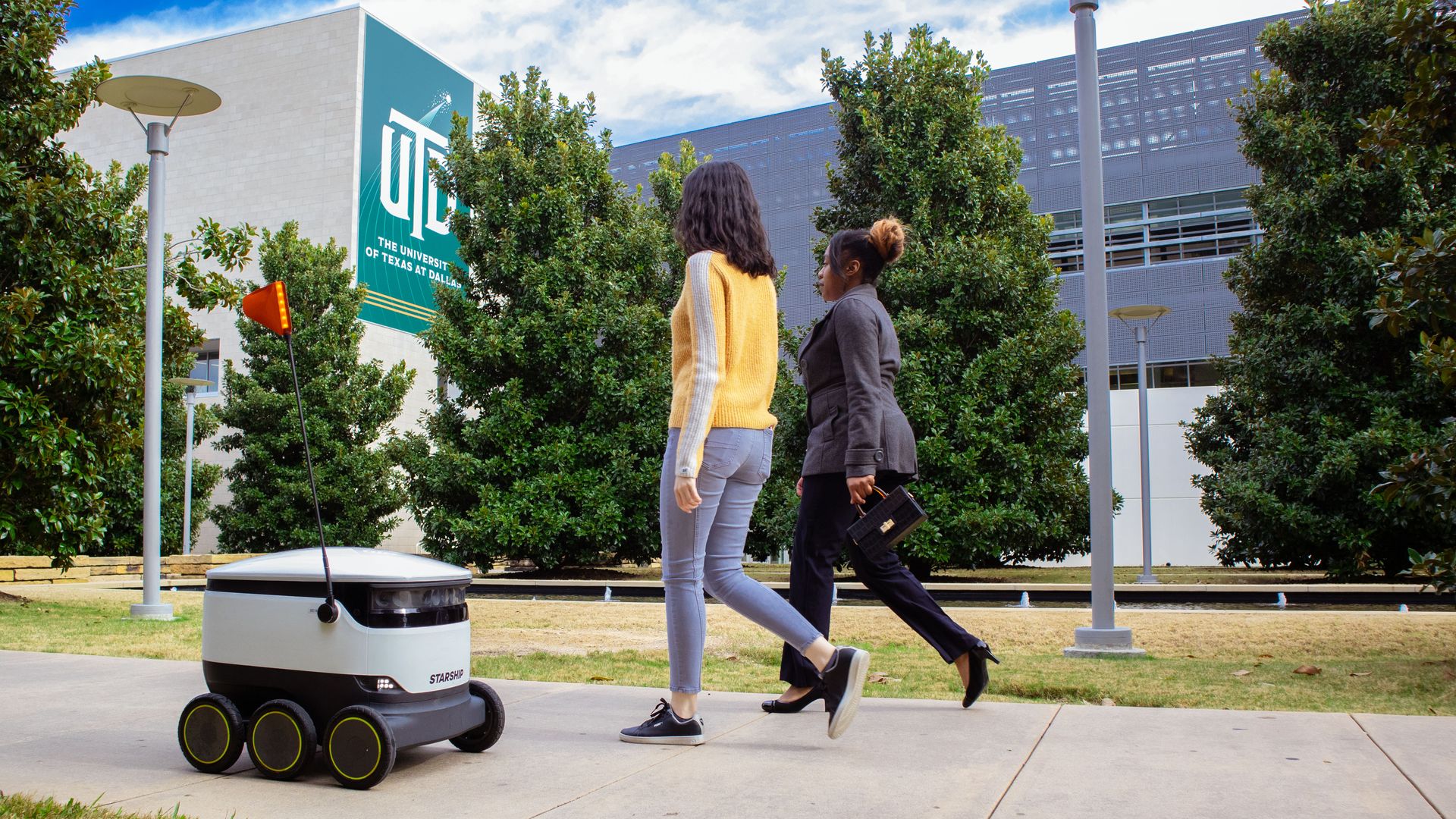
As small robots proliferate on sidewalks and city streets, so does legislation that grants them generous access rights and even classifies them, in the case of Pennsylvania, as "pedestrians."
Why it matters: Fears of a dystopian urban world where people dodge heavy, fast-moving droids are colliding with the aims of robot developers large and small — including Amazon and FedEx — to deploy delivery fleets.
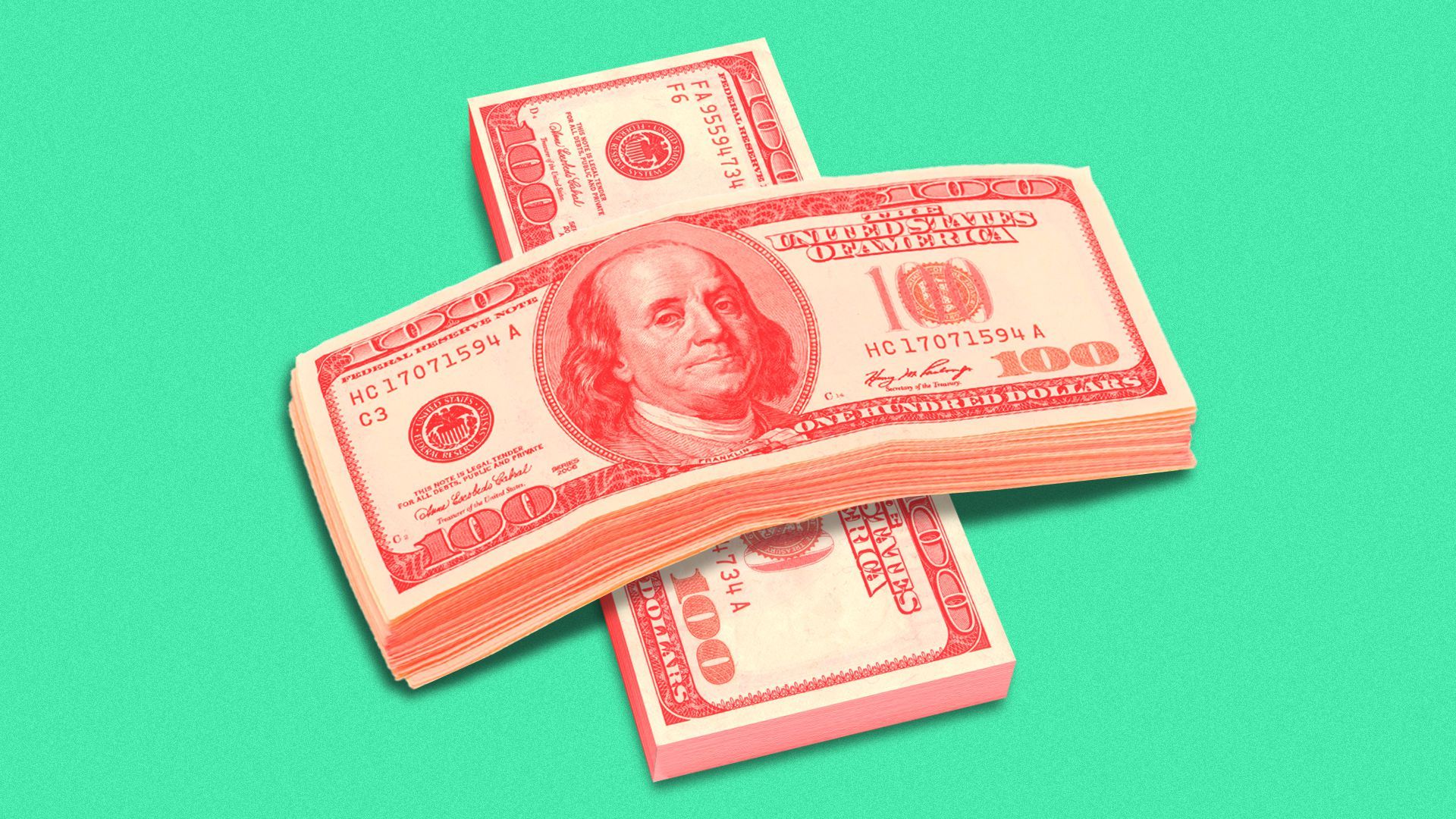
Taxing the rich is an idea that's back. An "ultra-millionaire tax" introduced by Elizabeth Warren and other left-wing Democrats this week would raise more than $3 trillion over 10 years, they say, while making the tax system as a whole more fair.
Why it matters: New taxes would be a necessary part of any Democratic plan to redistribute wealth and reduce inequality. But President Biden has more urgent priorities — and Warren's wealth tax in particular faces constitutional obstacles that make it a hard sell.
Paramount+, the new subscription service from ViacomCBS, launched Thursday, further crowding the competitive streaming battlefield. It's the last remaining service to launch from a big entertainment company for the foreseeable future.
Why it matters: Data shows that most consumers are likely to pay for at most 3-4 services per month. Not every streamer will emerge a winner.
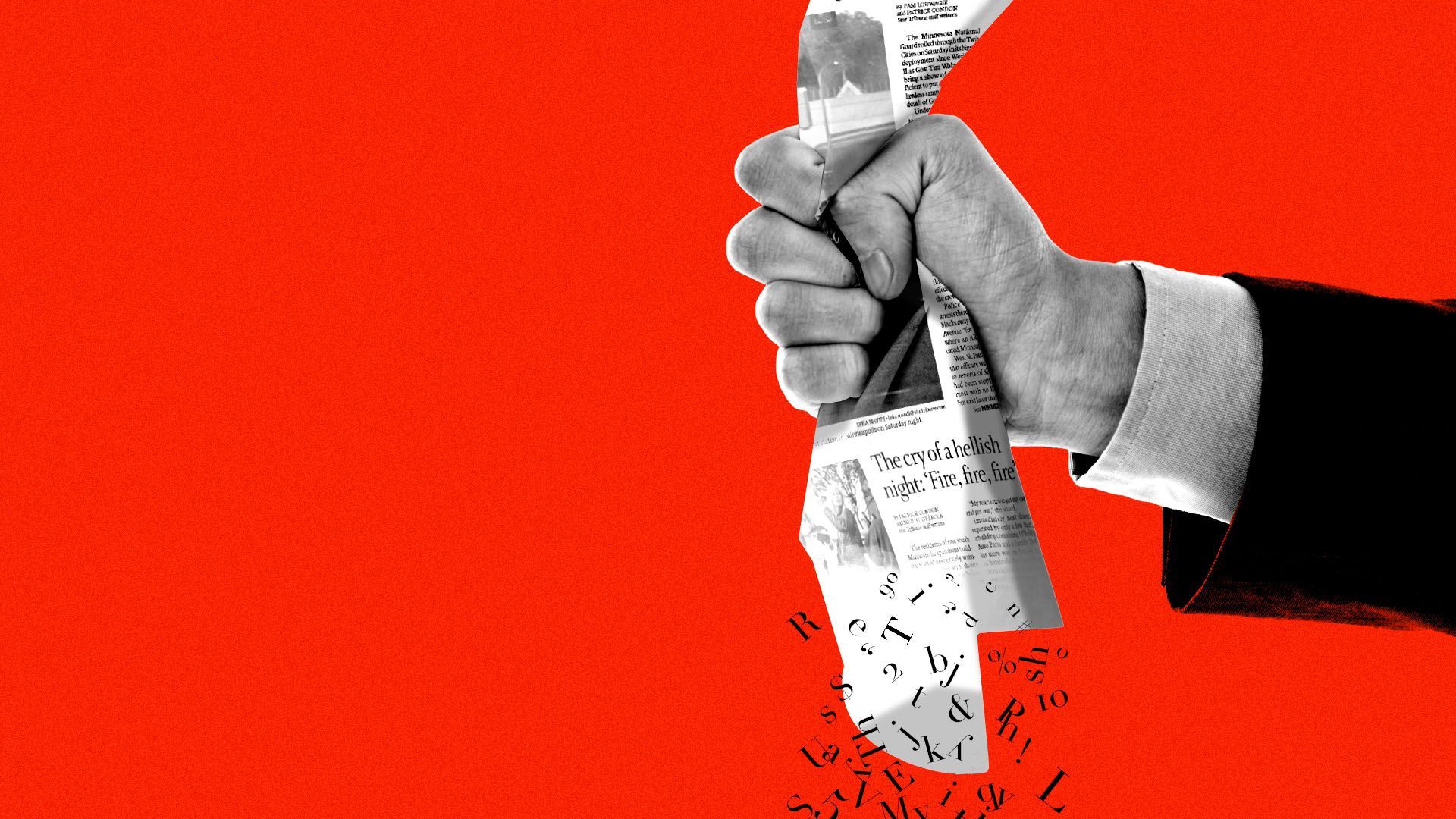
Around the world, journalists are being targeted at record levels by despots, eager to silence the press.
Why it matters: Experts worry that the United States' wavering stance on press freedoms over the past few years may have empowered autocrats looking to gain power and undermine democracy by going after journalists.



/2021/03/04/1614884313590.gif?w=3840)












/2021/03/03/1614786103610.gif?w=3840)