You've never seen a Lucid automobile, let alone driven one. Still, at the close of trade on Wednesday, Lucid Motors was valued by the stock market at $46 billion — roughly the same as Ford Motor Company.
Why it matters: In the absence of any actual product, the main driver of the electric vehicle start-up's reputation has become the stock market. Deliveries of its first car won't happen until the second half of this year at the earliest.
The catch: It's always dangerous to conflate a company with its share price. In this case, because Lucid chose to go public via a SPAC, rather than through a traditional IPO, the narrative has become even more confused.
How it works: The company taking Lucid public is a special-purpose acquisition company, or SPAC, with the unwieldy name of Churchill Capital Corp IV. For the time being, CCIV, as it's known to traders, is simply a box of money holding $2.1 billion in cash.
CCIV has agreed to swap that cash for 258 million shares in Lucid, as part of a bigger deal that also includes outside investors putting in another $2.5 billion for 167 million shares. In return, Lucid gets not only $4.6 billion in cash but also a stock-market listing.
The deal is fantastic for CCIV. It has turned its $2.1 billion into shares that, at Wednesday's close, are worth more than $7 billion.
Flashback: Shares in CCIV were bid up on the stock market in anticipation of the deal. The lower the price that CCIV managed to buy Lucid for, the more CCIV's shares would ultimately be worth.
Until Monday evening, no one knew what the merger price would be, so the value of CCIV shares was largely guesswork, even with the heroic assumption that the ultimate market value of Lucid Motors was a known quantity.
Driving the news: After the deal was announced, headlines started appearing saying things like "High-profile SPAC craters" or "Lucid Motors confirms SPAC deal: CCIV stock down 25%." Those headlines risked giving the impression that the stock market didn't welcome the deal, or that the valuation of Lucid had somehow fallen.
Reality check: The stock market loves this deal, and loves Lucid, which now carries a truly stratospheric valuation far greater than anything that CCIV was valued at pre-merger. Not that the pre-announcement CCIV share price really meant anything at all, beyond the fact that investors were very excited to get the opportunity to buy into Lucid.
The bottom line: One of the biggest problems with SPACs is that most normal stock-market investors don't yet fully understand how they work.
While going public via SPAC can make sense for companies like Lucid, it does tend to be accompanied by a fair amount of confusion and beffudlement.
After nearly a year of pandemic life, people are making plans to indulge in all the activities they have desperately missed — emboldened by encouraging vaccine news.
Why it matters: Signs of the pent-up demand expected to underscore the economic recovery are already taking shape.
Fintech startup Finix has filled up 10%, or $3 million, of its recent funding round for investors from underrepresented backgrounds via a special purpose vehicle.
Why it matters: "It's not just about ensuring that these investors are on the cap table…. It's also to help them build a track record and get attribution fo these deals," Finix co-founder and CEO Richie Serna told Axios.
Big corporations and top CEOs are putting pressure on Congress and the White House to pass economic stimulus measures, as the political debate drags on.
Axios Re:Cap goes deeper with Heather Higginbottom, a former Obama administration official and president of the JPMorgan Chase Policy Center, about why her organization just published its first-ever set of policy recommendations.
Dispo, a retro photo-sharing app co-founded by YouTube star David Dobrik, recently raised $20 million in Series A funding led by Spark Capital at a valuation of about $200 million, Axios has learned. The company declined to comment.
Why it matters: After releasing a new test version of its disposable camera-inspired app earlier this month, it quickly racked up users and buzz.
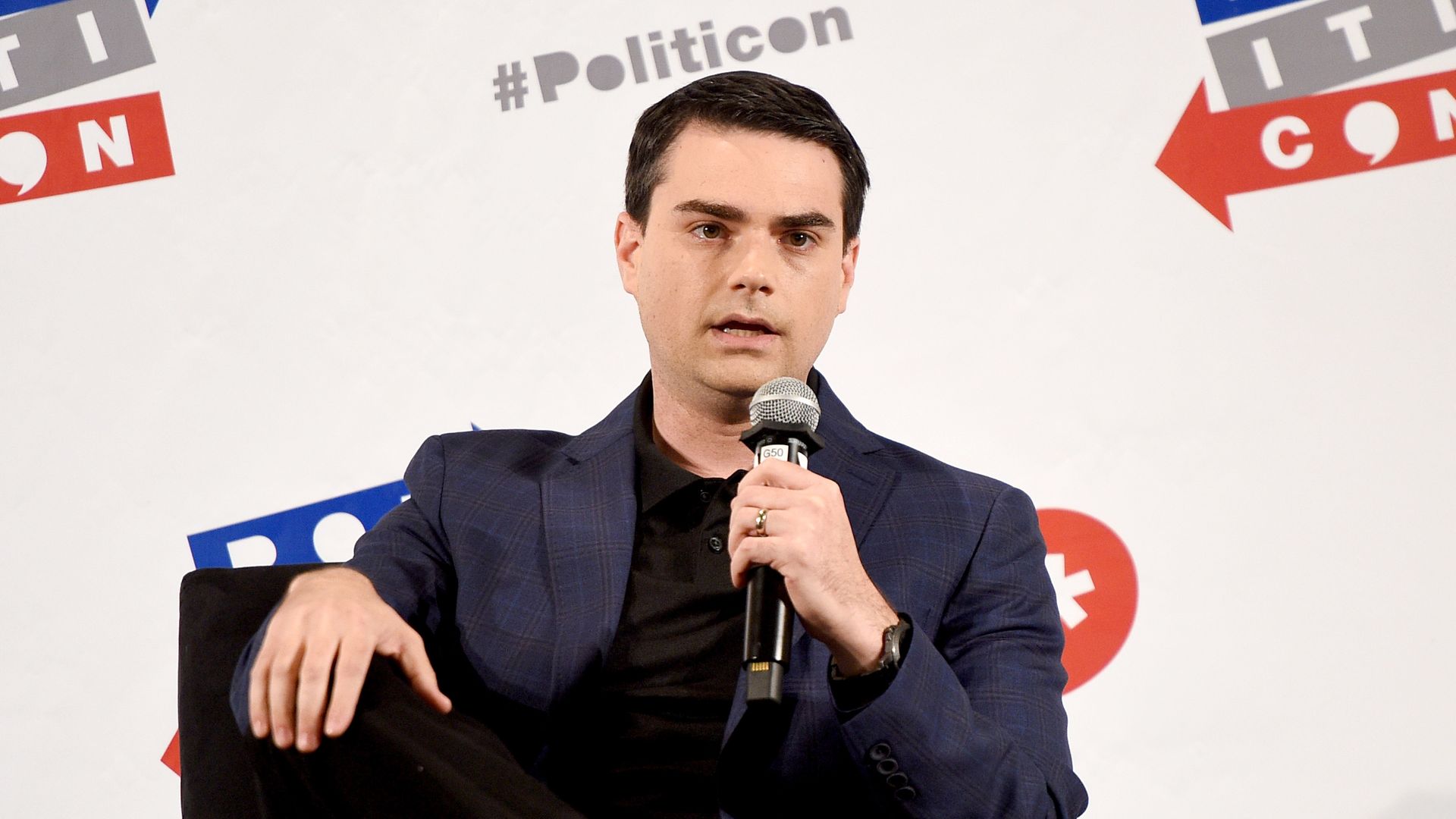
Ben Shapiro, the Daily Wire conservative commentator known best for his popular podcast "The Ben Shapiro Show," is launching a new show called "Debunked," Axios has learned.
Why it matters: Shapiro has made a brand for himself with his viral attempts to dissect left-wing arguments on his podcast. Now he'll take that format to video, where he'll air videos of left-wing figures making claims that he will confront.
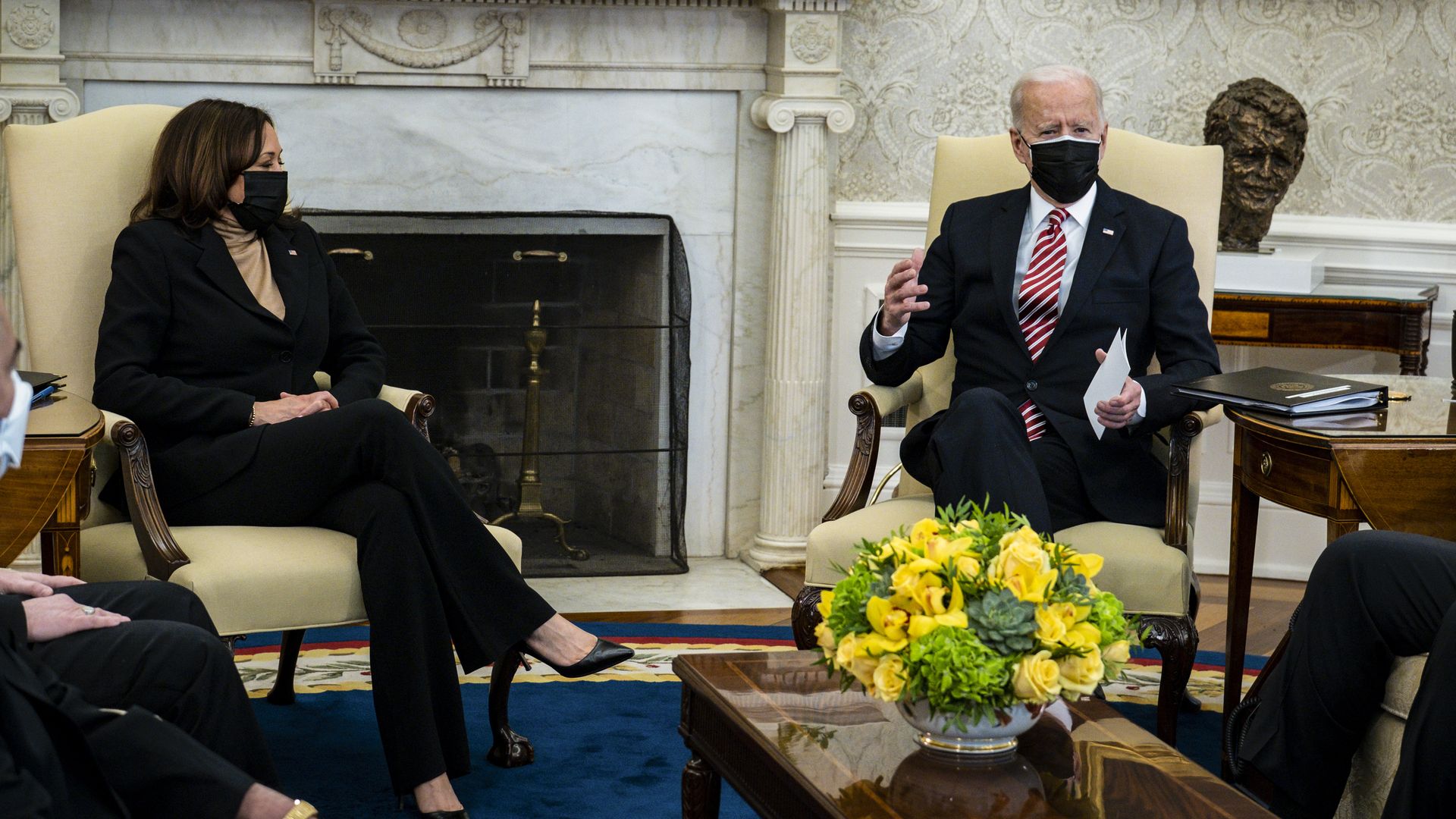
60% of Republicans surveyed in a new Morning Consult/Politico poll either strongly support or somewhat support President Biden's $1.9 trillion coronavirus relief package.
Why it matters: The poll suggests GOP lawmakers' criticisms of the plan have failed to gain traction with their voters, as the massive proposal has gained bipartisan support amid enduringly high unemployment and economic pain.
United Airlines CEO Scott Kirby believes that people will feel safe traveling again by this time next year, depending on the pace of vaccinations and the government's ongoing response to the pandemic, he said at an Axios virtual event.
Why it matters: Misery for global aviation is likely to continue and hold back a broader economic recovery if nothing changes, especially with new restrictions on international border crossings. U.S. airlines carried about 60% fewer passengers in 2020 compared with 2019.
Reid Hoffman knows he isn't the first person who comes to mind when you hear "flying taxis."
Yes, but: The LinkedIn co-founder and venture capitalist insists that his latest deal is more than SPAC silliness, and that its success will be heavily reliant on the sorts of network effects that are in his historical wheelhouse.
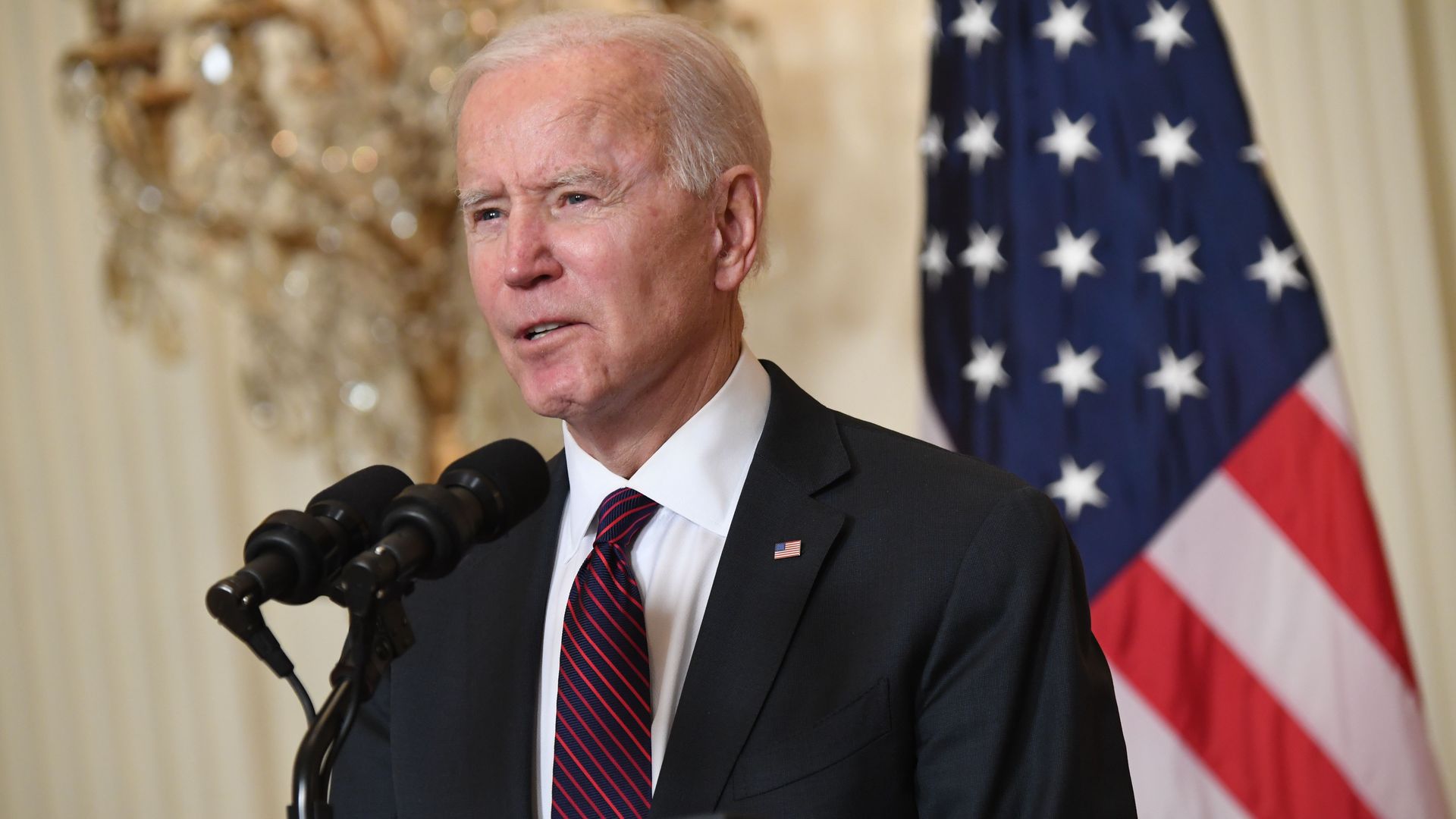
150 top executives from companies like Goldman Sachs, Google, IBM, Blackstone and United Airlines sent a letter to Congress endorsing President Biden's $1.9 trillion coronavirus relief plan.
Why it matters: Republicans in Congress have argued that the plan, which has enjoyed bipartisan support in polls, could lead to faster inflation, expand the federal deficit, and discourage Americans from looking for work by providing enhanced unemployment benefits.
TheSkimm, a digital media company catering to millennial women, plans to launch SkimmU, a set of free virtual courses designed to help women take control of their finances.
Why it matters: TheSkimm has focused much of its coverage in the last year around what it calls the “shecession,” the recession that is disproportionately impacting women amid the pandemic. The free classes are meant to address that.
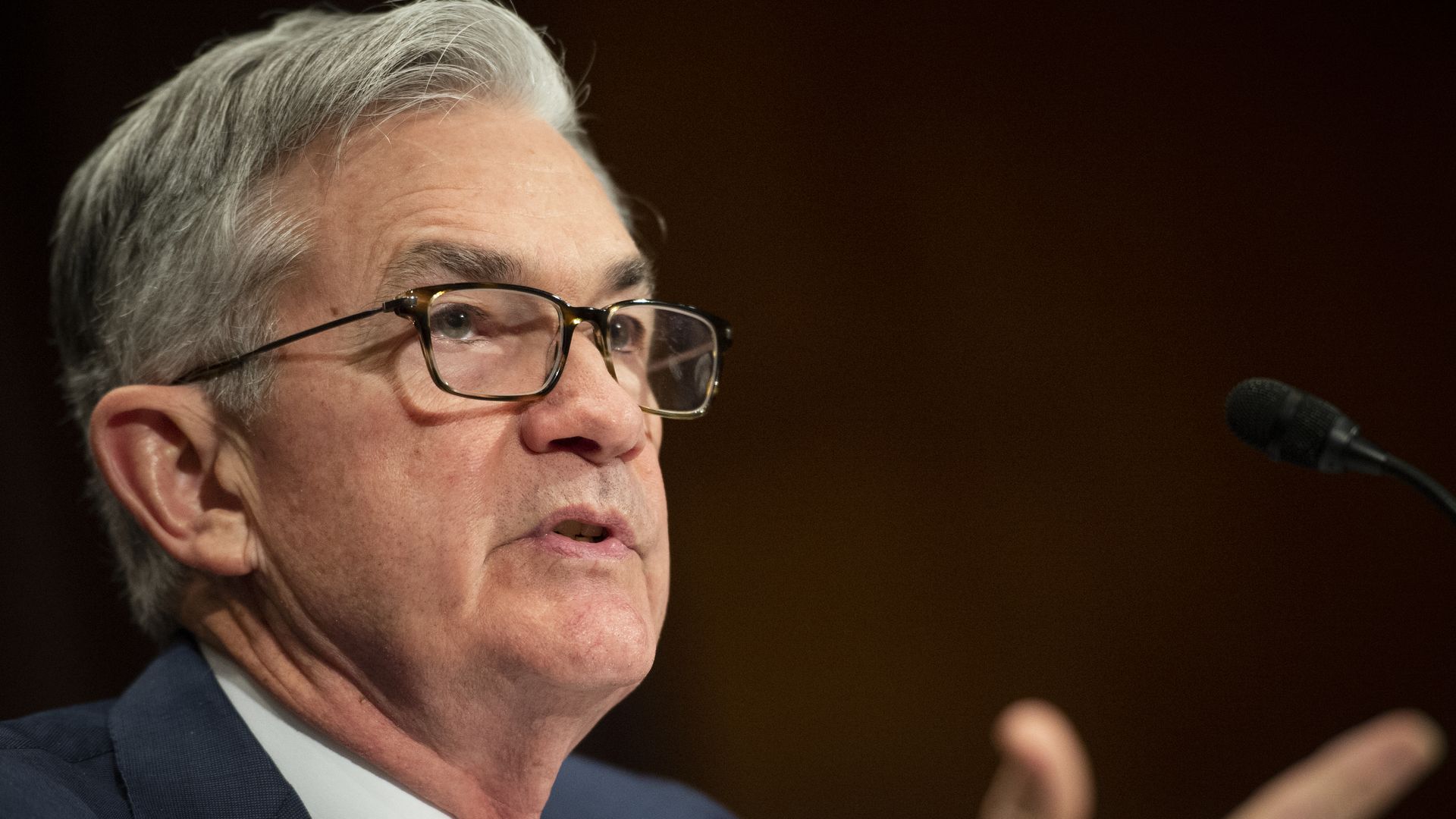
Fed chair Jerome Powell was the latest to cosign higher U.S. growth expectations on Tuesday, agreeing that he could see the U.S. economy growing in the range of 6% in 2021 and reaching its pre-pandemic level by the first half of this year.
Why it matters: Powell joins an expanding chorus of economists and investors who see the U.S. growing much faster than expected this year, reaching annual GDP growth not seen since the 1980s and about three times the average growth rate of the past 15 years.
Employee happiness is up 5.4% from December 2019 to December 2020, according to a global survey of more than 9 million people conducted by Glint, a human resources platform owned by LinkedIn.
The big picture: As the workers of the world navigate a pandemic, many are finding comfort in the familiarity of work and the companionship of colleagues.
As the pandemic drags on, child care is not getting any easier for working parents, and more and more are hitting their limits and leaving their jobs, per a new report from the think tank Third Way, provided exclusively to Axios.
The big picture: Lack of child care is now the third-most cited reason for not working, behind layoffs and furloughs. At the very beginning of the pandemic, it was No. 5.
Over the past two years, electric vehicle and emerging renewable technology stocks have soared as investors priced in the transition away from fossil fuels, but so far in 2021 that narrative has reversed.
By the numbers: XOP, an ETF that tracks the largest U.S. oil and gas companies, has gained nearly 40% so far this year as oil producers like Diamondback Energy and Occidental Petroleum have seen their shares jump by more than 50%.
TikTok said Wednesday that it removed under 1% of the videos uploaded on its platform during the latter half of last year amid the election and start of the COVID-19 vaccine rollout.
Why it matters: Most of the videos the company removed were attributed to child and adult nudity, a similar trend that occurs across most tech platforms. About 13% of the content it removed came from the U.S.
Across cities, companies and industries, Black professionals are underrepresented in the top jobs.
Why it matters: Fixing the broken pipeline for Black executives is not only the right thing to do, but improving boardroom diversity has also been proven to drive profits.
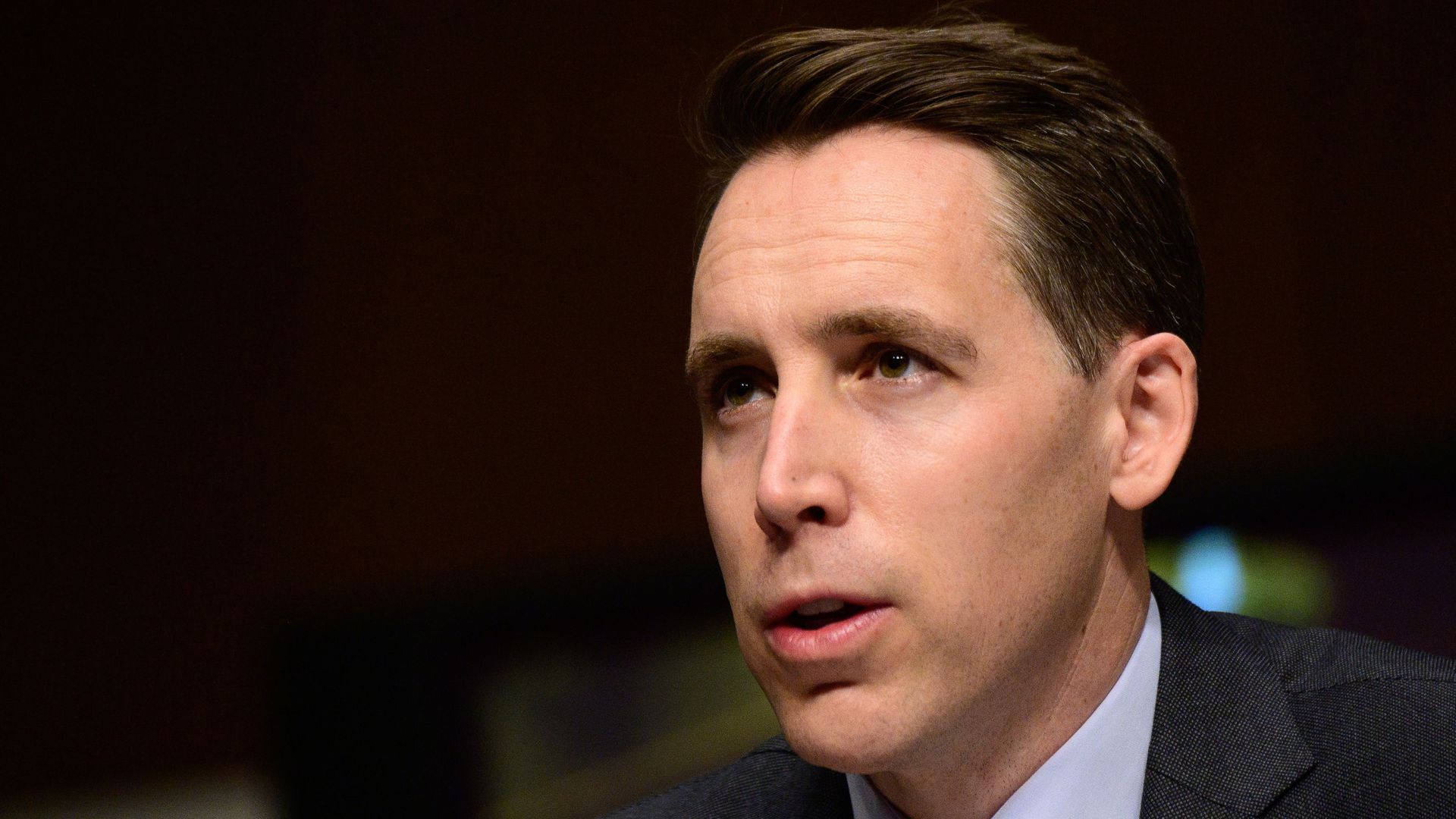
Sen. Josh Hawley (R-Mo.) is jumping on the minimum wage bandwagon and will introduce an alternative to Democrats' proposal on Wednesday that would use federal dollars to increase low-earning workers' income, Axios has learned.
Why it matters: Hawley, a Trump-style Republican who's considered a likely 2024 presidential contender, is breaking with the mainstream GOP orthodoxy in suggesting that he believes the federal minimum wage is too low.
In a new analysis, U.S. government economists have used data to project which jobs will fare well and not so well in the next several years.
Why it matters: The findings show how the pandemic has allowed some industries to thrive while decimating others, Jed Kolko, chief economist at the jobs site Indeed, writes in the New York Times.
Senate Democrats are readying to pass President Biden’s infrastructure package through the budget reconciliation process, a recognition they're unlikely to get much Republican support for a potential $2 trillion package.
Driving the news: Sen. Bernie Sanders told Axios on Tuesday he’s consulted with the White House about how to prepare for the next round of spending, and he's ready to do it immediately via reconciliation — a process he controls as chair of the Senate Budget Committee.













/2021/02/24/1614124828609.gif?w=3840)




/2021/02/24/1614125192686.gif?w=3840)