M&T Bank today became the latest to glom on to the "bigger is better" mentality swarming regional banks.
Why it matters: It adds to the parade of regional lenders — which have taken an active role in distributing PPP loans — swallowing each other in an effort to survive a more treacherous backdrop.
Net interest margin — a key way banks make money — collectively hit an all-time low for U.S. banks last year. The culprits: low interest rates and sluggish lending.
There's also growing competition from big players, like JPMorgan and Bank of America, that are bulking up in additional states and offering more digital banking options.
Details: M&T is buying People's United Financial for $7.6 billion in an all-stock deal.
The combined bank would have roughly $200 billion in assets, per the release. That catapults M&T to the fifth-largest regional bank by this measure, according to FactSet. (Previously, it was the 10th).
Yes, but: Even with the tie-up, M&T won't crack the top 10 biggest banks overall by assets.
The big picture: Today's actionfollows PNC Financial's purchase of BBVA's U.S. branches last year, which — if approved — would create the largest regional lender in the U.S.
Another: Huntington announced it would buy regional peer TCF Financial late last year, giving them combined assets of roughly $170 billion.
What they're saying: Part of the thinking is you can consolidate then grow that way, says Stephen Biggar, a banking analyst at research firm Argus Research.
What to watch: The regional tie-ups are among the first bank deals that will face regulatory scrutiny in the Biden era.
Executives expect the deal will close in the fourth quarter of 2021.
The Nasdaq’s historic diversity proposal is being called too narrow by activists who say it was a “colossal mistake” to exclude disability from the list, Axios has learned.
Why it matters: The tension highlights a key challenge in the unprecedented push to diversify corporate America's top decision-makers: There's no universal rule on what — or how many underrepresented minorities — makes a boardroom inclusive.
Brazil's marketstumbled on Monday, with state oil company Petrobras losing 19% of its value, after president Jair Bolsonaro announced he was firing the company's Chicago-educated CEO and replacing him with a former general.
Why it matters: Bolsonaro pledged to "put a finger on electricity" — to keep prices at artificially low levels, worrying investors who had previously been counting on him to have more of a laissez-faire approach to industry.
Hayley Arceneaux, a 29 year-old physician's assistant and childhood cancer survivor, today was named the second crew member for Inspiration4, which is set to be the first-ever all-civilian space flight.
Axios Re:Cap digs into the story behind the flight, Arceneaux's selection and what Inspiration4 means for the future of space tourism, with Axios Space editor Miriam Kramer.
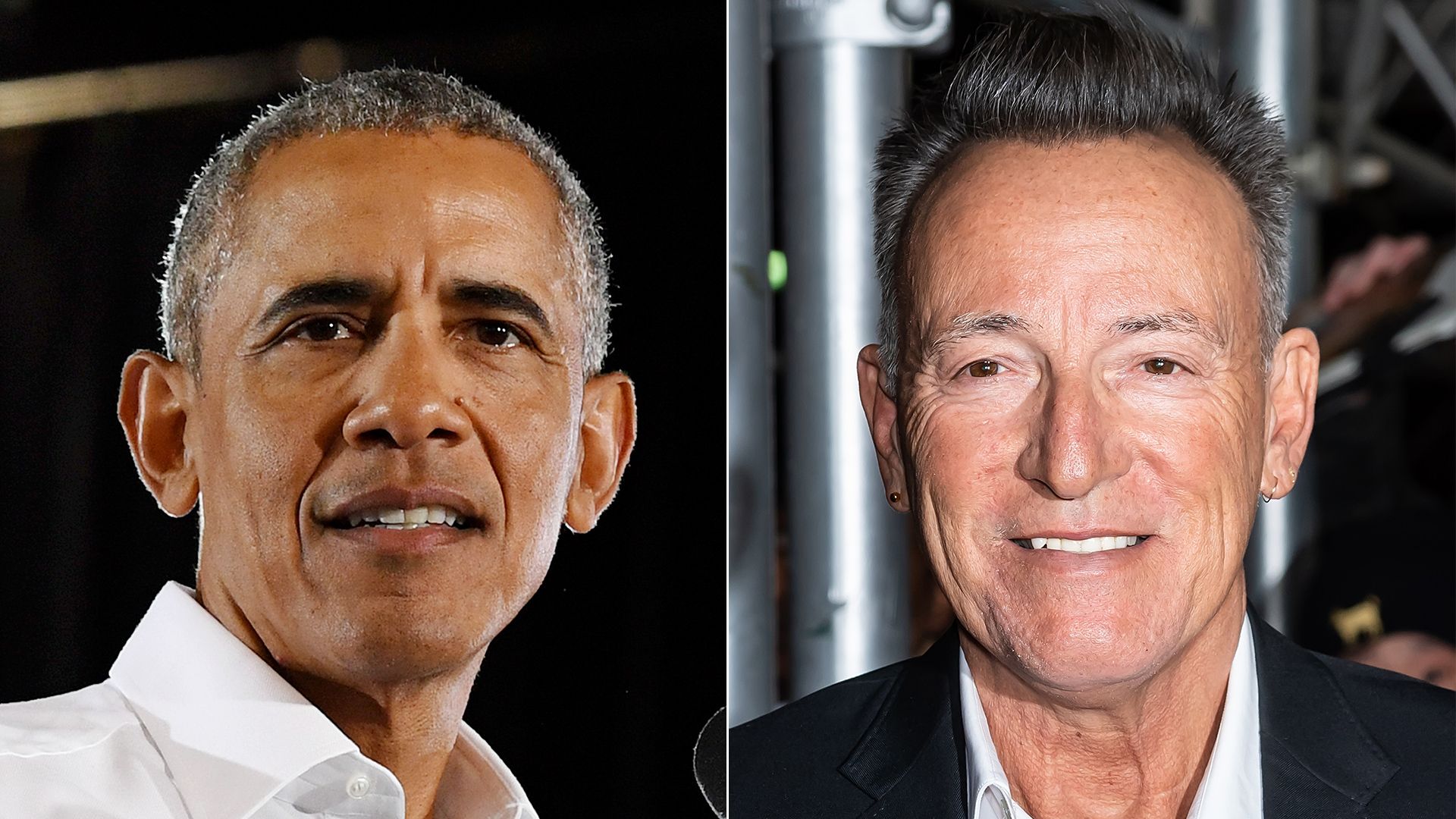
Barack and Michelle Obama’s production company, Higher Ground Productions, announced a new show with Bruce Springsteen exclusively for Spotify called "Renegades: Born in the USA."
Spotify on Monday announced a slew of new tools to help podcast creators on its platform develop more interactive shows.
Why it matters: Spotify believes podcasts will help drive long-term user attention and growth for the company, which today is still primarily used to stream music.
NextCar, a startup for car leases and subscriptions formed by TrueCar and Fair founder Scott Painter, has raised about $30 million in seed funding from investors like Reid Hoffmann and Mark Pincus, per an internal email obtained by Axios. The round was led by a private equity firm, according to a source.
Backstory: Shortly before Painter announced his new company in October, Reuters reported that he was exploring ways to buy Fair back from SoftBank Vision Fund and other backers. He resigned as CEO in October 2019.
Editor's note: The story has been updated to clarify that the company provides lease and subscriptions (not rentals).
Google informed its advertising partners Monday that its platforms will resume accepting all political ads starting Wednesday, after banning them following last month's insurrection at the U.S. Capitol, according to an email obtained by Axios.
Why it matters: Google and rival Facebook have been instituting political ad bans on and off over the past few months to slow the spread of misinformation and curb confusion around sensitive events, like the Capitol attack and the election.
Xos Inc.,an electric truck company that counts UPS among its customers, said this morning that it's going public at a $2 billion valuation via a reverse merger with NextGen Acquisition Corp.
Why it matters: The California-based Xos' deal is the latest in a wave of electric vehicle companies going public via mergers with special purpose acquisition companies, signaling heavy investor interest in the sector.
Pocket Outdoor Media, the 4-year-old media company that's home to 22 active lifestyle publications and several technology groups, announced a Series B funding round led by Sequoia Heritage to fuel acquisitions.
Driving the news: The company is also announcing the purchase of five outdoor sports media and tech companies and is changing its name to reflect the branding of one of those companies, "Outside."
The consultancy Rystad Energy sees lots of job growth coming in the offshore wind power sector this decade.
The big picture: They see global installed offshore wind capacity reaching 110 gigawatts by 2025 and 250 GW by 2030, and "this prolific growth will require a lot of skilled employees."
U.S. real yields are rising, meaning the cost of borrowing money is again turning positive — at least for longer maturities.
Why it matters: Borrowing money has essentially been free for quite some time, benefiting big companies (and governments) by allowing them to accumulate huge sums of debt that have little real cost.
Many small businesses have applied for and received funds from the latest iteration of the government's Paycheck Protection Program, but most say they will need more help, a new survey from Goldman Sachs provided first to Axios shows.
What's happening: Only 11% of firms that received a PPP loan say they are very confident they will be able to maintain payroll if no further government relief is provided and 67% of loan recipients expect to exhaust their second loan funding in April or May.
Expectations for U.S. growth in the first quarter, for the year and even for 2022 are roaring higher as economists race to price in the impact of big government spending, vaccinations and higher inflation.
Why it matters: These bullish expectations are unusual — not only are they historically high, even given the large contraction the country suffered in 2020, but also because they seem to completely disregard any fears of the weak U.S. labor market or rising prices to get in the way.
The Biden administration will temporarily prevent big businesses from applying for loans through the Paycheck Protection Program, restricting applications to businesses with fewer than 20 employees, according to administration officials.
Why it matters: The White House wants to target small businesses and ensure that they are not shut out of the application process, as some were during the first round of the program last spring.
The Federal Aviation Administration (FAA) said Sunday there must be "stepped up" inspections of Boeing 777 aircraft that contain the same engine model that failed on a United Airlines flight over Denver this weekend.
Why it matters: United, Japan's two main airlines and Korean Air have grounded Boeing 777s with the same Pratt & Whitney PW4000 engines as the jet involved in the Denver incident.






/2021/02/22/1614002669106.gif?w=3840)