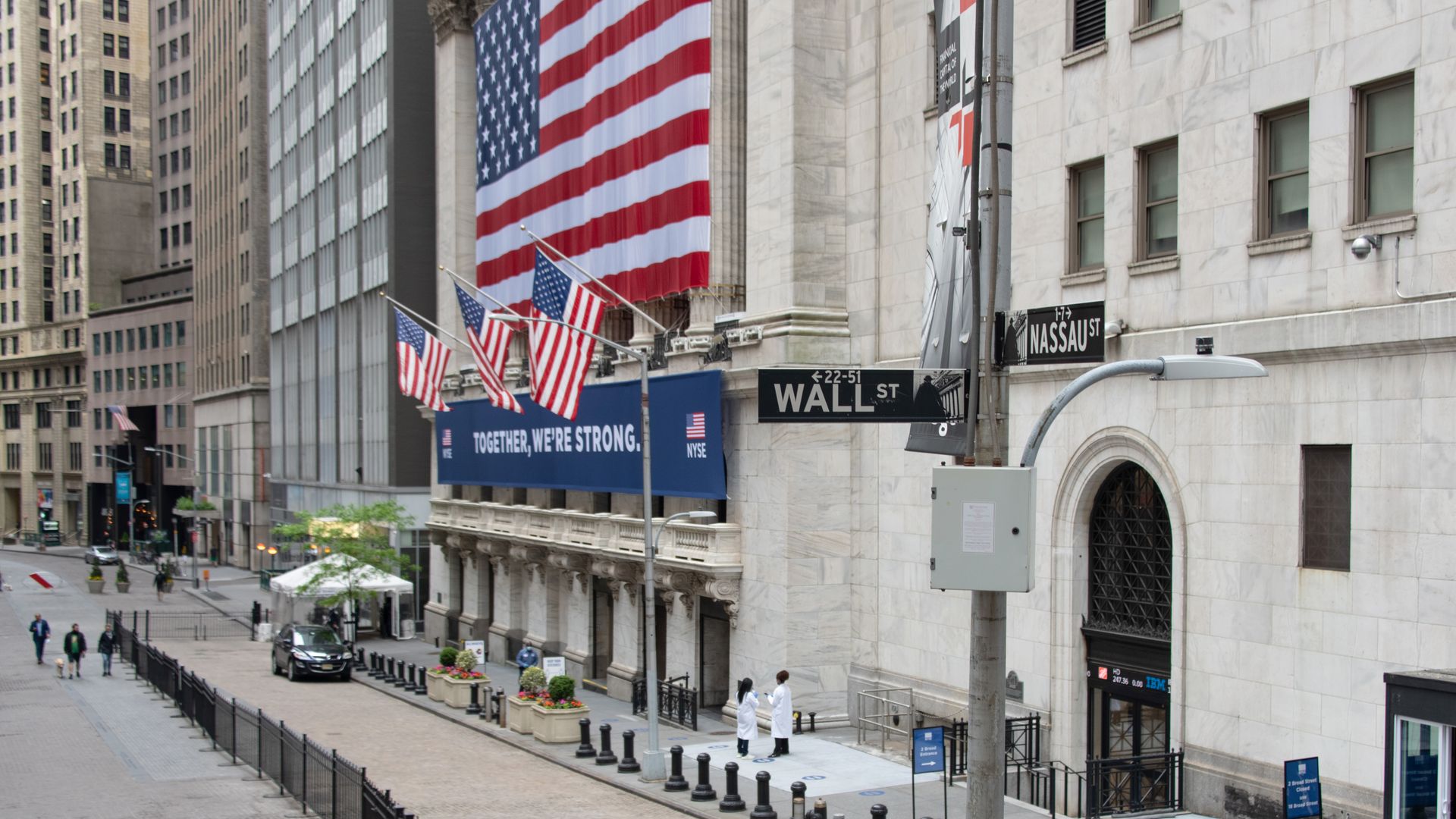
The S&P 500 closed 5.9% lower on Thursday — the worst decline for the index since March — while the Dow Jones Industrial Average fell 6.9% (over 1,800 points), and the Nasdaq dropped 5.3%.
Why it matters: It's a pause in an epic Wall Street rally that has seen stocks recover about 40% since the worst of the coronavirus sell-off in March — despite the economy's slide into possibly one of the deepest recessions of all time.
There's one big non-political reason why luxury stores were targeted by looters: Their wares can now be sold for top dollar, thanks to the rise of what is often known as the "circular economy."
Why it matters: The illegal act of looting is not new. What is new is that stores like Chanel and Louis Vuitton are getting looted, rather than a QuikTrip gas station or a grocery store in East Flatbush. Instead of stealing goods they need to live, looters are increasingly stealing the goods they can most easily sell online.
If stock trading is the new sports betting, then the best kind of stock to gamble with is a stock that's guaranteed to end up being wiped out entirely.
The big picture: Bankrupt companies like Hertz, Whiting Petroleum and JC Penney are great gambling vehicles for low-information bettors. Much like bitcoin, they have no intrinsic value; their share price is therefore simply a reflection of short-term flows and manias.
The coronavirus pandemic had already prompted an increase in charitable donations before the current national reckoning over systemic racism kicked that number up even further.
By the numbers: An FT analysis has found more than $450 million in corporate pledges made to groups focused on social and racial justice — and that's before the increase in disbursements from the Ford Foundation, the MacArthur Foundation and others.
Grocery delivery company Instacart announced Thursday that it raised $225 million in new venture capital funding at a $13.7 billion valuation.
Why it matters: Instacart was often an afterthought for those following the gig economy, until the coronavirus pandemic made it a lifeline for many Americans who were unable or unwilling to shop for groceries. It's now valued higher than competitors like Postmates, Grubhub, Lyft and DoorDash.
Country music band Lady Antebellum announced Thursday that it had changed its name to Lady A, because of the connection of the word "antebellum" to slavery.
Why it matters: It shows that even the entertainment world — alongside localities, militarybranches and even NASCAR — can be impacted by the cultural push to remove or ban Confederate-era symbols and nomenclature amid racial unrest over the police killing of George Floyd
"Addressing pay and equity is completely within our control as companies," Accenture CEO Julie Sweet said Thursday during an Axios event, adding that CEOs need to do more to promote people of color to management positions.
Why it matters: Though African Americans account for around 12% of the U.S. population, they only held 3.2% of the senior leadership roles at large companies in the country in 2019, CBS reports.
The sudden economic shock from coronavirus stay-at-home orders caused a stunning drop in local commerce in cities across the country, with San Francisco seeing the heaviest decline, followed by Chicago, New York and Detroit.
How it works: TheJP Morgan Chase Institute analyzed a subset of credit card transactions typical of everyday goods and services bought and sold at the local level to create a "local commerce" economic view.
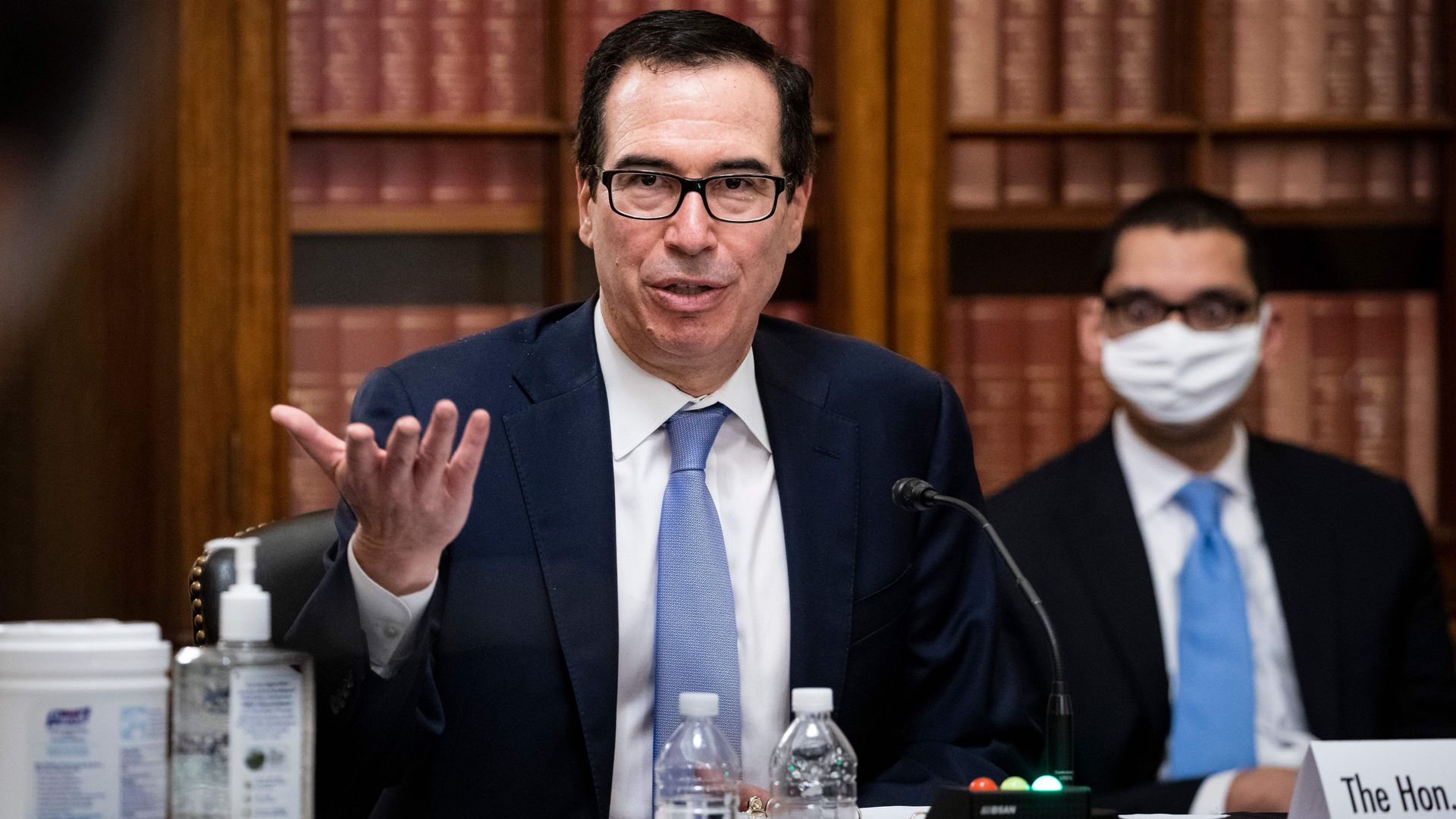
Treasury Secretary Steve Mnuchin told CNBC Thursday that shutting down the economy again to stop the spread of the coronavirus is not an option.
Why it matters: The comment came as stocks opened much lower Thursday amid fears that infections are spiking again in states that have reopened. Mnuchin said the country "learned a lot” from the first shutdown, which he said caused significant damage even if it helped slow the spread of the virus.
Regeneron Pharmaceuticals is testing a new coronavirus antibody drug in humans as part of a federally funded, wide-ranging, placebo-controlled clinical trial.
Why it matters: The drug candidate is going to be tested as a way to both treat and prevent the infection.
Another 1.5 million Americans filed jobless claims last week, according to data released by the Labor Department on Thursday.
Why it matters: Unemployment applications have tapered off from their peak at the start of the coronavirus pandemic, but remain at historically high rates even as states take steps to reopen and businesses start to bring workers back.
From local governments to sports leagues, a host of institutions have started taking real action to address systemic inequality in the wake of nationwide protests over police brutality and racism — and the Federal Reserve may not be immune.
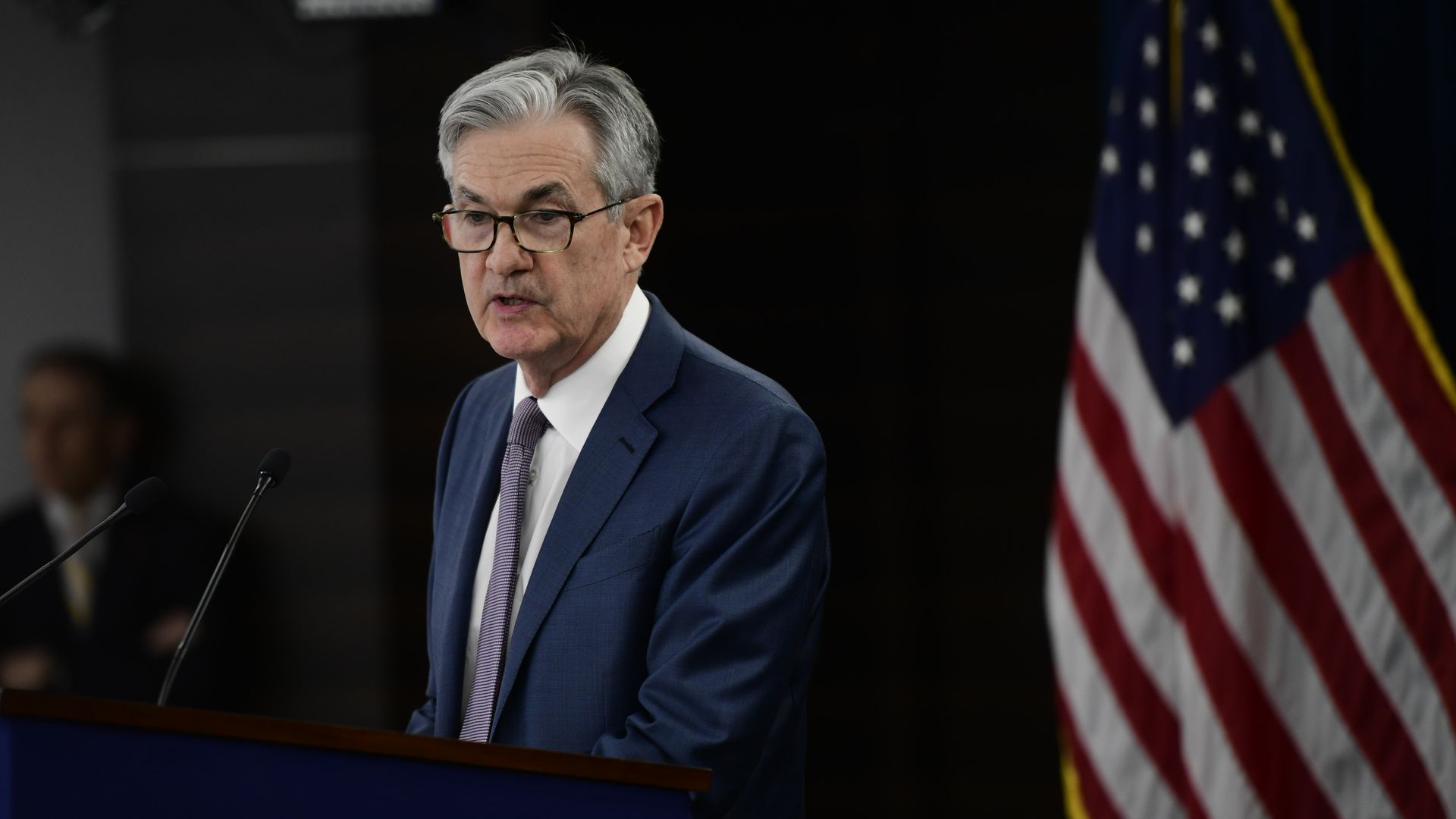
Driving the news: Chair Jerome Powell chafed at a question during the Fed's latest policy meeting about the way the central bank's policies have contributed to wealth inequality — a longtime grievance of politicians and market watchers, but a subject rarely broached at Fed press conferences.
The U.S. consumer price index fell for the third straight month in May with a gauge of the index that removes volatile food and energy prices also negative for a third month in a row.
Why it matters: The reports fan worries that the coronavirus pandemic could spark deflation, further eroding U.S. growth.
Why it matters: Sales were up 66.7% compared to last year for the four-week period ending March 28 — and still up 32.8% in May. One company had to import more tofu from South Korea to meet demand.
Facebook has been hiring seasoned tech investors to help lead a new "multimillion dollar" investment fund within its experimental apps team, Axios has learned.
Why it matters: Starting a formal investing program aimed at startups could bolster the company's ability to spot the next big social app before it becomes big. That visibility is all the more important given that antitrust scrutiny has likely closed the door on large acquisitions by Facebook for the near future.
A coalition of state attorneys general has sued more than two dozen generic drug companies and high-ranking executives, accusing them of conspiring to fix prices of their prescription pills and creams. Health insurer Cigna similarly filed a lawsuit of its own, arguing the price-fixing schemes led to massive "overcharges."
The big picture: These lawsuits build on previous ones, as well as three criminal admissions of guilt, and paint a bleak picture of the industry's practices.