Walmart announced on Wednesday it will now require consumers to be at least 21 to buy tobacco and vaping products after the Food and Drug Administration put the supermarket on notice for selling tobacco products to underage consumers, reports AP.
The big picture: Other retailers have been either removing tobacco products from their shelves or raising the minimum purchase age requirement. Walgreens also received a warning from the FDA and announced it will be raising the minimum age to 21, reports CNBC. In April, Rite-Aid said it would start phasing out the sale of e-cigarettes and vaping products.
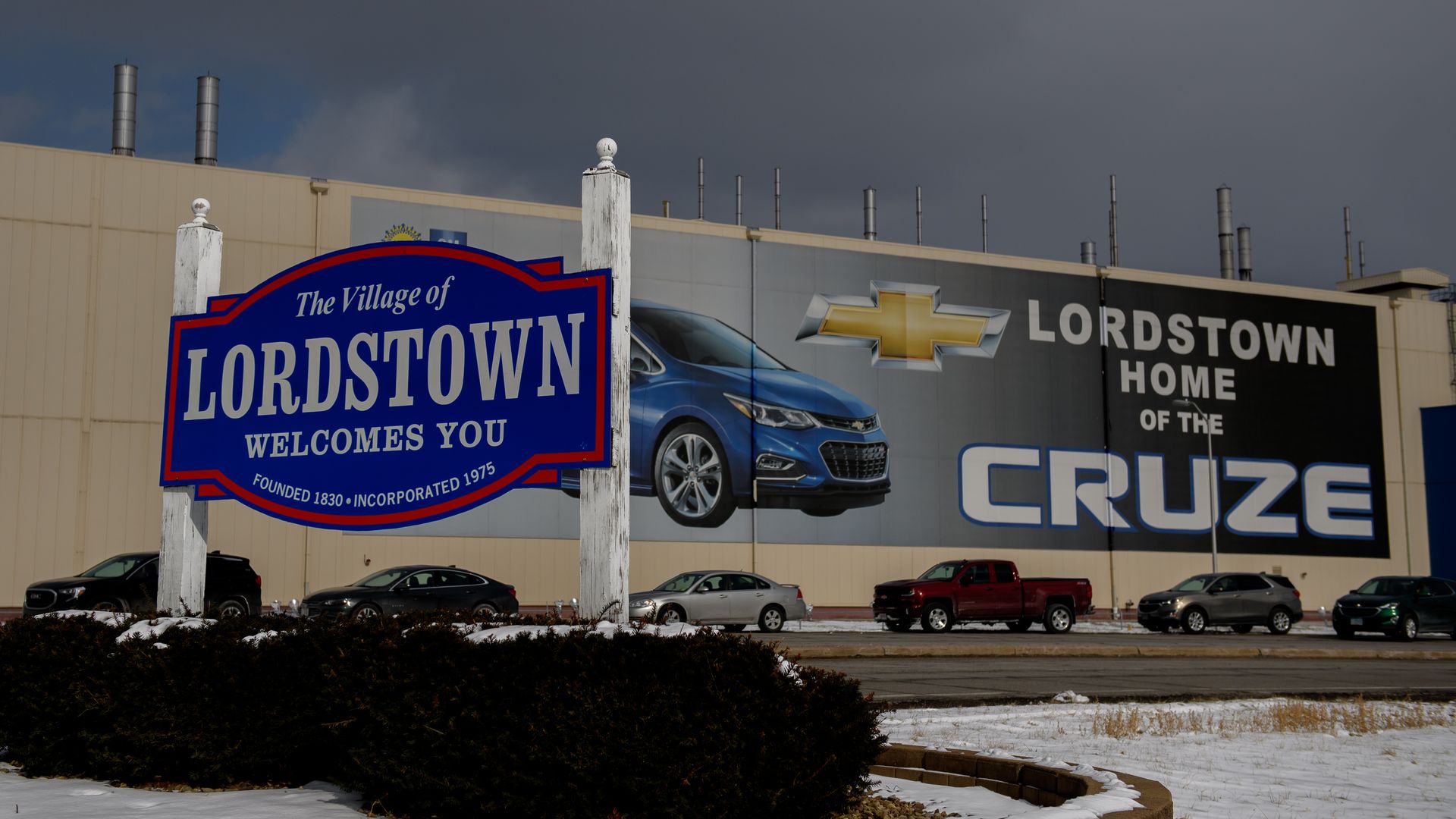
General Motors confirmed Wednesday that it is in discussions to sell its Lordstown, Ohio, plant to electric vehicle maker Workhorse and a newly-formed corporate entity, confirming an earlier pair of tweets by President Trump.
The big picture: The Lordstown plant's planned closure by GM is a key 2020 issue for Trump, who wants to shore up his place with blue-collar voters in a key swing state. But while the news might seem good for the plant's workers on its face, Workhorse is no GM — it has a market cap of just $55 million and 98 full-time employees, compared to the 1,600 workers who were employed by GM at Lordstown.
Despite Tuesday's stock market rout and strong buying of safe-haven U.S. government bonds all year, a $38 billion auction of 3-year Treasury notes drew lackluster demand. Traders told Axios they aren't sure why.
The big picture: The U.S. Treasury Department auctioned the notes at the lowest yield for 3-year maturities since January 2018, Treasury data showed. The ratio of bids to the amount of notes sold was the lowest since January and indirect bidders took the lowest percentage of the total in more than 4 years, both signs of weak demand.
Australia hasn't had a recession in 27 years, but economists, market analysts and everyday Australians are starting to worry that things are taking a turn for the worse.
Driving the news: The Reserve Bank of Australia on Tuesday decided not to cut interest rates, which are already at the lowest level in the country's history, holding steady for the 30th meeting in a row. But many expect that it's only a matter of time.
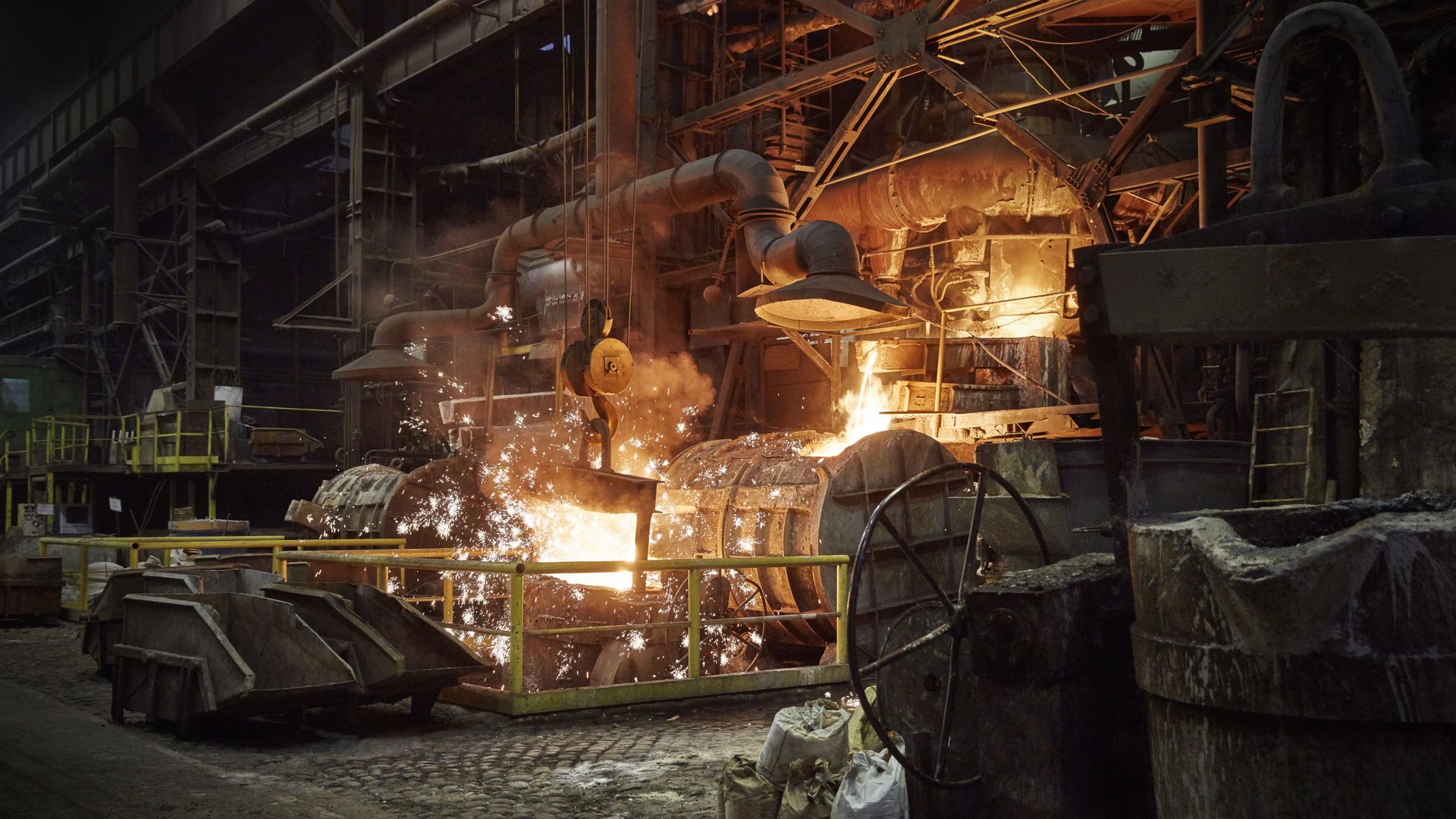
President Trump's steel tariffs are costing American consumers $900,000 for every job the tariffs have created or saved, the Washington Post reports, citing experts at the Peterson Institute for International Economics.
By the numbers: U.S. companies have been paying roughly 10% more for steel since Trump's tariffs went into effect nearly a year ago, amounting to about $11.5 billion per year, according to the Peterson Institute for International Economics. The Alliance for American Manufacturing claims that more than 12,700 jobs have been created or saved because of Trump's tariffs, which is how the experts came to the $900,000 per job figure. Peterson senior fellow Gary Hufbauer says that the number is so high because steel is "a very capital intensive industry" that doesn't employ many workers.
Trump country is winning again, "at least for now," according to a new Brookings Institution report that shows counties that voted for Donald Trump are adding jobs at a faster rate than Clinton counties.
Adapted from a Brookings analysis of Bureau of Labor Statistics data; Chart: Axios Visuals
The Dow Jones Industrial Average closed down 472 points on Tuesday, while the S&P 500 fell 1.6% and the Nasdaq dropped 1.9%. The tech and industrial sectors saw the biggest losses.
Source: Factset.
The big picture: The drop comes two days after President Trump threatened to escalate the trade war and one day after the administration confirmed higher tariffs on Chinese imports would take effect later this week. The S&P 500 is 2% below the all-time closing high seen last week. It's 1.8% higher than where it was when the trade war began in early 2018.
The issue driving income inequality in the U.S. has not been a lack of productivity by American workers, a February report from the Economic Policy Institute finds. Instead it is that the lion's share of gains from increased productivity have gone to a tiny segment of wage earners at the top.
The big picture: After tracking closely in the three decades following World War II, from 1979 to 2017 productivity grew 70.3%, while hourly compensation of production and nonsupervisory workers grew just 11.1%. That means productivity grew six times faster than typical worker pay.
Affiliate link marketing could soon go from a friendly and useful revenue tool for publishers to one exploited by Google and Amazon for their own ambitions.
Why it matters: Affiliate links have become increasingly important for some publishers as advertising has become a less reliable revenue model.
One big takeaway from NewFront presentations this year is that publishers are getting behind the "shoppable ads" trend that many tech platforms have been focusing on for the past two years.
What's new: NBCUniversal became the first national broadcaster to roll out "shoppable" TV ads on Monday, per AdWeek.
Despite the continued growth of subscription video services like Netflix and Hulu, free ad-supported video services are making fresh headlines.
Why it matters: Free, ad-supported video gives companies the ad inventory to sell digital TV ads, which are seen as a lucrative opportunity for whichever publisher can really master the technology.
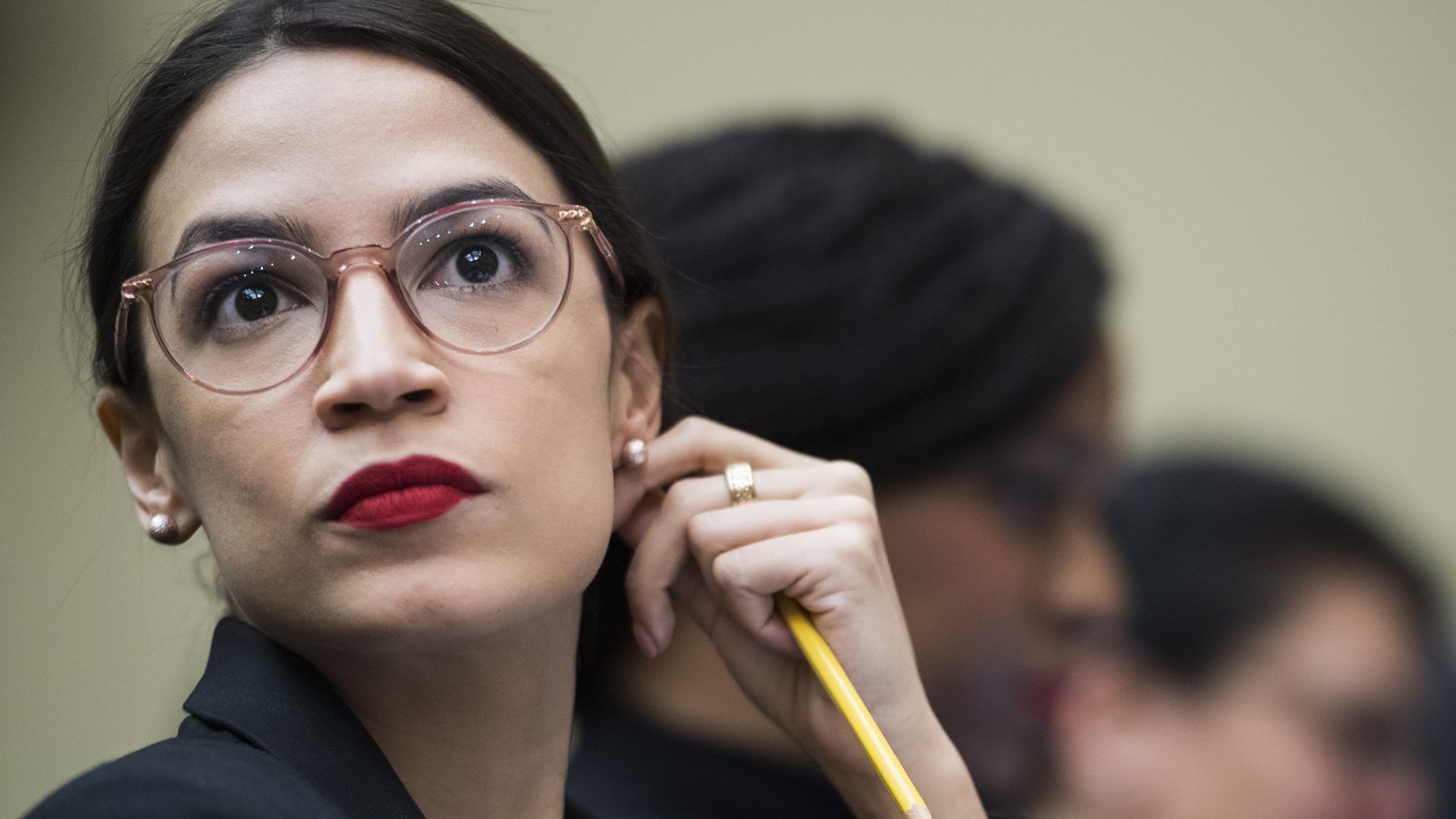
Rep. Alexandria Ocasio-Cortez (D-N.Y.) is in talks with documentary filmmaker Rachel Lears about a new project that would chronicle the freshman Democrat's Green New Deal policy movement, according to two sources familiar with the project.
Between the lines: Lears is same filmmaker behind the new Netflix documentary called "Knock Down the House," which chronicles the campaigns of four women running in the 2018 midterms, including Ocasio-Cortez.
Chinese stocks were crushed last year after the Trump administration announced it would begin putting tariffs on essentially all Chinese imports to the U.S.
The backdrop: History looked poised to repeat itself on Monday, after Trump called off the ceasefire, threatening to raise tariffs on Chinese goods to 25%. China's onshore stock exchange sank 7.4%, the biggest fall since January 2016 (the 4th largest decline this decade, 10th largest this century and 23rd largest in the history of the exchange, according to FactSet).
For the first time ever, the U.S. has more physicians who work as employees of a hospital system or a practice owned by other physicians (47.4%) than those who run their own practice (45.9%), according to new survey data from the American Medical Association.
The big picture: Doctors have gradually shifted away from owning a practice — 75.8% were independent in 1983, and that number has been falling ever since.
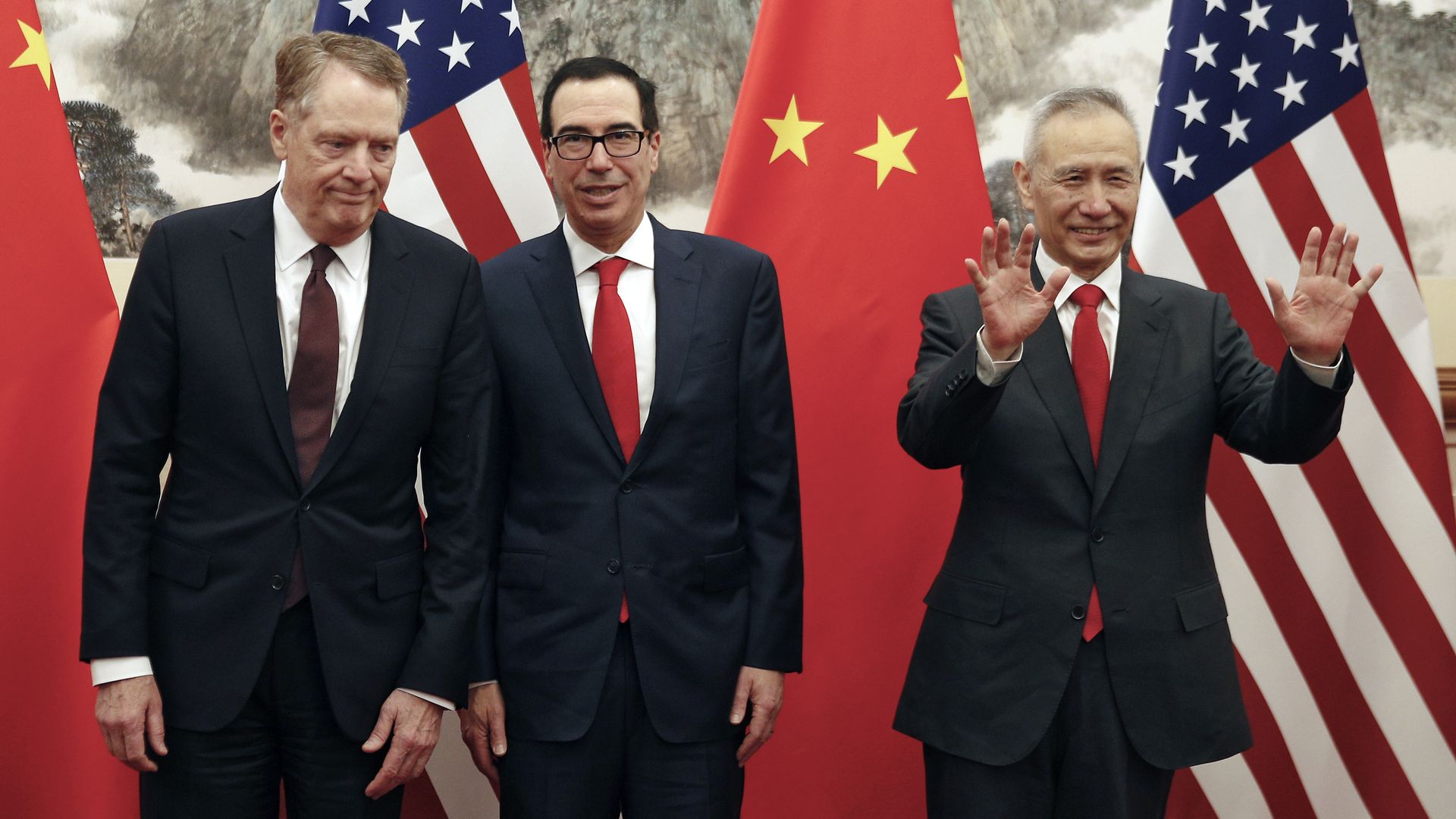
China said Tuesday its economy czar, Vice Premier Liu He, is preparing to go to Washington, D.C., this week for crunch trade talks, as tensions between the 2 countries escalates and the U.S. tariffs deadline looms.
Why it matters: President Trump has threatened to increase tariffs on $200 billion of Chinese goods from 10% to 25%. His administration has accused China of "reneging" on its trade commitments, per Axios' Jonathan Swan — who noted U.S. trade representative Robert Lighthizer planned to put out a Federal Register notice Tuesday saying the tariffs increase would come into effect "the first minute of Friday.
When it comes to traffic referrals for media companies, certain topics and behaviors take off on some platforms but fall flat on others. Politics, for example, is the No. 1 show in town on Facebook, Twitter and Reddit, while it gets smothered on visual-heavy platforms like Instagram and Pinterest.
Why it matters: The majority of traffic referrals to online media companies isn't from direct sources, making it critical for publishers to understand which platforms are most likely to elevate specific topics.