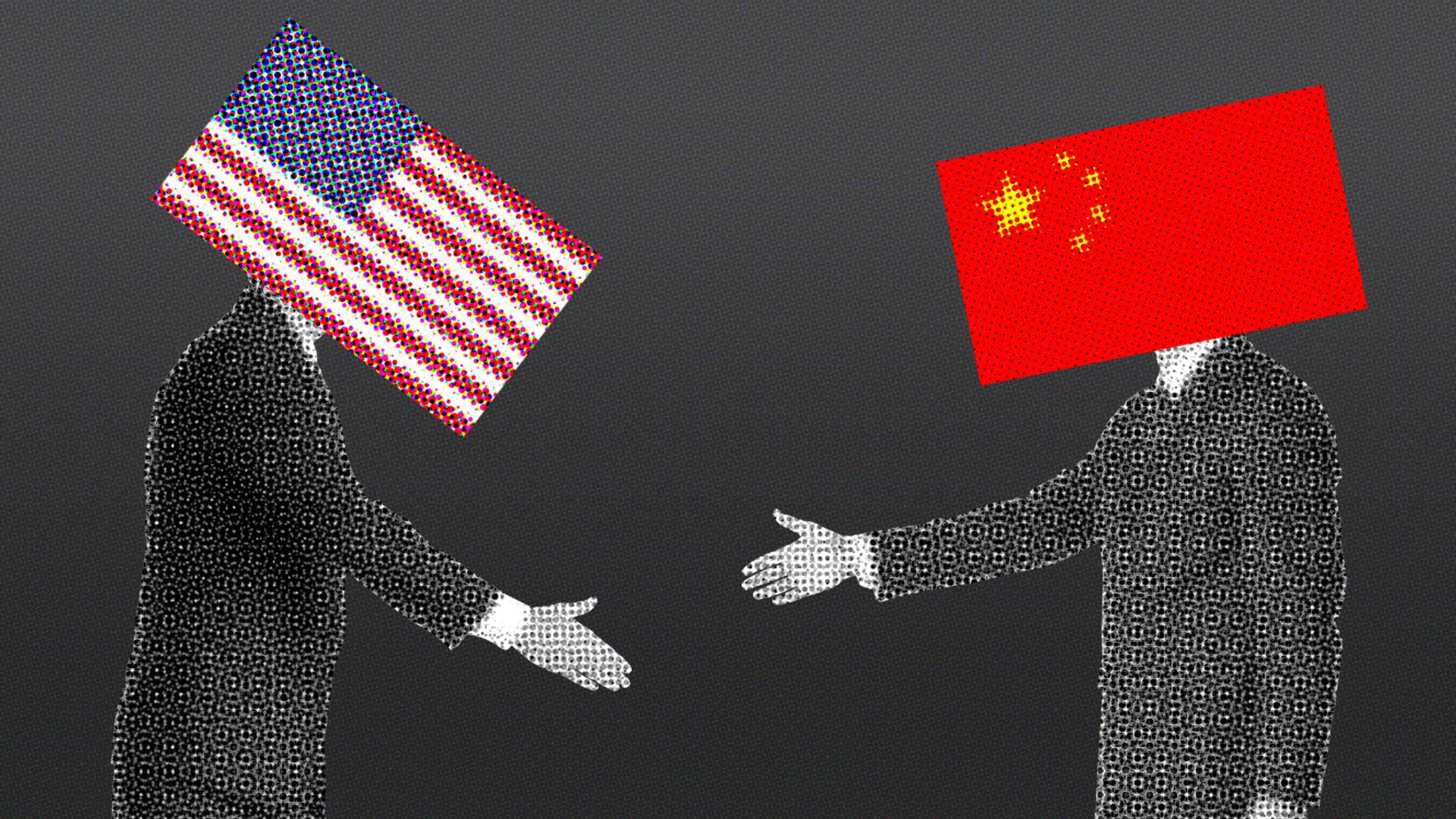
The latest escalation in President Trump's trade war will expose to tariffs roughly 11 million U.S. workers who are employed in industries that produce targeted goods.
Why it matters: Industries affected by the brinksmanship are mostly concentrated in rural, deeply red, already-struggling parts of the country, with political consequences for Trump and Republicans in 2020.
President Trump is likely to further raise tariffs to 25% on Chinese imports by Friday, and prices of consumer products could soon spike.
The big picture: Trump has exhausted his options on taxing items that won't affect American consumers. Electronics, toys and shoes have so far been exempt, leaving the manufacturing industry and farmers to bear the brunt of the trade war. This weekend's expansion could change that.
The National Telecommunications and Information Administration's assistant secretary David Redl unexpectedly stepped down after 18 months in the role, The Hill reports.
Why it matters, per Axios' David McCabe: Redl has been a key player in the nation’s wireless strategy, which has been closely watched as carriers move toward launching 5G amid security concerns about Chinese equipment manufacturers.
The FCC has voted unanimously to deny China Mobile's application to provide telecommunications services in the U.S. due to concerns about national security and law enforcement risks.
Why it matters: The move represents a significant escalation in the slow-building conflict between the U.S. and China over telecommunications trade, and comes at a crucial time in U.S.-China trade negotiations. On Friday, the U.S. will raise tariffs on $200 billion of Chinese imports from 10% to 25%. The Chinese government has signaled that it will retaliate.
Former intelligence analyst Daniel Everette Hale was indicted for allegedly providing classified documents related to drone warfare to a reporter in 2014 while working at the National Geospatial-Intelligence Agency (NGA). Descriptions of that reporter match Jeremy Scahill, a founding editor of the Intercept, the Washington Post reports.
Why it matters: This is at least the third time an Intercept source has been arrested for leaking classified documents. NSA contractor Reality Winner leaked a classified NSA document on Russian meddling in the U.S. election to The Intercept in 2017, while ex-FBI agent Terry Albury was arrested in 2018 for leaking documents about the bureau's informant recruiting.. These arrests underscore the risk posed to sources involved in national security stories.
The big picture: The chart above looks at the average number of jobs per $1 billion in market cap for the 20 largest U.S. firms by market capitalization in recent years. This could be a harbinger of things to come, as adoption of artificial intelligence and automation further disconnects wealth creation and job creation.
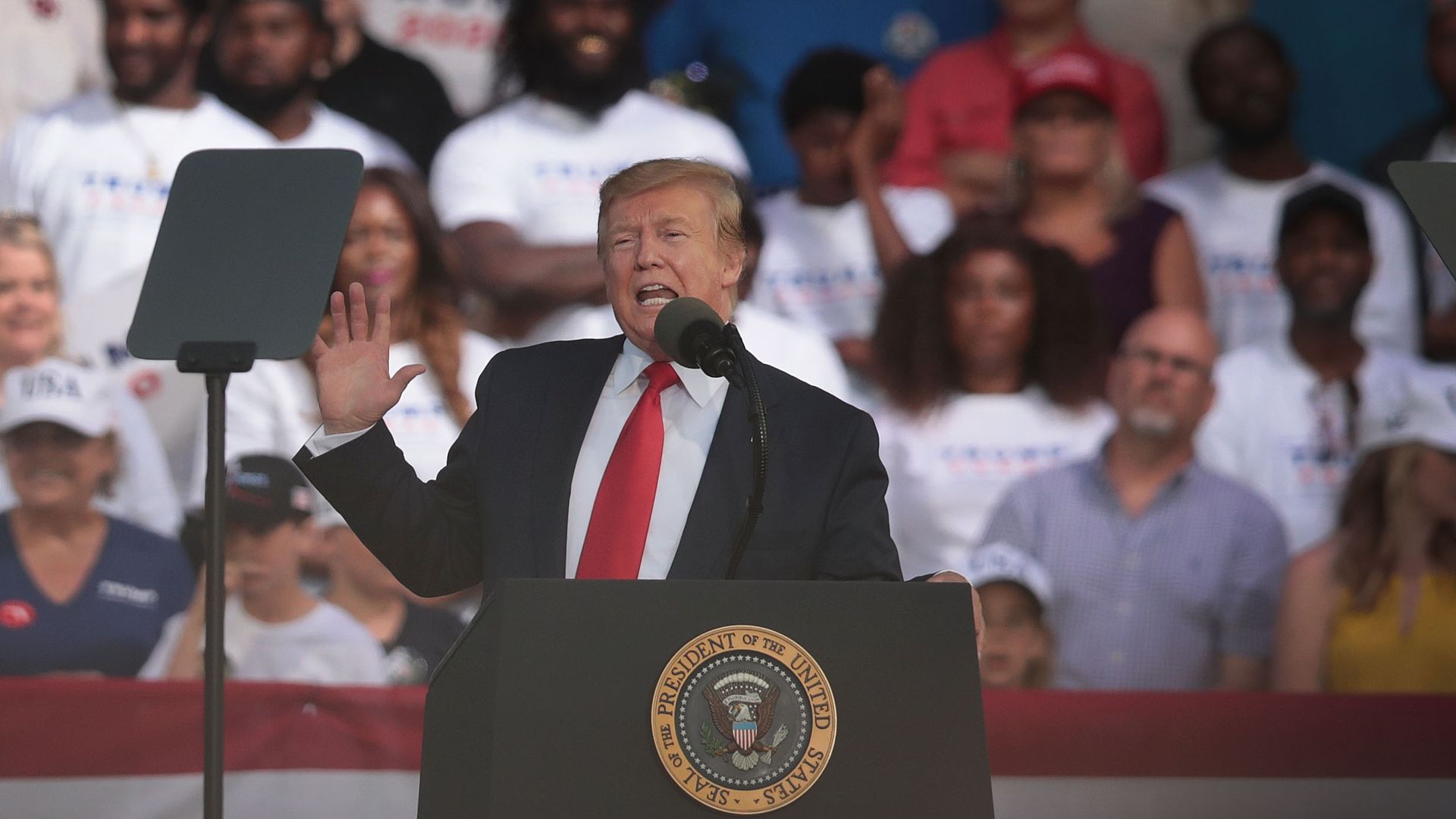
It appears increasingly likely President Trump will raise tariffs to 25% on Chinese imports to the U.S. At a rally last night in Florida the president said China "broke the deal."
Why it matters: Economists expect the escalation to reduce 2019 and 2020 GDP growth for both China and the U.S. It could also change the outlook for the Fed, pinning down U.S. interest rates for the foreseeable future.
Demand for benchmark 10-year notes at Wednesday's U.S. Treasury auction was the worst in a decade, data shows, following Tuesday's sleepy 3-year Treasury note auction that also drew lackluster demand.
Why it matters: The historically weak auctions have come despite falling stock prices and strong buying of safe-haven U.S. debt for much of the year, showing diminishing appetite among some investors.
Tinder has been absolute gold for Match Group, which reported first quarter earnings yesterday that sent its stock up 12% to an all-time high.
Why it matters: There's been a lot of talk about the way millennials and Gen Z communicate and the growth of social networks like Facebook, Snap and Twitter, but no company has perfectly tapped the zeitgeist of young people coupling like Match Group.
Unless there's a breakthrough in the trade talks before midnight tonight, U.S. tariffs on $200 billion in Chinese imports are about to rise from 10% to 25% — an escalation of the trade war that could hurt major importers and trigger even more painful retaliation by China.
Why it matters: A larger trade war would be sure to hurt China, economists say — but it's also likely to backfire on the U.S. and global economy in a way that President Trump hasn't acknowledged.
China's Commerce Ministry said in a statement on its website Wednesday it would retaliate with "necessary countermeasures" if the U.S. increased tariffs.
Details: It's comments came as President Trump told supporters at a rally in Panama City Beach, Florida, he was introducing the tariffs because China "broke the deal" in the ongoing trade talks. "[T]he vice premier tomorrow is flying in — good man — but they broke the deal," he said, referring to China's chief negotiator, Liu He, who's due to be in Washington, D.C., Thursday. "They can't do that, so they'll be paying."