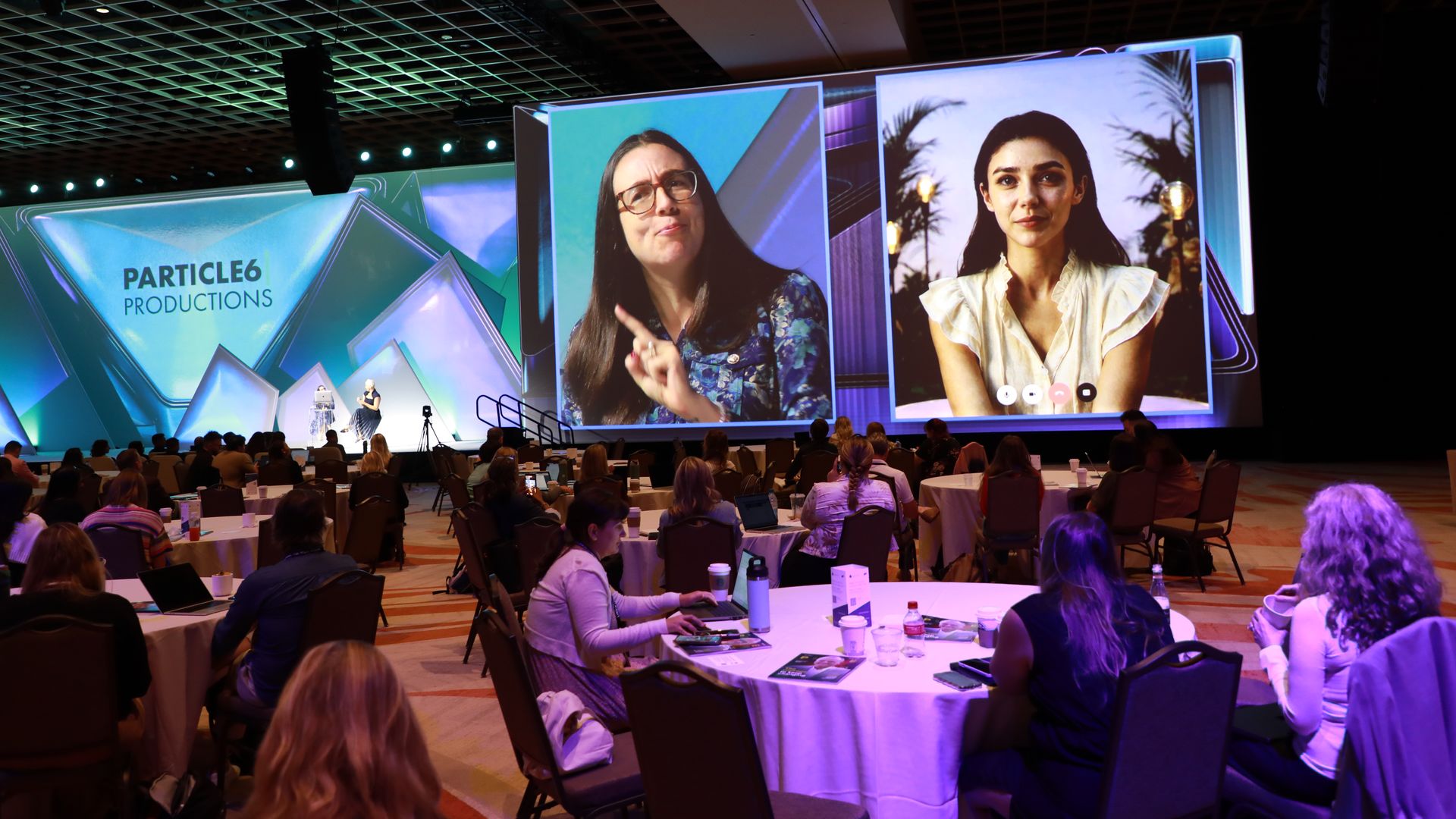
NEW YORK — Media leaders outlined new revenue strategies, distribution plans and audience engagement approaches at Axios' Media Trends Live Summit.
Why it matters: AI, mergers and political pressures are reshaping the entertainment industry. How companies navigate these challenges will determine which legacy organizations survive and which newcomers stand out.
The Oct. 20 event was sponsored by BBC Studios and Civic.
Catch up quick: Here are our top takeaways.
There's no price at which Hearst would sell its stake in ESPN, Hearst president and CEO Steven Swartz told Axios' Sara Fischer on stage, pointing in particular to the company's relationship with the NFL.
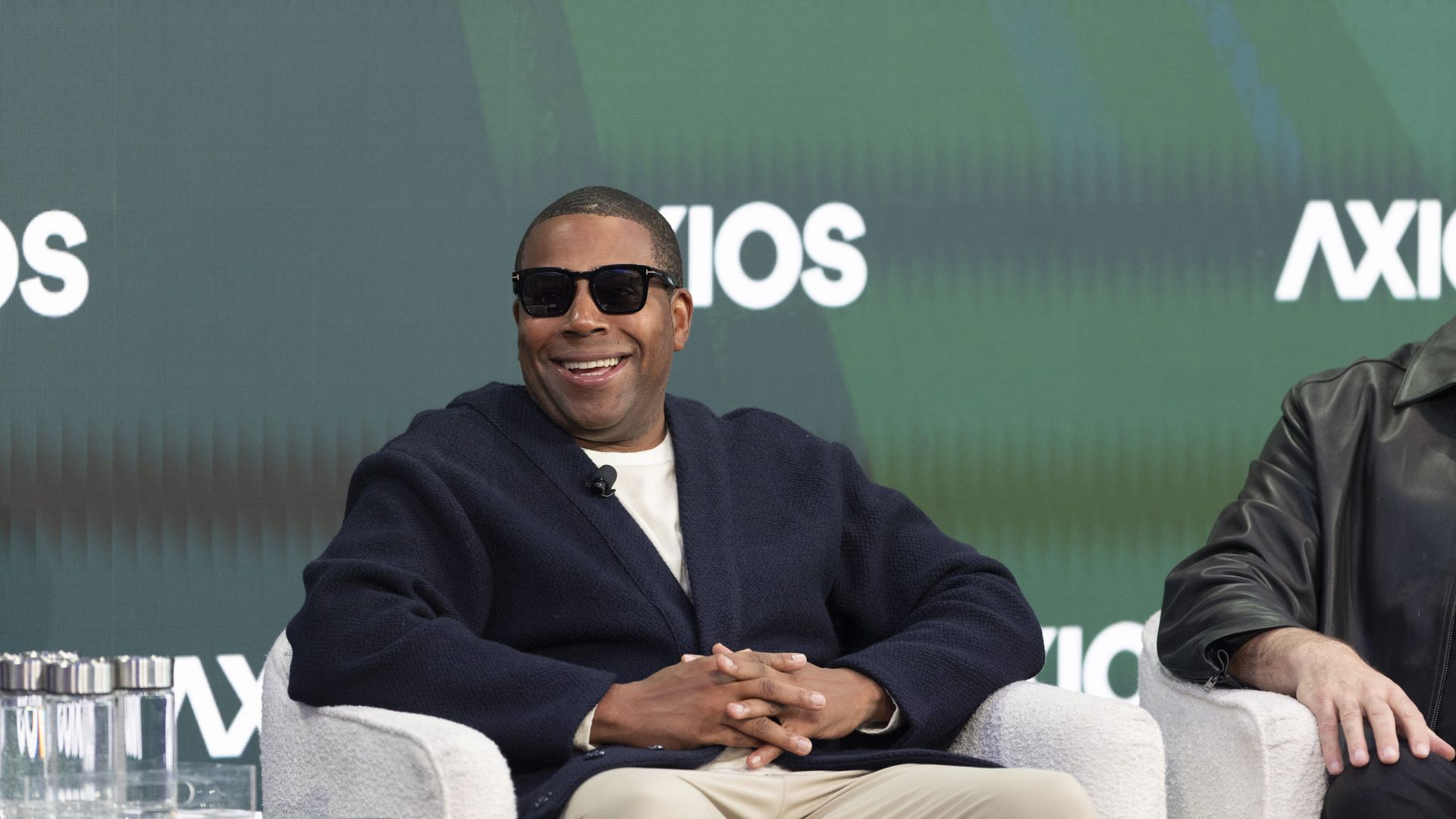
Longest-running Saturday Night Live cast member, actor and comedian Kenan Thompson addressed the recent Shane Gillis controversy, saying that if Gillis were to return as a host, there would need to be a conversation "like a little kid" about what could have gone differently. "I would just sit him down and be like, 'Yeah, so what do you think we could change there, pal?'"
Democratic FCC CommissionerAnna Gomez predicted ABC will win its First Amendment lawsuit against the agency over alleged retaliation for editorial decisions related to Jimmy Kimmel.
Trump Media and Technology Group CEO Kevin McGurn declined to comment on investigations into Truth API, saying, "We hear from all sorts of government agencies all the time. We're one of the most scrutinized businesses on the face of the planet."
Content from the sponsor's segment:
BBC Studios' Jon Otto on stage at Axios' Oct. 20 Media Trends Live Summit. Photo: Jonathan Heisler for Axios
In a View From the Top conversation, BBC Studios North America SVP of client partnerships Jon Otto said that modern media companies can stay relevant by being selective about how they reach and engage audiences.
"Being everything to everyone at all times is a really difficult strategy today, when we're in an industry with endless fragmentation and access to infinite content. So audiences are not a monolith, and neither can we be."
Axios' Kristin Burkhalter on stage with CIVIC Entertainment's Stuart Ruderfer at Axios' Oct. 20 Media Trends Live Summit. Photo: Jonathan Heisler for Axios
In a sponsored conversation, CIVIC Entertainment Group co-founder and co-CEO Stuart Ruderfer said brands can build trust through creating shared experiences and community, especially in emerging audience segments like Gen Z.
"Let's stop being so much the disco ball and more be the dance floor. Invite people to get on that dance floor and help co-create the brand together. That's where magic can be made, and that's where value can be built in the next couple years."
Here's a surprising combination of words: Municipal bonds are sexy right now — offering historically attractive returns at a time when states and localities need more and more cash.
Why it matters: That may be good news for investors, but it costs taxpayers who foot the bill when states and localities borrow money by issuing these bonds.
Data: FactSet, company filings; Chart Axios/Matt Phillips
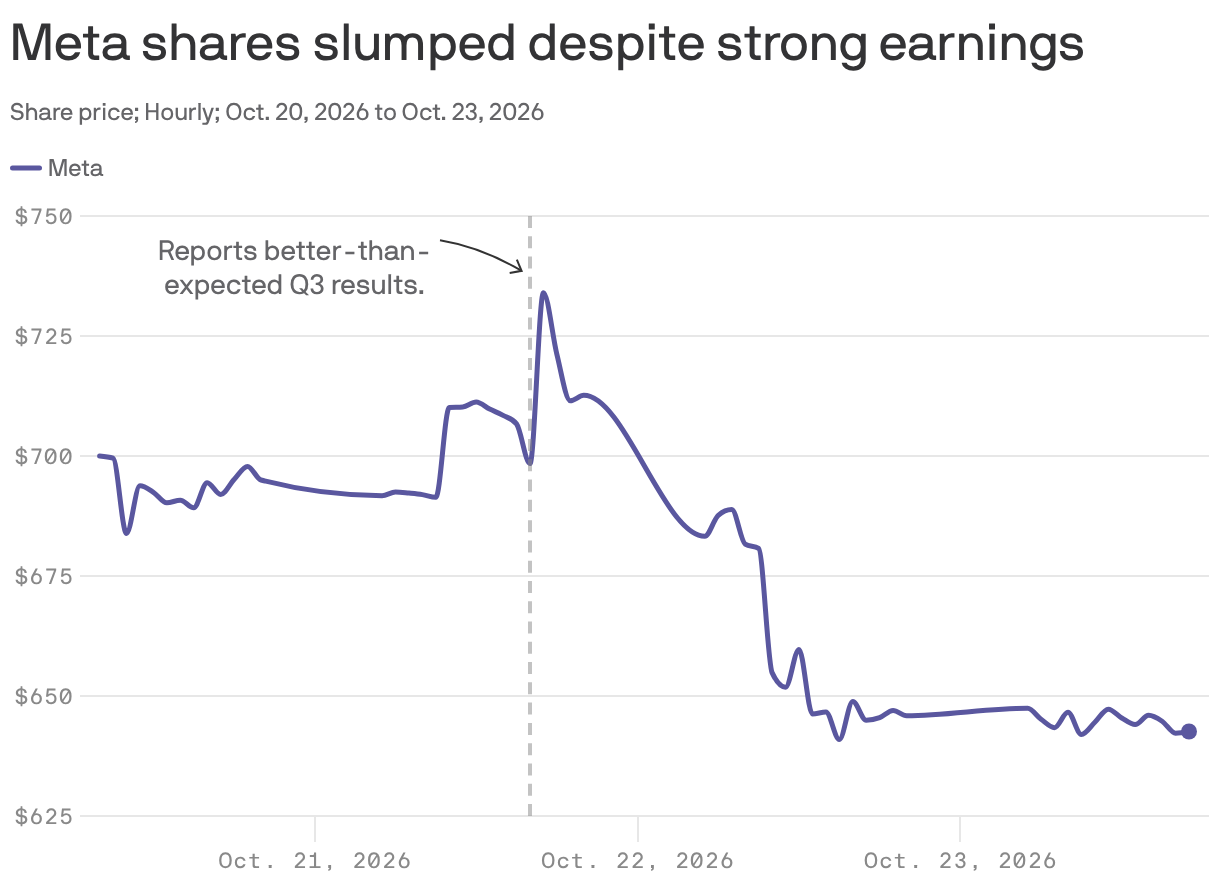
Mark Zuckerberg's Meta got smacked around Thursday after reporting earnings that looked pretty strong at first glance.
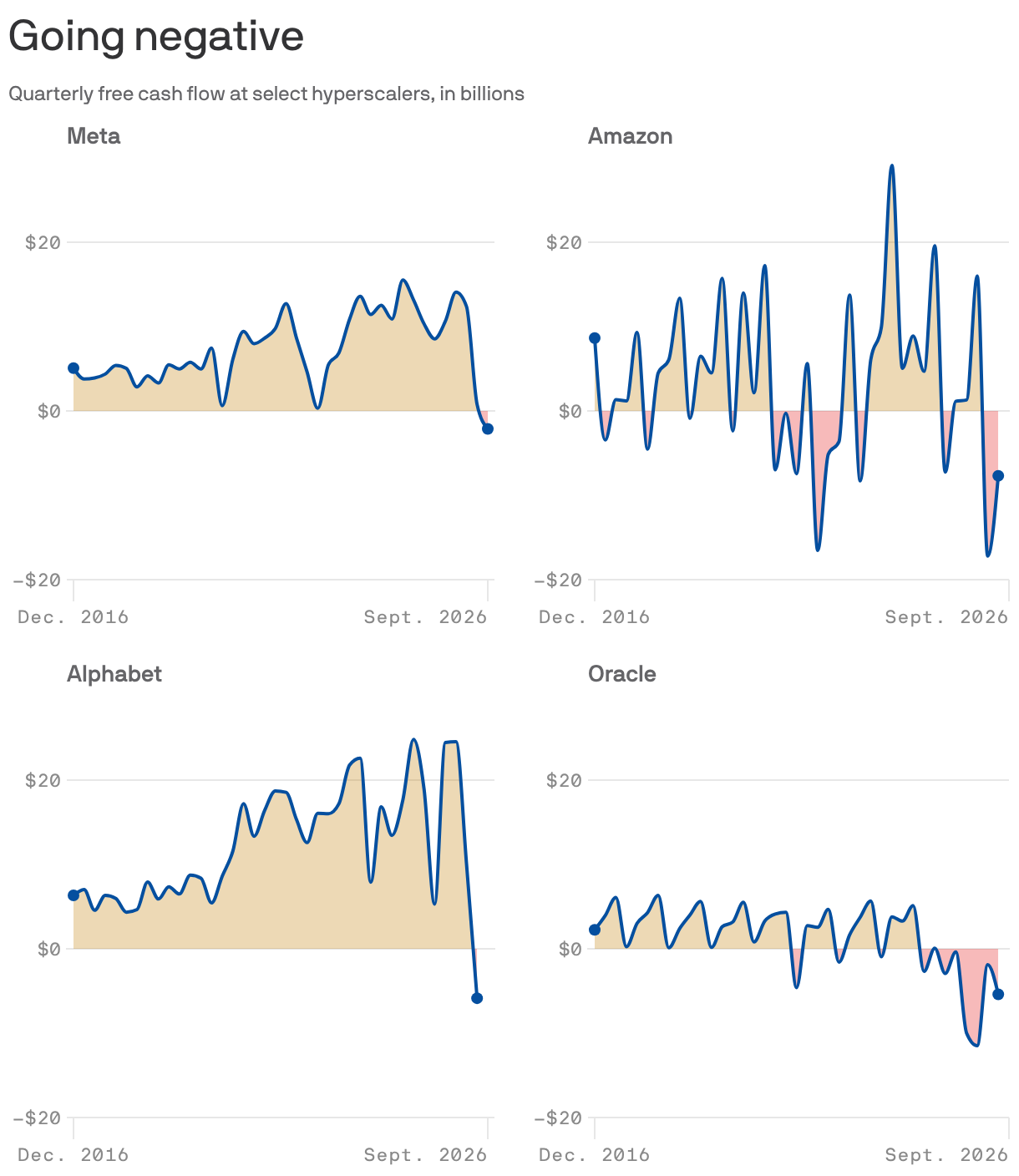
Why it matters: Its drubbing in the stock market — Meta ended down 7% —suggests that investors are growing concerned that Big Tech's insistence on pouring more and more capital into data centers could end up costing them in the long run.
ORLANDO, Florida — I got roasted by "AI actor" Tilly Norwood in a room full of marketers.
Why it matters: The AI-generated character has attracted controversy over fears of synthetic talent replacing human jobs in Hollywood and in advertising.
America's largest banks are working to prevent AI worst-case scenarios. But they're also preparing for the "day after" a catastrophe, Axios has learned.
Why it matters: America's financial institutions have joined the largest AI companies in scenario-planning for disaster, a prudent but worrisome signal about the extent of the risk that major corporations see on the horizon.
Your neighborhood's next hot bakery — or coffee shop, pizza joint or BBQ spot — might be inside someone's house.
Why it matters: More people are turning their home baking into a business, as online platforms and loosening state regulations make it easier for home cooks to reach customers.
On October 22 at 6:50 p.m. CT, tune in as Austin Mayor Kirk Watson delivers opening remarks, followed by conversations with Liberty Media Corporation president and CEO Derek Chang and APEX founder and CEO António Caçorino on the business forces driving Formula 1's global growth and its expanding influence across technology, media and culture.
The program will also include sponsored View from the Top segments featuring BWT Alpine Formula One Team driver Pierre Gasly, BWT Alpine Formula One Team global marketing director Guy Martin and Adobe global vice president of enterprise marketing Marissa Dacay.
That wince you just made while researching travel options? Get used to it.
Why it matters: Soaring jet fuel prices are accelerating changes across the airline industry, seen in higher fares, premium-heavy cabins and fewer flight options for travelers.
Spotify on Thursday beat investor estimates on paid user growth for the third quarter, thanks in part to new AI-driven personalization features and other benefits designed to bolster the value of a subscription.
Why it matters: Paid user growth is contributing to a more financially stable and profitable company that can reward shareholders while allowing Spotify to invest more in its business.
Some of America's most powerful business leaders are making loud promises to share their fortunes and publicly acknowledging the dangers of economic inequality.
Why it matters: Corporate America is starting to read the room. For communications and corporate affairs chiefs, that raises tricky questions: Should your company join the conversation, and if so, how do you do so in a meaningful way?
The fragile Senate permitting deal is a major priority across the energy industry, per newly filed lobbying disclosures.
Why it matters: The filings reveal behind-the-scenes efforts by powerful interests and companies representing oil and gas, mining, renewables, environmentalists and plenty in between to shape the legislation.
Kalshi is asking federal regulators for permission to re-list compute derivatives, which would allow users to trade on the future cost of renting GPUs, the powerful chips used to run AI.
Why it matters: The prediction market was reportedly ordered by the Commerce Department to take down compute markets earlier this year over national security concerns. (Commerce denied that it did so.)
Driving the news: Sudhir Jain, Kalshi's chief compliance officer, said Wednesday on LinkedIn that Kalshi had submitted comments to the Commodity Futures Trading Commission asking it to allow the markets.
That would ensure that "price discovery" on GPUs happens in the U.S., not offshore, he argued.
"Compute already fits the definition of a commodity" and "both sides have a reason to hedge" on compute pricing, Jain wrote. "Buyers like AI labs can lock in costs. Providers like data center operators can protect the revenue behind their GPU investments."
What they're saying: The CFTC declined to comment.
Catch up quick: The agency sent a request for public comment on compute contracts in August.
"Just as American markets helped establish the gold standard for trading the commodities that powered the industrial economy, we will do the same for the commodity that will power the intelligence economy," CFTC chair Michael Selig said at the time.
Hackers are finding new ways to infect iPhones with spyware — even when victims never click a malicious link — according to new research shared with Axios.
Why it matters: Software once used to spy on politicians, journalists and other high-value targets is becoming a tool for everyday cybercriminals looking to steal cryptocurrency and login credentials.
Small businesses across America are embracing AI, but usage and spending vary dramatically by state, according to exclusive Goldman Sachs data shared with Axios.
The big picture: Companies nationwide, big and small, are figuring out how best to incorporate AI into their workforces and what that means for productivity.
Major U.S. banks are detecting unauthorized third-party AI agents operating inside customer accounts, with some agents attempting to take actions that appear to be independent of user instructions, sources tell Axios.
Why it matters:AI agents are becoming a nightmare for America's banks, making their way into banking systems faster than financial institutions can respond.
The difficulty in distinguishing between a human and an unauthorized bot is forcing banks to block the technology and rapidly rewrite their terms of service.