Delta expects fuel bill to rise $6 billion this year

Add Axios as your preferred source to
see more of our stories on Google.
Photo: Justin Sullivan/Getty Images
Soaring jet fuel prices are expected to add $6 billion to Delta Air Lines' fuel bill this year, the company said Friday.
Why it matters: Elevated fuel costs have been driving up fares and prompting airlines to cut flights — changes that could outlast the fuel price spike itself.
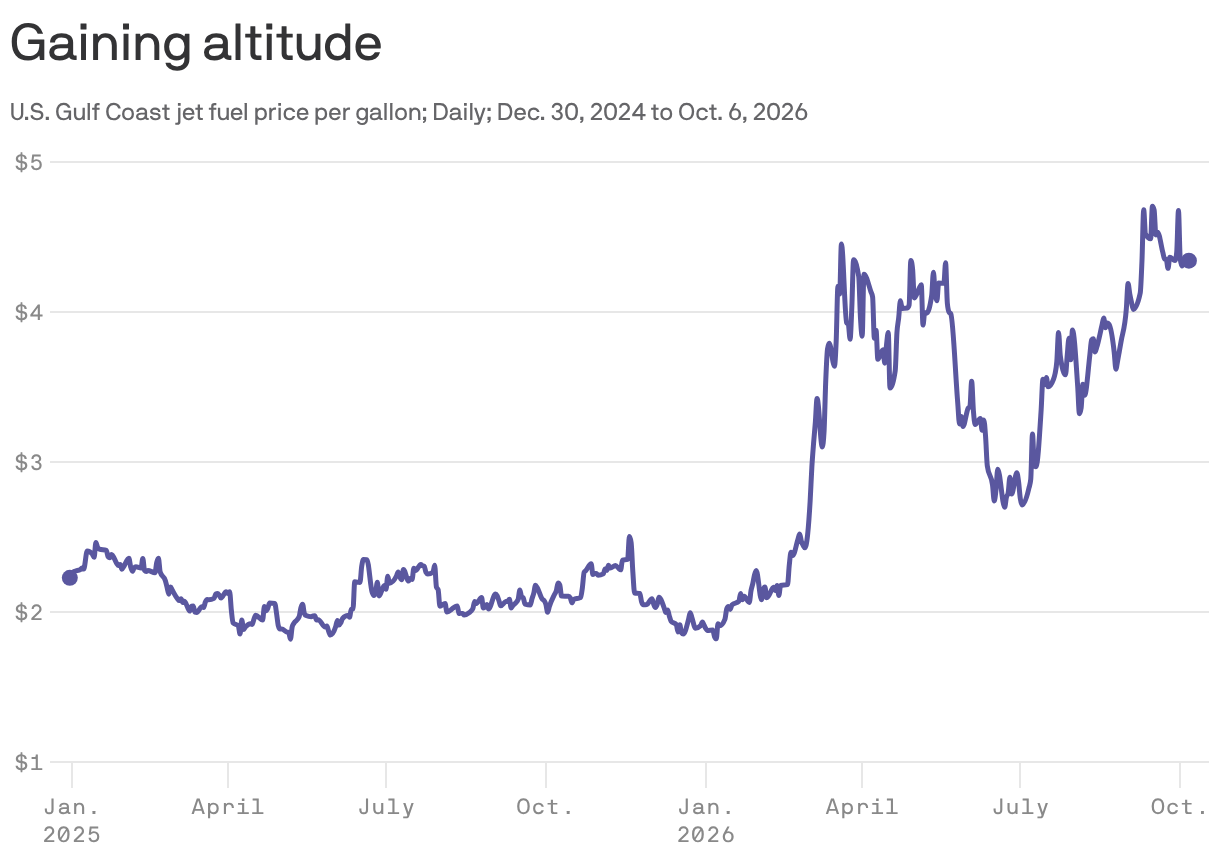
Catch up quick: The Iran war has disrupted global oil shipments and damaged refineries, creating shortages of jet fuel that have pushed prices up even faster than crude oil.
Driving the news: As a result of the rising costs, Delta lowered its full-year earnings outlook Friday by nearly a quarter, to $5.10 to $5.60 per share.
- The $6 billion increase in fuel costs represents a 60% jump from last year, the company said.
State of play: Delta's all-in fuel costs averaged $3.61 a gallon in the recent quarter, after pricing in a benefit from the company's own refinery. (Yes, this airline owns a refinery.)
- It expects to pay $4.25 per gallon over the fourth quarter, despite an even larger refinery benefit in the period.
- Bloomberg reported Friday that general jet fuel prices in New York and Los Angeles were both over $4.90 a gallon, the highest mark since March and April, respectively.
The impact: U.S. airfares were up 23.4% in August from a year earlier, according to the latest federal inflation data, as airlines passed soaring fuel costs along to travelers.
- Travelers are seeing fewer flight options as well, as carriers have cut unprofitable flights and scaled back plans for expansion.
What we're watching: Delta CEO Ed Bastian does believe fuel prices will come down, though he's not sure when. The structural changes in the industry, however, may not reverse with them.
- "What we have seen over this last year, the ability of the industry to get much greater value for the product that we offer. And unfortunately, it took a fuel spike to — in a short order — move people in that direction," Bastian said.
- "We see the customer response," he added. "Candidly, the limited amount of resistance that we see, the fact that our product continues to be seen in a consumer basket as reasonably affordable, even at a 20% price increase… I think that's a very good sign for the future."
