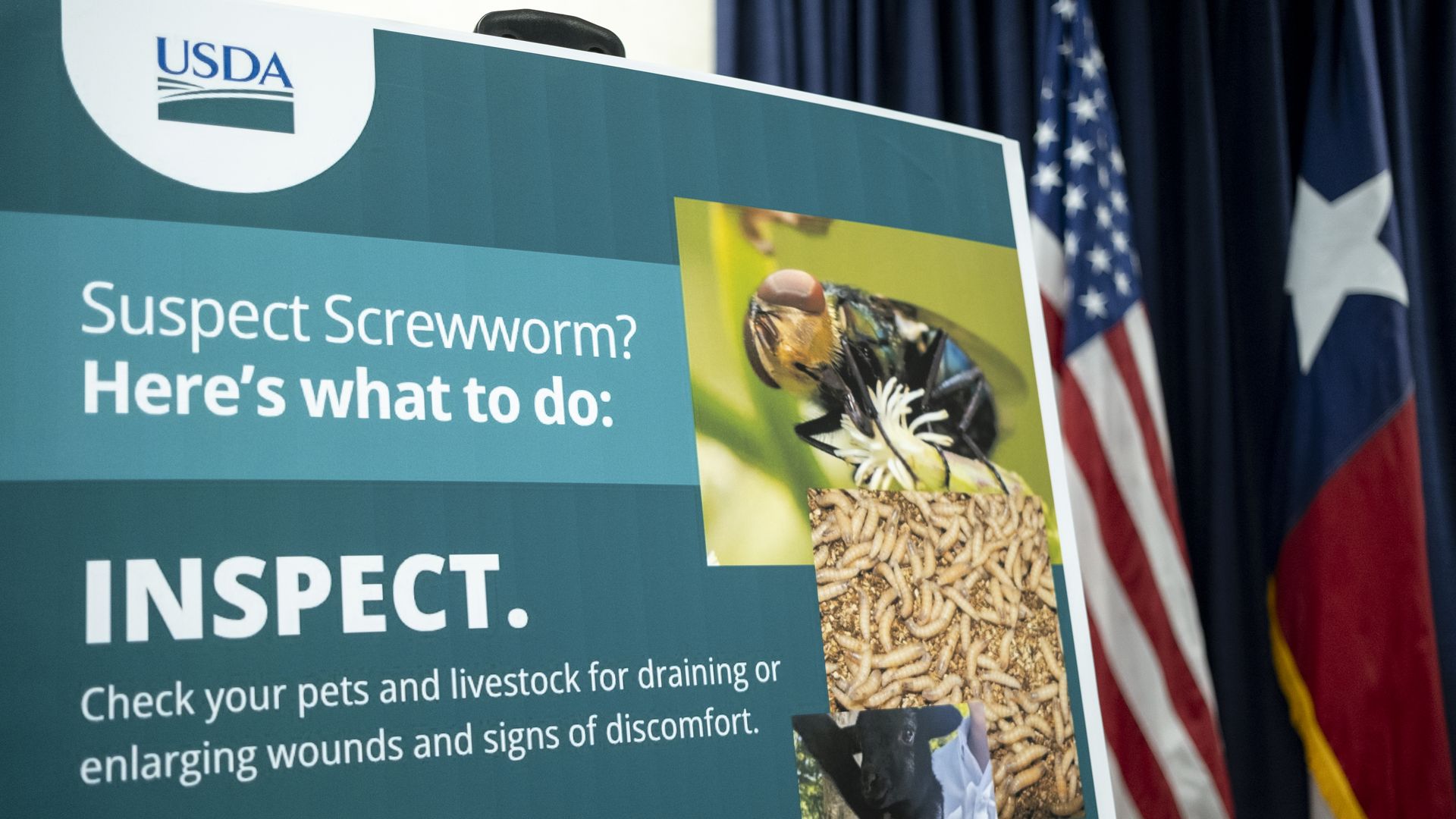
Federal and Texas officials on Wednesday confirmed the first known case of the New World screwworm parasite in U.S. wildlife during the current outbreak.
Why it matters: The discovery raises new questions about whether the flesh-eating parasite is spreading beyond livestock.
The White House counsel's office warned Politico in a Monday letter that it had 48 hours to retract or correct recent stories about alleged staff drama, or it would suffer unspecified consequences.
That deadline expires Thursday.
Why it matters: The White House demand threatens to escalate already tense relations with Politico specifically and, more generally, the press corps that covers President Trump in Washington.
Tesla's revenue flattened out in the third quarter, but the company launched robotaxi service and humanoid production while still managing to spend far less than expected.
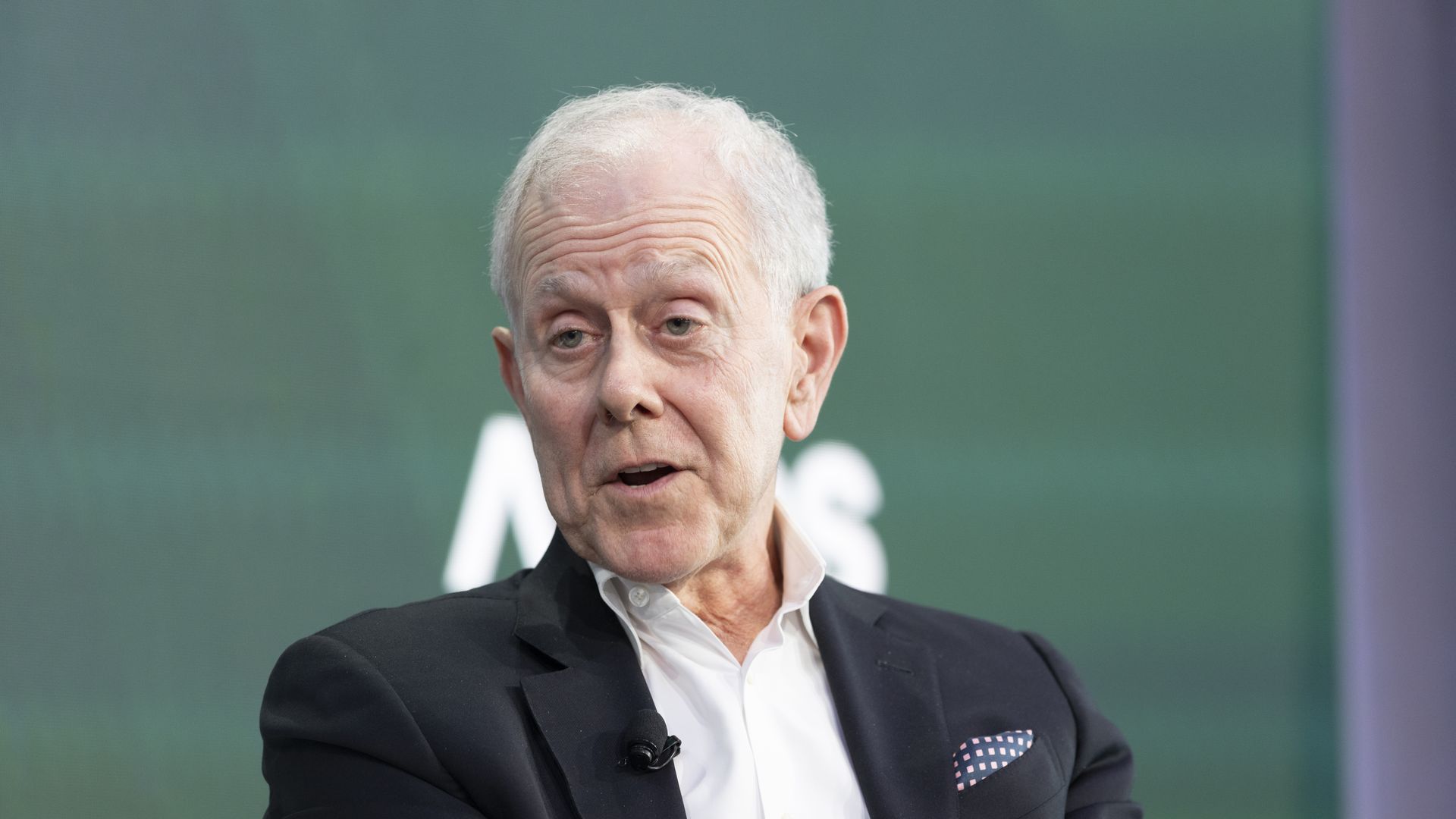
Hearst bought out Disney's 50% stake in A&E Global Media because it was a better alternative than selling to a third party at "what would have been a really low price," president and CEO Steven Swartz told Axios at its annual Media Trends Live event in New York City on Tuesday.
Why it matters: Hearst has the balance sheet to make such a move, but its CEO acknowledges that plans for the asset are still in the works.
The AI shopping wars are here — and longtime nemeses Walmart and Amazon are taking a markedly different approach.
Why it matters: The agentic shopping revolution is in its early stages, but retailers expect it to accelerate quickly as consumers become more comfortable deploying AI agents to do their business for them.
General Motors wants to slash the time it takes to develop a new vehicle in half, betting that artificial intelligence can help it compete with China's much faster automakers.
Why it matters: Chinese carmakers have a formidable speed advantage, allowing them to introduce new models and technologies faster than their Western rivals can respond.
General Motors envisions a future where you can dispatch your car to pick up groceries, take your kids to soccer practice and handle other errands — all without you behind the wheel.
Why it matters: As software, AI and autonomous driving reshape the auto industry, GM is taking a big swing amid growing competition from Chinese rivals and leaders in the race toward self-driving cars.
Wall Street Journal editor-in-chief Emma Tucker defended attending the White House dinner with News Corp. executives earlier this month.
"Look, I'm a journalist. I was not going to say no to a dinner with the president of the United States," she told Axios on stage at its annual Media Trends Live event in New York City Tuesday.
Why it matters: The dinner raised eyebrows not only because the Journal is locked in a legal battle with President Trump, but also because of the Trump administration's unprecedented pressure on the press, particularly for outlets whose owners have ties to the president.
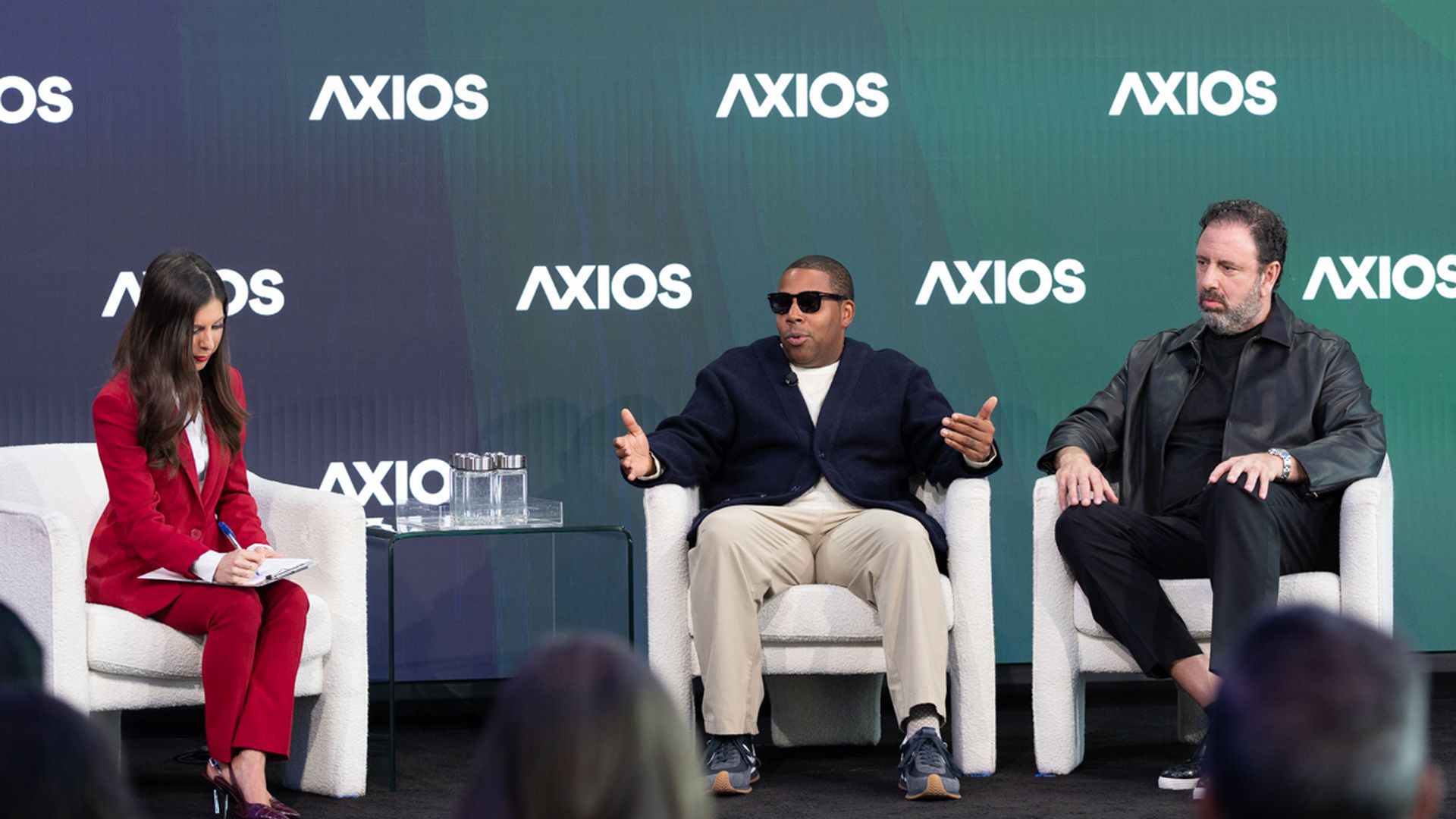
"Saturday Night Live" star Kenan Thompson said he would have a candid conversation with Shane Gillis if he returned to host after Gillis' controversial monologue.
"I don't know him to be a mean person necessarily," he told Axios at Media Trends Live in New York City on Tuesday. "But yeah, if he were to come back, I'm sure we would have a conversation of like, how do you think that went?"
Why it matters: Gillis' remarks sparked debate over the boundaries of comedic license after saying women who wear shorts to the gym dress like "whores."
The inevitable merger of SpaceX and Tesla took an orbital leap forward yesterday, with Elon Musk calling it "a good idea" and both companies forming special committees to discuss a deal.
Why it matters: This would be the largest corporate tie-up in history.
Private equity firm General Atlantic and 32 Equity, an investment vehicle of the National Football League, plan to raise a fund that will invest in sports-related companies.
Why it matters: For the NFL owners, this advances global expansion goals while also creating a new revenue stream (i.e., carried interest) that needn't be shared with players.
OpenAI is bringing its AI models and Codex coding tools to Google Cloud, expanding its reach to customers of all three major U.S. cloud providers — including companies that are also among its fiercest AI rivals.
Why it matters: The move underscores a growing recognition that winning the enterprise AI race isn't just about building the smartest models. It's also about making those models available wherever businesses already run their software and store their data.
The AI boom is moving into its rational exuberance phase, to adapt a term from the last tech bubble: Investors are pulling back funding and demanding more evidence that their investments will actually pay off.
Why it matters: It's a delicate dance. The economy is running on the AI trade right now. Can investors take air out of the bubble without popping the whole damn thing?
Republicans and Democrats are flooding the midterm airwaves with explosive TV ads accusing their opponents of protecting pedophiles and child sexual abusers.
Why it matters: The advertising blitz underscores the lingering power of the Jeffrey Epstein scandal, which has fueled distrust of powerful figures and pushed allegations of child sexual abuse to the forefront of national politics.
Anthropic's impending IPO will test a jittery Wall Street, but investors say the timing isn't optional. The reason is simple math: The AI giant has grown too big for private fundraising.
Why it matters: Top AI companies like Anthropic and OpenAI are racking up 12-figure spending commitments, straining the financial system's ability to keep up with a buildout that rivals America's railroads or interstate highways.
With private borrowing costs spiking, tapping the massive liquidity of the public markets is the best way to fund the next phase of the AI arms race, investors say.
In the race to fend off AI-enabled cyber threats, security teams are confronting a new problem: The AI models they rely on to investigate attacks can suddenly refuse to help.
Why it matters: While AI giants race to build AI tools that can respond quickly to hacking or other malicious online threats, strict guardrails on their most powerful models lock out defenders mid-investigation, leaving them scrambling for alternatives at critical moments.