U.S. to breed billions of flies in fight against flesh-eating maggots

Add Axios as your preferred source to
see more of our stories on Google.
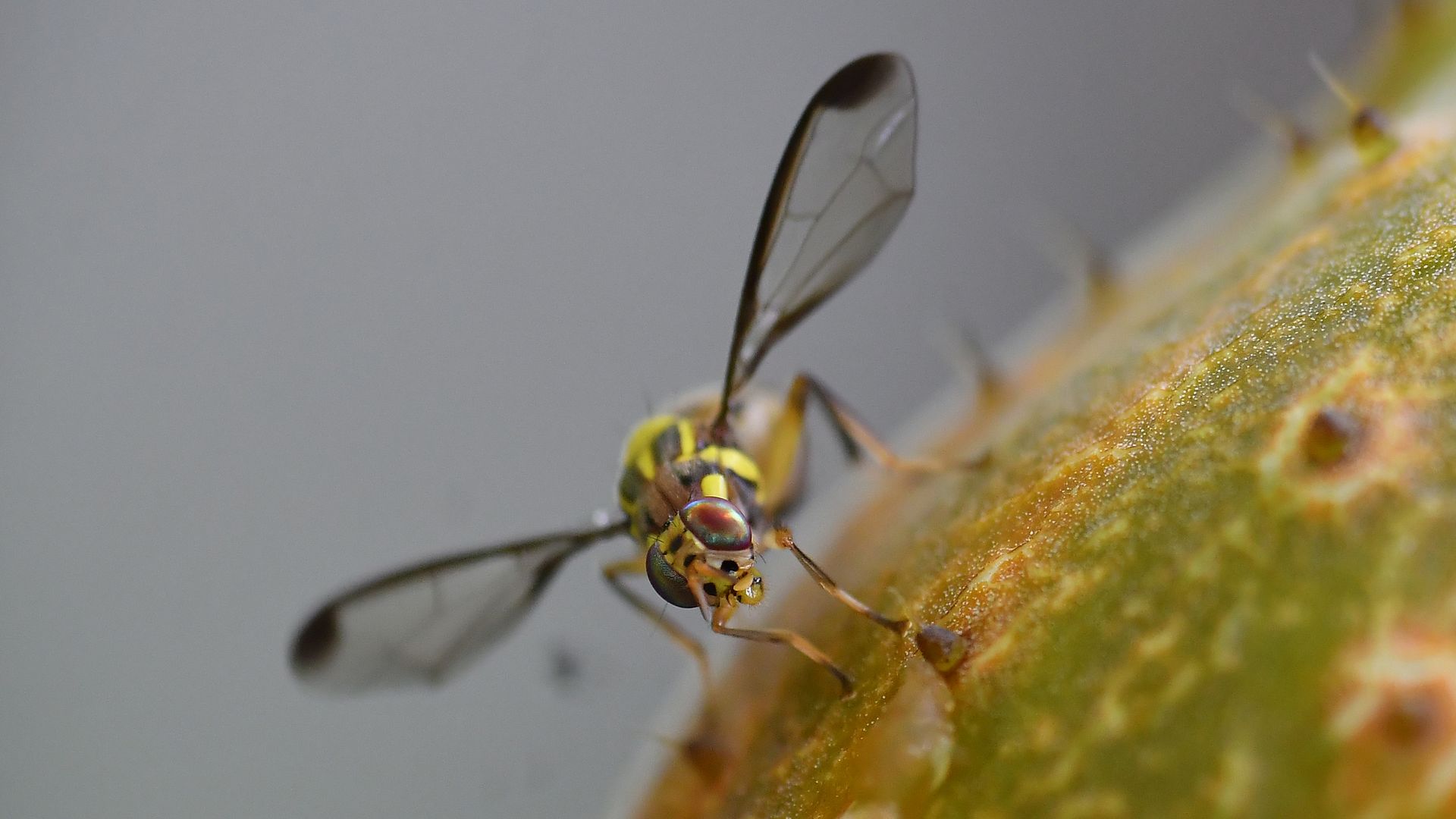
"Mexico will also begin renovation of its sterile fruit fly facility in Metapa this week, with renovation expected to be completed by July 2026," per the USDA. Photo: Anuwar Hazarika/NurPhoto via Getty Images
The Trump administration plans to breed and sterilize billions of flies to airdrop over Mexico and southern Texas in an effort to stamp out the New World screwworm (NWS).
Why it matters: This highly destructive, parasitic flesh-eating maggot "is a devastating pest that causes serious and often deadly damage to livestock, wildlife, pets, and in rare cases, humans," per a U.S. Department of Agriculture post on the plan to sterilize the flies using radiation technology.
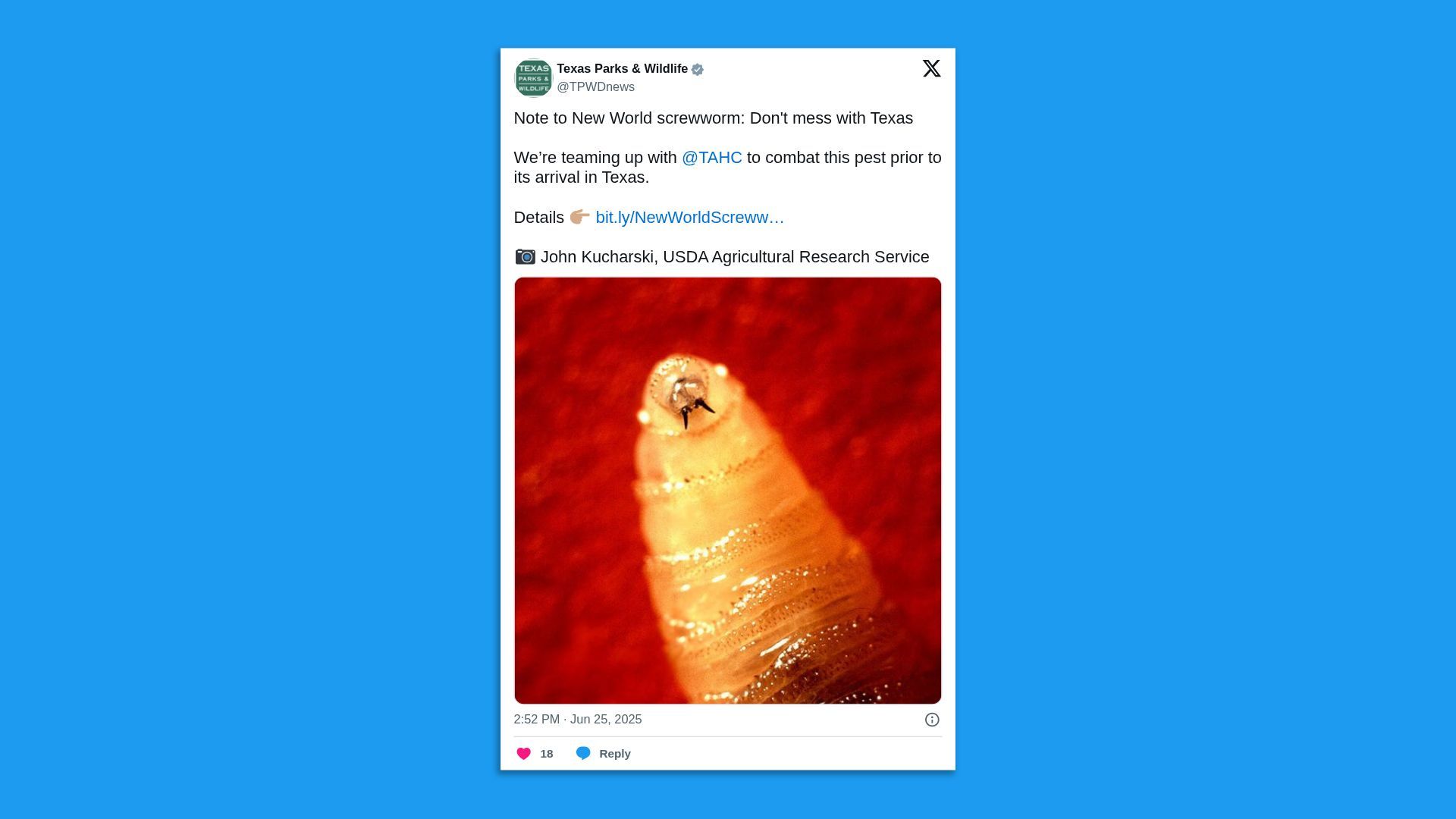
"While NWS has been eradicated from the United States for decades, recent detections in Mexico as far north as Oaxaca and Veracruz, about 700 miles away from the U.S. border, led to the immediate suspension of live cattle, horse, and bison imports through U.S. ports of entry along the southern border on May 11, 2025."— USDA
Flashback: U.S. officials used this biological control technique to eradicate populations of the parasite that's known scientifically as Cochliomyia hominivorax (which means "man-eater") from the country in 1966, per a USDA online post.
- They again sterilized insects to eliminate "a small outbreak" from the Florida Keys in 2017, according to the agency.
State of play: Agriculture Secretary Brooke Rollins announced Monday port reopening plans for cattle, bison and horses from Mexico following what the USDA described in a statement as "extensive collaboration" between U.S. officials and their Mexican counterparts to "increase NWS surveillance, detection, and eradication efforts."
- The phased reopening of the ports along the border with Mexico will start with Douglas, Arizona, as early as Monday, with more planned in New Mexico and Texas later in July.
- "Mexico will also begin renovation of its sterile fruit fly facility in Metapa this week, with renovation expected to be completed by July 2026," per the statement.
- "Renovation of this facility will allow for production of between 60-100 million sterile NWS flies each week. This is a critical step towards reaching the goal of producing the estimated 400-500 million flies each week needed to re-establish the NWS barrier at the Darien Gap."
Meanwhile, Rollins announced last month $8.5 million would be allocated to establish an NWS sterile fly facility at the Moore Air Base in Hidalgo County, Texas.
- The facility that's due to be completed this year "could boost domestic sterile fly production by up to 300 million flies per week and could complement current production that already exists in Panama and Mexico," per a USDA statement.
Separately, Texas Gov. Greg Abbott last month directed the state's Parks and Wildlife Department and Animal Health Commission to establish a joint Texas New World Screwworm Response Team due to the NWS' northward spread.
What they're saying: "We have made good progress with our counterparts in Mexico to increase vital pest surveillance efforts and have boosted sterile fly dispersal efforts," Rollins said.
- "These quick actions by the Trump administration have improved the conditions to allow the phased reopening of select ports on the Southern border to livestock trade."
- The National Cattlemen's Beef Association said it supports the sterilization effort.
- "The only way to protect the American cattle herd from the devastating threat of New World screwworm is by having a sufficient supply of sterile flies to push this pest away from our border," said NCBA president Buck Wehrbein, a Nebraska cattleman.
Go deeper: What to know about New World screwworm
