SpaceX said Tuesday it has agreed to a deal with AI coding startup Cursor that could result in an acquisition or $10 billion investment.
Why it matters: The deal underscores SpaceX CEO Elon Musk's push to make his company into an AI powerhouse ahead of its potential IPO, which may be the largest in history.
U.K.-based neobank Revolut is gearing up for a secondary share sale later this year that could value it over $100 billion, the Financial Times reports citing sources.
Why it's the BFD: Some companies are going public now, afraid SpaceX and other potential trillion-dollar listings will dry up the market, but Revolut CEO Nik Storonsky is eyeing 2028 or later.
Between the lines: The profitable company could be set up for annual secondary sales, similar to Stripe, until it goes public.
Revolut hit a $75 billion valuation just last year, up 66% from its last round, in a secondary sale.
Between the lines: The step-ups in valuation are geared toward hitting a $150 billion to $200 billion valuation in a potential IPO, per the FT.
Starbucks announced plans Tuesday to invest $100 million and bring 2,000 jobs to Nashville as it builds a major corporate hub to anchor its Southeast expansion.
Microsoft is building universal protocols and tools that will make the agentic web reliable and transactable across all AI platforms.
It's in active conversations with other AI companies to participate, says corporate vice president for AI monetization Tim Frank.
Why it matters: The company believes its 51-year history, focused mostly on enterprise solutions, established the trust and scale necessary to build the foundational layers of the agentic web.
Three boutique firms — Six Eastern, Daly and Care of Chan — have come together to launch a new agency collective, Plenty & Co., Axios exclusively reports.
Why it matters: Collectives like Plenty & Co. are betting the future isn't a single agency of record, but a curated ecosystem of specialists that can plug in as needed.
Chat, are we cooked? Young adults are scared and unprepared for the AI revolution upending their early career choices and prospects — even as some look to form relationships with the tech.
Why it matters: The data illustrates how AI is integrating with society, from board rooms to chat rooms — even as schools resist the changing tide.
By the numbers: Gen Z's excitement about AI dropped 14 points over the last year to just 22%, according to Gallup polling released last week. Hopefulness about the technology fell nine points to 18%, while anger rose nine points to 31%.
You can't blame that trend on the AI-averse, Jim VandeHei and Mike Allen write. Daily AI users among the cohort saw even bigger drops in sentiment, with excitement falling 18 points and hopefulness tumbling 11 points.
Workers have never been more dissatisfied with their pay or their ability to get ahead. But the likelihood of moving to a new employer is at multiyear lows.
Those are the bleak findings from a New York Federal Reserve Bank survey, which showed plummeting job satisfaction alongside diminishing odds that workers will be able to make a change.
Why it matters: For most workers, switching jobs is the fastest route to a raise or a promotion. But with hiring at historically low levels, that path has all but disappeared.
We wrote last week about the societal, academic and economic implications of young Americans scared of AI ("The kids aren't AI-right, Part 1"). Today, we dig deeper into job panic.
Young Americans are scared of more than AI. They're downright panicky about finding a job at all.
Only 20% of young workers told Gallup in Q4 last year that it's a good time to find a quality job, down from 62% at the pollster's peak for the measure in October 2021. You rarely see mood swings this severe.
Why it matters: For 70 years, a bachelor's degree was the most reliable on-ramp to a stable career. That's no longer true. And that's before AI hits entry-level work at scale.
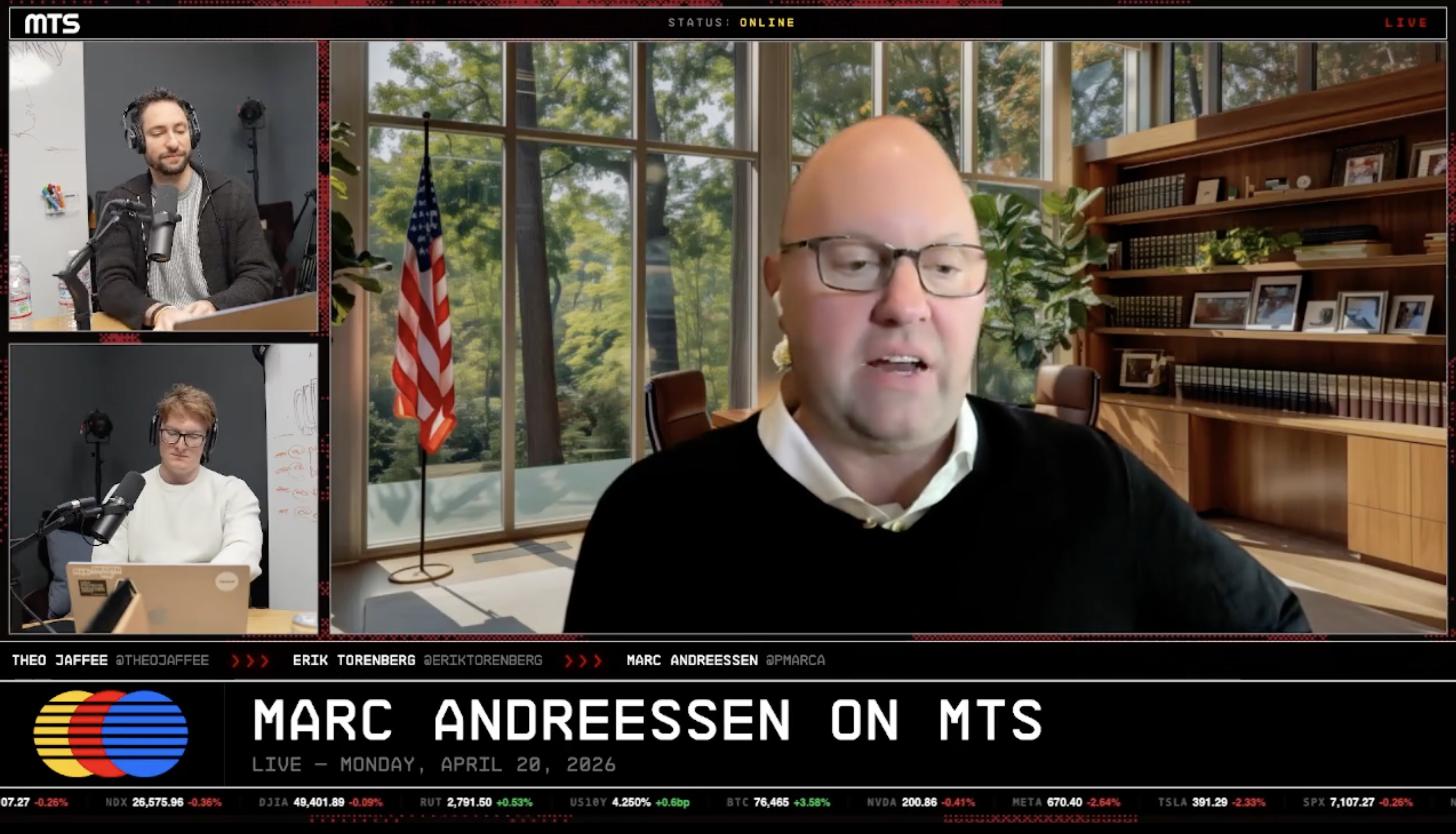
One of Silicon Valley's most powerful venture firms helped launch a 24/7 livestream on X Monday, joining a wave of tech money piling into the news cycle as the internet's hottest new asset class.