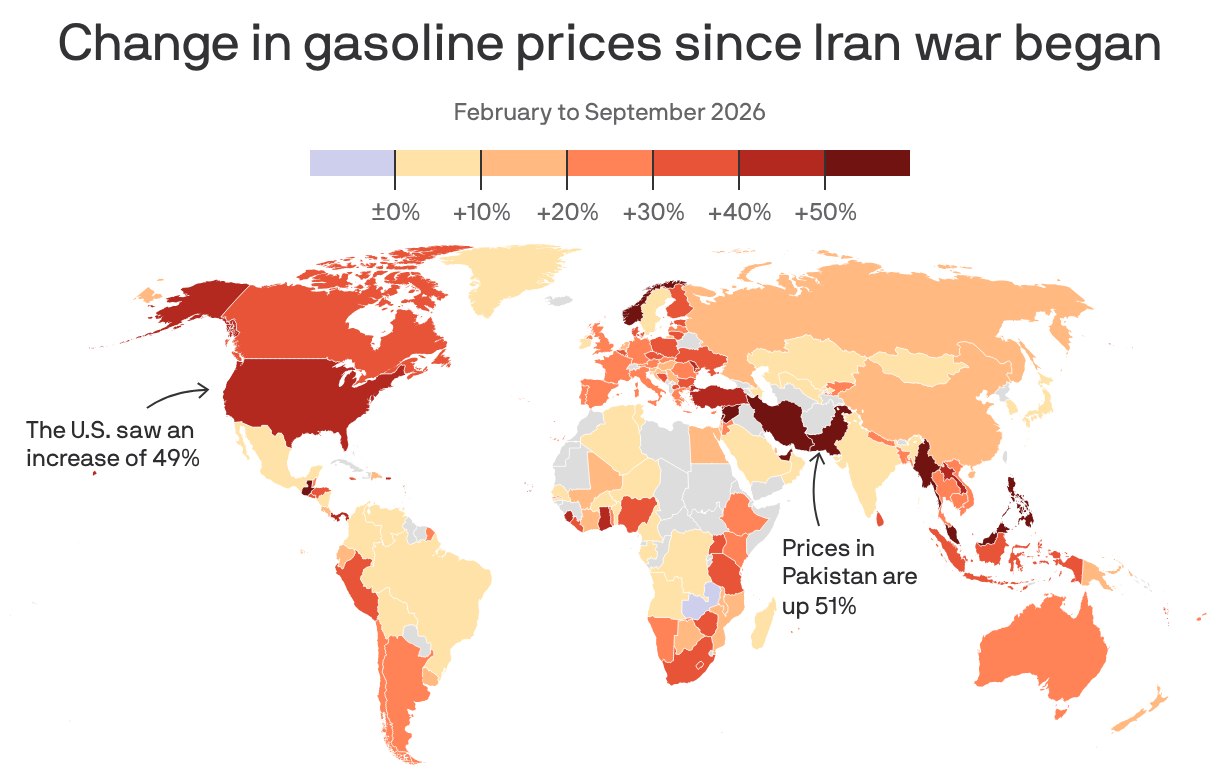
Data: Axios research. Note: Some countries use a quota system for gasoline. Malaysia's figure reflects the unsubsidized market rate. Chart: Noah Bressner/Axios
The Iran war is driving fuel prices higher worldwide, leading to angry protests around the globe and straining the economies of countries that have nothing to do with the war.
Why it matters: It's not just driving up prices in the U.S. The war is causing problems around the world — in some cases far worse than anything Americans are experiencing.
Latino voters swung sharply toward Republicans in 2024. Now, much of that gain is fading as gender and generational divides widen.
Why it matters: The GOP breakthrough two years ago hasn't produced a uniformly more conservative Latino electorate, as Democrats have regained ground in polling this year.
But an Axios analysis of recent polls shows Latino voters aren't simply swinging right, then left. The data show Latino politics fragmenting from within, as young Latino men and women increasingly split over immigration, President Trump and democracy.
Foreign actors last month breached two small Colorado water utilities and manipulated equipment used to control drinking water systems.
Why it matters: The attacks come amid heightened concern about foreign actors infiltrating U.S. water systems — including recent attacks linked to actors suspected of ties to Iran.
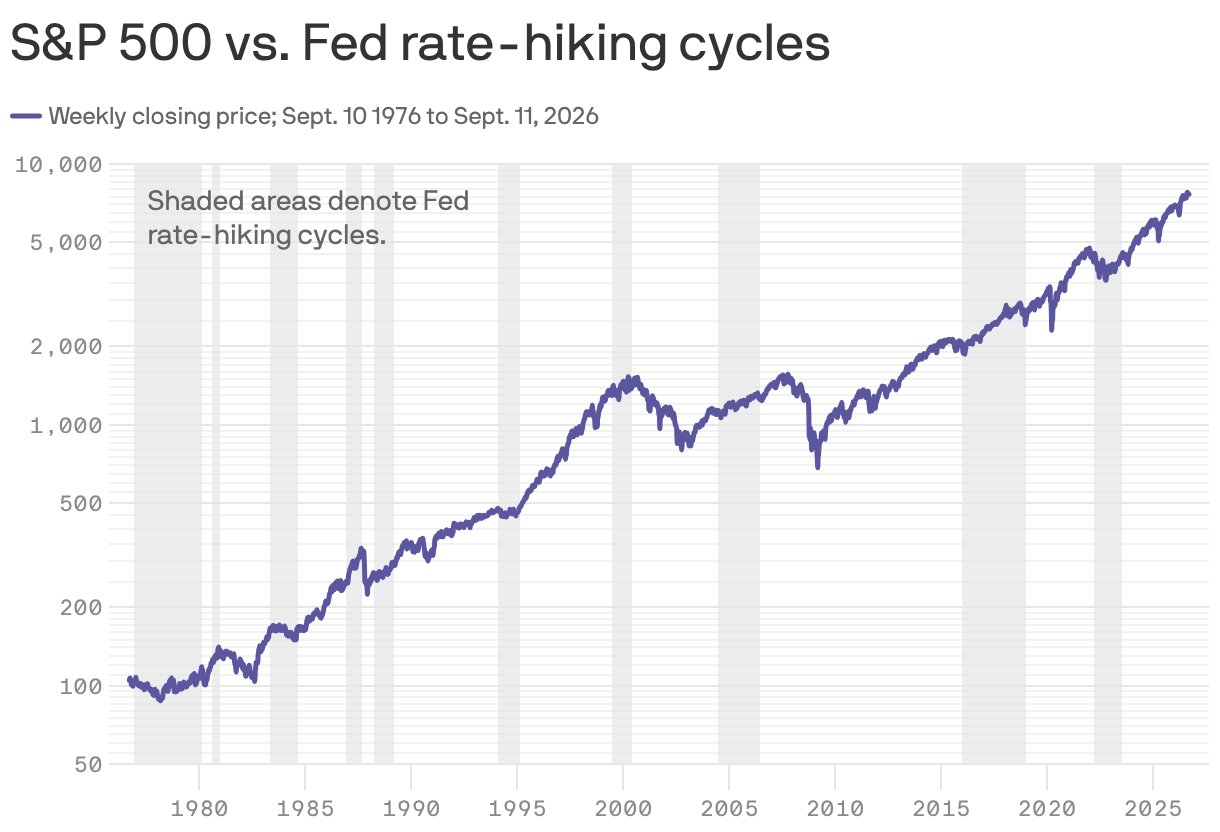
Central bankers around the globe are, metaphorically, holding hands and taking the leap toward higher interest rates together.
The big picture: Interest rate increases from the Bank of Japan on Friday, the Fed on Wednesday and the European Central Bank last week reflect the common global forces that are challenging the world's biggest advanced economies.
Energy prices are marching upward, reflecting the disruptions from the Iran war, at a time inflation has already been elevated for years.
Driving the news: The Japanese central bank raised its target interest rate to 1.25%, from 1%, overnight U.S. time — still low by global standards but the highest in 31 years.
Governor Kazuo Ueda told reporters that Japanese monetary policy "has shifted to a new stage," per Bloomberg's translation.
Zoom out: While each central bank is charged with setting policy based on what is best for its country's economy, there is a certain safety in numbers when the major banks move more or less together.
In particular, joint action helps limit currency gyrations and disorderly flows of capital that can occur when one central bank zigs while others zag.
Zoom in: Each nation's central bank has its own remit, structure and economic circumstances. But top central bankers meet and discuss goings-on frequently.
That includes bimonthly gatherings at the Bank for International Settlements in Basel, Switzerland; on the sidelines of international summits; and at conferences like those in Jackson Hole, Wyoming, and Sintra, Portugal.
There is frequent lower-level communication between staff of leading central banks. (Neil, for example, was once in the ECB cafeteria in Frankfurt awaiting an appointment and bumped into the then-New York Fed markets desk chief.)
State of play: In crises, these close ties can enable efficient coordination, such as the joint monetary easing announcement in 2008 and the use of international currency agreements to address financial freeze-ups.
Even in non-crisis moments, though, the sense of economic interdependence can factor into decision-making.
The intrigue: Fed chairman Kevin Warsh seemingly went out of his way to mention this international dimension to monetary policy in his news conference Wednesday.
"In my meetings these last few weeks — in Jackson Hole, in Asheville at the G-20 meeting, which the U.S. hosted, and at a central bank conference in Basel — it was evident that most advanced economies are facing price pressures," he said.
He later added that "when the Federal Reserve makes a policy choice, it matters not just to the U.S. economy, but it spills over to the rest of the world."
"When foreign central banks make decisions, where they're confronted with higher prices and they choose, consistent with their remit, to raise rates, then they're helping to quash inflation in their countries, and there's spillovers and spill-backs in both directions," Warsh said.
What they're saying: "As he pointed out, other central banks are facing similar inflation pressures as a result of higher oil prices, and some are raising rates," Bill English, a former top Fed economist now at the Yale School of Management, tells Axios.
"It seems helpful to point out that the U.S. situation isn't unique and that others are doing similar things," English added. "That may help the public to understand what is going on (it's a global issue), and it may also be helpful politically (there is safety in numbers)."
China's holdings of U.S. Treasury securities reached an 18-year low in July, new Treasury Department data shows.
Why it matters: It's not just China. Foreign governments are pulling back on buying Treasury securities, and hedge funds and other private investors are filling the void.
That poses some risks to the ability of the U.S. to borrow money cheaply, as analysts say it could put upward pressure on borrowing costs.
And the award for honesty in oil market analysis goes to ... J.P. Morgan!
"For the first time since the start of the Iran conflict, we don't have a baseline view. We simply don't know how to model the endgame," bank researchers said in a note (emphasis added).
Why it matters: While the phrasing is unusually blunt, the sentiment is shared to varying degrees.